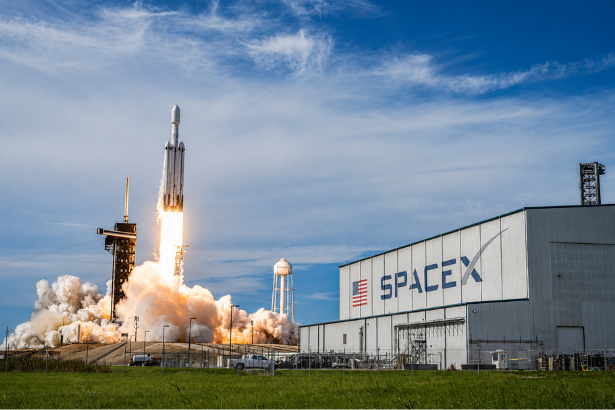
Elon Musk’s aerospace giant enters public markets in the largest IPO ever, creating a watershed moment for the global space economy.
SpaceX stock is officially headed to Wall Street after the company priced its blockbuster initial public offering at $135 per share ahead of its Nasdaq debut. The offering raises approximately $75 billion and values the company at roughly $1.77 trillion, making it one of the most valuable publicly traded companies in the United States from day one.
The listing represents a defining moment not only for SpaceX but also for investors seeking exposure to the rapidly expanding commercial space industry.
Background and Context
For years, SpaceX remained one of the most sought-after private companies in the world.
Founded by Elon Musk in 2002, the company transformed from a startup rocket manufacturer into a global aerospace powerhouse responsible for:
- Falcon launch systems
- Starship development
- Starlink satellite internet
- Government and defense contracts
- Commercial space transportation
Private-market valuations surged throughout the AI and space technology boom, eventually pushing SpaceX close to a $1.8 trillion valuation before its public debut.
Latest News Breakdown
SpaceX priced its IPO at $135 per share and plans to trade under the ticker symbol SPCX on Nasdaq. The company sold approximately 555.6 million shares, generating around $75 billion in proceeds.
Several aspects of the offering stand out:
Largest IPO in U.S. History
The transaction surpasses previous IPO records and immediately places SpaceX among the most valuable public companies globally.
Massive Investor Demand
Reports indicate demand exceeded available shares by a wide margin, reflecting investor appetite for space infrastructure and Musk-led companies.
Retail Participation
Unlike many mega-cap offerings, SpaceX allocated a significant portion of shares to retail investors, potentially increasing trading volume and volatility during its first sessions.
Expert Analysis
The SpaceX stock debut arrives during a period when investors are increasingly focused on long-term infrastructure themes.
Several drivers support the bull case:
Starlink Growth
Starlink continues expanding globally, generating recurring subscription revenue that diversifies SpaceX beyond launch services.
Government Contracts
NASA and defense-related contracts provide stable revenue streams and strategic advantages.
AI Infrastructure Potential
Analysts increasingly view satellite networks, edge computing, and global connectivity as critical infrastructure for future AI systems.
Space Economy Expansion
Morgan Stanley has previously estimated the space economy could exceed $1 trillion annually over coming decades, creating a large addressable market for SpaceX.
Elon Musk and the Trillionaire Milestone
The IPO has reignited discussions around Elon Musk’s wealth.
With SpaceX now valued at nearly $1.8 trillion and Musk maintaining substantial voting control, analysts estimate the offering could push his net worth toward historic levels, potentially making him the world’s first trillionaire.
While such projections fluctuate with market prices, the IPO underscores how central SpaceX has become to Musk’s business empire.
Broader Implications
For Technology Investors
The success of the offering signals continued demand for high-growth technology companies despite elevated valuations.
For Future IPOs
A strong debut could encourage other private technology giants to pursue public listings.
For the Space Industry
The listing effectively creates a publicly traded benchmark for commercial space businesses.
Internal Link Suggestion: /future-of-space-economy-investing
Historical Comparison
| Company | Approximate IPO Valuation |
| $104 Billion | |
| Alibaba | $168 Billion |
| Saudi Aramco | $1.7 Trillion |
| SpaceX | $1.77 Trillion |
SpaceX enters public markets at a scale rarely seen in financial history.
What Happens Next?
Investors will closely monitor:
- First-day trading performance
- Analyst price targets
- Institutional ownership trends
- Starlink revenue growth
- Progress on Starship development
Early volatility is expected given unprecedented retail participation and the size of the offering.
Conclusion
SpaceX stock is no longer a private-market phenomenon. Its historic IPO marks the arrival of the commercial space economy on public markets at an unprecedented scale.
Whether the company ultimately justifies its near-$1.8 trillion valuation will depend on its ability to expand Starlink, scale next-generation launch systems, and maintain its leadership position in an increasingly competitive aerospace market.
For investors, the debut is more than a stock listing. It is a test of how much value markets place on the future of space infrastructure.
FAQ
What is the SpaceX stock IPO price?
SpaceX priced its IPO at $135 per share.
What ticker symbol does SpaceX use?
The company is expected to trade under the ticker SPCX.
What is SpaceX worth after the IPO?
The IPO values SpaceX at approximately $1.77 trillion.
Why is SpaceX stock attracting attention?
Its dominant position in launch services, Starlink’s growth, and Elon Musk’s leadership have made it one of the most anticipated IPOs in history.
Could Elon Musk become the world’s first trillionaire?
Some analysts believe the IPO could move Musk closer to that milestone depending on post-listing performance.
Is SpaceX stock profitable?
The company continues investing heavily in growth initiatives, including Starship and satellite infrastructure, while expanding revenue through commercial launches and Starlink services.
SOURCES & REFERENCES
- Reuters — SpaceX Prices Record $75 Billion IPO at $135 a Share
- Yahoo Finance — SpaceX Sets $135 IPO Price Ahead of Nasdaq Debut
- MarketWatch — SpaceX Officially Prices IPO
- CNBC — Investors Reap Rewards From $1.8 Trillion Valuation
- Al Jazeera — Elon Musk Poised to Become World’s First Trillionaire