Introduction
The Elon Musk Terafab construction plan is moving from ambitious concept toward a physical semiconductor project, with SpaceX and Tesla planning an initial investment of $16.8 billion in a giant AI chip manufacturing complex in Grimes County, Texas. The facility is expected to cover roughly 100 million square feet and ultimately support the enormous computing requirements of Musk’s expanding AI and robotics ambitions.
The scale is difficult to overstate. The proposed facility would be several times larger than the world’s current largest buildings by floor area, according to Fortune’s analysis, while Musk’s companies envision Terafab as a vertically integrated manufacturing operation rather than a conventional chip fab.
The strategy is straightforward: instead of relying entirely on outside semiconductor suppliers, Musk wants greater control over the physical infrastructure underpinning Tesla’s vehicles and Optimus robots, as well as SpaceX’s planned space-based computing systems.
Background and Context
Terafab is part of a broader push by Musk’s companies to control more of the AI hardware stack.
SpaceX’s 2026 prospectus describes Terafab as an initiative intended to vertically integrate the design, fabrication and deployment of advanced logic and memory chips. The company says the long-term objective is to produce enough hardware to support as much as one terawatt of compute annually.
That is a fundamentally different proposition from simply building another semiconductor factory.
The project is intended to combine multiple stages of chip production, including manufacturing, advanced packaging and testing. The goal is to shorten the development loop between designing a processor and testing it in a finished system.
Tesla has its own reason for wanting that control.
The company’s AI ambitions increasingly depend on custom silicon for autonomous vehicles, robotics and other systems. SpaceX has a separate requirement: extremely powerful computing hardware that can eventually operate in orbital environments.
Those demands are large enough that Musk’s companies argue the existing chip supply chain may not be sufficient for their future plans.
Latest Update: Elon Musk Terafab Construction Plan Expands in Texas
The latest announcement puts the full-scale Terafab project in Grimes County, Texas, with an initial investment of $16.8 billion. Reuters reported that the facility will be designed to manufacture, package and test advanced logic and memory chips.
Reuters: SpaceX, Tesla to initially spend $16.8 billion on Terafab chip plant in Texas
The initial phase is expected to create at least 3,000 jobs, while the overall project could eventually reach approximately $119 billion if all planned phases are built out.
That distinction is important.
The $16.8 billion figure represents the initial investment, not necessarily the final cost of the complete Terafab vision.
A 100 Million-Square-Foot Semiconductor Giant
The proposed facility’s footprint is one of its most extraordinary characteristics.
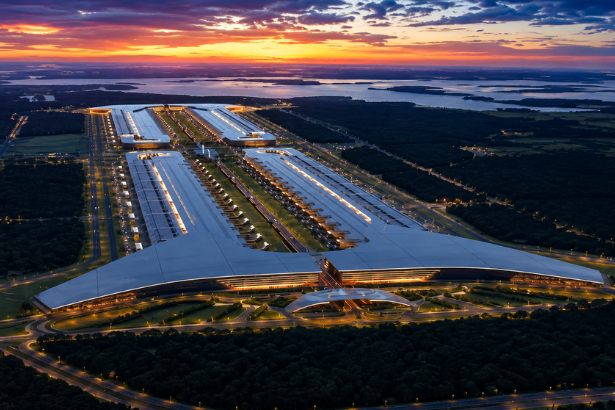
At approximately 100 million square feet, Terafab would be enormous even by industrial standards. Fortune reported that the proposed factory would be about five times the floor area of the world’s current largest building.
The physical scale reflects the project’s intended role.
This is not simply a factory designed to manufacture one generation of processors. Musk’s companies want Terafab to become a large-scale platform for producing multiple types of AI hardware.
What Terafab Is Supposed to Make
The chips are intended for several different applications.
Tesla needs processors for:
- Optimus humanoid robots
- Autonomous driving systems
- Cybercabs
- Edge AI and inference
SpaceX wants high-power processors for:
- Space-based data centers
- Orbital computing infrastructure
- Large-scale AI workloads
SpaceX’s prospectus says Terafab is intended to produce one class of chips optimized for terrestrial edge and inference applications, particularly Tesla’s robots and vehicles, alongside chips optimized for the space environment.
That makes Terafab strategically important to both companies.
Expert Insights and Analysis
Terafab is really about vertical integration
The most important part of the Elon Musk Terafab construction plan is not the building itself.
It is the attempt to vertically integrate the semiconductor supply chain.
Traditional technology companies typically depend on specialist semiconductor manufacturers. Designing a processor and physically manufacturing it are very different businesses, requiring enormous amounts of capital, specialized equipment and highly experienced engineering teams.
Terafab aims to bring much of that process into one ecosystem.
SpaceX says its strategy involves integrating mask design, fabrication, memory production, advanced packaging and testing into a single closed-loop facility.
That could potentially allow Musk’s companies to iterate faster.
If a chip design needs to change, engineers could theoretically move through the development process without relying on multiple external manufacturing and packaging partners.
The chip shortage argument
Musk’s companies are building Terafab around a simple concern: future AI demand could exceed available semiconductor manufacturing capacity.
SpaceX says the combined demand from Tesla and SpaceX could exceed one terawatt of compute, creating a potential gap between the hardware the companies want and what the global semiconductor industry can supply.
That is an extraordinary demand projection.
It also explains why the companies are willing to contemplate a facility that could eventually require more than $100 billion in investment.
Intel adds manufacturing expertise
Intel is also involved in the Terafab effort, providing additional semiconductor manufacturing expertise. SpaceX’s prospectus identifies Terafab as a collaboration designed to expand access to advanced chip production while maintaining relationships with third-party suppliers.
That last point matters.
Terafab is not necessarily intended to eliminate external suppliers.
SpaceX explicitly says it expects to continue sourcing a significant portion of its computing hardware from third-party manufacturers.
The project is therefore better understood as an attempt to add another layer of supply security and internal manufacturing capability.
Broader Implications
Texas is becoming a deeper semiconductor hub
The Elon Musk Terafab construction plan adds another major technology manufacturing project to Texas.
Tesla already operates its Gigafactory Texas near Austin, while SpaceX has established major operations elsewhere in the state.
Terafab would take that manufacturing presence into an entirely different industry: advanced semiconductor production.
Texas has spent years positioning itself as an alternative manufacturing center for companies looking to expand U.S. chip capacity. A project of Terafab’s proposed size would significantly increase the state’s importance in the domestic AI hardware ecosystem.
AI infrastructure is becoming the real bottleneck
For years, the AI race was primarily framed around better models.
That is changing.
The industry now faces questions about GPUs, custom accelerators, memory, data centers, electricity, cooling and manufacturing capacity.
SpaceX’s prospectus explicitly argues that the major physical constraints on AI growth are chip manufacturing, data-center infrastructure and power generation.
Terafab is essentially Musk’s answer to the first problem.
The bigger question is whether controlling chip manufacturing can give his companies enough leverage to solve the other two.
The economics are enormous
A $16.8 billion initial investment is already extraordinary.
A potential $119 billion full buildout is another category entirely.
Semiconductor factories are among the most capital-intensive industrial projects in the world. They require sophisticated manufacturing equipment, clean-room environments, water, electricity and highly trained personnel.
Building the physical structure is only the beginning.
The economic test will be whether Terafab can produce chips at sufficient yield, performance and cost to justify the investment.
For more coverage of AI infrastructure and semiconductor technology, visit The Tech Marketer.
Related History and Comparable Technologies
The semiconductor industry has repeatedly demonstrated that manufacturing scale can become a competitive advantage.
Companies such as TSMC built their businesses around specialized manufacturing, allowing chip designers to focus on architecture while foundries handled production.
Musk’s approach moves in the opposite direction.
Rather than becoming entirely dependent on an external foundry, Tesla and SpaceX want greater control over manufacturing.
The concept is closer to the vertically integrated approach that has historically characterized some of the world’s largest technology companies.
But semiconductor manufacturing presents a much harder engineering challenge than assembling finished products.
A modern fab must maintain extraordinary process control. Tiny variations can affect chip yields, and advanced manufacturing processes require billions of dollars in equipment and years of accumulated expertise.
That is why Terafab’s execution will matter as much as its headline size.
What Happens Next
The next stage is construction and development of the Texas facility.
Tesla has already been carrying out related construction work around its Texas operations, while the larger Terafab project is now planned for Grimes County. Reuters reported that the initial phase will focus on building the infrastructure required for large-scale chip production.
Several milestones will determine whether Musk’s vision becomes reality:
- Construction progress: Can the enormous facility be built on schedule?
- Manufacturing equipment: Can the companies secure the specialized machinery required for advanced chip production?
- Process technology: Can Terafab achieve competitive manufacturing yields?
- Chip design: Can Tesla and SpaceX create processors that justify the manufacturing investment?
- Power and water: Can Texas infrastructure support a facility of this scale?
- Capital requirements: Can the companies sustain the investment if the project expands toward its potential $119 billion cost?
The first phase will therefore be watched closely by the semiconductor industry.
A successful Terafab could give Musk’s companies greater control over one of the most strategically important components of the AI economy.
A delayed or excessively expensive project would demonstrate just how difficult semiconductor vertical integration can be.
Conclusion
The Elon Musk Terafab construction plan represents one of the most ambitious attempts yet to bring AI chip manufacturing under the control of a technology conglomerate.
SpaceX and Tesla plan to invest $16.8 billion initially in a 100-million-square-foot Texas complex capable of manufacturing, packaging and testing advanced chips. The project could eventually reach $119 billion and employ at least 3,000 people.
The strategic logic is clear.
Tesla needs enormous quantities of AI compute for vehicles and Optimus. SpaceX wants powerful processors for its future orbital computing ambitions. Both companies want more control over the hardware supply chain.
But the scale also creates an equally enormous execution challenge.
Terafab is not simply another factory. It is an attempt to reshape how Musk’s companies obtain the fundamental hardware needed for their AI ambitions.
If it works, Tesla and SpaceX could gain an unusual degree of control over their computing infrastructure.
If it fails, the project will become a powerful reminder that semiconductor manufacturing remains one of the hardest and most expensive businesses in technology.
FAQ
What is Elon Musk’s Terafab?
Terafab is a planned semiconductor manufacturing complex being developed by SpaceX and Tesla in Texas. It is designed to integrate chip manufacturing, memory, advanced packaging and testing into a large-scale facility.
How much will Terafab cost?
The initial investment is approximately $16.8 billion. Reuters reported that the complete project could eventually reach around $119 billion if all planned phases are developed.
Where will Terafab be built?
The full-scale Terafab is planned for Grimes County, Texas.
How big will Terafab be?
The proposed facility is expected to cover approximately 100 million square feet, making it one of the largest buildings ever proposed.
What chips will Terafab make?
The facility is intended to manufacture advanced logic and memory chips. Tesla-focused chips are expected to support applications such as Optimus robots and Cybercabs, while SpaceX plans chips for space-based computing infrastructure.
Why does Elon Musk want his own chip factory?
The strategy is aimed at securing semiconductor supply, increasing vertical integration and allowing Tesla and SpaceX to control more of the hardware stack supporting their AI ambitions. SpaceX says the companies could eventually require more than one terawatt of computing capacity.
Is Intel involved in Terafab?
Yes. Intel is participating in the Terafab effort and brings semiconductor manufacturing expertise to the project. SpaceX’s prospectus describes Terafab as complementary to continued sourcing from third-party suppliers.
Sources & References
- Reuters, SpaceX, Tesla to initially spend $16.8 billion on Terafab chip plant in Texas
Read the Reuters report - Fortune, Musk’s planned $16.8 billion factory is five times bigger than the world’s current largest building
Read the Fortune report - FOX Business, SpaceX and Tesla choose Texas for AI chip manufacturing plant that will be world’s largest building
Read the FOX Business report - SpaceX, 2026 Prospectus
Read the SpaceX prospectus