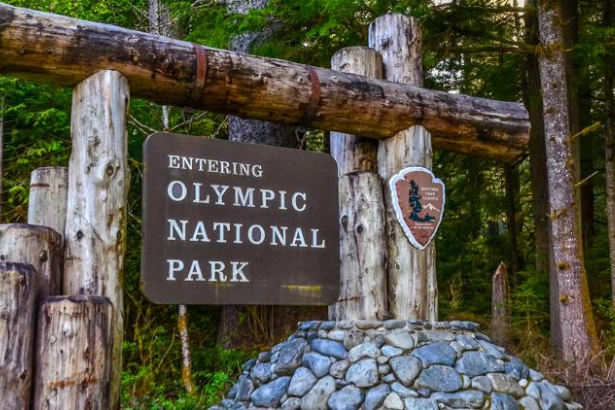
Olympic National Park remains identified as Joseph Louis Serrao Jr., a Hawaii man whose family had not heard from him since 1998, were confirmed by the National Park Service on June 11, 2026. Skeletal remains discovered inside a sleeping bag in a remote backcountry tent along the Sol Duc River in July 2000 sat unidentified for 26 years, until a 2024 DNA submission to forensic genealogy lab Othram led investigators to Serrao’s relatives in Hawaii and finally closed one of Washington State’s longest-running cold cases.
What Was Found: The 2000 Discovery Along the Sol Duc River
In July of 2000, a researcher came across skeletal remains in a sleeping bag inside a tent in a remote area of Olympic National Park.
About two years after Serrao’s family last heard from him, in July 2000, a researcher discovered human skeletal remains in a remote part of Olympic National Park, along the Sol Duc River, the National Park Service said.
The remains were found inside a tent, accompanied by personal items that painted a picture of someone equipped for an extended backcountry stay. The sleeping bag in which the remains were found was inside a tent, and discovered with it were multiple items, including binoculars, a day hiker pack, a shoulder bag, a folding saw, a blanket and winter gear, according to the park service and the laboratory.
The combination of winter gear, a folding saw, and a day hiker pack suggests someone prepared for sustained time outdoors, possibly in cold conditions. The Sol Duc River area of Olympic National Park is a remote, densely forested region of the Olympic Peninsula, known for old-growth rainforest and limited access points.
Who Was Joseph Louis Serrao Jr.?
Joseph Louis Serrao Jr. was born in December 1960, making him in his late 30s at the time of his death.
Serrao’s family said their last known contact with him was in 1998, and they had not heard from him since. According to family, Serrao was originally from Hawaii and had been in Washington before going missing.
The two-year gap between Serrao’s last contact with family in 1998 and the discovery of the remains in 2000 is consistent with the pathologist’s later estimate that the body had been dead for roughly six months to four years before discovery. That places his likely time of death somewhere between 1996 and 2000, a window that aligns with the 1998 last-contact date his family provided.
Why the Case Stayed Cold for Two Decades
The remains were initially sent to a pathologist, who was able to determine that the body was likely a man, between the ages of 30 and 50, who had been dead for about six months to four years.
The initial forensic assessment provided a general profile, but it was not enough to generate an identification. Items were recovered from the scene where they found the remains, however, investigators were unable to get any usable fingerprints.
For 24 years, this was the limit of what investigators could determine: an adult male, likely in his 30s to 50s, who had died sometime in the mid to late 1990s, found with a specific set of camping equipment, but with no name, no fingerprint match, and no missing person report that investigators had connected to the case. His name remained unknown until recently.
The 2024 Breakthrough: Othram and Forensic Genealogy
The case that had stalled for over two decades was reopened through a relatively recent development in DNA analysis technology.
A breakthrough came once an anthropologist with the medical examiner’s office submitted a DNA sample to Othram in 2024, according to the park service, which investigated Serrao’s case alongside King County authorities and the laboratory.
Othram is a Texas-based forensic genetic genealogy laboratory that has become a central player in resolving cold cases across the United States, including multiple cases in Washington State alone. The company’s Forensic-Grade Genome Sequencing technology can develop usable DNA profiles from skeletal remains that are often decades old and too degraded for older testing methods to analyze successfully.
The 2024 submission represents the moment this case shifted from a static cold case to an active investigation again, 24 years after the remains were first found.
How Forensic Genealogy Identified Serrao
Forensic genealogy is a method that analyzes DNA to identify potential relatives and eventually deduce the identity of the person behind the DNA sample.
Using forensic genealogy, a technique that can help pinpoint living relatives of a deceased person based on the decedent’s DNA, the lab was able to identify possible family members by 2025.
Once Othram’s lab identified potential family connections, the investigative work shifted from the laboratory back to field investigators. Investigators were then able to reach out to Serrao’s relatives in Hawaii to interview them and collect reference DNA samples for comparison. Serrao was positively identified through a combination of genetic, genealogical, and circumstantial evidence.
The combination of genetic data, family genealogy research, and circumstantial details, such as Serrao’s Hawaii origins matching the family connections Othram identified, allowed investigators to move from “possible relatives” to a positive identification with confidence.
The Investigative Team: National Park Service, King County, and Othram
Figuring out his identity took a large-scale collaborative effort between the National Park Service Investigative Services Branch, the King County Medical Examiner’s Office and advanced genetic testing conducted by forensic genealogy lab Othram.
The three-way collaboration reflects how cold case identification typically works in 2026. The National Park Service Investigative Services Branch maintains jurisdiction over deaths that occur within national park boundaries. The King County Medical Examiner’s Office, despite Olympic National Park being in Clallam and Jefferson counties, has built specialized forensic anthropology expertise that other Washington jurisdictions draw on for complex identification cases. Othram provides the DNA sequencing and genealogy research that neither agency can perform in-house.
Deputy Chief Debra Flowers of the National Park Service Investigative Services Branch reflected on the significance of the resolution. “This case remained unresolved for nearly 30 years, but investigators never lost sight of the goal of identifying this individual and finding answers for his family,” she said. “I’m proud of the persistence and collaboration that made this identification possible, and I hope it brings some measure of closure to those who have spent so many years wondering what happened to Joseph.”
Other Recent Othram Cases in Washington State
The Serrao identification is part of a broader pattern of cold case resolutions in Washington State using the same forensic genealogy approach.
In a separate case from March 2026, skeletal remains discovered in a remote area of Grant County, Washington in November 2011 were identified as 39-year-old Jorge Palayo-Rodriguez of Othello, Washington, also through Othram’s DNA extraction and KinSNP rapid relationship testing in partnership with the King County Medical Examiner’s Office.
In another Washington case, human remains that washed ashore on a beach in Grays Harbor County in 2006 were identified through Othram as Clarence Edwin “Ed” Asher, a 72-year-old former Oregon mayor who had gone missing while crabbing in Tillamook Bay.
These cases collectively demonstrate how forensic genealogy has transformed Washington State’s approach to unidentified remains cases. Cases that were considered permanently unsolvable as recently as 2020 are now being resolved at an accelerating pace as DNA sequencing technology and genealogical databases continue to improve.
What Happens Next for the Serrao Family
With Joseph Louis Serrao Jr. now identified, his family in Hawaii has the answer they sought for 28 years: confirmation of what happened to their relative, and the ability to claim his remains and arrange whatever memorial or burial they choose.
The identification does not, on its own, establish a cause of death beyond what was determined at the time the remains were initially examined. The items found at the scene, a tent, sleeping bag, binoculars, day hiker pack, folding saw, blanket, and winter gear, are consistent with someone equipped for extended backcountry travel, though the circumstances that led to his death in that remote location remain part of the broader case record maintained by the National Park Service.
For families of the thousands of unidentified remains cases still open across the United States, the Serrao case is one more example of how a DNA sample submitted decades after a discovery can still produce an answer.
Latest Updates
The identification was announced by the National Park Service on June 11, 2026. Hawaii News Now confirmed the full details including the 2000 discovery date along the Sol Duc River, the items found at the scene, the 2024 Othram DNA submission, the 2025 family connection identification, and Deputy Chief Debra Flowers’ statement. Yahoo News and CBS News confirmed the same timeline and additional detail that Serrao was born in December 1960 and would have been in his late 30s at the time of his death, with the pathologist’s original estimate of six months to four years since death at the time of discovery. Unofficial Networks confirmed that investigators reached out to relatives across several states, including Hawaii, to coordinate interviews and collect reference DNA samples.
Full sources: Yahoo News | People.com | Hawaii News Now
Broader Implications
The Serrao identification is part of a wave of cold case resolutions made possible by forensic genealogy technology that simply did not exist when most of these cases originated. A case that sat unsolved for 24 years before its DNA sample was even submitted to a specialized lab illustrates both the limitations of the forensic tools available in 2000 and the dramatic capability gains achieved since.
For the National Park Service, the resolution validates a model of ongoing collaboration with county medical examiner offices and private forensic genealogy labs that has produced multiple identifications across Washington State in just the past several months. Cases once filed away as permanently unidentifiable are being revisited systematically as technology costs decrease and genealogical databases expand.
For families with unresolved missing person cases anywhere in the country, the Serrao case offers a measure of hope: a DNA sample submitted today, even for a case decades old, can still produce an answer years later. The 28-year gap between Serrao’s last contact with family and his identification is a long time to wait, but it was not an indefinite one.
For more news on cold case resolutions and breaking national news, visit The Tech Marketer.
If you or someone you know is grieving a loss or experiencing a mental health crisis, you can call or text 988 to reach the Suicide and Crisis Lifeline, available 24 hours a day, seven days a week.
Frequently Asked Questions
1. Who were the remains found in Olympic National Park identified as?
The remains, discovered in July 2000 inside a sleeping bag in a tent along the Sol Duc River in Olympic National Park, were identified on June 11, 2026 as Joseph Louis Serrao Jr., a man originally from Hawaii who was born in December 1960. His family last had contact with him in 1998.
2. How were the Olympic National Park remains identified after 26 years?
The identification was made possible through forensic genetic genealogy. In 2024, a forensic anthropologist with the King County Medical Examiner’s Office submitted a DNA sample to Othram, a Texas-based forensic genealogy laboratory. By 2025, the lab had identified possible family connections, and investigators with the National Park Service then contacted relatives in Hawaii, collected reference DNA, and positively identified the remains as Serrao through genetic, genealogical, and circumstantial evidence.
3. What items were found with the remains in Olympic National Park?
The remains were found inside a sleeping bag within a tent. Items discovered at the same location included binoculars, a day hiker pack, a shoulder bag, a folding saw, a blanket, and winter gear, consistent with someone equipped for an extended backcountry stay.
4. What is Othram and how does it help solve cold cases?
Othram is a Texas-based forensic genetic genealogy laboratory that uses Forensic-Grade Genome Sequencing to develop usable DNA profiles from often-degraded skeletal remains, which it then uses to identify potential living relatives of unidentified individuals. Othram has helped resolve multiple cold cases in Washington State alone, including the 2026 identification of remains found in Grant County in 2011 and remains found on a Grays Harbor County beach in 2006.
5. How long was the Joseph Louis Serrao Jr. case unsolved?
The case was unsolved for 26 years from the discovery of the remains in July 2000 to the identification announcement in June 2026, and nearly 28 years from his family’s last contact with him in 1998. National Park Service Deputy Chief Debra Flowers described it as a case that “remained unresolved for nearly 30 years.”