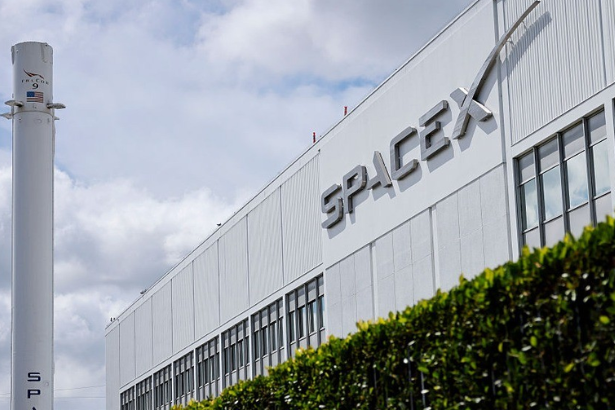
The SpaceX IPO 2026 is officially filed. Space Exploration Technologies Corp. submitted its S-1 prospectus to the Securities and Exchange Commission on May 20, targeting a Nasdaq listing under the ticker symbol SPCX on June 12, 2026. The offering is targeting a $1.75 trillion valuation with a raise of up to $75 billion — which would make it the largest initial public offering in capital markets history, surpassing Saudi Aramco’s 2019 record of $35.4 billion raised. The roadshow begins June 4 and pricing is set for June 11. Goldman Sachs is leading the deal alongside Morgan Stanley, Bank of America Securities, Citigroup, and JPMorgan. Here is what the prospectus actually shows — and what the valuation depends on.
The Core Numbers: Revenue Up, Losses Wide
The SpaceX IPO 2026 prospectus provided the first audited public look at SpaceX’s financial scale. For fiscal year 2025, SpaceX reported $18.67 billion in consolidated revenue — up from $14.01 billion in 2024 and $10.39 billion in 2023. Adjusted EBITDA for 2025 was $6.58 billion. But the net loss was $4.9 billion.
For Q1 2026, SpaceX generated $4.69 billion in revenue with an adjusted EBITDA of $1.13 billion. The company’s revenue has grown rapidly and consistently — three consecutive years of roughly 35% year-over-year growth is an extraordinary trajectory for a company of this scale. The $4.9 billion net loss reflects heavy R&D spending and the costs of integrating xAI. It is not the financial profile of a business struggling to grow — it is the profile of a business spending aggressively to grow faster than revenue can currently cover.
The $1.75 Trillion Valuation: What It Implies
The SpaceX IPO 2026 valuation target of $1.75 trillion requires the most careful examination in the entire prospectus analysis. The number implies approximately 109 to 116 times trailing 2025 revenue. On 2026 forward revenue projections of $27 to $30 billion, the multiple compresses to 58 to 65 times. For context, Snowflake and Airbnb — two of the most expensive recent mega-IPOs — commanded significantly lower revenue multiples at debut.
Elon Musk’s SpaceX isn’t the financial juggernaut that many were expecting, according to the IPO prospectus it filed. For context, 200 companies in the S&P 500 had more revenue last year than did SpaceX. This includes Tesla, whose sales were five times higher.
The valuation is not a reflection of SpaceX’s current earnings power. It is a bet on three future growth curves: Starlink’s subscriber expansion and margin improvement, xAI’s eventual monetization of AI compute infrastructure, and the Starship launch vehicle’s potential to revolutionize both commercial and government space economics. All three of those bets are plausible. None of them are certain.
Starlink: The Only Profitable Business in the Filing
The most important financial fact in the SpaceX IPO 2026 prospectus is also the most underreported in the headline coverage: Starlink is the only profitable division SpaceX operates.
According to the filing, Starlink generated $3.26 billion in revenue in Q1 2026, accounting for 69% of the company’s total. The company now boasts about 10.3 million Starlink subscribers. Connectivity is also the only profitable part of the company. The space business lost $619 million in the quarter on an operating basis. The AI unit lost $2.5 billion. Connectivity recorded a profit of $1.19 billion.
Starlink is projected to generate approximately $20 billion in 2026, representing 70 to 75 percent of total SpaceX revenue. That one product line — a satellite internet service that began as a side project — is now the financial engine of the entire enterprise. Everything else SpaceX does, from Falcon 9 launches to Starship development to xAI’s AI compute infrastructure, is subsidized by people paying monthly fees for satellite internet in rural areas and emerging markets.
The xAI Problem: $818 Million vs. What Twitter Used to Make
The SpaceX IPO 2026 story’s most uncomfortable data point is buried in the segment breakdown. The AI unit containing X and xAI generated only $818 million in Q1 2026 — about a third less than Twitter alone generated in the quarter before Musk took it over.
Musk acquired Twitter in October 2022 for $44 billion, promptly renamed it X, restructured it, and then absorbed it into SpaceX’s corporate structure via a stock transaction. The AI compute business — xAI, the developer of the Grok model — was acquired by SpaceX in an all-stock transaction in February 2026 at a combined valuation of $1.25 trillion. The combination was supposed to create an integrated aerospace-AI platform. The prospectus shows that the integration is costing more than it is currently generating. Cost of revenue in the AI segment jumped 29% to $2.18 billion in 2025, driven by infrastructure and cloud computing costs.
The bright side of the xAI segment: Anthropic has agreed to pay $1.25 billion per month to SpaceX for compute — roughly $15 billion annually — and SpaceX says it will seek to sign similar contracts. That single contract, if it holds, would substantially change the AI unit’s revenue profile.
Musk’s Voting Control: 85.1% in a Public Company
The SpaceX IPO 2026 dual-class share structure is the governance detail that institutional investors are scrutinizing most carefully. The company will issue two classes of common stock, and the structure will grant Elon Musk 85.1% of the voting power.
That means SPCX shareholders — including any retail investor who buys the stock on June 12 — will have essentially no ability to influence any decision that requires a shareholder vote. Board composition, executive compensation, major acquisitions, capital allocation strategy, and every other matter of corporate governance will be decided by Musk’s vote alone. The only meaningful governance recourse for public shareholders is the ability to sell the stock.
This is not unique to SpaceX — Alphabet, Meta, and Snap all use similar super-voting structures. But at 85.1%, Musk’s control is more absolute than at most major technology companies. Investors are being asked to trust not just in SpaceX’s business model but in Musk’s indefinite stewardship of a $1.75 trillion enterprise.
What Could Make Elon Musk the First Trillionaire
The SpaceX IPO 2026 is expected to be the largest IPO ever and could make Elon Musk the world’s first trillionaire. At a $1.75 trillion valuation with Musk holding a substantial equity stake in SpaceX — combined with his existing positions in Tesla, X, xAI, Neuralink, and The Boring Company — the math on a trillion-dollar net worth becomes plausible.
Musk’s current net worth has fluctuated between $200 billion and $350 billion based on Tesla’s stock price. The SpaceX equity at the IPO valuation, if priced accurately and sustained, would add several hundred billion dollars to that figure. Whether the $1.75 trillion valuation holds through the roadshow, the pricing, and the first weeks of trading is the question that will determine whether the trillionaire narrative materializes or remains a projection.
What Comes After SpaceX: OpenAI and Anthropic
The SpaceX IPO 2026 is not happening in isolation. AI rivals OpenAI and Anthropic are expected to go public after Labor Day, with OpenAI appearing to be ahead on paperwork.
The pipeline implication for institutional investors is significant. Any investor who allocates to SPCX will need to hold capacity for OpenAI and Anthropic IPOs in the same calendar year. That sequential demand on institutional capital is one reason analysts are watching the SpaceX roadshow investor meetings with particular attention — the quality and diversity of the anchor book will signal how much demand is available for the subsequent AI IPOs following in SpaceX’s wake.
Broader Implications: What the SpaceX IPO Means for Space, AI, and Public Markets
The SpaceX IPO 2026 is the most consequential market event of the year — not because of the capital raised or the valuation achieved, but because of what it represents structurally. A company that simultaneously builds rockets, operates satellite internet for 10 million subscribers, runs an AI compute infrastructure business, and owns one of the world’s largest social media platforms is asking public markets to price all of those activities simultaneously.
The Axios framing is the most accurate available: SpaceX isn’t quite David, but it’s sure as hell not Goliath. The IPO depends on investor confidence in staggering future growth — and at 109 to 116 times trailing revenue, the current business does not justify the valuation on its own terms. The valuation is a prediction about what SpaceX will be, not a reflection of what it is. Public investors who buy SPCX are making that prediction explicitly. For more on the biggest stories in finance, technology, and space, visit The Tech Marketer.
Latest Updates
The SpaceX IPO 2026 S-1 was filed May 20. Here is where to follow the full coverage:
- Axios has the full analysis from Dan Primack of why SpaceX is not the financial behemoth many expected — including the $4.9 billion net loss, the Anthropic $1.25 billion/month compute deal, and the Starlink profitability context that makes the entire IPO thesis hold together. Read more at Axios
- Yahoo Finance has the full video explainer of how the SpaceX IPO could make Elon Musk the world’s first trillionaire, including the equity math and what the $1.75 trillion valuation implies for Musk’s consolidated net worth across all of his enterprises. Read more at Yahoo Finance
- CNN has the complete SpaceX IPO filing report covering the S-1 submission, the SPCX ticker, the June 12 Nasdaq target date, the Goldman Sachs-led underwriting syndicate, and the full financial summary from the prospectus. Read more at CNN
FAQ: SpaceX IPO 2026
1. When is the SpaceX IPO date and what is the ticker symbol? SpaceX is targeting a June 12, 2026 debut on the Nasdaq under the ticker symbol SPCX. The roadshow begins June 4 and pricing is set for June 11. Goldman Sachs is leading the deal alongside Morgan Stanley, Bank of America Securities, Citigroup, and JPMorgan.
2. What is SpaceX’s IPO valuation and how much is it raising? SpaceX is targeting a $1.75 trillion valuation and aims to raise up to $75 billion — which would make it the largest IPO in capital markets history, surpassing Saudi Aramco’s 2019 record of $35.4 billion raised. The valuation implies approximately 109 to 116 times SpaceX’s 2025 trailing revenue of $18.67 billion.
3. Is SpaceX profitable? Partially. Starlink — SpaceX’s satellite internet connectivity business — posted a $1.19 billion operating profit in Q1 2026. The space business (rockets and launches) lost $619 million and the AI unit (xAI and X) lost $2.5 billion in the same quarter. The company reported a $4.9 billion net loss for full-year 2025 on $18.67 billion in revenue.
4. How much voting power does Elon Musk retain after the SpaceX IPO? Elon Musk retains 85.1% of voting power through a dual-class share structure in which Class B shares hold super-voting rights. Public SPCX shareholders will have essentially no governance influence over any corporate decision. This is similar to the structures at Alphabet, Meta, and Snap but more concentrated than most major technology companies.
5. What is the Anthropic-SpaceX compute deal in the IPO filing? The SpaceX prospectus disclosed that Anthropic has agreed to pay $1.25 billion per month — approximately $15 billion annually — to SpaceX for AI compute capacity. This deal represents one of the largest single enterprise AI compute contracts ever disclosed publicly and is cited as evidence that SpaceX’s AI infrastructure business can generate significant revenue. SpaceX says it is actively seeking additional contracts of similar scale.