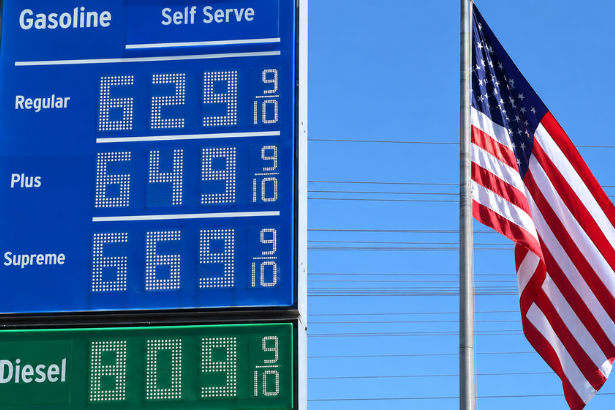
The CPI Report May 2026 releases this morning at 8:30 a.m. Eastern Time from the Bureau of Labor Statistics, and economists are bracing for the most significant inflation reading since early 2023. The consensus forecast from Dow Jones economists projects the annual rate of inflation hit 4.2% in May, a sharp jump from April’s 3.8%, driven primarily by energy prices that remain nearly 40% above pre-war levels following the start of the conflict with Iran in late February. This is the third consecutive month of rising inflation, and the first time annual inflation is expected to top 4% in over three years.
When Does the May 2026 CPI Report Come Out?
The Bureau of Labor Statistics’ Consumer Price Index for last month will be released at 8:30 a.m. ET Wednesday, June 10, 2026.
The report will be available simultaneously on the BLS website at bls.gov and through major financial data platforms including Bloomberg, FactSet, and the Dow Jones Newswires. Financial markets open at 9:30 a.m. ET, giving traders one hour to process the CPI data before equities begin trading.
The report will cover consumer prices for May 2026 across hundreds of categories including energy, food, shelter, healthcare, transportation, and apparel. The headline CPI number and the core CPI number, which excludes food and energy, will both be closely watched by markets and the Federal Reserve.
What Economists Expect: 4.2% Annual Inflation in May
Economists surveyed by Dow Jones expect it will show the annual rate of inflation hit 4.2%, well above the 2.4% level it hit before the war and its highest point since early 2023.
For context, the inflation trajectory since the Iran war began in late February is striking. February CPI came in at 2.4%, unchanged from January, capturing the period before the conflict began. March surged to 3.3% as energy markets reacted to the oil supply disruption. April accelerated further to 3.8%, with energy accounting for over 40% of the monthly CPI increase. May’s expected 4.2% would make it the third consecutive monthly escalation.
Economists expect that inflation rose 0.5% in May on a monthly basis and 4.2% from a year ago, according to Factset. If CPI rises 4.2% in May, it will mean that real inflation-adjusted wages are declining at an annual rate of 0.8%, meaning the typical American worker’s purchasing power is shrinking in real terms even as nominal wages continue to rise.
The Iran War’s Role: Oil Up 40%, Gas Still 40% Higher Than Before
The direct cause of the inflation acceleration is unambiguous: the Iran war disrupted Middle Eastern oil supplies, sent oil prices sharply higher, and that energy price shock is working through the economy in waves.
Since the war with Iran started, oil prices have risen nearly 40%, although they are well off their highs for the year. U.S. crude oil briefly rose to more than $115 per barrel in early April.
Retail gasoline prices have fallen in turn by 40 cents from their high this year. But consumers filling up at the pump are still paying around 40% more on average than they did before the war began.
The April CPI data provides the clearest breakdown of the energy impact already visible in the data. Energy prices rose 3.8% in April amid the Iran war’s disruption of Middle Eastern oil supplies, with prices up 17.9% in the last year. The BLS noted that the energy index accounted for over 40% of the overall CPI increase in April. Gasoline prices increased 5.4% in April and are up 28.4% from a year ago.
High energy prices will again provide upward pressure, although potentially less than in the previous two months, analysts at Lloyd’s Bank noted.
Core Inflation: The “Sticky” Number That Worries the Fed
The headline inflation number is important, but it is the core CPI, which strips out food and energy, that the Federal Reserve watches most closely.
Core inflation, which excludes food and energy costs, will be of particular focus in Wednesday’s report. It’s expected to return to near 3%.
The reason the Fed focuses on core is precisely because energy prices are volatile and tend to reverse. A 4.2% headline number driven by oil is alarming but may prove temporary if oil prices stabilize or fall. A 3% core number that reflects persistent price increases in shelter, insurance, services, and apparel is more worrying because those categories move slowly and are harder to reverse.
“The bigger concern is not the headline number which is expected to jump from 3.8% to 4.2%. That would be its highest level since March of 2023. Headline includes those volatile gas and food items that can be temporary, but it’s those ‘sticky’ items that can be embedded. The concern is that these categories, such as shelter, insurance and services, may keep inflation above the Fed’s comfort zone as they can remain higher for longer,” said Jay Woods, Chief Market Strategist at Freedom Capital Markets.
“Beyond airfares, there is little evidence that overall inflation is spilling over to core inflation yet,” Bank of America analysts wrote. “However, numerous indicators suggest that this pass-through is likely to occur soon, raising concerns that inflation may repeat the pattern observed in 2022.” That year, annual inflation surged as high as 8.9%.
Real Wages Are Falling: What 4.2% Inflation Means for Paychecks
Inflation at 4.2% versus wage growth that trails it means American workers are earning less in real terms even if their nominal paychecks are growing.
Consumers and U.S. workers are feeling the pinch of a wage growth rate that lags behind the rate of inflation.
The math is straightforward: if your employer gives you a 3% raise but inflation runs at 4.2%, your real purchasing power declines by approximately 1.2%. For workers in industries with smaller wage gains or those on fixed incomes, the impact is sharper. Fast-rising prices are already outstripping Americans’ paychecks, and that gap is widening.
The groups most affected are lower-income households, who spend a larger percentage of their income on necessities like food, housing, and transportation. Price hikes are particularly difficult for lower-income Americans, because they tend to spend more of their already-stretched paychecks on necessities and have less flexibility to save.
Federal Reserve Rate Hike: When Could It Happen?
The inflation data releases into a Federal Reserve that has been explicitly discussing the possibility of returning to rate increases.
Traders expect a rate hike by December and see a 60% chance one could happen by October.
“If recent data trends continue, it may soon be appropriate for policy to act to address the growing risks of persistently elevated inflation,” Beth Hammack, president of the Federal Reserve Bank of Cleveland, said. “Monetary policy may not be sufficiently restrictive to bring inflation down to 2%,” she added.
The Fed held rates steady at approximately 3.6% at its most recent meeting, but the language around that decision has shifted meaningfully since the Iran war began. The central bank’s projection for one rate cut this year, maintained from its December forecast, is now widely viewed as optimistic by outside economists who see the energy price shock keeping inflation above 4% for multiple months.
“Meanwhile, tariffs elbowed their way back into the headlines,” said JPMorgan chief U.S. economist Michael Feroli, referring to proposed duties on products from 60 countries. Those tariffs of at least 10% could affect imports from critical trading partners, adding a second inflationary pressure that compounds the energy shock.
Could Inflation Get Worse? The Energy Stockpile Problem
The immediate reason for the current inflation surge is oil prices. The reason the situation could deteriorate further is energy stockpiles.
There could be more pain to come. Executives and analysts warn that the moderating prices don’t account for a growing problem. Energy stockpiles are being drained rapidly to make up for oil that can’t make it out of the Strait of Hormuz, and they could reach critical low levels by the end of June, according to some observers.
Once that happens, prices will “shoot up,” Exxon Mobil executive Neil Chapman said at a Bernstein investment conference.
The Strait of Hormuz is the narrow waterway through which approximately 20% of global oil supply flows. If the conflict continues to disrupt transit, the world’s ability to substitute other oil sources for the disrupted Iranian supply becomes the binding constraint. Drained stockpiles mean less buffer against that supply disruption, which means prices respond more violently to any new escalation.
If June stockpile data confirms the drain analysts are projecting, the July CPI report could be even more alarming than today’s May reading.
What the CPI Report May 2026 Means for Your Budget
For households navigating these conditions, the May CPI report has direct practical implications.
Gasoline remains the most visible impact. Consumers are still paying roughly 40% more at the pump than they were before the Iran war, a number that translates directly to $30 to $50 more per month for a typical household that fills up twice a week. Food costs are expected to rise further as transportation costs, themselves driven by fuel prices, pass through to grocery shelves.
It isn’t clear yet how much of an impact higher oil and fuel prices are having on the retail costs of other consumer products.
The categories worth watching in today’s report include airfares, which typically respond to jet fuel costs within weeks; apparel, which reflects both fuel costs for shipping and tariff pass-through; shelter, which has remained stubbornly high; and healthcare, which moves independently of energy but compounds the overall affordability pressure.
Latest Updates
The May 2026 CPI report releases at 8:30 a.m. ET on June 10, 2026. NBC News confirmed that the Dow Jones economist consensus projects 4.2% annual inflation for May, the highest since early 2023, with consumers still paying roughly 40% more for gasoline than before the Iran war began. NBC News also confirmed that traders see a 60% chance of a Federal Reserve rate hike by October and that Fed Governor Beth Hammack has explicitly stated monetary policy may not be sufficiently restrictive. CNBC confirmed the Lloyd’s Bank assessment that energy prices will again provide upward pressure but potentially less than in the prior two months. USA Today’s live coverage will track the actual data release Wednesday morning.
Full sources: CNBC | USA Today | NBC News
Broader Implications
The May 2026 CPI report is not just a data release. It is a reckoning with the downstream costs of a geopolitical conflict that American consumers had limited ability to anticipate and no ability to prevent. The Iran war began in late February. By May, its inflationary effects are running at 4.2% annually. If the pattern from 2022 repeats, that headline number understates where inflation is heading, because the pass-through from energy to food, transportation, and services takes months to fully manifest in the CPI data.
The political and economic stakes are high. A Federal Reserve that was on track for one or more rate cuts in 2026 now faces a credible scenario where it must hike rates to contain energy-driven inflation, even though rate hikes do nothing to solve the supply-side problem at the root of the surge. Hiking rates to fight oil-price inflation risks slowing an economy that is otherwise performing reasonably well, as last week’s 172,000-job May employment report demonstrated.
For households, the near-term reality is constrained: pay more at the pump, pay more for food, watch real wages decline, and hope that geopolitical developments or energy stockpile management prevent the worst-case scenario that Exxon executives are publicly warning about.
For more inflation, Federal Reserve, and economic news, visit The Tech Marketer.
Frequently Asked Questions
1. When does the May 2026 CPI report come out? The May 2026 Consumer Price Index report is released by the Bureau of Labor Statistics at 8:30 a.m. Eastern Time on Wednesday, June 10, 2026. The data will be available at bls.gov and through major financial data platforms.
2. What is the expected May 2026 inflation rate? Economists surveyed by Dow Jones expect annual inflation to come in at 4.2% for May 2026, the highest level since early 2023 and a jump from April’s 3.8%. On a monthly basis, economists expect prices rose 0.5% in May. The increase is primarily driven by energy prices, which are still approximately 40% above pre-Iran war levels.
3. Why is inflation rising in 2026? The primary driver of 2026 inflation is the Iran war, which began in late February and disrupted Middle Eastern oil supplies through the Strait of Hormuz. Oil prices rose nearly 40% following the conflict’s start. The resulting energy price shock sent gasoline prices up roughly 40% above pre-war levels. Additional inflationary factors include tariffs on imports from 60 countries and ongoing pass-through of higher fuel costs into food, transportation, and services.
4. Will the Federal Reserve raise interest rates in response to the May CPI report? Traders currently see a 60% chance of a Federal Reserve rate hike by October 2026. The Fed held rates steady at approximately 3.6% at its most recent meeting. Fed Governor Beth Hammack has stated that monetary policy may not be sufficiently restrictive to return inflation to the 2% target. A May CPI print above the 4.2% forecast would increase the probability of a rate hike; a lower reading would reduce it.
5. What is core CPI and why does it matter more than headline inflation? Core CPI excludes volatile food and energy prices to measure the underlying inflation trend. May core CPI is expected to return to near 3%. The Fed focuses on core because energy prices tend to be temporary and reversible, while core categories like shelter, insurance, and services are “sticky” and take longer to reverse. A persistent rise in core inflation is more alarming than an energy-driven headline spike, because it suggests broader price pressure that monetary policy needs to address.