The former Illinois sheriff’s deputy died Sunday while serving a 20-year sentence for second-degree murder in the 2024 killing of Sonya Massey. His death comes weeks after a medical-release request was denied.
Sean Grayson has died in prison at age 32, months after he was sentenced to 20 years for the killing of Sonya Massey, a case that became a national flashpoint over police use of force and accountability.
Grayson’s attorney, Daniel Fultz, confirmed that his client died Sunday, August 23, 2026. He did not provide further details about the death. Grayson had been serving his sentence after being convicted of second-degree murder in October 2025.
The news quickly became a major Google search trend. The supplied Google Trends screenshot shows searches for “Sean Grayson” accelerating sharply, with related searches including “Sonya Massey,” “Sonya Massey shooting,” “Sean Grayson cancer,” “Sean Grayson officer,” “Sean Grayson cause of death” and “how did Sean Grayson pass away.”
One important detail remains unresolved: an official cause of death has not been publicly confirmed. Grayson had advanced colon cancer, but reporting does not establish that cancer was the direct cause of his death.
Background and Context
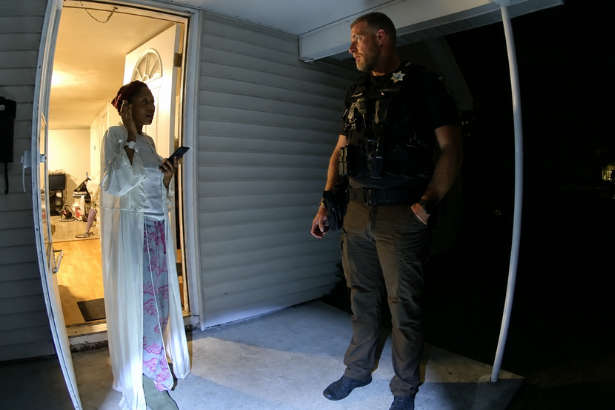
The case began on July 6, 2024, when Sonya Massey, a 36-year-old Black woman, called 911 to report a possible prowler outside her home near Springfield, Illinois.
Grayson and another Sangamon County sheriff’s deputy responded.
Body-camera footage from the encounter later became central to the criminal case. The footage showed Grayson confronting Massey inside her home before shooting her. Massey died from a gunshot wound.
The shooting received national attention after Illinois State Police released the body-camera video. The footage prompted protests and renewed debate over police use of force, particularly during calls involving people experiencing behavioral health crises.
Grayson was fired following the shooting and initially faced a first-degree murder charge.
His defense argued that he believed Massey posed a threat. Prosecutors argued that the shooting was unjustified.
A jury ultimately convicted Grayson of the lesser charge of second-degree murder in October 2025. He was sentenced in January 2026 to the maximum 20-year prison term, followed by two years of mandatory supervised release.
Latest Update: Sean Grayson Dies in Prison
The latest development is Grayson’s death while incarcerated.
According to the Associated Press, Grayson’s attorney confirmed the death but declined to provide additional details. Grayson was six months into his 20-year sentence.
The timing is significant because Grayson’s health had become part of the legal story surrounding his incarceration.
His attorneys said at sentencing that he had been diagnosed with colon cancer before Massey’s killing and that the disease had spread to his liver and lungs. In May 2026, Grayson sought medical release under an Illinois law allowing certain incarcerated people with terminal illnesses or serious medical conditions to seek release. The Illinois Prisoner Review Board rejected that request in July.
The medical-release decision had already attracted attention because of Grayson’s age and the severity of his illness.
His death now closes one part of that legal dispute, although it does not erase the criminal conviction or the broader policy questions that emerged from the Massey case.
USA TODAY’s report on Sean Grayson’s death
What Happened to Sonya Massey?
Massey’s death remains the central fact of the case.
She had called 911 seeking assistance with a possible prowler. The responding deputies entered her home and interacted with her in the kitchen.
According to trial evidence summarized by the Associated Press and NPR, Massey was holding a pot of hot water when the confrontation escalated. She told the deputies, “I rebuke you in the name of Jesus.” Grayson interpreted the statement and her movements as threatening.
The other responding deputy, Dawson Farley, later testified that he did not consider Massey a threat and that he drew his weapon only after Grayson did.
Body-camera footage became a critical piece of evidence because it provided a record of the encounter and the moments immediately preceding the shooting.
The case raised difficult questions about threat perception, police decision-making, training and how officers respond to people experiencing mental or behavioral health difficulties.
NPR’s report on Grayson’s death and the Massey case
Expert Insights and Analysis
The significance of the case extends beyond the conviction itself.
A 911 Call Became a National Police-Accountability Case
Massey’s death became part of a broader national discussion about what happens when police respond to calls involving people in potentially vulnerable or unstable situations.
The Justice Department later opened a civil-rights investigation connected to the case. According to NPR’s reporting, the resulting agreement required changes involving law-enforcement training and emergency response, including additional training for interactions with people with behavioral health disabilities and development of a mobile crisis response program.
That means the consequences of the case are not limited to the courtroom.
The incident influenced policy discussions about how agencies recruit officers, evaluate previous employment records and prepare personnel for crisis calls.
The Conviction Was Not the End of the Story
Grayson’s conviction resolved the criminal question of his culpability under the jury’s verdict, but the case continued to generate policy consequences.
Illinois lawmakers passed the Sonya Massey Act, which requires law-enforcement agencies to conduct closer reviews of an applicant’s previous employment records before hiring officers.
That legislative response reflects one of the most important themes of the case: police accountability can involve not only what happens during an encounter, but also how officers are recruited, vetted, trained and supervised before they ever respond to a call.
Broader Implications
For Police Hiring and Background Checks
The Massey case intensified scrutiny of how law-enforcement agencies evaluate applicants.
The Sonya Massey Act represents a legislative attempt to address that issue by requiring agencies to look more closely at employment history.
The broader question is straightforward: if an officer has a problematic history at a previous agency, how effectively can information about that history follow the officer to the next department?
The legislation seeks to make that process harder to overlook.
For Crisis Response
Another consequence involves how police departments respond to calls involving behavioral health concerns.
The Justice Department agreement described by NPR included additional training and a mobile crisis response program. That reflects a growing recognition that not every emergency call requires the same response model.
The challenge is building systems that can distinguish between situations requiring an armed law-enforcement response and situations where medical, behavioral-health or specialized crisis professionals may be better positioned to intervene.
For Digital Evidence
The case also illustrates the growing importance of body-camera footage in public accountability.
The video from the Massey shooting became central to public understanding of what happened. It allowed journalists, investigators, attorneys and the public to examine an encounter that might otherwise have been understood largely through competing accounts.
That does not make video automatically self-explanatory. Context, testimony and forensic evidence remain essential.
But body cameras have fundamentally changed the information environment surrounding police encounters.
For a technology publication, that is one of the most significant aspects of the story. Digital evidence is increasingly becoming part of the infrastructure through which society evaluates government power and public safety.
For more reporting on technology’s impact on society, data and public institutions, readers can explore The Tech Marketer.
Related History and Comparable Cases
The Massey case emerged during a period of intense national scrutiny of police shootings involving Black Americans.
What made it particularly powerful was the combination of several factors: a 911 call for help, the shooting inside the caller’s own home, publicly released body-camera footage and a subsequent criminal trial.
The video also became a major source of public information because it allowed viewers to see portions of the encounter rather than relying exclusively on official statements.
That dynamic has appeared repeatedly in high-profile police cases over the past decade.
The technology does not eliminate disagreement over what footage means. Instead, it changes the evidentiary landscape by creating a record that can be independently examined.
The Medical Release Controversy
Grayson’s deteriorating health became a separate issue from the underlying criminal conviction.
Illinois law permits certain incarcerated people with terminal illnesses or serious medical conditions to seek release under specific circumstances. Grayson pursued that option after his cancer had progressed.
The Illinois Prisoner Review Board denied his request in July 2026. NPR and AP reporting indicate that the board’s decision came only weeks before his death.
That sequence has naturally generated questions about the medical-release process.
However, it is important to distinguish questions raised by the timing from claims about what caused Grayson’s death or whether his medical treatment was inadequate. The available reporting does not establish those conclusions.
What Happens Next
There is unlikely to be another criminal proceeding against Grayson following his death.
The larger consequences of the Massey case, however, continue.
The Sonya Massey Act remains part of Illinois’ law-enforcement framework, while reforms stemming from the Justice Department’s civil-rights investigation address training and crisis response in Sangamon County.
For the Massey family, Grayson’s death also represents an emotionally complicated moment.
According to reporting from PEOPLE, attorneys for the family said his death does not erase the trauma caused by Massey’s killing.
That distinction is important. The current news cycle is about Grayson’s death, but the underlying story remains the death of Sonya Massey and the institutional questions that followed.
Why Sean Grayson Is Trending on Google
The supplied Google Trends screenshot shows a sharp rise in searches for Sean Grayson over the past 24 hours.
The related searches provide a revealing snapshot of public interest:
- Sonya Massey
- Sonya Massey shooting
- Sean Grayson Sonya Massey
- Sean Grayson cancer
- Sonya Massey officer
- Sean Grayson cause of death
- How did Sean Grayson pass away?
The pattern suggests that users are searching for both the immediate news and the backstory.
Some searches focus on Grayson’s death. Others seek information about Massey, the shooting, his cancer diagnosis and the circumstances surrounding his imprisonment.
This is exactly the kind of search spike that turns a developing news story into a rapidly expanding information ecosystem.
For publishers, it also creates a responsibility to keep the headline accurate. The available reporting confirms Grayson’s death, his conviction and his cancer diagnosis. It does not establish that cancer was definitively the cause of death.
Conclusion
Sean Grayson has died at 32 while serving a 20-year sentence for second-degree murder in the killing of Sonya Massey.
His death comes only months into his imprisonment and weeks after Illinois officials rejected his request for medical release. His attorney confirmed the death, but no official cause has been publicly established.
The case will continue to be remembered for much more than Grayson’s final months.
Massey’s 911 call, the body-camera footage, the criminal trial and the subsequent policy response exposed difficult questions about police use of force, officer hiring, crisis intervention and accountability.
Illinois’ Sonya Massey Act and the Justice Department’s subsequent reforms show that the consequences of the case reached beyond one courtroom.
And as the Google Trends spike demonstrates, the public is still trying to understand what happened.
The latest headline may be about Grayson’s death. The larger story remains about Sonya Massey and the institutional changes her death helped set in motion.
FAQ
What happened to Sean Grayson?
Sean Grayson, the former Sangamon County sheriff’s deputy convicted in the killing of Sonya Massey, died in prison on August 23, 2026, while serving a 20-year sentence. His attorney confirmed the death.
How old was Sean Grayson when he died?
Sean Grayson was 32 years old when he died.
What was Sean Grayson convicted of?
Grayson was convicted of second-degree murder in October 2025 for the fatal shooting of Sonya Massey. He was sentenced to 20 years in prison in January 2026.
What happened to Sonya Massey?
Sonya Massey, 36, was fatally shot inside her Springfield-area home on July 6, 2024, after she called 911 to report a possible prowler. Grayson and another deputy responded to the call.
Did Sean Grayson have cancer?
Yes. Grayson’s attorneys said he had colon cancer that had progressed and spread to his liver and lungs. He sought medical release from prison in 2026, but the Illinois Prisoner Review Board denied the request.
What was Sean Grayson’s cause of death?
An official cause of death has not been publicly confirmed in the reporting available at publication. Although Grayson had advanced colon cancer, it has not been established that cancer directly caused his death.
What is the Sonya Massey Act?
The Sonya Massey Act is Illinois legislation requiring law-enforcement agencies to more closely review an applicant’s previous employment records when considering them for hiring.
Why is Sean Grayson trending on Google?
The supplied Google Trends screenshot shows a sharp increase in searches following news of his death. Related searches include Sonya Massey, the shooting, Grayson’s cancer diagnosis and questions about his cause of death.
Sources & References
- USA TODAY: “Ex-deputy convicted in Sonya Massey killing dies in prison”
- NPR: “Sean Grayson, former deputy convicted of killing Sonya Massey, dies in prison”
- NBC News: “Sean Grayson, ex-deputy convicted of fatally shooting Sonya Massey, dies in prison”
- Associated Press: “Sean Grayson, former Illinois deputy convicted of killing Sonya Massey, dies in prison”
- CBS Chicago: “Sean Grayson, former Sangamon County deputy convicted in killing of Sonya Massey, dies in prison”