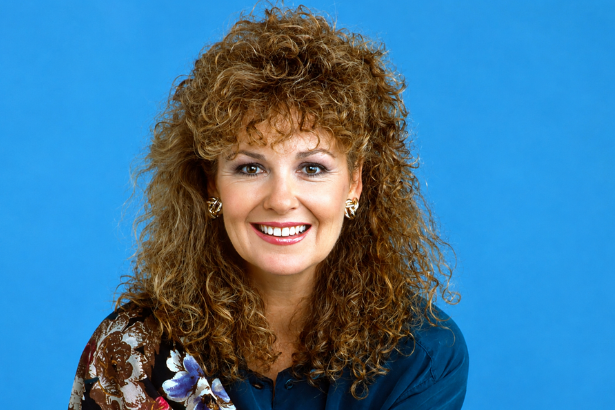
The longtime television actress and singer died in Los Angeles on August 22, leaving behind a career that stretched from childhood television to one of the most recognizable sitcoms of the late 20th century.
Shelley Fabares has died at 82, according to her family and reporting from PEOPLE and The Associated Press. Fabares died Saturday, August 22, in Los Angeles, surrounded by loved ones, her family said. No cause of death was given.
Her death immediately sent searches for her name sharply higher, reflected in the Google Trends screenshot supplied for this story. Searches connected to Fabares included “Johnny Angel,” “The Donna Reed Show,” “Coach,” Mike Farrell and other parts of her decades-long career.
For audiences who grew up with classic American television, however, Fabares was more than a trending search. She was a rare performer whose career crossed several generations of television, film and music.
Background and Context
Fabares was born in Santa Monica, California, in 1944 and entered show business as a child. PEOPLE reports that her mother put her into modeling when she was 3, and Fabares made her television debut at 10. AP similarly traces her early television work to appearances beginning in the 1950s.
Her breakthrough came in 1958, when she joined The Donna Reed Show as Mary Stone, the teenage daughter of Donna Reed’s character. The role turned Fabares into a familiar face for American television viewers.
She later remembered Reed as an important influence on her life and career. PEOPLE reports that Fabares described Reed as a role model who helped her navigate the pressures of working in Hollywood as a teenager.
The show also unexpectedly opened another door.
Fabares began recording music during her time on the series, eventually releasing “Johnny Angel.” The song reached No. 1 on the Billboard Hot 100 in 1962, giving Fabares a second identity as a pop performer. She released four albums during her recording career.
Latest Update: Shelley Fabares Dies at 82
The news of Fabares’ death was confirmed by her family in a statement provided to PEOPLE and The Associated Press.
Her family described her as a source of love, strength, laughter and comfort and said her greatest legacy was the personal impact she had on the people around her.
The family said Fabares died in Los Angeles surrounded by loved ones. AP reported that no cause of death was provided.
That distinction matters because online searches can quickly turn an obituary into speculation. At the time of publication, the supplied reporting does not establish a cause of death, so claims circulating beyond those confirmed details should be treated cautiously.
Her husband, actor Mike Farrell, was among the family members mourning her death. The couple married in 1984 and remained together for more than four decades.
Read PEOPLE’s full report on Shelley Fabares
Expert Insights and Career Analysis
Fabares’ career is unusual because it did not simply follow the typical path of a television star.
She began as a child performer, became a household name on a family sitcom, briefly became a chart-topping recording artist, appeared opposite Elvis Presley in three movies, and later reinvented herself as an established adult television actress.
That longevity is arguably the most important part of her story.
From Mary Stone to Pop Star
Fabares’ role on The Donna Reed Show made her famous, but “Johnny Angel” turned that fame into something bigger.
The song became a No. 1 hit in 1962. According to PEOPLE, Fabares later said she was stunned by the success because she never considered herself a singer.
That moment captures something distinctive about early television celebrity. A successful sitcom could become a launchpad into music, movies and merchandising, creating stars who crossed multiple parts of the entertainment industry.
Fabares was one of them.
Three Elvis Presley Movies
Her film career also included three appearances opposite Elvis Presley.
Fabares appeared in:
- Girl Happy in 1965
- Spinout in 1966
- Clambake in 1967
AP and PEOPLE both identify the three Presley films as an important part of her career.
Those movies helped keep her visible as she transitioned away from the teenage television role that had initially made her famous.
The Second Act: Coach
For a later generation of television viewers, Fabares became best known as Christine Armstrong on Coach.
The sitcom premiered in 1989, with Fabares appearing opposite Craig T. Nelson. Her character was an ambitious professional whose relationship with Nelson’s Hayden Fox became one of the show’s central storylines.
The show did not become an instant success.
PEOPLE reports that its first season struggled before NBC moved it behind Roseanne, where its audience expanded significantly. Fabares ultimately received two Emmy nominations for her work on the series.
That turnaround mirrors Fabares’ career more broadly. She repeatedly found ways to remain relevant after the role that originally made her famous had faded.
Broader Implications
Why Shelley Fabares Is Trending Now
The Google Trends screenshot supplied with this article shows a dramatic spike in searches for “Shelley Fabares.”
The associated search terms provide a useful snapshot of what audiences want to know immediately after a celebrity death. Searches are not limited to the death itself. They connect the person with familiar cultural reference points:
- “Johnny Angel”
- “The Donna Reed Show”
- “Coach”
- Mike Farrell
- Shelley Fabares cause of death
- Her film and television career
That pattern is typical of modern digital remembrance. A single breaking-news event sends people backward through an entire career.
Instead of discovering Fabares through one television rerun or one song, today’s audiences can jump between clips, biographies, news reports, streaming catalogs and historical archives within minutes.
For publishers, that creates an important editorial challenge. Search demand rewards speed, but obituary coverage still requires restraint. The strongest stories distinguish confirmed information from speculation and give readers meaningful context instead of simply repeating the headline.
The Digital Afterlife of Classic Television
Fabares’ death also illustrates how the internet has changed the way older entertainment is rediscovered.
A performer from the 1950s or 1960s can suddenly become a trending topic among people who were not alive when their biggest performances aired.
That is partly because television history is now searchable.
A viewer who sees “Johnny Angel” mentioned in a breaking-news report can immediately look up the song. Someone who knows Fabares from Coach can discover that the same actress had already been a major star decades earlier.
In that sense, search engines and streaming platforms have turned entertainment history into an enormous searchable archive.
For more coverage of the technology, media and digital culture shaping how audiences discover information, readers can explore The Tech Marketer.
Related History and Comparable Television Careers
Fabares belongs to a generation of performers who grew up inside the television industry as the medium was becoming central to American popular culture.
Her career shares a recognizable pattern with other child performers of the era: early exposure, enormous visibility, periods of professional uncertainty and eventual reinvention.
Fabares herself acknowledged that the entertainment business was not consistently stable. PEOPLE reports that she described periods when she struggled to find work and other stretches when guest appearances were the only opportunities available.
Her eventual success on Coach therefore matters.
It showed that her identity was not permanently tied to Mary Stone from The Donna Reed Show. She could return to television decades later and become part of another successful sitcom.
That kind of career longevity is increasingly unusual in an entertainment industry driven by rapidly changing platforms and shorter attention cycles.
Personal Life and Advocacy
Fabares’ personal life also became intertwined with causes that mattered deeply to her.
Her mother experienced Alzheimer’s disease, and Fabares became involved in Alzheimer’s advocacy and fundraising. PEOPLE reports that she described her work with the Alzheimer’s Association as one of the most rewarding experiences of her life.
She also faced a serious health crisis herself.
AP reports that in 1999, an emergency-room visit connected to an esophageal bleed revealed progressive liver failure. After spending 22 months on a transplant waiting list, Fabares underwent liver transplant surgery in October 2000.
The experience became another defining chapter in her life, alongside her marriage to Mike Farrell and her work away from the screen.
What Happens Next
The immediate aftermath of Fabares’ death will likely bring renewed attention to her most recognizable work.
Her performances on The Donna Reed Show and Coach are likely to generate fresh searches, clips and retrospective coverage. “Johnny Angel” is also likely to experience another wave of discovery as people encounter the song for the first time.
The Google Trends spike shown in the supplied screenshot is already evidence of that process.
For younger audiences, the most interesting part may be the discovery that one person could occupy so many corners of entertainment history.
Fabares was a television child star, a No. 1 recording artist, an Elvis Presley co-star and a later-generation sitcom favorite. Those chapters are usually separated across different performers. In her case, they belonged to one career.
Conclusion
Shelley Fabares leaves behind a career that is unusually easy to trace through the evolution of American popular culture.
She entered television as a child, became Mary Stone on The Donna Reed Show, reached No. 1 with “Johnny Angel,” appeared alongside Elvis Presley, endured difficult periods between roles and eventually found another defining television character in Coach.
Her death at 82 has prompted a new generation of searches, but the interest is not simply about a celebrity obituary.
It is a reminder of how much entertainment history can be contained within one career.
Fabares was part of the early television era, the 1960s pop explosion, Hollywood’s Elvis years and the sitcom revival of the late 1980s and 1990s. Now, through search engines and digital archives, those chapters are being rediscovered by audiences who never watched them when they first aired.
Her work remains the reason people are searching.
FAQ
What happened to Shelley Fabares?
Shelley Fabares died in Los Angeles on August 22, 2026, at age 82, according to her family and The Associated Press. No cause of death was provided.
How old was Shelley Fabares when she died?
Shelley Fabares was 82 years old when she died.
What was Shelley Fabares best known for?
She was best known for playing Mary Stone on The Donna Reed Show and Christine Armstrong on Coach. She also had a successful recording career and appeared in three Elvis Presley movies.
Was Shelley Fabares the singer of “Johnny Angel”?
Yes. Fabares recorded “Johnny Angel,” which reached No. 1 on the Billboard Hot 100 in 1962.
Who was Shelley Fabares married to?
Fabares was married to actor Mike Farrell from 1984 until her death. She had previously been married to music producer Lou Adler.
What movies did Shelley Fabares make with Elvis Presley?
Fabares appeared with Elvis Presley in Girl Happy, Spinout and Clambake.
What role did Shelley Fabares play on Coach?
Fabares played Christine Armstrong on Coach, opposite Craig T. Nelson’s character Hayden Fox. The role earned her two Emmy nominations.
What was Shelley Fabares’ cause of death?
The family and AP reporting available at publication did not give a cause of death. Claims about a specific cause should therefore not be presented as confirmed.