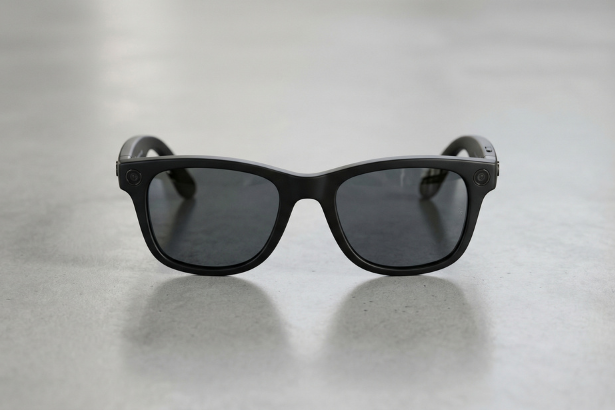
As wearable AI enters the mainstream, Ray-Ban Meta smart glasses are forcing a reckoning over surveillance, consent, and social boundaries.
Introduction
Ray-Ban Meta smart glasses are quickly becoming one of the most visible consumer AI devices on the market. The sleek eyewear, developed by Meta in partnership with EssilorLuxottica, blends fashion with always-on cameras and AI features. As adoption accelerates, concerns about privacy, surveillance, and shifting social norms are growing just as fast.
Background and Context
Smart glasses have been a long-standing ambition in Silicon Valley. Google Glass attempted to pioneer the category in 2013 but failed after widespread backlash over privacy concerns and unclear real-world use.
Meta has taken a different approach. Instead of futuristic hardware, the company embedded its technology into familiar Ray-Ban designs. The result is a device that looks like standard eyewear but includes:
- Built-in cameras for photos and video
- Open-ear speakers for audio
- Voice-controlled AI assistant features
- Livestreaming capabilities
This design strategy has made the product more socially acceptable. At the same time, it introduces a new challenge. The technology is less visible, which makes its presence harder to detect in everyday interactions.
Latest Update or News Breakdown
According to WIRED’s reporting in The Rise of the Ray-Ban Meta Creep (https://www.wired.com/story/the-rise-of-the-ray-ban-meta-creep/), the growing popularity of these glasses is already changing how people behave in public.
Users are increasingly recording moments without clearly signaling it. In some situations, individuals wearing the glasses capture conversations or interactions in public and semi-private settings without explicit consent. The LED indicator designed to signal recording is small and easy to overlook.
The report points to a subtle but important shift. People are starting to question whether they are being recorded during normal interactions. This mirrors early smartphone anxiety but feels more invasive because the recording device sits directly on a person’s face and blends into everyday fashion.
Meta maintains that the glasses are built for creativity and convenience. Critics argue that normalizing face-level cameras introduces risks that current social norms and legal frameworks are not prepared to handle.
Expert Insights or Analysis
Privacy experts describe devices like Ray-Ban Meta smart glasses as part of a broader move toward ambient computing. Technology is becoming less visible while gaining more capability.
The concern is behavioral as much as technical. When recording becomes frictionless, people are more likely to capture moments without thinking about consent. The barrier that once existed with smartphones is reduced significantly.
There is also a psychological impact. Individuals adjust their behavior when they know they are being recorded. With smart glasses, that awareness becomes inconsistent. This creates uncertainty in social settings.
The integration of AI deepens the issue. Future versions could analyze faces, environments, and conversations in real time. That raises questions about biometric data, ownership of recorded content, and how long that data is stored.
Broader Implications
For Consumer Technology
Ray-Ban Meta smart glasses show that wearable AI is moving into the mainstream. Devices are becoming more integrated into daily life, blending hardware with real-world environments.
For more on how AI hardware is evolving, see https://thetechmarketer.com/category/artificial-intelligence/.
For Privacy Norms
The shift here is cultural. Smartphones made recording common, but they are still visible tools. Smart glasses remove that signal.
This may lead to:
- New expectations around consent
- Demand for clearer recording indicators
- Social pushback similar to early reactions to Google Glass
For Regulation
Existing privacy laws were not designed for always-on wearable cameras. Regulators may need to revisit frameworks to address this shift.
Areas likely to be debated include:
- Disclosure requirements for recording
- Restrictions in sensitive environments
- Rules around storage and use of captured data
Related History or Comparable Technologies
Google Glass remains the closest historical comparison. It failed largely because of social rejection rather than technical limitations. Public discomfort led to bans in bars, theaters, and other venues.
Snap Spectacles offered a lighter version focused on social media. While less controversial, they never achieved widespread adoption.
Ray-Ban Meta smart glasses sit between these examples. They combine stronger functionality with a design that people are more willing to wear. That balance could determine whether they succeed long term.
What Happens Next
The next phase will likely focus on deeper AI integration. Meta is positioning these glasses as a gateway to its broader AI ecosystem.
Future capabilities could include:
- Real-time translation
- Visual recognition
- Context-aware assistance
Public response will shape adoption. As more people encounter these devices, social norms will either adapt or push back against them.
Conclusion
Ray-Ban Meta smart glasses are not just another consumer gadget. They represent a shift in how technology interacts with the real world.
Users gain seamless tools for capturing and sharing experiences. At the same time, bystanders lose clear signals about when they are being recorded.
This tension sits at the center of ambient computing. As technology becomes less visible, its impact becomes harder to ignore.
FAQ
What are Ray-Ban Meta smart glasses?
Ray-Ban Meta smart glasses are wearable devices that combine traditional eyewear with cameras, speakers, and AI features. They allow users to take photos, record video, and interact with voice assistants hands-free.
Why are Ray-Ban Meta smart glasses controversial?
Ray-Ban Meta smart glasses raise privacy concerns because their cameras are discreet. People may be recorded without realizing it, which creates uncertainty in social situations.
Do Ray-Ban Meta smart glasses record all the time?
No. Recording is user-activated through a button or voice command. However, the ease of activation makes spontaneous recording more likely.
How do Ray-Ban Meta smart glasses indicate recording?
The glasses include a small LED light that turns on during recording. Critics argue that it is not noticeable enough in many real-world situations.
Will Ray-Ban Meta smart glasses become widely adopted?
Adoption is increasing due to their familiar design and useful features. Long-term success will depend on how privacy concerns are addressed by both companies and regulators.
Sources & References
- WIRED, The Rise of the Ray-Ban Meta Creep
https://www.wired.com/story/the-rise-of-the-ray-ban-meta-creep/ - The Verge, Meta’s smart glasses strategy explained
https://www.theverge.com/ - TechCrunch, Meta doubles down on wearable AI
https://techcrunch.com/