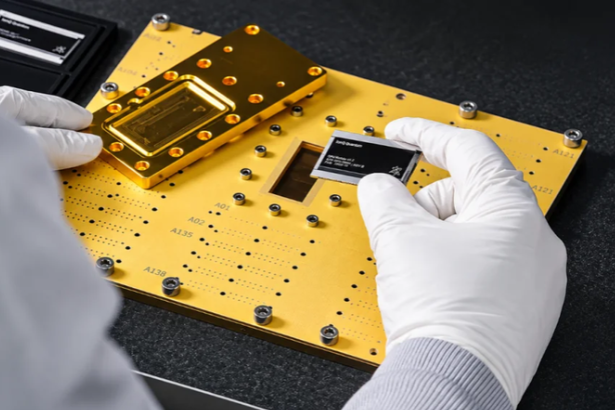
IBM quantum computing is entering an important new phase as the company prepares to scale its Nighthawk processor architecture beyond 1,000 qubits.
On November 11, 2026, IBM announced Nighthawk R3, a next-generation quantum processor designed to execute circuits involving 10,000 quantum operations across 520 programmable qubits.
The announcement is particularly significant because IBM is not stopping at a single processor.
The company plans to connect two Nighthawk R3 processors into one 1,040-qubit system during 2027, using specialized chip-to-chip connections known as l-couplers.
The development represents another step toward building quantum computers capable of solving increasingly complex computational problems.
IBM is also working toward a much larger milestone: Starling, its planned fault-tolerant quantum computer targeted for 2029.
The announcement comes as quantum computing attracts growing attention from technology companies, governments, researchers and investors.
For IBM, the challenge is no longer simply demonstrating that quantum processors can perform impressive calculations. It is proving that these systems can deliver reliable, repeatable and commercially valuable results.
That distinction will determine how quickly quantum computing moves from research laboratories into real-world applications.
Background and Context: Why IBM Is Investing So Heavily in Quantum Computing
IBM Quantum System Two: the era of quantum utility is here | IBM Quantum Computing Blog
IBM has been developing quantum computing technology for years, positioning itself as one of the major companies building commercially accessible quantum hardware and software.
Unlike conventional computers, which process information using bits represented by zeroes and ones, quantum computers use quantum bits, commonly called qubits.
Qubits can exploit quantum phenomena such as superposition and entanglement to perform certain computational tasks in fundamentally different ways.
This creates opportunities for tackling specific problems that are difficult for conventional computers.
Potential applications include:
- Molecular and chemical simulation.
- Materials discovery.
- Pharmaceutical research.
- Complex optimization.
- Financial modeling.
- Energy system development.
- Advanced scientific computing.
However, building a useful quantum computer remains extraordinarily difficult.
Qubits are sensitive to environmental disturbances, and errors can accumulate during computation.
The industry therefore needs more than a large number of physical qubits. It needs reliable processors, effective error correction and systems capable of executing complex computations without losing accuracy.
This is the challenge IBM’s Nighthawk and Starling roadmaps are designed to address.
In June 2026, IBM also announced plans to invest more than $10 billion in quantum computing over five years, covering research, development, manufacturing, acquisitions and ecosystem expansion. IBM Newsroom+1
Latest Update: IBM Unveils Nighthawk R3 Quantum Processor
Scaling for quantum advantage and beyond | IBM Quantum Computing Blog
IBM’s November 11 announcement introduced Nighthawk R3 as its next-generation quantum processor.
According to the official IBM announcement, the new processor is designed to execute 10,000 quantum operations across 520 programmable qubits.
That is a significant increase from the current Nighthawk R2 generation, which supports 120 programmable qubits.
IBM Nighthawk R3: Key specifications
| Specification | Nighthawk R3 |
|---|---|
| Programmable qubits | 520 |
| Physical qubits | 2,034 |
| Designed quantum operations | 10,000 |
| Chip-to-chip interconnects | 10 l-couplers |
| Planned interconnected system | 1,040 programmable qubits |
| Target for interconnected system | 2027 |
Source: IBM’s November 11, 2026 announcement. The 1,040-qubit configuration is a planned system combining two processors, not a single 1,040-qubit chip. IBM Newsroom+1
Three developments stand out.
First, the number of programmable qubits increases substantially.
Nighthawk R3 is designed around 520 programmable qubits, compared with 120 on Nighthawk R2.
Second, IBM is targeting deeper quantum circuits.
The processor is designed to execute 10,000 quantum operations, allowing researchers to explore more complex computations.
Third, modular connectivity is becoming central to IBM’s strategy.
The 10 l-couplers are designed to connect processors and allow the company to scale beyond individual chips.
This third development could prove particularly important because building larger quantum systems requires more than simply manufacturing bigger processors.
IBM needs reliable ways to connect different quantum modules while maintaining the quality of quantum information.
IBM Plans a 1,040-Qubit Quantum Computer in 2027
IBM announces the world’s fastest quantum computer with 433 qubits
The most important part of IBM’s announcement is its plan to connect two Nighthawk R3 processors into a single system.
Each processor is designed with 520 programmable qubits.
Connecting two processors would create a system with 1,040 programmable qubits.
This is a major architectural step because quantum computing companies cannot rely indefinitely on simply increasing the size of individual chips.
They need modular architectures that allow multiple processors to communicate and work together.
What are l-couplers?
IBM uses the term l-couplers for specialized chip-to-chip connections designed to transfer quantum information between processor modules.
Think of them as an important part of the communication infrastructure inside a larger quantum computer.
However, quantum information is extremely delicate.
Connecting processors requires maintaining high fidelity during state transfer, meaning the system must preserve the quantum information with minimal errors.
IBM says it has already demonstrated connections between Nighthawk R1 processors using four l-couplers, achieving 99.3% quantum state transfer fidelity.
The company’s target is to improve this capability as it develops larger interconnected systems. IBM Newsroom+1
Why 1,040 qubits matters
A larger connected system could allow researchers to run more complex circuits and explore problems that are difficult to simulate using classical computers.
However, qubit count alone does not determine computational performance.
The quality of qubits, connectivity, error rates, circuit depth and error correction capabilities are equally important.
That is why IBM’s announcement emphasizes both processor size and the ability to execute 10,000 quantum operations.
The objective is to increase computational scale without sacrificing reliability.
Nighthawk R2 Already Demonstrates Significant Performance Improvements
IBM Quantum Computing | Hardware and roadmap
While Nighthawk R3 is the next step, IBM is also highlighting the performance of its existing R2 processor.
According to IBM’s Quantum Developer Conference 2026 announcement, Nighthawk R2 supports:
- 120 programmable qubits.
- More than 7,500 quantum operations.
- Up to 100,000 samples per second.
- Up to 25 times higher sampling throughput than IBM Heron.
IBM also reported that clients and partners, including E.ON, Algorithmiq and Q-CTRL, had run more than 34 billion circuits on Nighthawk R2.
Some reported workloads achieved speedups of up to 19 times compared with previous IBM quantum processors. IBM Quantum Computing Blog+1
These results demonstrate why IBM is focusing on processor performance rather than relying exclusively on headline qubit counts.
A quantum processor must produce accurate results at a useful speed before businesses can depend on it.
IBM’s quantum advantage milestone
Another important development is IBM’s claim that 2026 has become the year of quantum advantage.
Quantum advantage refers to situations where a quantum computer performs a computational task beyond the practical capabilities of classical computing methods.
IBM says researchers have achieved demonstrations in which quantum computations go beyond purely classical approaches while producing results that can be rigorously verified.
However, this does not mean quantum computers are now faster than traditional computers for every type of problem.
Quantum advantage applies to specific computational tasks, not general-purpose computing.
That distinction is important when evaluating the industry’s progress. IBM Quantum Computing Blog+1
IBM Starling: The Road to Fault-Tolerant Quantum Computing by 2029
Beyond Nighthawk R3, IBM is developing a much more ambitious quantum computing system called Starling.
The company plans to deliver Starling in 2029.
IBM’s target architecture is designed to support:
| Specification | IBM Starling target |
|---|---|
| Logical qubits | 200 |
| Quantum operations | 100 million |
| Target year | 2029 |
| Architecture | Modular and fault-tolerant |
Hardware and roadmap+1
The distinction between physical and logical qubits is particularly important.
Physical qubits are the actual quantum components manufactured in a processor.
Logical qubits are created using quantum error correction techniques that combine information across multiple physical qubits.
The purpose is to protect quantum information from errors and make calculations more reliable.
A fault-tolerant quantum computer would be capable of executing much longer and more complex computations while actively correcting errors.
This is a major requirement for commercially useful quantum computing.
Why error correction matters
Quantum computers are extremely sensitive to environmental disturbances.
Even small changes in temperature, electromagnetic interference or other external factors can introduce errors.
Without effective error correction, those errors can accumulate and compromise calculations.
IBM is working on several technologies to address this challenge:
- Improved quantum error-correcting codes.
- Faster real-time error decoding.
- Modular processor connections.
- Advanced cryogenic systems.
- Better control electronics.
Starling brings these developments together into a larger fault-tolerant architecture.
The 2027 Nighthawk R3 system is therefore an important stepping stone toward IBM’s 2029 objective.
Expert Analysis: Why IBM’s Quantum Computing Strategy Is Different
How to test a quantum computer chip – IBM Research
IBM’s approach is built around three interconnected priorities: hardware development, software integration and practical applications.
This is different from focusing exclusively on building processors with more qubits.
1. Hardware scaling through modular architecture
Connecting processors allows IBM to expand computational capacity without relying entirely on increasingly large individual chips.
The approach could improve manufacturing flexibility and make future systems easier to upgrade.
It also introduces engineering challenges involving signal transmission, quantum state fidelity and system synchronization.
The Nighthawk R3 architecture is designed to address these challenges through multiple l-couplers.
2. Combining quantum and classical computing
IBM does not expect quantum computers to replace conventional computers.
Instead, its strategy involves combining quantum processors with CPUs and GPUs.
This approach is known as quantum-centric supercomputing.
The quantum-centric supercomputing of tomorrow—today | IBM Quantum Computing Blog
In this model:
- CPUs handle general-purpose processing.
- GPUs accelerate selected classical workloads.
- Quantum processors tackle specialized computational tasks.
- Software coordinates the entire workflow.
IBM’s March 2026 blueprint for quantum-centric supercomputing describes how quantum processors can work alongside GPUs and CPUs across research centers, on-premises systems and cloud environments. IBM Newsroom
This strategy is important because many scientific problems require a combination of computational techniques.
3. Software development through Qiskit
IBM is also investing in its quantum software ecosystem.
Its Qiskit platform gives researchers and developers tools for building, executing and analyzing quantum programs.
The November 11 announcement also highlighted improvements to the IBM Quantum Platform, which integrates quantum and classical computing resources.
The company is developing managed workflows, profiling tools and other capabilities to help researchers run larger hybrid workloads.
These tools could help lower the barrier to entry for organizations interested in exploring quantum computing.
4. Moving from research to commercial applications
IBM’s ultimate objective is to make quantum computing useful in real industries.
The company highlighted 39 active or completed client projects in 2026, involving areas such as chemistry, materials science, energy and finance.
One example involved IBM, Cleveland Clinic and RIKEN researching protein-ligand interactions using quantum-classical workflows.
IBM reported that the project generated 1.75 billion samples in 139 hours while studying complexes involving up to 12,635 atoms. IBM Quantum Computing Blog
These projects demonstrate how quantum computing research is beginning to explore more practical applications.
However, the commercial value of these workloads still needs to be demonstrated through measurable improvements over existing classical approaches.
IBM Quantum Computing vs Traditional Computing
Quantum computers are not designed to replace laptops, smartphones or conventional enterprise servers.
They are specialized systems that could offer advantages for certain computational tasks.
| Feature | Classical computing | Quantum computing |
|---|---|---|
| Basic information unit | Bit | Qubit |
| Information states | 0 or 1 | Quantum superposition of states |
| Main hardware | CPUs and GPUs | Quantum processors |
| Error management | Conventional error detection and correction | Quantum error correction |
| Best applications | General computing | Specialized computational problems |
| Current maturity | Commercially established | Emerging technology |
| Infrastructure | Standard semiconductor systems | Specialized quantum hardware and cryogenics |
The biggest opportunity lies in combining the strengths of both systems.
Quantum computing could eventually accelerate selected scientific and industrial workloads, while classical systems continue handling the majority of everyday computing tasks.
Broader Implications: Which Industries Could Benefit From IBM Quantum Computing?
The commercial potential of quantum computing extends across several industries.
IBM’s strategy is particularly focused on areas where conventional computational approaches face significant complexity.
Chemistry AI Simulation Breakthroughs in High-Pressure Modeling – AI CERTs News
1. Pharmaceuticals and drug discovery
Quantum computers could help researchers simulate molecular interactions and investigate complex chemical structures, potentially supporting new approaches to drug discovery.
US awards $500 million to SandboxAQ for chipmaking materials research | Domain-b.com
2. Materials science
Researchers could investigate advanced materials, catalysts and chemical properties that are difficult to model accurately using classical methods.
Experienced roles Quant Research EU | IMC Trading
3. Financial services
Quantum algorithms may eventually support selected portfolio optimization, risk analysis and complex financial modeling applications.
The carbon footprint of electric vehicles: A comprehensive analysis.
4. Energy and battery technology
Quantum simulations could help researchers understand battery chemistry, materials performance and selected energy optimization problems.
5. Manufacturing and industrial optimization
Potential applications include complex scheduling, logistics optimization, manufacturing processes and materials research.
These are potential application areas rather than guarantees of near-term commercial deployment.
The technology must demonstrate reliable advantages over classical alternatives before companies can justify large-scale adoption.
IBM Stock: Could the Quantum Computing Breakthrough Become a Market Catalyst?
IBM Stock Analysis: Is $265 a Strong Buy or the Calm Before a Pullback?
IBM’s quantum computing announcement also matters to investors following IBM stock (NYSE: IBM).
Quantum computing represents a potential long-term growth opportunity for the company, complementing its established enterprise software, consulting, infrastructure and AI businesses.
The Nighthawk R3 announcement could strengthen IBM’s position in the emerging quantum computing market.
However, investors should distinguish between technological progress and immediate financial performance.
A more powerful quantum processor does not automatically translate into higher quarterly revenue or earnings.
Why investors may be interested
There are several reasons the announcement could strengthen IBM’s long-term technology narrative:
- Competitive positioning: IBM is expanding its quantum hardware capabilities.
- Enterprise partnerships: The company is working with businesses and research institutions.
- Software ecosystem: Qiskit and IBM Quantum Platform provide opportunities to attract developers and organizations.
- Long-term investment: IBM has committed more than $10 billion to quantum computing over five years.
- Commercial applications: Progress in chemistry, materials science and scientific computing could create future enterprise opportunities.
What investors should watch
| Investment factor | Why it matters |
|---|---|
| Quantum commercialization | Determines whether research becomes recurring revenue |
| Enterprise adoption | Shows whether customers are willing to pay |
| R&D expenditure | Influences long-term investment requirements |
| Competitive progress | Measures IBM’s position against rivals |
| Quantum error correction | Determines whether useful large-scale systems become feasible |
| Software adoption | Indicates the strength of IBM’s developer ecosystem |
IBM’s quantum business should therefore be viewed as a long-term strategic opportunity rather than a standalone reason to buy the stock.
Related History: IBM’s Quantum Computing Roadmap From Nighthawk to Starling
IBM’s quantum development strategy has evolved through several generations of hardware.
IBM Quantum Computing | Hardware and roadmap
6
| Generation | Main development |
|---|---|
| Heron | Improved quantum processor performance and error characteristics |
| Loon | New architecture supporting advances in quantum error correction |
| Nighthawk R2 | 120 programmable qubits and circuits exceeding 7,500 operations |
| Nighthawk R3 | 520 programmable qubits and 10,000 planned quantum operations |
| Connected Nighthawk R3 | Planned 1,040-qubit system in 2027 |
| Starling | Planned fault-tolerant system with 200 logical qubits in 2029 |
IBM’s roadmap demonstrates a deliberate progression.
The company is working to increase processor performance, improve connections between modules and develop the error correction required for larger systems.
The long-term goal is not simply to manufacture the world’s largest quantum chip.
It is to build a computer capable of performing useful, reliable calculations at a scale that conventional systems cannot practically match. IBM Quantum Computing Blog+1
What Happens Next? Key IBM Quantum Computing Milestones
The next several years will be important for IBM’s quantum ambitions.
- November 2026: Nighthawk R3 announcementIBM introduces its next-generation processor, designed for 520 programmable qubits and 10,000 quantum operations.
- 2027: 1,040-qubit connected systemIBM plans to connect two Nighthawk R3 processors into one larger quantum computing system.
- 2027: Backend V3 and platform integrationIBM plans to introduce an improved backend interface for expressing complete quantum programs and integrating classical and quantum workloads.
- 2028: Further scalingIBM’s development roadmap includes additional progress toward larger quantum systems, error correction and more complex quantum operations.
- 2029: IBM Quantum StarlingIBM targets the delivery of its first large-scale fault-tolerant quantum computer, designed for 200 logical qubits and 100 million quantum operations.
These are IBM’s development targets, not guaranteed delivery dates. The company explicitly notes that its roadmap reflects current intentions and may change. IBM Technology Atlas+2
Conclusion: IBM Is Moving Quantum Computing Closer to Practical Applications
IBM’s Nighthawk R3 announcement is an important development in the race to build commercially useful quantum computers.
The new processor is designed to support 520 programmable qubits and 10,000 quantum operations, while the company’s 2027 plan aims to connect two processors into a 1,040-qubit system.
But the bigger story is IBM’s progress toward fault-tolerant quantum computing.
The company is developing the hardware, software, modular connections and error correction technologies needed to build its planned Starling system in 2029.
The commercial opportunity could eventually extend across pharmaceuticals, materials science, energy, finance and advanced manufacturing.
Still, significant technical and economic challenges remain.
For investors, IBM’s quantum computing strategy offers an interesting long-term growth opportunity, but the technology should not be confused with an immediate earnings catalyst.
The real milestone will be proving that larger quantum systems can consistently solve commercially valuable problems that conventional computers cannot efficiently handle.
IBM is making progress toward that goal. The next major test arrives in 2027.
Frequently Asked Questions
1. What is IBM’s Nighthawk R3 quantum processor?
Nighthawk R3 is IBM’s next-generation quantum processor announced on November 11, 2026. It is designed to execute 10,000 quantum operations across 520 programmable qubits.
2. Will IBM build a 1,040-qubit quantum computer in 2027?
IBM plans to connect two Nighthawk R3 processors into a single system with 1,040 programmable qubits in 2027. This is a planned interconnected system, not a single 1,040-qubit chip.
3. What is the difference between Nighthawk R2 and R3?
Nighthawk R2 supports 120 programmable qubits and more than 7,500 quantum operations. Nighthawk R3 is designed for 520 programmable qubits and 10,000 quantum operations.
4. What is IBM Quantum Starling?
Starling is IBM’s planned fault-tolerant quantum computer targeted for 2029. Its architecture is designed to support 200 logical qubits and 100 million quantum operations.
5. What are l-couplers in quantum computing?
L-couplers are specialized connections designed to transfer quantum information between processor modules. They help IBM develop larger interconnected quantum computing systems.
6. What is quantum advantage?
Quantum advantage describes a situation in which a quantum computer performs a particular computational task beyond the practical capabilities of classical computing methods. It does not mean quantum computers outperform conventional computers for every task.
7. What industries could benefit from IBM quantum computing?
Potential applications include pharmaceutical research, chemistry, materials science, financial modeling, energy systems and industrial optimization.
8. Is IBM investing heavily in quantum computing?
Yes. IBM announced plans in June 2026 to invest more than $10 billion in quantum computing over five years, including research, development, manufacturing and ecosystem expansion.
9. Is IBM quantum computing commercially available?
IBM provides access to quantum hardware and software through its IBM Quantum Platform. Researchers, developers and organizations can explore supported quantum computing resources and hybrid workflows.
10. Is IBM stock a good investment because of quantum computing?
Quantum computing could become a long-term growth opportunity for IBM, but it remains an emerging business area. Investors should also evaluate IBM’s established businesses, financial performance, valuation and broader competitive position.
Sources & References
- IBM Quantum: The Year of Advantage and What Comes Next
- IBM Newsroom: IBM Quantum Nighthawk Demonstrates New Levels of Speed and Quality, With Plans to Scale Beyond 1,000 Qubits in 2027
- IBM Technology Atlas: IBM Quantum Development Roadmap
- Barron’s: IBM Unveils Next-Gen Quantum Chip. Useful Systems Are Years, Not Decades, Away
- TradingView: IBM Plans 1,040-Qubit System in 2027 With Nighthawk R3
- IBM Newsroom: IBM Releases a New Blueprint for Quantum-Centric Supercomputing
- IBM Newsroom: IBM Commits More Than $10 Billion to Quantum Computing