Introduction
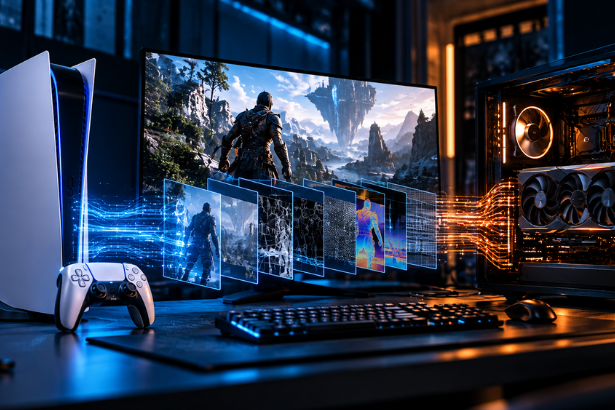
The PlayStation 5 emulator scene has reached another notable technical milestone. SharpEmu, an experimental open-source PS5 emulator, has reported six games reaching a playable 60 frames per second, while 12 of 55 tested titles have reached gameplay. The progress comes alongside continued improvements to Vulkan support and SPIR-V shader translation.
The development has pushed “PlayStation 5” sharply higher in Google Trends, with the supplied search snapshot showing a major surge during the last several hours. Current coverage from Tom’s Hardware, IMDb and TBreak is focusing on what SharpEmu’s latest build means for PS5 emulation on PC.
There is an important caveat, however. The six games reported at 60 FPS have not been tested from beginning to end, so the milestone should not be interpreted as proof of flawless full-game compatibility.
Background and Context
Console emulation is considerably more complicated than simply translating a game’s graphics into a format a PC understands.
An emulator has to reproduce enough of the target console’s hardware and operating-system behavior for software designed for that machine to operate correctly. That can involve CPU instructions, graphics APIs, memory behavior, system libraries, input handling, storage and proprietary platform functions.
The PS5 presents an interesting technical target because its CPU uses AMD’s Zen 2 x86-64 architecture. SharpEmu can therefore execute native CPU instructions on conventional x86-64 PCs rather than translating them from an entirely different instruction set. Its graphics workload still requires significant translation and compatibility work.
SharpEmu is written in C# and uses Vulkan for graphics on Windows and Linux, with MoltenVK used for its macOS implementation. The project is designed around accuracy and gradually reproducing the underlying PS5 environment rather than simply optimizing individual games.
Latest Update or News Breakdown
SharpEmu reaches six-game 60 FPS milestone
SharpEmu’s September 25 release, v0.0.4-release.2, represents the latest step in the project’s development.
According to Tom’s Hardware, 55 PS5 titles had been tested, with 12 reaching gameplay and six reaching the project’s playable 60 FPS designation.
The six titles reported in that milestone are:
- Dreaming Sarah
- Void Terrarium
- New Joe & Mac: Caveman Ninja
- Tetris Forever
- Hoa
- Tomb Raider IV-VI Remastered
TBreak independently reported the same six-game 60 FPS milestone and emphasized that none of those titles had been tested from start to finish.
Read the Tom’s Hardware report on the SharpEmu milestone
Why Vulkan and shader translation matter
One of the major technical challenges in emulation is translating instructions and graphics operations designed for one environment into operations another platform can execute.
SharpEmu’s latest build includes improvements to SPIR-V shader translation and Vulkan support. Tom’s Hardware reported that the release also included additional Vulkan extension support and CPU and graphics fixes.
Vulkan is particularly useful for a cross-platform emulator because it provides a common graphics API across supported operating systems and hardware.
Shader translation is equally important because modern games can rely on large and complicated collections of GPU shaders. Efficiently translating and executing those shaders can make the difference between a game merely launching and one running at a usable frame rate.
The “60 FPS” headline needs context
The most important qualification is the project’s definition of playable.
The six games have not been completed from start to finish under SharpEmu testing. Minor graphical or audio problems can also remain.
That makes the milestone significant as a development marker, but it does not mean six PS5 games are now guaranteed to deliver a console-quality 60 FPS experience on every compatible PC.
It also does not mean demanding modern PS5 releases are suddenly playable.
The compatibility list is changing quickly
There is another reason to be careful with the exact number.
The developer’s September 25 announcement referred to six games reaching the 60 FPS playable milestone. Subsequent reporting indicates that SharpEmu’s compatibility list had already expanded to seven titles classified as playable, with the list including games such as Castlevania Dominus Collection, Dead Cells and DOOM + DOOM II.
This means the number can change rapidly as developers update the compatibility database.
For that reason, “six games at 60 FPS” is best understood as the milestone associated with the September 25 build and reporting, rather than a permanent description of SharpEmu’s capabilities.
Expert Insights or Analysis
The significance of SharpEmu’s progress lies less in the individual games and more in what it demonstrates about the underlying emulator.
Early emulators typically spend a long time getting basic system functionality working. A game may boot, display a menu or render a few frames without being remotely playable.
Moving from that stage to sustained gameplay requires several layers of the target platform to work together.
SharpEmu’s current progress suggests that its CPU execution, system functions, graphics pipeline and shader handling have reached a point where certain less-demanding titles can operate at useful frame rates.
The distinction between those titles and demanding 3D games is critical.
A 2D or relatively lightweight game can place substantially different demands on an emulator than a large modern 3D production with complex shaders, streaming systems, sophisticated CPU workloads and extensive use of proprietary platform functionality.
TBreak specifically notes that the six-game milestone does not establish compatibility with larger or more demanding PS5 releases.
Why PS5 emulation is difficult
The PS5’s x86-64 CPU architecture removes one major translation challenge, but it does not make the platform simple to reproduce.
An emulator still has to replicate behavior expected from Sony’s hardware and software environment.
Graphics are particularly complicated. The PS5 uses a customized AMD graphics architecture, while games can depend on platform-specific APIs and system behavior.
An emulator therefore has to reproduce the expected environment closely enough that a game cannot distinguish the virtualized system from the console in ways that cause failures.
That is why improving Vulkan and shader translation can be meaningful without immediately producing broad compatibility.
Broader Implications
The rise of the PlayStation 5 emulator scene could have implications beyond a handful of games.
PC gaming compatibility
If emulation eventually becomes mature enough, PS5 software could become accessible on PC without requiring a native PC port.
But that is a long-term possibility rather than the current state of the technology.
The latest SharpEmu results demonstrate limited compatibility across a small test set, not broad PS5 support.
Preservation
Emulation also plays a role in game preservation.
As hardware generations age, maintaining access to software can become increasingly difficult. Accurate emulators can preserve older software after the original hardware becomes difficult to obtain or maintain.
The preservation argument is particularly relevant to console platforms because their software can depend on hardware-specific behavior.
Competition between emulator projects
SharpEmu is not the only PS5 emulation project making progress.
Tom’s Hardware recently reported on AnyPS5, an open-source project pursuing a different approach by converting PS5 executables for Windows and Linux rather than relying on conventional emulation. Another project, KyTyPS5, has also demonstrated progress with more demanding software.
That creates an interesting split in the technology landscape:
| Project | Approach | Current significance |
|---|---|---|
| SharpEmu | Conventional experimental emulation | Six reported 60 FPS games in September milestone |
| KyTyPS5 | PS5 emulation | Has demonstrated progress with demanding 3D software |
| AnyPS5 | Executable translation | Attempts to run PS5 software natively on Windows/Linux |
| Native PC ports | Developer-supported ports | Full optimization for PC hardware |
For more gaming and emerging technology coverage, readers can explore The Tech Marketer.
Legal considerations remain important
SharpEmu describes itself as an experimental research and educational project and says it does not include copyrighted PS5 firmware, game data or proprietary PlayStation assets.
That distinction matters.
Emulation software and copyrighted game or firmware files are separate issues. Users should follow applicable laws and use legitimately obtained software rather than assuming that an emulator itself provides unrestricted access to commercial games.
Related History or Comparable Technologies
The history of console emulation shows why today’s milestone needs to be viewed in context.
PlayStation 1 and PlayStation 2 emulators eventually achieved broad compatibility after years of development. The same process occurred with later platforms, although each generation introduced more sophisticated hardware and software challenges.
PlayStation 3 emulation was especially notable because of the complexity of its Cell architecture. Projects such as RPCS3 required years of development before many games became practical.
The PS5 presents a different problem because its x86-64 CPU architecture is closer to contemporary PC hardware. That can simplify CPU instruction execution, but the graphics architecture, operating system and platform-specific components remain substantial challenges.
The current generation also brings a much larger software stack than early consoles, making accurate emulation a long-term engineering project.
The recent appearance of multiple PS5 projects suggests that developers are now experimenting with different ways of solving those problems.
What Happens Next
SharpEmu’s next milestones will likely be measured less by raw frame rate and more by compatibility depth.
Several developments will be particularly important:
- Full-game testing: The current six-game 60 FPS result needs complete playthroughs to establish whether compatibility remains stable beyond initial gameplay.
- More demanding 3D titles: Running complex games would provide a much stronger test of the emulator’s graphics and system implementation.
- Graphics accuracy: Higher frame rates are useful only if rendering remains visually and technically consistent with the original software.
- Audio and peripheral support: Minor audio issues and other system-level problems will need continued attention.
- Vulkan development: Continued shader translation and API improvements could expand the number of games that reach usable performance.
- Cross-platform support: SharpEmu already targets Windows, Linux and macOS, creating another development challenge as compatibility expands.
- Independent testing: Community testing will provide a broader picture of how the emulator behaves across different CPUs, GPUs, operating systems and drivers.
The appearance of a seventh playable title in later compatibility reporting also shows how quickly the situation can change between releases.
Conclusion
The latest PlayStation 5 emulator milestone is significant, but its importance is easy to overstate.
SharpEmu has demonstrated that six tested titles can reach a playable 60 FPS milestone, while 12 of 55 tested games had reached gameplay in the September 25 reporting.
The technical progress is being driven in part by improvements to Vulkan support and SPIR-V shader translation, alongside broader work on CPU execution and PS5 system functionality.
At the same time, none of the six games had been verified from beginning to end, and the project remains experimental. Subsequent compatibility updates have already changed the reported playable count.
The bigger story is therefore not that a PS5 can suddenly be replaced by a gaming PC. It is that PS5 emulation has entered a phase where some software is moving from technical demonstrations into genuinely playable territory.
That is a meaningful step for emulator development, even if the road to broad PS5 compatibility remains long.
FAQ
1. What is the latest PlayStation 5 emulator milestone?
SharpEmu reported that six PS5 games had reached a playable 60 FPS milestone in its September 25 development update, with 12 of 55 tested titles reaching gameplay.
2. Which games can SharpEmu run at 60 FPS?
The six titles reported in the September 25 milestone are Dreaming Sarah, Void Terrarium, New Joe & Mac: Caveman Ninja, Tetris Forever, Hoa and Tomb Raider IV-VI Remastered.
3. Does SharpEmu run every PS5 game?
No. The project remains in an early experimental stage. Tom’s Hardware reported that 12 of 55 tested games had reached gameplay in the milestone covered by its report.
4. Does 60 FPS mean the games are fully playable?
Not necessarily. The six games had not been tested from beginning to end, and minor graphical or audio problems could remain.
5. Why is Vulkan important for PS5 emulation?
Vulkan provides a cross-platform graphics API that SharpEmu uses to translate and execute graphics workloads on supported PC hardware. Improvements to Vulkan support and SPIR-V shader translation are among the technical changes associated with the latest development progress.
6. Can a PC now replace a PS5 through emulation?
Not broadly. Current results represent limited compatibility with a small number of games. More demanding PS5 titles remain a substantially harder test for emulator developers.
Sources & References
- PS5 emulator successfully runs six titles at a playable 60 FPS, Tom’s Hardware
- 7 PS5 Games Are Now Playable at 60 FPS on PC, Thanks to SharpEmu, IMDb News
- SharpEmu now runs six PS5 games at 60fps, TBreak
- Open-source AnyPS5 dumps emulation to run PlayStation 5 console games natively on PC, Tom’s Hardware