Introduction
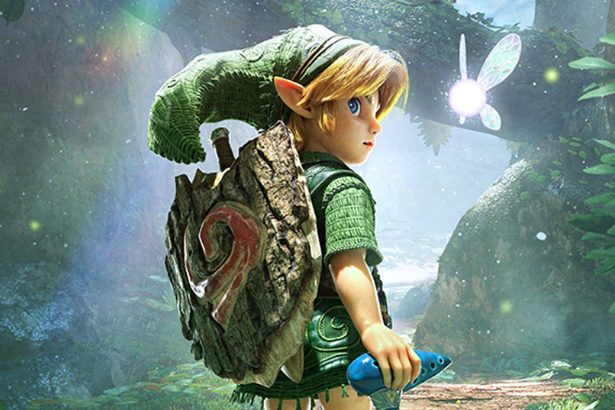
The Ocarina of Time remake now has a firm release date. Nintendo will launch its rebuilt version of the 1998 classic exclusively on Nintendo Switch 2 on November 5, 2026, following the company’s Zelda 40th Anniversary Direct. The showcase gave fans their first substantial look at the game’s redesigned environments, updated movement, new progression tools and expanded presentation.
The announcement explains the sharp Google Trends spike shown in the supplied screenshot. Searches for “Nintendo” surged, with related queries heavily concentrated around Ocarina of Time, the remake, Zelda’s 40th anniversary and Nintendo Switch 2.
Background and Context
Nintendo first released The Legend of Zelda: Ocarina of Time on Nintendo 64 in 1998. The game became one of the defining releases of its generation, establishing a 3D template for Zelda that would influence the franchise for decades.
The 2026 version is not simply a resolution upgrade.
Nintendo describes it as the 1998 adventure “reborn for a whole new era,” with completely overhauled visuals, fully voiced cutscenes, expanded character dialogue, symphonic orchestral music and redesigned camera and movement controls.
That distinction matters.
Nintendo has previously revisited Ocarina of Time through the 2011 Nintendo 3DS release. The new Switch 2 project is much more ambitious visually and mechanically, while Nintendo is still positioning it as a faithful interpretation of the original adventure.
The result sits in an interesting space between preservation and reinvention.
Latest Update or News Breakdown
Nintendo confirms the November 5 release date
The biggest announcement is straightforward: the game arrives on November 5, 2026, exclusively for Nintendo Switch 2. Nintendo’s official product page now lists the same release date.
Preorders are also underway.
The remake is positioned as one of Nintendo’s major Switch 2 releases for the holiday season, arriving shortly before Rockstar’s Grand Theft Auto VI, which is scheduled for November 19. That puts two enormous gaming releases within the same month.
Hyrule has been rebuilt from the ground up
The visual transformation is arguably the most immediately noticeable change.
Nintendo has rebuilt environments such as Kokiri Forest, Hyrule Field and Hyrule Castle Town with modern geometry, lighting and environmental detail. The game’s official description emphasizes reimagined visuals rather than simply presenting the original game’s assets at higher resolution.
That has already prompted an interesting debate among longtime fans.
Aftermath’s Joshua Rivera argues that the remake’s extraordinarily detailed environments can actually reduce some of the imaginative gaps that made the 1998 original so powerful. His criticism is less about technical quality than about what happens when a game replaces suggestion with explicit detail.
That is a surprisingly important question for this particular remake.
The original Ocarina of Time asked players to imagine what existed beyond its relatively simple geometry. The 2026 remake can show much more.
Link gets modern movement
Nintendo has also changed how Link moves through Hyrule.
The remake introduces a dedicated jump action, a dash ability and the ability to freely leap across gaps and obstacles. The official product page also says players can cover long distances using the new dash ability and ride a trusty steed later in the adventure.
Camera control has received an equally significant overhaul.
Players can freely move the camera rather than relying on the more restrictive presentation of the original game. That should make exploration feel much closer to modern Zelda titles such as Breath of the Wild and Tears of the Kingdom, even though the underlying adventure remains rooted in the 1998 design.
The Threads of Time changes how players navigate the adventure
One of the most interesting additions is Threads of Time.
The feature acts as a progression guide, allowing players to review the story, see current objectives and track their journey through a gradually developing tapestry.
This is a significant quality-of-life change.
The original Ocarina of Time could leave players wondering what to do next, particularly when returning to the game after a long break. Threads of Time appears designed to preserve the original adventure while reducing the friction of figuring out where the story expects you to go.
It is a modern solution to a very old problem.
The ocarina itself is getting a strange new twist
Nintendo has also expanded the relationship between the player and Link’s signature instrument.
The remake allows players to hum melodies that Link has learned, with the game responding through the in-game ocarina. Nintendo is also supporting physical ocarina products that can interact with the experience.
It is exactly the kind of feature that would have been impossible in the original Nintendo 64 hardware environment.
Nintendo is going all-in on Zelda’s 40th anniversary
The remake is only one piece of Nintendo’s broader Zelda celebration.
The company announced a Zelda-themed Nintendo Switch 2 console and accessories launching October 29, ahead of the game. It is decorated around the Triforce and arrives as part of the franchise’s 40th anniversary campaign.
Nintendo is also planning a global Zelda 40th Anniversary Concert series beginning in 2027, while a live-action The Legend of Zelda movie is scheduled to reach cinemas worldwide on April 30, 2027.
The strategy is clear: Nintendo is treating Zelda’s anniversary as a year-long cultural event rather than a single game launch.
Expert Insights or Analysis
The most important question surrounding the Ocarina of Time remake is not whether Nintendo can make the game look better.
Obviously, it can.
The harder question is whether Nintendo can modernize a game without removing the qualities that made it historically important.
That is where the remake’s design choices become interesting.
Nintendo has modernized movement, camera control and navigation, but it has not announced a wholesale redesign of the adventure itself. The company’s presentation instead emphasizes fidelity to the original while updating the technology around it.
That approach makes sense.
A completely redesigned Ocarina of Time could alienate players who want the adventure they remember. A simple remaster, meanwhile, would struggle to justify a major new release on Switch 2.
Nintendo appears to be choosing the middle ground.
The environments can be rebuilt. The characters can speak. Link can move more freely. The player can receive better guidance.
But the fundamental journey through Hyrule remains recognizable.
That balance could ultimately determine whether this becomes another celebrated Zelda remake or an example of a classic being over-engineered.
Broader Implications
Nintendo is turning nostalgia into a Switch 2 strategy
The remake demonstrates one of Nintendo’s most powerful advantages: its historical library is valuable enough to become a new-release pipeline.
Ocarina of Time is almost three decades old, yet its name alone can generate enormous interest.
The Google Trends screenshot supplied for this article illustrates that effect. Searches rapidly climbed after Nintendo’s anniversary presentation, with queries including “ocarina of time remake,” “Nintendo Switch 2” and “Zelda Switch 2.”
For Nintendo, that means the company’s past can directly support the future of its hardware platform.
The remake tests how much modernization Zelda fans actually want
There is a delicate line between convenience and redesign.
Features such as Threads of Time make the game easier to navigate. Free camera movement makes exploration more natural. New movement abilities reduce some of the mechanical friction of a 1998 adventure.
But Aftermath’s analysis raises the opposite concern: if Nintendo explains and renders everything more explicitly, does the player lose some of the mystery that originally came from technical limitations?
That tension is likely to dominate discussion after launch.
Zelda’s 40th anniversary is bigger than one game
Nintendo’s announcement connects the remake to a much wider ecosystem of products and experiences.
There is the Switch 2 anniversary hardware, the concert series, Nintendo Today! digital cards, new amiibo and the upcoming live-action film.
That makes 2026 and 2027 an unusually important period for the Zelda brand.
For broader coverage of how major entertainment franchises use technology, hardware and digital ecosystems to extend their reach, consider an internal link to The Tech Marketer’s gaming and technology coverage at The Tech Marketer.
Related History or Comparable Technologies
The obvious comparison is the 2011 Nintendo 3DS version of Ocarina of Time.
That release updated the original with stereoscopic 3D visuals, redesigned menus and several quality-of-life improvements while retaining the core game.
The 2026 remake takes the same fundamental idea much further.
Instead of simply adapting the original presentation to new hardware, Nintendo has rebuilt Hyrule with modern visuals, introduced substantially more flexible camera movement and changed how Link navigates the environment.
The comparison also highlights how much game design has changed since 1998.
The original Ocarina of Time helped establish conventions for navigating 3D action games. The remake is now applying nearly three decades of accumulated design knowledge back onto that original template.
That makes the project almost circular.
A game that helped define modern 3D adventure design is being redesigned using the conventions that emerged from the genre it helped create.
What Happens Next
The immediate milestone is November 5, 2026, when the remake launches on Nintendo Switch 2.
Before then, Nintendo is likely to continue showing additional gameplay and discussing the game’s features.
The next major questions are less about whether the remake exists and more about how extensive the changes really are.
Players will want to know:
- How much of the original dungeon design has been altered
- How the new movement affects classic puzzles
- How freely players can explore Hyrule
- How Threads of Time handles optional objectives
- How much new dialogue has been added
- How the new soundtrack compares with the original score
- Whether the remake introduces additional content beyond what Nintendo has shown
The answers will determine whether this is best understood as a remake, a reinterpretation or a modern reconstruction of a foundational game.
The wider Zelda anniversary campaign also continues into 2027, with concerts and the live-action film providing Nintendo with additional opportunities to keep the franchise in the spotlight.
Conclusion
The Ocarina of Time remake is no longer a distant promise.
Nintendo has shown the game running on Switch 2, confirmed its November 5 release date and revealed a much more substantial reconstruction than a simple graphical upgrade. Hyrule has been rebuilt, Link has new movement options, the camera is freer, characters are fully voiced and Threads of Time gives players a modern way to follow their progress.
But the most interesting part may be what Nintendo has chosen not to change.
The remake still appears deeply committed to the structure and spirit of the 1998 adventure.
That creates a fascinating experiment. Can Nintendo use modern technology to make one of gaming’s most famous adventures more accessible without sanding away the mystery that made it special?
The answer will come when players return to Hyrule this November.
For now, the Google Trends spike tells us something simpler.
People still care about Ocarina of Time.
A lot.
FAQ
When does the Ocarina of Time remake release?
The Ocarina of Time remake launches exclusively on Nintendo Switch 2 on November 5, 2026.
Is the Ocarina of Time remake coming to the original Nintendo Switch?
Nintendo’s current announcement lists the remake for Nintendo Switch 2. The official product page identifies Nintendo Switch 2 as its system.
What is new in the Ocarina of Time remake?
The remake features reimagined visuals, a refreshed soundtrack, fully voiced cutscenes, expanded dialogue, modernized camera and movement controls, a dash ability, jumping and the new Threads of Time progression system.
What is Threads of Time?
Threads of Time is a new progression feature that lets players review the story, check current objectives and track their journey through a growing tapestry.
Will the Ocarina of Time remake have voice acting?
Yes. Nintendo says the remake includes fully voiced cutscenes and expanded character dialogue.
Can Link jump in the remake?
Yes. Nintendo’s official product information says Link can freely leap over gaps and obstacles using a button press.
Is the remake part of Zelda’s 40th anniversary?
Yes. Nintendo announced the remake as part of its The Legend of Zelda 40th Anniversary celebration, alongside special-edition hardware, concerts, amiibo, Nintendo Today! content and the upcoming live-action movie.
Sources & References
- Nintendo: The Legend of Zelda 40th Anniversary celebration
- Nintendo: The Legend of Zelda: Ocarina of Time for Switch 2
- Nintendo: Zelda 40th Anniversary Direct
- Aftermath: A Zelda Game Ought To Leave More To The Imagination Than This
- Shacknews: Threads of Time quest log details
- The Verge: Nintendo’s Ocarina of Time remake launches in November