Introduction
The Ocarina of Time remake is no longer a mysterious 2026 release. During Nintendo’s Zelda 40th Anniversary presentation on September 8, the company revealed gameplay and confirmed that the Switch 2 exclusive will launch on November 5, 2026.
The reveal explains why searches for “ocarina of time remake” have suddenly exploded on Google Trends. After months of speculation following Nintendo’s brief June teaser, fans now have a release date, substantially more gameplay footage, and a clearer picture of Nintendo’s approach to one of the most influential games in 3D gaming.
Background and Context
Nintendo announced the remake in June, describing The Legend of Zelda: Ocarina of Time as a Nintendo 64 classic being “reborn” exclusively for Nintendo Switch 2. At the time, however, Nintendo offered only a short teaser and a broad 2026 release window.
That made the September Zelda Direct particularly important. The original Ocarina of Time arrived on Nintendo 64 in 1998 and became a reference point for 3D action-adventure design. Its remake therefore carries an unusual burden: modernize the experience without stripping away the identity that made the original so important.
Nintendo’s answer appears to be a visual and mechanical modernization rather than a complete reinvention.
Latest Update or News Breakdown
The Ocarina of Time remake launches November 5
The biggest announcement is straightforward: November 5, 2026.
The Verge reports that Nintendo confirmed the date during its Zelda 40th Anniversary stream, making the game one of the major Switch 2 releases arriving in the crowded November window.
The Verge: Nintendo’s Ocarina of Time remake launches in November
Nintendo’s own product information still identifies the game as a Switch 2 exclusive and describes it as the return of the Nintendo 64 classic for a new generation.
Nintendo showed substantially more gameplay
The new footage is where the remake starts to distinguish itself.
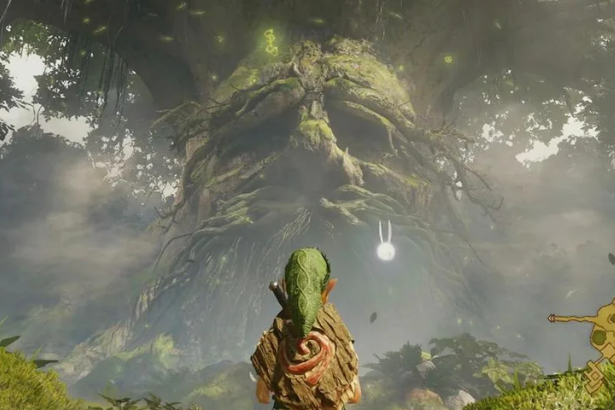
Nintendo showed a much more detailed version of Kokiri Forest and the Great Deku Tree, alongside a redesigned Link and free camera movement. The presentation also demonstrated new mechanics that change how players interact with the classic adventure.
One of the most noticeable changes is a dedicated jump button. In the original game, Link’s movement was heavily contextual. The remake gives players direct control over jumping, bringing the game closer to modern 3D action-adventure conventions.
Nintendo is also adding a system called “threads of time,” designed to help players understand where and when they should go next. Another change lets Link hum tunes rather than reproduce the original musical inputs through controller commands.
The result is recognizably Ocarina of Time, but it is not simply a resolution upgrade.
Pricing is also coming into focus
Before the Direct, the Australian Nintendo Store briefly displayed pricing information for the remake.
Vooks reported a digital price of A$94.95, with the physical version expected to sit at A$109.95. The New Zealand digital price was listed at NZ$104.95.
Vooks: The Legend of Zelda Ocarina of Time remake pricing revealed
Vooks estimated that the Australian pricing could translate to roughly US$59.99 digitally and £49.99 digitally, but those international prices were not guaranteed by the Australian listing.
That distinction matters. The Australian figure is directly reported from the store listing, while the US and UK figures are estimates.
The remake is exclusive to Switch 2
This is not a cross-generation release.
Nintendo’s product listing identifies Ocarina of Time as a Nintendo Switch 2 title, with the original game being rebuilt specifically for the new hardware.
That gives Nintendo an opportunity to use the remake as another showcase for the Switch 2’s capabilities, particularly its improved graphics and more flexible controls.
Expert Insights or Analysis
The interesting part of this remake is how conservative Nintendo appears to be with the game’s identity.
Eiji Aonuma described the project as a “faithful interpretation using modern technologies,” according to The Verge.
That phrase neatly explains the strategy.
Nintendo does not need to rebuild Ocarina of Time from scratch conceptually. The game’s world, characters, dungeons, music, time-travel structure and central progression are already deeply established. The opportunity is to remove some of the friction created by 1998-era design without turning the remake into something that feels unrelated to the original.
The dedicated jump control is a good example. So is free camera movement.
These changes acknowledge that players have spent nearly three decades playing 3D action games with control systems that evolved considerably after the Nintendo 64 era.
The same philosophy applies to navigation. “Threads of time” appears designed to make the game’s objectives easier to understand without replacing the adventure itself with a modern checklist.
In other words, Nintendo is updating the interface between the player and the game, rather than rewriting what made the game memorable.
Broader Implications
The remake also says something about Nintendo’s strategy for Switch 2.
Nintendo has already used major legacy properties to give its new hardware a stronger software identity. Bringing back Ocarina of Time as a full remake takes that strategy a step further.
The timing is especially notable. The game arrives during Zelda’s 40th anniversary and shortly before Nintendo’s upcoming live-action The Legend of Zelda movie, which The Verge reports will be released on April 30, 2027.
That creates a broader Zelda campaign spanning games, hardware, film and anniversary merchandise.
For more analysis of Nintendo’s hardware and software strategy, an internal link could point readers to The Tech Marketer’s Nintendo Switch 2 coverage.
Related History or Comparable Technologies
Ocarina of Time has already received one significant modernization.
Nintendo released The Legend of Zelda: Ocarina of Time 3D for Nintendo 3DS in 2011. That version upgraded the visuals while introducing interface and gameplay improvements designed around the handheld’s hardware.
The new Switch 2 version is a much larger proposition.
Rather than simply remastering the existing assets, Nintendo appears to be rebuilding the visual presentation and updating the control philosophy for modern hardware.
That puts the project closer to the modern remake model used for other classic games, where developers preserve the original structure while substantially reworking presentation and usability.
It also creates an interesting comparison with The Legend of Zelda: Link’s Awakening, which received a radically stylized remake in 2019. Nintendo has therefore demonstrated that it is willing to reinterpret Zelda classics in very different visual directions.
The Ocarina remake takes a different path. Its presentation appears designed to preserve the atmosphere and fantasy tone of the original while giving Hyrule dramatically more visual detail.
What Happens Next
The immediate milestone is November 5, 2026, when the remake launches exclusively on Nintendo Switch 2.
Between now and release, the questions likely to dominate discussion are less about whether the game is real and more about how far Nintendo has gone with the remake.
Players will want to know:
- How extensively have the dungeons been redesigned?
- How much additional dialogue has been added?
- How does the new camera work during combat?
- What exactly does “threads of time” do?
- How much has the soundtrack changed?
- Are there additional quality-of-life features beyond those shown?
- Will the remake receive launch-day or post-launch updates?
Nintendo has already answered the biggest question, though. This is not simply a nostalgic announcement. The company is positioning Ocarina of Time as one of the major games of the Switch 2 era.
Conclusion
The Ocarina of Time remake has finally moved from anticipation to something tangible.
Nintendo has confirmed a November 5, 2026 release, shown significantly upgraded visuals, introduced free camera movement and a dedicated jump button, and revealed new systems such as “threads of time.”
The Australian store listing also gives fans an early indication of pricing, with a A$94.95 digital price and an expected A$109.95 physical price.
The larger question is whether Nintendo can modernize one of gaming’s most revered adventures without sanding away the quirks that made it special.
So far, the answer looks encouraging. The remake is changing how Ocarina of Time feels to play, but Nintendo appears determined to keep its heart intact.
FAQ
1. When does the Ocarina of Time remake release?
The Ocarina of Time remake releases November 5, 2026, exclusively on Nintendo Switch 2.
2. Is the Ocarina of Time remake coming to the original Nintendo Switch?
Nintendo has positioned the remake as a Nintendo Switch 2 exclusive. Its official product listing identifies Nintendo Switch 2 as the supported system.
3. What new gameplay features are in the Ocarina of Time remake?
Nintendo has shown free camera movement, a dedicated jump button, a “threads of time” navigation feature and the ability for Link to hum musical tunes instead of using the original controller-based input method.
4. How much does the Ocarina of Time remake cost?
Vooks reported an Australian digital price of A$94.95 and an expected physical price of A$109.95. It estimated US$59.99 and £49.99 for digital editions, but those international prices were not confirmed by the Australian listing.
5. Is the Ocarina of Time remake a remaster or a remake?
Nintendo is presenting it as a remake, or a “reborn” version of the Nintendo 64 classic. The gameplay footage shows substantially rebuilt visuals and updated controls rather than a simple resolution upgrade.
Sources & References
- Nintendo’s Ocarina of Time remake launches in November, The Verge
- The Legend of Zelda Ocarina of Time remake pricing revealed, Vooks
- The Legend of Zelda Ocarina of Time remake gameplay and release date, Polygon
- The Legend of Zelda: Ocarina of Time, Nintendo official site
- Nintendo Direct announcement covering Ocarina of Time, Nintendo