Nvidia went from 95% of China’s AI chip market to zero. The CEO called it a strategic mistake. And a black market for Nvidia’s best chips is charging $1 million per server.
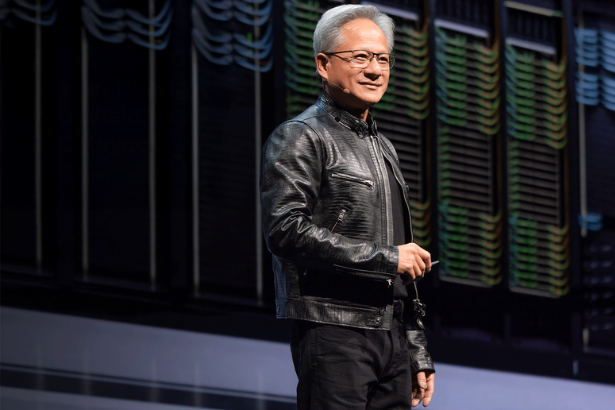
Nvidia China AI market share zero 2026 is now official, confirmed by CEO Jensen Huang himself in an interview with the Special Competitive Studies Project, a bipartisan US lawmakers initiative. “In China, we have now dropped to zero,” Huang said. “Conceding an entire market the size of China probably does not make a lot of strategic sense, so I think that has already largely backfired.” Just two years ago, Nvidia controlled more than 60% of China’s AI accelerator market. In the previous full fiscal year, China generated $17 billion in Nvidia revenue against total company revenue of $130.5 billion. That $17 billion is now gone. And Reuters is reporting that Nvidia’s B300 server, which US export controls prohibit selling to China, is trading on gray market channels inside China for $1 million per unit, a premium above the US price that reflects the desperation of Chinese AI companies trying to access hardware they are legally blocked from obtaining.
This article is for informational purposes only and does not constitute financial or investment advice. Consult a qualified financial advisor regarding Nvidia’s investment profile.
Background and Context
The Nvidia China AI market share zero 2026 situation is the direct consequence of a multi-year escalation in US semiconductor export controls that began in October 2022 and has tightened progressively since.
The logic of the export control strategy was straightforward: deny China access to the most advanced AI accelerators and you slow its ability to develop frontier AI systems that could have military applications. The H100, A100, and eventually the H20, Nvidia’s China-tailored downgrade, were all restricted in successive rounds of policy tightening.
In its previous full fiscal year, Nvidia generated $17 billion in revenue from China alone, with full company revenue standing at $130.5 billion, up 114% year over year. Nvidia also noted it gained $4.5 billion in charges related to the US ban on H20 exports to China during the first fiscal quarter of 2026. There were no H20 sales to China-based customers in the second quarter. Enid
The H20 was Nvidia’s last meaningful product for China, a deliberately crippled version of its high-end hardware that met earlier export control thresholds. When the US government banned even the H20, the last legal channel for Nvidia hardware into China closed entirely.
Why Nvidia China AI Market Share Zero 2026 Is a Global Story
Latest Update
Jensen Huang’s “zero percent” statement was made in the first week of May 2026 and generated simultaneous coverage across technology and finance media.
Full coverage from the story:
- Exclusive: Prices of Nvidia’s B300 Server at $1 Million in China on US Curbs — Reuters
- Nvidia Faces China Scarcity Premiums as Customers Launch Rival AI Chips — Yahoo Finance
- Jensen Says Nvidia Now Has ‘Zero Percent’ Market Share in China — Says US Export Policy ‘Has Already Largely Backfired’ — Tom’s Hardware
Key confirmed details from the story:
- Jensen Huang said at a Citadel Securities event and in an interview with the Special Competitive Studies Project: “In China, we have now dropped to zero. Conceding an entire market the size of China probably does not make a lot of strategic sense, so I think that has already largely backfired. Maybe it made sense at the time, but I think the policy really needs to be dynamic and needs to stay with the times.” CBS News
- Huang also described going “from 95% market share to 0%” in China, calling it a mistake for the United States not to participate in the second-largest computer market in the world.
- Reuters reported that Nvidia’s B300 server is trading on gray market channels in China at prices of approximately $1 million per unit, significantly above the US retail price, reflecting Chinese customers’ desperation to access restricted hardware.
- Earlier this year, Bernstein estimated that Nvidia’s share of China’s AI GPU market could fall from 66% in 2024 to roughly 8% in the coming years, both due to restrictions imposed by the US government and because domestic vendors are moving to cover up to 80% of demand. Huang’s latest statement now suggests the decline may have gone even further than expected. Yahoo Sports
- Chinese domestic alternatives, particularly Huawei’s Ascend AI processors, have been confirmed as capable of supporting advanced models including DeepSeek’s V4.
The Five Alarming Facts About Nvidia’s China Collapse
Fact 1: Nvidia lost 95 percentage points of market share in roughly two years. The speed of the decline is what analysts find most striking. Just two years ago, Nvidia controlled a major share of China’s AI hardware market. However, strict US export controls blocked the company from selling some of its most advanced AI chips to Chinese buyers. As a result, local competitors gained room to expand and accelerate development. A market position built over a decade evaporated in two years. nfl
Fact 2: Nvidia’s B300 server trades at $1 million on China’s gray market. Reuters reported that Nvidia’s flagship B300 server, which US law prohibits from being sold to China, is available through gray market channels at approximately $1 million per unit. The premium represents both the scarcity created by export controls and the revealed willingness of Chinese AI companies to pay almost any price to access the hardware they cannot legally obtain. That willingness also signals how much Chinese AI development still depends on Nvidia-class compute despite three years of restrictions.
Fact 3: China was Nvidia’s second-largest market and generated $17 billion annually. Nvidia generated $17 billion in revenue from China in its previous full fiscal year. That business is now gone entirely. The $4.5 billion in charges Nvidia took for the H20 ban represents only the most recent and visible piece of the write-down. Enid
Fact 4: Chinese domestic alternatives are accelerating because of the vacuum. Domestic Chinese vendors are moving to cover up to 80% of demand for AI accelerators in China, with Bernstein projecting Huawei and other domestic players filling the gap that Nvidia’s exit created. Huawei’s Ascend chips, while less capable than Nvidia’s frontier products, have been confirmed as able to support major AI deployments including DeepSeek V4. The export controls have functioned as industrial policy for Chinese chip manufacturers. Yahoo Sports
Fact 5: Huang is publicly lobbying for a policy reversal. Jensen Huang’s comments at the Special Competitive Studies Project and Citadel Securities events are not passive observations. They are a coordinated public effort to change US export control policy. Huang argued that ceding a market of that scale accelerates China’s self-sufficiency push, while continued US participation would extend the global reach of the American AI technology stack. He described China as the second-largest computer market in the world and said: “I think it’s a mistake for the United States to not participate.” The Hill
Expert Insights and Analysis
Jensen Huang’s “zero percent” statement is the most direct and public criticism of US chip export policy from a major American technology CEO since the controls were introduced.
His argument has two distinct components. The first is strategic: ceding the Chinese market to domestic competitors accelerates their development and does not actually slow China’s AI progress, it simply redirects Chinese investment from US chips to Chinese chips.
The second is economic: a company that generated $17 billion from China in a single fiscal year and now generates zero is a company whose long-term competitive position has been structurally impaired. The revenue loss to Nvidia is permanent unless the policy changes.
Huang argued that conceding a market of that scale accelerates China’s push toward self-sufficiency, while continued participation of American companies in that market would help extend the global reach of the American AI technology stack. He added: “So hopefully we’ll continue to explain and inform and hold out hope for a change in policy.” CBS News
The counterargument from the US government’s perspective is that frontier AI capability has strategic military implications that outweigh Nvidia’s commercial interests. The Trump administration has maintained and expanded export restrictions. Whether Huang’s public lobbying shifts that calculus depends on whether policymakers accept his framing that the controls are counterproductive rather than simply accepting the commercial cost as a necessary strategic price.
Broader Implications
The Nvidia China AI market share zero 2026 situation is the most consequential data point yet in the US-China technology decoupling story.
The scenario US policymakers feared when designing the export controls was that restricting Nvidia chips would slow China’s AI development timeline. What the data shows instead is that the restrictions accelerated Chinese domestic chip development, created a captive market for Chinese AI chip manufacturers, and produced a black market for Nvidia hardware at 2x to 3x US prices that primarily benefits gray market intermediaries rather than Nvidia itself.
The question of whether US export controls are achieving their stated strategic goal versus simply redistributing market share from American to Chinese companies is one of the most important and unresolved debates in technology policy in 2026. Huang’s public testimony is the most prominent contribution from the private sector to that debate.
The B300 gray market data is particularly revealing. Chinese companies are paying $1 million per server for hardware they cannot legally buy directly from Nvidia. That revealed preference tells you two things simultaneously: Chinese AI companies believe Nvidia hardware is significantly superior to domestic alternatives for their most demanding workloads, and they are willing to accept massive cost premiums and legal exposure to access it. Both signals suggest the export controls have not achieved their objective of preventing Chinese access to frontier AI compute.
For deeper coverage of the US-China semiconductor conflict and how it is reshaping global AI development and the chip industry, The Tech Marketer tracks the geopolitical and technology stories driving the biggest shifts in the industry.
Related History and Comparable Situations
The Nvidia China situation has a partial precedent in the US semiconductor industry’s experience with Japan in the 1980s. When US policymakers and manufacturers faced Japanese competition in DRAM memory chips, the response included export restrictions, tariffs, and managed trade agreements. The result was that Japanese manufacturers captured market share, South Korean manufacturers entered the market, and the US DRAM industry effectively ceased to exist.
The parallel is imperfect: AI accelerators are not commodity memory chips, and Nvidia’s technological lead is more defensible than US DRAM manufacturers’ lead was in the 1980s. But the structural logic is similar: restriction accelerates domestic competitor development in the restricted market.
The more recent analogy is Huawei. US export controls on chips for Huawei’s smartphones forced Huawei to develop its own Kirin processor series. Today Huawei’s Mate smartphones are competitive in China without Qualcomm chips. Restriction did not eliminate Huawei. It made Huawei a chip developer.
What Happens Next
Nvidia’s B300 server is on gray market channels in China at $1 million. Nvidia’s H20 cannot be sold legally. Nvidia’s market share is zero. And Jensen Huang is publicly calling for a policy change.
The Trump administration has not signaled any relaxation of export controls. The technology decoupling from China is a bipartisan consensus position in Washington. Whether Huang’s lobbying effort produces any change in the restriction framework is an open question, but the current trajectory points toward a permanent separation of Nvidia from the Chinese AI hardware market.
Nvidia’s financial outlook has priced this in. Its valuation reflects the massive remaining global demand for AI compute outside China. But the $17 billion revenue line that China once represented is not being replaced dollar for dollar by other markets, and the B300 gray market is a reminder that the technology gap between Nvidia and Chinese alternatives still exists and still generates demand pressure even under restriction.
Conclusion
Nvidia China AI market share zero 2026 is the most dramatic corporate geopolitical loss in the semiconductor industry since the US DRAM exit of the 1980s. Ninety-five percentage points of market share lost in two years. Seventeen billion dollars in annual revenue gone. A gray market for restricted hardware charging $1 million per server. And the CEO of the world’s most valuable chip company saying publicly that the policy driving all of it has largely backfired.
Whether Jensen Huang is right about the policy being counterproductive is a debate for policymakers and strategists. What is not debatable is that Nvidia’s China AI market share is zero, and the Chinese companies rushing to fill that gap are moving faster than the restrictions anticipated.
FAQ
1. Why does Nvidia have zero percent market share in China in 2026? US export controls have banned Nvidia from selling its most advanced AI chips to China, including the H100, A100, and eventually the H20, the downgraded version Nvidia created specifically to meet earlier export control thresholds. When the US government banned even the H20, Nvidia had no remaining legal product to sell in China. CEO Jensen Huang confirmed zero direct sales in a May 2026 interview.
2. What did Jensen Huang say about US export controls and China? Huang said “In China, we have now dropped to zero” and characterized US export controls as having “already largely backfired.” He argued that conceding the second-largest computer market in the world accelerates China’s AI self-sufficiency rather than slowing it, and that continued American participation in China would have extended the global reach of the American AI technology stack. He explicitly called it “a mistake for the United States to not participate.”
3. Why are Nvidia’s B300 servers selling for $1 million in China? The B300 is Nvidia’s latest flagship AI server, which US law prohibits from being exported to China. Despite the ban, Reuters reported gray market channels inside China are offering B300 servers at approximately $1 million per unit. The massive premium reflects both the scarcity created by export controls and the willingness of Chinese AI companies to pay almost any price for hardware they cannot legally obtain through direct channels.
4. How much revenue did Nvidia lose by being banned from China? In its previous full fiscal year, Nvidia generated approximately $17 billion in China revenue, representing roughly 13% of its total revenue of $130.5 billion. That business is now at zero. Nvidia also took $4.5 billion in charges related to the H20 ban in Q1 FY2026 alone.
5. Are Chinese domestic chips replacing Nvidia in China’s AI market? Yes, but with capability gaps that the gray market B300 prices reveal. Bernstein estimated domestic Chinese vendors could cover up to 80% of China’s AI chip demand, with Huawei’s Ascend chips confirmed as capable of supporting major AI deployments including DeepSeek V4. However, Chinese AI companies are simultaneously paying $1 million per Nvidia B300 server on gray markets, suggesting Huawei alternatives are not yet fully replacing Nvidia for the most demanding workloads.
Sources & References
- Exclusive: Prices of Nvidia’s B300 Server at $1 Million in China on US Curbs — Reuters
- Nvidia Faces China Scarcity Premiums as Customers Launch Rival AI Chips — Yahoo Finance
- Jensen Says Nvidia Now Has ‘Zero Percent’ Market Share in China — Tom’s Hardware
- Nvidia CEO Jensen Huang Says China Market Share Has Collapsed to 0% — BigGo Finance
- Jensen Huang Says Nvidia’s China Market Share Fallen to Zero — TechRadar
- NVDA Stock Gains in Premarket: CEO Jensen Huang Says China Chip Export Ban ‘Largely Backfired’ — Stocktwits