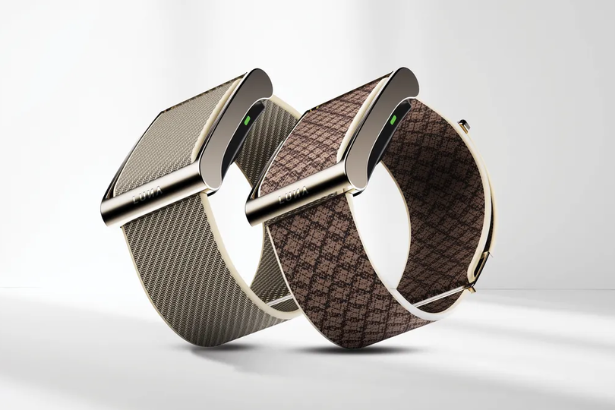
The Luna Band vs Fitbit Air 2026 comparison is the most relevant wearable face-off of the year. Luna, the company behind the Luna Ring Gen 2, officially opened its waitlist on Thursday, May 21 for the Luna Band — a screenless fitness tracker priced at approximately £155/$149 with no monthly subscription fee. The Fitbit Air, Google’s long-awaited screenless band, launches next week. Luna’s pitch is distinct: where Fitbit Air and Whoop focus on tracking and displaying health data, the Luna Band is built around LifeOS — an AI intelligence layer that does not just monitor your body but actively plans your day around it, hour by hour, using calendar integration and haptic feedback nudges. Drop 1 is invite-only, with shipping at the end of July 2026.
The Luna Band: What It Is and How It Works
The Luna Band positions itself as something different from every other screenless tracker currently available. While Whoop is built primarily for athletes tracking strain and recovery, and Fitbit Air is designed to bring Google’s health platform to a mainstream audience without a screen, the Luna Band describes itself as a “calendar for your body, built to keep you in peak state.”
The Band itself handles continuous tracking through its sensors, while LifeOS acts as the intelligence layer behind the scenes. Luna says the platform can combine wearable data with other inputs such as blood markers, food habits, and medical context to build a more personalized model around each user. The result is a system that does not present dashboards of metrics — it delivers haptic suggestions at relevant moments, such as reminding someone to get fresh air or have coffee before a long meeting.
The broader philosophy behind Luna is that most people already collect more health data than they know what to do with. Instead of showing endless charts and scores, LifeOS is designed to interpret signals in the background and surface suggestions when they are actually useful.
The Voice-First Difference: Siri Integration and Its Limitations
The most distinctive feature of the Luna Band — and the one that most clearly separates it from Fitbit Air and Whoop — is its voice-first design. You can log meals, symptoms, and “moments” using your voice and without opening the app, thanks to Siri integrations.
There is an important caveat here. There is no microphone on the band itself, which means speaking into your iPhone. The Luna Band also works with Android phones, but without the voice functionality. That distinction matters for the substantial portion of the potential user base on Android. The voice logging — which is one of Luna’s most compelling differentiators — is effectively an iPhone-exclusive feature. Android users get the tracking and haptic feedback, but the hands-free voice interaction that makes the product feel genuinely different requires an iPhone.
This is a strategic limitation Luna will likely address in future hardware iterations. For the current Drop 1, iPhone users get the full experience that the product is designed around.
Calendar Integration: The Feature That Makes Luna Different
The Luna Band vs Fitbit Air 2026 comparison sharpens most clearly around calendar integration — a feature the Fitbit Air does not have and that Luna has placed at the center of its value proposition.
Luna Band syncs with a user’s calendar and can offer haptic suggestions at relevant moments — reminding someone to get fresh air or have coffee before a long meeting, for example. The practical implication is significant. A fitness tracker that knows you have a two-hour strategy meeting at 2 PM can prompt you to take a walk at 1:45 PM, time your caffeine cutoff based on your sleep window, and nudge you toward a moment of focus or calm when the calendar shows back-to-back blocks.
That is meaningfully different from what Fitbit Air, Whoop, or even the Oura Ring currently do. Those devices track what your body is doing. The Luna Band tracks what your body is doing and what your day is demanding — and tries to bridge the gap between the two.
The Price and Subscription Model: Where Luna Wins the Comparison
On pure value arithmetic, the Luna Band vs Fitbit Air 2026 comparison favors Luna for users who are sensitive to total cost of ownership. Luna has priced the Band at approximately £155/$149. Importantly, when comparing with the likes of Whoop and Google Health Premium — the new version of Fitbit Premium — there is no subscription fee.
The subscription math matters at this price tier. Whoop’s most accessible plan runs approximately $239 annually on top of hardware costs. Google Health Premium’s pricing has not been fully confirmed ahead of the Fitbit Air launch, but any monthly fee adds meaningful cost over a two or three-year ownership period. Luna’s no-subscription model means the $149 purchase price is the complete cost — no recurring charges, no premium tier locked behind a paywall.
What LifeOS Actually Includes
The app behind the Luna Band ships with a suite of what Luna calls micro-apps covering areas such as stress, nutrition, training, supplements, and productivity. The platform is designed to replace the collection of separate wellness apps that many people currently juggle — a single system that combines sleep, fertility, workout, stress, and productivity tracking into one coherent picture.
The app also supports custom health modules, which users can build based on their specific needs. Luna says additional integrations will arrive over time. The ambition is to make LifeOS the single platform where all health and wellness data converges — pulling in blood markers, medical context, and food habits alongside wearable sensor data to build a genuinely personalized model.
That ambition is credible in concept and yet to be proven in execution. The CES prototype shown in January 2026 showed early promise. The updated product opening its waitlist in May reflects meaningful development — a noticeably updated design and more fully articulated LifeOS feature set compared to what was demonstrated five months earlier.
The WHOOP Lawsuit: Background Context
The Luna Band vs Fitbit Air 2026 story has a legal subplot worth noting. WHOOP filed a lawsuit against Luna earlier in 2026. Luna has not made detailed public comments on the suit’s status, and Gadgets & Wearables noted the lawsuit remains “part of the background” even as Luna leans harder into LifeOS and daily guidance.
The product’s visual design evolution from the January CES prototype to the May 2026 official reveal may reflect at least partial awareness of that legal context. Whether the suit has substantive merit will be resolved in the courts. For consumers evaluating the Luna Band, the most relevant question is whether the product delivers on its LifeOS promise — and that question will only be answerable after Drop 1 ships in late July.
The Screenless Tracker Market in 2026: Who Else Is Coming
The Luna Band vs Fitbit Air 2026 competition exists in a rapidly expanding market. The Fitbit Air is kicking off a surge of interest in screenless fitness trackers in 2026 — it is by no means the first, with Whoop being popular with athletes for many years, but Google’s new band is pushing the category into the mainstream. A Garmin Cirqa is also expected later in 2026, which would bring Garmin’s precision sports tracking heritage into the screenless format. And Oura, which has dominated the smart ring category, filed for its IPO on the same day the Luna Band waitlist opened.
The convergence of these launches in a single week is not coincidental. The screenless wearable category is reaching the same inflection point that the smartwatch category reached around 2015, when multiple credible players entered the market simultaneously and consumer awareness accelerated faster than any single product could have driven alone.
Broader Implications: What the Luna Band Means for the Wearable Market
The Luna Band vs Fitbit Air 2026 launch moment is the clearest signal yet that the screenless tracker category is bifurcating. Fitbit Air and Whoop are building for the data-first user — people who want comprehensive, accurate health metrics presented clearly. Luna is building for the behavior-change user — people who want their wearable to not just measure their health but actively help them manage their day around it. Both approaches are legitimate. Both address real consumer frustrations with existing wearables. Which one the market rewards at scale will depend on whether the LifeOS execution matches its ambitious pitch — and on whether Apple Watch and Oura Ring users can be convinced to downgrade their displays in exchange for a more focused, less distracting health experience. For more on the biggest stories in wearables and technology, visit The Tech Marketer.
Latest Updates
The Luna Band waitlist opened May 21, 2026. Here is where to follow the full coverage:
- Tech Advisor has the complete official Luna Band details including its pricing at £155/$149, the no-subscription model, the voice-first Siri integration, LifeOS feature breakdown, the end of July Drop 1 invite-only launch timeline, and the competitive context against Fitbit Air and Garmin Cirqa. Read more at Tech Advisor
- CNET has the full waitlist opening announcement for the Luna Band screenless fitness tracker, including the CES reveal background, the updated design details, and how to join the invite list. Read more at CNET
- Gadgets & Wearables has the full analysis of how Luna Band’s LifeOS shifts the product from tracking to daily planning — including the calendar-aware haptic nudge system, micro-apps breakdown, the WHOOP lawsuit context, and reviewer Marko Maslakovic’s take from having tested the Luna Ring Gen 2. Read more at Gadgets & Wearables
FAQ: Luna Band vs Fitbit Air 2026
1. How much does the Luna Band cost and is there a subscription fee? The Luna Band is priced at approximately £155 / $149, excluding taxes. There is no subscription fee — unlike Whoop and Google Health Premium (Fitbit Premium), the Luna Band’s full feature set is included in the purchase price. Drop 1 is invite-only with shipping expected at the end of July 2026. You can join the waitlist at lunazone.com.
2. What is LifeOS and how does it differ from other fitness trackers? LifeOS is Luna’s AI intelligence layer that combines wearable sensor data with blood markers, food habits, medical context, and calendar information to build a personalized daily plan around each user. Rather than displaying dashboards of health metrics, LifeOS delivers haptic nudges at relevant moments — such as reminding you to take a walk before a long meeting or timing your caffeine cutoff based on your sleep window.
3. Does the Luna Band work with Android phones? The Luna Band works with both iPhone and Android, but the voice-first features — including logging meals, symptoms, and moments using your voice — require Siri integration and therefore an iPhone. There is no microphone on the band itself. Android users receive the full tracking and haptic feedback functionality but cannot access the voice logging features.
4. How does Luna Band compare to Fitbit Air in price and features? The Luna Band is priced at $149 with no subscription fee. The Fitbit Air — launching the week of May 26 — will require Google Health Premium for full feature access. Luna differentiates with calendar integration, hourly body-aware daily planning, and voice logging via Siri, while Fitbit Air offers Google’s broader health data ecosystem and tighter integration with Android devices.
5. What does Luna Band track? The Luna Band tracks sleep, fertility, and continuous physiological data through its wrist sensors. The LifeOS platform enriches that data with inputs from blood markers, food habits, and medical context. The app ships with micro-apps for stress, nutrition, training, supplements, and productivity, plus support for custom health modules. Calendar sync enables time-aware haptic nudges throughout the day.