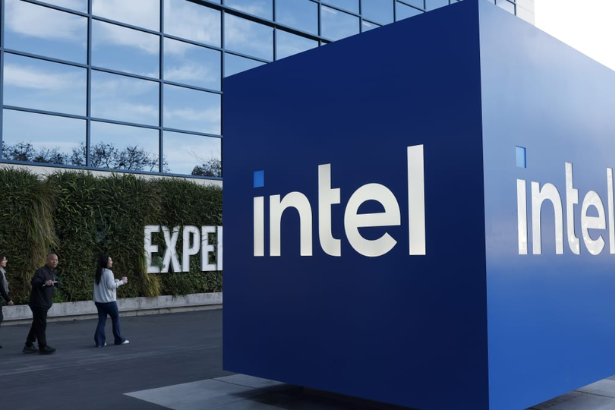
Intel stock surges more than 9% in premarket trading Thursday, June 18, 2026, after President Donald Trump announced on Truth Social that Apple has agreed to work with Intel to design and build its chips domestically in the United States. “I decided to help Intel because we need to design and build our Chips right here in America,” Trump posted, adding that the announcement follows previous moves bringing Nvidia and Elon Musk’s planned TerraFab facility into Intel’s orbit. Neither Apple nor Intel has issued a formal statement confirming the partnership, and the announcement arrived just days after Apple CEO Tim Cook told the Wall Street Journal that price increases on Apple products are “unavoidable” due to surging memory chip costs.
What Trump Announced on Truth Social
President Donald Trump posted a major announcement on his personal social media platform, Truth Social, on Thursday, declaring that Apple has officially reached a partnership agreement with Intel, and both parties will jointly conduct chip design and manufacturing operations within the United States.
“Apple has agreed to work with Intel to design and build its Chips in America,” Trump wrote. He framed the announcement within a broader narrative about reviving domestic semiconductor manufacturing: “Stupid Presidents took our Economy for granted, and let Taiwan and others steal our Semiconductor Factories. When I won my Second Term, it was clear America needed its Semiconductor Industry to come back to the U.S.A.”
Trump also referenced two earlier moves he credited himself with arranging. “First, we helped bring in Nvidia, and they agreed to build their first level Chips with Intel,” he wrote. “Next, Elon agreed to build his TerraFab, the largest Chip Factory in the World, designed together with Intel’s Technology team.”
The Market Reaction: Intel Up 9%, Apple Barely Moves
The market’s response to Trump’s announcement was sharply asymmetric, with one company seeing dramatic gains while the other barely registered the news.
Intel Corp.’s stock surges more than 9% in premarket trading Thursday after US President Donald Trump said the chipmaker will work alongside Apple to design and produce semiconductors domestically. Apple stock moved about 0.5% in premarket trading, a gap that signals which company the market believes stands to benefit more from the arrangement.
Intel stock Surges has seen significant gains throughout the past year, having surged 464% in the past 12 months, with the company hitting a market cap of $608.7 billion following Thursday’s move. A company that was trading near $19 a year ago now carries a market cap approaching $600 billion, and the man who helped engineer its biggest potential commercial win owns a roughly 10% government stake in it.
Why Neither Company Has Confirmed the Deal
Despite the dramatic market reaction, a crucial caveat applies to the entire story: the actual companies involved have not validated Trump’s characterization of events.
As of June 18, 2026, neither Apple nor Intel has issued any official statement confirming this deal. CNBC has approached Intel, Apple, the White House, and the Taipei Representative Office in the U.K. for comment. Intel declined to comment when reached by CNN.
For investors, the real story is not the announcement itself but what the deal could mean for capacity allocation, pricing power, and the competitive map heading into 2027, provided it is eventually confirmed in formal terms. A presidential social media post is not a contract, and any durable re-rating for Intel depends on converting the reported Apple interest into signed, disclosed contracts with specific volume commitments, something that has not yet occurred.
The Backstory: A Year of Quiet Negotiations
While Trump’s announcement carried the tone of a fresh breakthrough, the underlying discussions between Apple and Intel reportedly stretch back considerably further than Thursday’s post suggests.
The Wall Street Journal first reported a preliminary agreement between Apple and Intel in early May 2026, after more than a year of closed-door discussions. As early as May 2025, media reports suggested that after more than a year of negotiations, the two sides had reached a preliminary agreement for Intel to manufacture some chips for Apple, specifically Intel’s 18A node designed for the iPad Pro and the entry-level MacBook Air.
Trump’s public statement now effectively puts an official seal of approval on a partnership that had already been progressing through normal corporate channels well before Thursday’s social media post. Rumors of an Apple-Intel foundry deal have been circulating since at least May 2026.
Why Apple Needs to Diversify Away From TSMC
The strategic logic behind Apple’s reported interest in Intel connects directly to capacity constraints Apple has experienced with its longtime primary chip manufacturing partner.
Apple has been highly dependent on TSMC in the field of chip manufacturing for years. However, with the explosive growth of the artificial intelligence industry, TSMC’s advanced process capacity is being heavily occupied by AI chip orders from Nvidia and AMD, both of which compete aggressively for the same leading-edge production lines that Apple has historically relied on.
Apple CEO Tim Cook told analysts on the company’s most recent earnings call that iPhone 17 production had been “constrained during the quarter” because TSMC could not produce enough A19 chips to meet demand. That was not a quality problem but a queue problem: TSMC makes chips for Nvidia, AMD, Google, Amazon, and every other company racing to build AI infrastructure. Apple is TSMC’s second-largest customer by revenue, after Nvidia, but even that scale was not enough to guarantee priority access when the factory became overbooked.
Intel’s 18A-P Process: The Technology Behind the Deal
The specific manufacturing technology at the center of the reported partnership represents Intel’s most advanced and closely watched chip production process to date.
Intel disclosed at the VLSI Symposium in Honolulu on June 16, 2026, just two days before Trump’s announcement, that its next-generation 18A-P node had entered risk production, an early validation stage in which Intel produces full wafers to gather data on defect rates, performance, and variability before full production begins.
The 18A-P variant delivers up to 9% higher performance or 18% lower power consumption compared to standard 18A, and is 20% to 40% more heat resistant. Intel’s current most advanced manufacturing node, 18A, entered volume production at its Arizona fab in December 2025. Intel CFO David Zinsner said on the Q1 earnings call that yield rates are running roughly two quarters ahead of internal targets, a data point that has helped rebuild investor confidence in the foundry business’s execution.
The US Government’s 10% Stake in Intel
The Trump administration’s financial relationship with Intel adds a layer of direct government interest to Thursday’s announcement that goes beyond simple political endorsement.
The US government previously provided support to Intel by acquiring a roughly 10% stake in the company, in exchange for the expansion of its domestic chip R&D and manufacturing capabilities. Last year, Washington converted roughly $8.9 billion in CHIPS Act and Secure Enclave funding into a 9.9% equity position, buying in at $20.47 a share.
At the time of the government’s investment, Intel’s market value was approximately $100 billion, whereas the company’s market value has now exceeded $600 billion, adding over $500 billion in market value within nine months. Based on the figures released by Trump, the value of the U.S. government’s stake has exceeded $60 billion, representing a substantial appreciation from the original investment.
How This Connects to Tim Cook’s Price Increase Warning
Thursday’s announcement arrived in close proximity to a separate but related story involving Apple’s broader chip supply chain challenges, connecting two narratives about the same underlying semiconductor squeeze.
Trump’s announcement comes after Apple CEO Tim Cook told the Wall Street Journal this week that price hikes on its products are “unavoidable” because of the rising costs of memory and storage chips sparked by the AI boom. “We’re doing our best to mitigate the huge increases that are being passed to us, and we’ve been trying to shield our customers from the increases, but the situation has become unsustainable,” Cook told the newspaper.
The connection between the two stories is direct: both reflect Apple’s broader struggle to secure adequate chip supply at reasonable cost amid AI-driven demand that has reshaped global semiconductor markets. Diversifying manufacturing toward Intel addresses processor capacity constraints, while the memory and storage cost pressure Cook described stems from a separate but related squeeze on DRAM and NAND production.
What Would an Apple Deal Actually Mean for Intel?
The financial significance of a confirmed Apple partnership for Intel’s business would be substantial, according to analysts tracking the company’s foundry turnaround under CEO Lip-Bu Tan.
“Winning Apple would roughly double Intel’s total revenue,” one analysis noted, given Intel’s current annual run rate of approximately $53 billion, and “completely transform Intel Foundry from a money-losing internal cost center into a major external business.” Intel’s foundry division operating loss narrowed to $2.4 billion last quarter, improving by $72 million quarter over quarter, supported by better yields across the Intel 4, 3, and 18A processes.
For Intel, landing Apple as a customer matters less for near-term revenue than for credibility. Intel’s foundry division has struggled for years to convince outside customers that its manufacturing can match TSMC on yield and reliability, and an Apple relationship, even a limited one, would validate Intel’s 18A process technology to other potential clients considering similar arrangements.
Latest Updates
Trump’s Truth Social announcement and the resulting Intel stock surge occurred on Thursday, June 18, 2026. CNBC confirmed the full Trump quote, Intel’s 8.8% premarket gain, the company’s 464% twelve-month rally, and its $608.7 billion market cap. Bloomberg confirmed Intel’s stock rose more than 9% premarket, that the company declined to comment, and the connection to Apple’s exploratory discussions with both Intel and Samsung for US chip production. CNN confirmed the direct link between Thursday’s announcement and Tim Cook’s earlier statement that price increases on Apple products are “unavoidable” due to memory and storage chip costs, along with details on the government’s $8.9 billion Intel investment from August.
Full sources: CNBC | CNN | Bloomberg
Broader Implications
Thursday’s Intel stock surge illustrates how directly presidential social media statements can move markets in 2026, even absent formal corporate confirmation. A 9% premarket gain on a single Truth Social post, adding billions in market value within minutes, represents an unusual dynamic in which government communication channels function as material market-moving events independent of the standard corporate disclosure process that would normally accompany news of this magnitude.
For Apple, a confirmed Intel partnership would address a genuine structural vulnerability: near-total dependence on a single overseas manufacturer whose advanced capacity is increasingly consumed by AI infrastructure customers willing to pay premium prices and sign multi-year commitments. The TSMC capacity constraint that limited iPhone 17 production last quarter is a concrete example of the risk that diversification toward Intel would theoretically mitigate.
For Intel, the credibility gained from even unconfirmed association with Apple matters considerably for a foundry business still working to convince outside customers it can match TSMC’s reliability. Whether Thursday’s announcement converts into the kind of signed, disclosed contract with specific volume commitments that would justify the stock’s reaction remains the central open question, one that will likely only be resolved through future earnings calls or formal SEC disclosures from either company.
For more semiconductor, Apple, and technology business coverage, visit The Tech Marketer.
Frequently Asked Questions
1. Why did Intel stock surge on June 18, 2026?
Intel stock surged more than 9% in premarket trading after President Trump posted on Truth Social that Apple had agreed to work with Intel to design and build its chips in America. The announcement built on Intel’s already strong 2026 performance, with shares up 464% over the prior twelve months.
2. Has Apple confirmed a chip manufacturing deal with Intel?
No. As of this report, neither Apple nor Intel has issued an official statement confirming Trump’s characterization of the partnership. Intel declined to comment when contacted by news outlets. The Wall Street Journal had previously reported in May 2026 that the two companies reached a preliminary agreement after more than a year of negotiations, but no formal contract details have been disclosed.
3. Why does Apple need to work with Intel instead of just using TSMC?
Apple has relied almost exclusively on Taiwan Semiconductor Manufacturing (TSMC) for its most advanced chips, but TSMC’s leading-edge capacity is increasingly consumed by AI chip orders from Nvidia, AMD, and other companies. Tim Cook said iPhone 17 production was “constrained” last quarter because TSMC could not produce enough A19 chips to meet demand, prompting Apple to explore diversifying its manufacturing base.
4. What is Intel’s 18A-P chip process?
Intel’s 18A-P is an advanced version of its 18A manufacturing node that entered “risk production” on June 16, 2026, two days before Trump’s announcement. It delivers up to 9% higher performance or 18% lower power consumption compared to standard 18A, with 20% to 40% better thermal resistance, and is seen as central to Intel’s effort to attract external foundry customers like Apple.
5. How does the Intel-Apple news relate to Apple’s price increase announcement?
Trump’s announcement came just days after Apple CEO Tim Cook told the Wall Street Journal that Apple price increases are “unavoidable” due to surging memory and storage chip costs. Both stories reflect Apple’s broader struggle with chip supply constraints, though Cook’s comments concerned memory and storage pricing specifically, while the Intel news concerns processor manufacturing capacity.