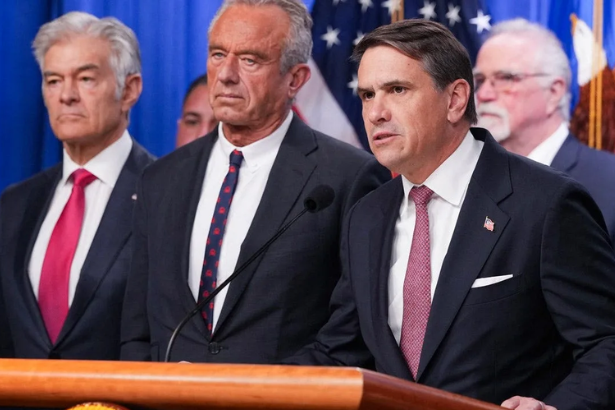
Health care fraud in the United States just faced its most aggressive federal response in recorded history. On Tuesday, June 23, 2026, the Justice Department announced the 2026 National Health Care Fraud Takedown, charging 455 defendants across 45 states and territories for alleged participation in schemes involving more than $6.5 billion in false claims submitted to Medicare, Medicaid, and other government-funded health programs. The two-week coordinated operation involved 56 federal districts, 50 state Medicaid Fraud Control Units, and unprecedented international cooperation, resulting in the apprehension of suspects from overseas and the seizure of more than $182 million in cash, luxury vehicles, jewelry, and real estate.
What Is the 2026 National Health Care Fraud Takedown?
The 2026 National Health Care Fraud Takedown is the Justice Department’s annual coordinated enforcement action against Medicare, Medicaid, and other federal health program fraud, but this year’s edition broke records across nearly every measurable dimension. Acting Attorney General Todd Blanche announced the results at a Department of Justice press conference joined by Health Secretary Robert F. Kennedy Jr., CMS Administrator Dr. Mehmet Oz, and FBI Director Kash Patel.
Of the 455 defendants charged, 90 were doctors and other licensed medical professionals. Cases spanned 56 federal districts in 45 states and territories, with 50 state Medicaid Fraud Control Units participating, the highest number in Department history. Blanche was direct about the administration’s posture: “This is just the beginning. Fraudsters can no longer rip off American taxpayers. This announcement marks the greatest combined federal and state effort in combating healthcare fraud in history.”
Assistant Attorney General Colin McDonald framed the enforcement philosophy in equally blunt terms: “If you put profit over patients, you should expect to be put in prison.”
The $6.5 Billion in False Claims: How the Schemes Worked
The fraudulent schemes targeted across the two-week takedown ranged from individual providers billing for medically unnecessary services to large-scale corporate operations running multi-billion dollar billing networks with kickback structures designed to obscure the underlying fraud.
One Arizona corporate executive was accused of running a wound care graft billing operation that submitted more than $1 billion in fraudulent claims to taxpayers, with proceeds used to purchase multi-million dollar homes, luxury cars, jewelry, and fund the construction of a hotel in the Philippines. A separately charged nurse practitioner was accused of billing Medicare more than $1 million per patient on average for medically unnecessary allografts in a scheme totaling $906 million. Three additional defendants were charged in a related $118 million allograft fraud scheme. One defendant apprehended internationally was connected to an over $3.7 billion scheme operating out of Kyrenia.
The charges covered the full spectrum of the health care system, from individual doctor’s offices to corporate boardrooms, and included criminal charges, civil monetary penalty settlements, and civil fraud charges across dozens of separate cases. The DOJ also noted more than $73 million across 48 civil monetary payment settlements and civil charges against 13 defendants for $14.8 million in health care fraud schemes.
Skin Substitute Allografts: The Billion-Dollar Billing Scandal
The single largest fraud category exposed in the 2026 Takedown involves amniotic wound allografts, a category of skin substitute products used in wound care that became one of the most heavily abused billing mechanisms in Medicare history before federal intervention
Health Care Fraud Unit Data Analytics Team detected a spike in payments for allografts and flagged the pattern for prosecution. Eleven defendants were charged in connection with fraudulent allograft billings, with one company alone allegedly responsible for more than $4 billion in Medicare billings and $2 billion in actual payments for the products. CMS separately took administrative action, reducing Medicare’s payment for allografts to $127 per square centimeter starting January 1, 2026. Without that intervention, CMS confirmed the allograft billing surge alone would have caused every Medicare beneficiary in the country to pay an extra $11 per month in Part B premiums.
CMS Administrator Dr. Mehmet Oz summarized the agency’s new approach: “Prosecuting criminals who steal from American patients is necessary. But stopping them before a single dollar leaves the building is smarter. CMS is done playing catch-up.”
Hospice Fraud, Opioid Abuse, and Genetic Testing Schemes
Beyond the allograft cases, the 2026 Takedown exposed fraud across a wide range of health care sectors that reflects the breadth of vulnerability within government-funded programs.
In the hospice sector, prosecutors charged Oren David Shachar, the owner of multiple health care entities and at least four hospices, with generating $27.7 million in fraudulent Medicare claims by enrolling individuals who were not terminally ill into intensive hospice care pipelines. When Medicare’s data analytics began monitoring the percentage of patients discharged from hospice alive as a fraud indicator, Shachar allegedly shifted tactics to include identities of recently deceased individuals, paying a funeral home employee between $1,000 and $3,000 per identity to continue the scheme.
In the genetic testing category, the Emylee Thai case out of Houston illustrates how laboratory owners used kickback arrangements with marketers to generate fraudulent Medicare billing. Thai’s laboratory billed Medicare approximately $142 million for genetic testing that was not medically necessary and was often not used in patients’ treatment, with Medicare paying approximately $95 million on those claims before the scheme was detected. The 2026 Takedown also included opioid abuse charges as part of the broader enforcement sweep, reflecting the overlap between prescription fraud and health care billing schemes.
Emylee Thai: Houston Fugitive Added to FBI’s Most Wanted Fraudster List
Alongside the mass charging announcement, FBI Houston confirmed Tuesday that Emylee Thai, a Houston woman accused of nearly $100 million in health care fraud through a medically unnecessary genetic testing and kickback scheme, has been added to the FBI’s Most Wanted Fraudster list with a reward of up to $150,000 for information leading to her arrest.
Thai was originally charged on July 11, 2022 with conspiracy to commit health care fraud, conspiracy to defraud the United States, and payment of kickbacks in connection with a federal health care program. The indictment alleges that beginning in 2019, Thai, who was a laboratory owner, contracted with marketers to refer signed doctors’ orders and beneficiary DNA samples to the laboratory in exchange for a percentage of Medicare reimbursements. On December 8, 2022, while out on bail wearing a location monitoring device, Thai had her monitor removed and was last tracked at Harry Reid International Airport in Las Vegas. She was separately charged on July 5, 2023 with destruction and alteration of records in a federal investigation. FBI officials believe Thai fled the United States aboard a private airplane using a fake identity and is likely currently in Vietnam.
AI and Data Analytics: How DOJ Caught the Fraudsters
A defining feature of the 2026 Takedown was the DOJ’s explicit deployment of artificial intelligence and advanced data analytics as proactive fraud detection tools, representing a structural departure from the traditional reactive “pay-and-chase” model that had characterized federal health care enforcement for decades.
The DOJ’s newly launched Health Care Fraud Data Fusion Center integrates real-time billing metrics from multiple federal intelligence platforms, flagging statistical anomalies such as 500-hour claimed workdays or 11-second diagnostic sign-offs the moment they appear in billing data. This allowed CMS to proactively freeze over $4 billion in suspicious claims before payments were disbursed and immediately revoke billing privileges for 1,403 providers during the two-week operation. CMS also suspended 1,079 providers during the same period. Dr. Oz reported that Medicare payment suspensions in the first half of 2026 increased 500 percent compared to the same period in 2025, with 1,000 suspensions executed including 800 in California alone.
HHS Secretary Kennedy announced new data-sharing agreements with the Federal Trade Commission and Customs and Border Protection to eliminate data silos and strengthen fraud detection algorithms, signaling that the technological infrastructure built for this Takedown is intended as a permanent enforcement upgrade rather than a one-time deployment.
$182 Million Seized: Maseratis, Bulgari Necklaces, and a Philippine Resort
Federal authorities seized more than $182 million in cash, luxury vehicles, jewelry, and real estate as part of the Takedown’s asset recovery component, providing a concrete illustration of how fraudulently obtained Medicare and Medicaid funds were being spent by defendants.
Among the seized assets were a $135,000 Maserati, an $865,000 Bulgari necklace, and the $4.6 million beach resort in the Philippines that the Arizona corporate executive allegedly funded with stolen taxpayer dollars. Blanche addressed the seizures directly: “We’re taking back the money, the luxury cars, the jewelry, and these alleged fraudsters will face justice.”
What Happens Next: CMS Reforms and Future Enforcement
The 2026 National Health Care Fraud Takedown is explicitly framed by DOJ and CMS officials not as a single operation but as the opening move in a sustained enforcement escalation. The HHS-OIG separately initiated actions to restore over $10 billion in flagged and suspended payments back to the Medicare Trust Fund, a figure that reflects the scale of suspicious billing activity that had accumulated in the system prior to the two-week enforcement action.
CMS has committed to closing billing loopholes that fraudsters have exploited for years, with Oz describing the agency’s new fraud-fighting team as focused on deploying predictive technology in real time. The record participation of 50 state Medicaid Fraud Control Units signals a durable federal-state partnership that the DOJ intends to maintain and expand in future enforcement cycles. Blanche’s statement that “this is just the beginning” was echoed by Kennedy, who framed the operation as the start of a new enforcement era rather than a standalone achievement.
3. FREQUENTLY ASKED QUESTIONS
- What is the 2026 National Health Care Fraud Takedown?
The 2026 National Health Care Fraud Takedown is the Justice Department’s largest annual health care fraud enforcement action on record. Announced on June 23, 2026, it resulted in charges against 455 defendants including 90 doctors and licensed medical professionals for alleged participation in schemes involving more than $6.5 billion in false claims to Medicare, Medicaid, and other federal health programs across 45 states and territories.
- What types of health care fraud were charged in the 2026 DOJ crackdown?
The 2026 Takedown covered a wide range of schemes including fraudulent billing for skin substitute allografts, hospice care fraud involving non-terminal patients, medically unnecessary genetic testing with kickback arrangements, opioid prescription abuse, and Medicaid billing for services never rendered. One company alone was accused of $4 billion in Medicare billings for unnecessary wound allografts.
- Who is Emylee Thai and why is she on the FBI Most Wanted Fraudster list?
Emylee Thai is a Houston woman accused of nearly $100 million in health care fraud through a medically unnecessary genetic testing and kickback scheme. Originally charged in 2022, Thai fled the United States in December 2022 using a fake identity and a private airplane after her bail monitoring device was removed. The FBI believes she is currently in Vietnam and is offering a reward of up to $150,000 for information leading to her arrest.
- How did the DOJ use artificial intelligence in the 2026 health care fraud crackdown?
The DOJ deployed its Health Care Fraud Data Fusion Center, which uses real-time billing analytics to flag statistical anomalies such as impossible claimed working hours or unusually fast diagnostic sign-offs. The system allowed CMS to proactively freeze over $4 billion in suspicious claims before payment and revoke billing privileges for 1,403 providers during the two-week operation, representing a shift from reactive investigation to proactive fraud prevention.
- What assets were seized in the 2026 health care fraud takedown?
Federal authorities seized more than $182 million in total assets including cash, a $135,000 Maserati, an $865,000 Bulgari necklace, and a $4.6 million beach resort in the Philippines that one Arizona defendant allegedly funded with stolen Medicare money. The DOJ also initiated civil monetary penalty settlements totaling more than $73 million across 48 separate cases.
4. SOURCES AND REFERENCES
- Wall Street Journal: Justice Department Unveils $6.5 Billion Healthcare Fraud Crackdown
- The New York Times: Justice Dept. Unveils Medicare Fraud Charges as Part of Larger Health Care Crackdown
- ABC13 Houston: Houston Woman Added to FBI’s Most Wanted Fraudster List, Accused of Nearly $100 Million in Healthcare Fraud