The Ebola outbreak 2026 in the Democratic Republic of Congo and Uganda has been declared a Public Health Emergency of International Concern by the World Health Organization. More than 80 people have died and more than 300 have been infected, including at least one American. The virus — identified as the Bundibugyo strain, a rare variant for which there is no approved vaccine or treatment — is believed to have circulated undetected for six to eight weeks before laboratory testing confirmed the outbreak in mid-May. Public health experts, former USAID officials, and outbreak responders are raising urgent questions about whether the dismantling of US-funded global health surveillance infrastructure directly contributed to the delayed detection. The Trump administration has denied that its restructuring of USAID harmed outbreak response capabilities.
The WHO Emergency Declaration: What Made It Historic
The WHO declared the Ebola outbreak 2026 in DRC and Uganda a public health emergency of international concern on May 16-17 — the third PHEIC ever declared over Ebola, following the 2014 West Africa epidemic and the 2018-2020 Kivu epidemic in the DRC. This is the first involving the rare Bundibugyo strain.
The declaration was also extraordinary for procedural reasons. WHO Director-General Tedros Adhanom Ghebreyesus issued the PHEIC without convening the WHO Emergency Committee — the first time in the history of the International Health Regulations that a public health emergency of international concern has been determined without a formal recommendation from that body. The committee will be convened retrospectively. The bypassing of standard procedure underscores both the urgency of the threat and the institutional pressure the WHO is operating under following the US withdrawal from the organization in January 2026.
The Scale of the Outbreak: 80 Dead, 300+ Infected, One American
By the time the WHO declared the emergency, the toll was already significant. More than 200 people had been infected and more than 80 had died before the disease was identified as the Bundibugyo variant. More than 300 total people have since gotten sick. At least one American is among those infected.
The size of the outbreak at the point of confirmation is the central alarm for public health experts. Normally when an outbreak gets announced, it is just a handful of cases. The DRC had an outbreak in 2024 that was declared after just 28 cases — and 45 people eventually died in that outbreak. The current outbreak had already accumulated over 200 cases before detection. That gap — between the size of a typical detection-point outbreak and the size of this one — is the epidemiological signal that suggests the detection system was not functioning at full capacity.
How the Outbreak Started and Spread
Epidemiologists trace the suspected onset of the Ebola outbreak 2026 to late April 2026, when a nurse in the Rwampara health zone presented with fever, vomiting, and severe bleeding. She died before a diagnosis could be established. Africa CDC Director-General Jean Kaseya has acknowledged that the true index case remains unknown, meaning the virus circulated undetected for several weeks.
The outbreak is now thought to have originated in Mongbwalu, a high-traffic gold mining hub in Ituri province, with cases subsequently migrating to Rwampara and Bunia as patients sought medical care. The crisis escalated when the virus crossed into Uganda, resulting in a confirmed death in Kampala — more than 400 kilometers from the Ituri origin zone. Cases have also been reported near Kinshasa, the DRC’s capital, approximately 1,500 kilometers to the west. The geographic spread at the time of confirmation reflects how much momentum the outbreak had already accumulated.
The USAID Funding Cut: What Was Eliminated
The connection between US foreign aid cuts and the Ebola outbreak 2026 detection failure is not theoretical. It is documented in specific program terminations.
In late January 2025, USAID transmitted a single email terminating the $100 million STOP Spillover program — a five-year project specifically designed to detect zoonotic spillovers of Ebola, Marburg, Lassa, and other hemorrhagic fevers in Uganda, the DRC border region, Liberia, and four other countries. Field teams monitoring bat reservoirs were dispersed within days. Researchers in Liberia were left with freezers of unprocessed blood samples. The Uganda-DRC cross-border surveillance infrastructure went dark. USAID itself was dismantled the same month.
The funding numbers tell their own story. Total humanitarian funding in Congo was over $900 million in the last year of the Biden administration. That dropped by close to 80% — down to $179 million — during the first year of the Trump administration. HHS sent nearly $33 million to the DRC in foreign aid in the 2024 federal fiscal year. That number fell to less than $10 million in 2025. The consequences of that collapse were not confined to dollar figures. The central pharmacies collapsed, the rural clinics collapsed, and mortality in the region doubled, according to forthcoming research conducted by the Congolese non-governmental organization RHA and analyzed by Les Roberts, a professor emeritus at Columbia University.
The Expert Assessment: What Konyndyk and Others Are Saying
The most direct public assessment of the connection between US aid cuts and the Ebola outbreak 2026 detection failure comes from Jeremy Konyndyk, who previously led Ebola response efforts at USAID during the Obama administration and now serves as president of Refugees International.
“I can’t help but wonder if the drawdown of USAID and CDC health interventions by DOGE undermined some of the surveillance and detection initiatives that might have helped to catch this earlier,” Konyndyk said. “The US invested in disease surveillance capacity in Congo because it is such a hotbed of known novel outbreak risks. That disease detection surveillance architecture has been badly weakened.” He added that the outbreak’s trajectory resembles the early stages of the devastating 2014 West Africa epidemic — which ultimately killed more than 11,000 people and sickened over 28,000 across 10 countries.
Konyndyk noted that USAID had staff all across the DRC who could gather disease intelligence, and that CDC staff both in DRC and the US helped transport samples and analyze them. Both programs had been substantially cut. “At every level, international response capacity has been badly undermined by the US, and also wider global funding cuts,” he said.
The US Withdrawal From WHO: A Compounding Factor
The Ebola outbreak 2026 response has been further complicated by the US formal withdrawal from the World Health Organization, which took effect January 22, 2026. The US had been the agency’s single largest funder, contributing approximately $700 million annually in peak years. No state has stepped up to replace those funds.
WHO is now shedding approximately 2,371 staff — roughly a quarter of its workforce — by mid-2026, with the African Regional Office particularly affected. This institutional deterioration has directly degraded WHO’s emergency response capacity. The decision to declare the PHEIC without convening the Emergency Committee reflects an organization operating under extreme resource pressure trying to move as fast as the outbreak demands.
The Trump administration also issued a gag order in January 2025 prohibiting all CDC communication with WHO — modified but never rescinded, and effectively made permanent by the US withdrawal from the organization.
The Bundibugyo Strain: No Vaccine, No Approved Treatment
The specific variant of Ebola responsible for the Ebola outbreak 2026 makes the situation more clinically challenging than a typical Ebola outbreak. The Bundibugyo strain is rare — and unlike the Zaire strain that caused the 2014 West Africa epidemic and for which approved vaccines and treatments exist, there is no approved vaccine or therapy for Bundibugyo.
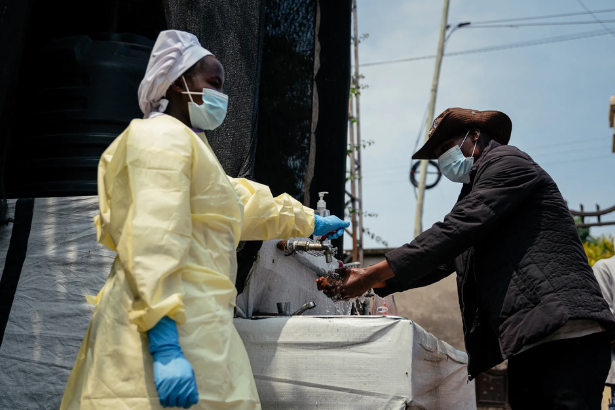
Symptoms include fever, headache, abdominal pain, and vomiting blood. The virus kills approximately half of those it infects. The absence of an approved vaccine means the response must rely entirely on containment measures — isolation, contact tracing, and personal protective equipment — without the immunization backstop that has helped control more recent Zaire-strain outbreaks.
The Government’s Response to Criticism
The Trump administration has denied that its restructuring of USAID harmed outbreak response capabilities. The State Department said in a statement: “It is false to claim that the USAID reform has negatively impacted our ability to respond to Ebola,” adding that funding and support to combat Ebola would continue. The department also noted that some public health funding had been transferred to the State Department under a new “America First” agreement with the DRC, in which the US pledged $900 million over five years.
An HHS spokesperson said the CDC “is fully equipped to protect Americans and mitigate risks through experts in this disease area,” noting capacity for virus testing, tracking, and prevention. State Department funding for public health efforts has begun flowing, sources say, but headcount and resources in the region remain substantially below pre-Trump levels. State Department employees, despite moving to address the outbreak, don’t have the staff or resources to take on the responsibility previously held by USAID.
Broader Implications: Surveillance Architecture and Global Health Security
The Ebola outbreak 2026 is arriving at a moment when the global disease surveillance architecture that has prevented major outbreaks for two decades has been deliberately restructured. The STOP Spillover program existed precisely because Ituri province and the DRC-Uganda border region are among the world’s highest-risk zones for zoonotic spillover events — where viruses jump from animal reservoirs to humans. That program was terminated via a single email in January 2025.
Whether the six to eight weeks of undetected spread that preceded confirmation of this outbreak would have been caught earlier under the pre-2025 surveillance architecture is a question that epidemiologists will study for years. What is already clear from the testimony of researchers, former USAID officials, and public health experts is that the infrastructure designed to catch exactly this kind of outbreak was substantially weakened in the year before this outbreak began. For more on the biggest stories in global health and public policy, visit The Tech Marketer.
Latest Updates
The Ebola outbreak 2026 remains an active public health emergency. Here is where to follow the full coverage:
- WIRED has the full investigative report on how Trump’s aid cuts are fueling the Ebola outbreak — including the specific USAID program terminations, expert assessments, and the connection between reduced surveillance capacity and the six-to-eight-week detection delay. Read more at WIRED
- STAT News has the complete reporting on how US aid cuts damaged epidemic preparedness and hampered the DRC Ebola response, including the HHS funding figures, the Les Roberts mortality research, and the State Department’s response to criticism. Read more at STAT News
- NPR has two full reports: the outbreak origins and detection timeline, and the broader USAID dismantling context — including Jeremy Konyndyk’s full assessment, the $900 million to $179 million funding collapse, and the WHO’s emergency declaration without committee convening. Read more at NPR
FAQ: Ebola Outbreak 2026
1. How many people have died in the 2026 Ebola outbreak? As of mid-May 2026, more than 80 people have died and more than 300 have been infected in the DRC and Uganda Ebola outbreak, including at least one American. The WHO declared the outbreak a public health emergency of international concern on May 16-17, 2026. The outbreak is caused by the rare Bundibugyo strain, for which there is no approved vaccine or treatment.
2. What is the Bundibugyo Ebola strain and why is it significant? Bundibugyo is a rare variant of the Ebola virus distinct from the Zaire strain that caused the 2014 West Africa epidemic. Unlike the Zaire strain, there is no approved vaccine or therapy for Bundibugyo. The virus kills approximately half of those infected. The 2026 outbreak is the first public health emergency of international concern involving the Bundibugyo strain.
3. How did USAID cuts affect the Ebola outbreak 2026 response? In January 2025, USAID terminated the $100 million STOP Spillover program — a five-year surveillance initiative specifically designed to detect Ebola and other hemorrhagic fever outbreaks in Uganda, the DRC border region, and surrounding countries. Total humanitarian funding in DRC fell by approximately 80% under the Trump administration, from over $900 million to $179 million. Public health experts say these cuts degraded the surveillance network that was designed to catch outbreaks before they gain momentum.
4. Where is the 2026 Ebola outbreak located? The outbreak originated in Mongbwalu, a gold mining hub in Ituri province in northeastern DRC, before spreading to Rwampara and Bunia. It subsequently crossed into Uganda, with a confirmed death in Kampala — more than 400 kilometers from the origin zone. Cases have also been reported near Kinshasa, approximately 1,500 kilometers to the west of Ituri.
5. What is the US government’s position on the USAID cuts and Ebola? The Trump administration has denied that its restructuring of USAID harmed outbreak response capabilities. The State Department said “it is false to claim that the USAID reform has negatively impacted our ability to respond to Ebola” and said some public health funding has been transferred to the State Department. However, sources working in the region told STAT News that State Department headcount and resources remain substantially below pre-Trump levels.