Introduction
The GoPro Starman Optical merger is one of the more unusual corporate pivots in the technology market this year. GoPro has agreed to merge with privately held Starman Optical in a transaction that will give GoPro shareholders $285 million in cash, or $1.14 per share, while leaving them with roughly 10% ownership of the combined company.
The deal does not simply represent an exit from the action-camera business. GoPro will remain publicly traded on Nasdaq, repay approximately $92 million of outstanding debt at closing and add Starman’s U.S.-made optical transceiver business to its portfolio. The combined company intends to pursue opportunities spanning AI data centers, government, defense, aerospace, robotics and commercial imaging.
That makes this less of a conventional acquisition story and more of a corporate reinvention.
Background and Context
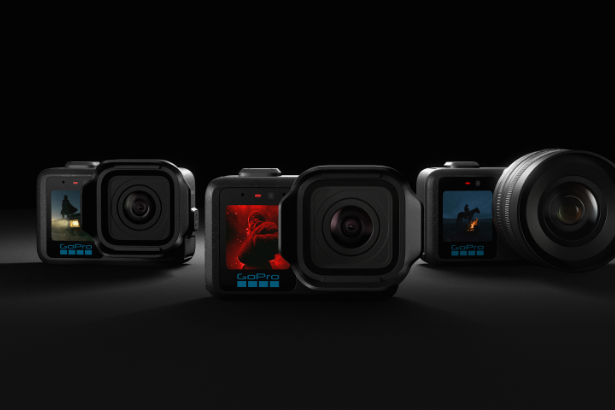
GoPro spent more than two decades building a recognizable consumer technology brand around cameras, imaging and software.
The company went public in 2014 at $24 per share and at one point reached a valuation approaching $4 billion. But expanding beyond its core action-camera market proved difficult, and the company entered 2026 looking for strategic alternatives.
In May, GoPro announced that it had retained investment bank Houlihan Lokey to evaluate a potential sale and other strategic options after receiving unsolicited interest from parties across multiple industries.
The strategic review became increasingly urgent as the company’s operating performance weakened.
GoPro’s second-quarter results showed revenue declining 31% year over year, according to Bicycle Retailer. Around the same period, founder and CEO Nicholas Woodman indicated that the company was approaching a decision about its future.
Now the answer is clear.
GoPro is using a merger with an optical-photonics company to transform itself from a consumer-camera specialist into a broader imaging and optical technology business.
Latest Update or News Breakdown: The GoPro Starman Optical Merger
Under the definitive agreement announced September 1, GoPro shareholders will receive approximately $285 million in aggregate cash, equivalent to $1.14 per share. The amount remains subject to potential adjustment based on GoPro’s net working capital at closing. Shareholders will also retain approximately 10% of the combined company’s outstanding shares.
The transaction is expected to close by the end of 2026, assuming regulatory approvals, GoPro shareholder approval and other customary closing conditions are satisfied.
The $92 million debt problem gets addressed
One of the most consequential elements of the transaction is the treatment of GoPro’s balance sheet.
Approximately $92 million of GoPro’s outstanding debt will be repaid in full at closing, leaving the combined company with a substantially debt-free balance sheet.
That gives the transaction a recapitalization component rather than making it purely about adding a new business.
Bicycle Retailer describes the merger as an effort to maximize GoPro’s intellectual property and growth potential while strengthening its balance sheet and investing in strategic markets.
Starman brings optical transceivers into GoPro
This is where the deal gets particularly interesting.
Starman Optical develops optical transceivers and related photonics technologies. These components convert electrical computer data into optical signals that can travel through fiber-optic networks at high speeds.
That technology is increasingly important to AI data centers.
Large AI systems require enormous quantities of data to move between servers, accelerators and storage systems. As computing capacity increases, the networking infrastructure connecting those systems becomes a major bottleneck.
Starman’s U.S.-made optical transceivers are intended to give the combined company exposure to that market.
GoPro’s own announcement describes the opportunity as an expansion into the rapidly growing market for optical transceivers supporting AI infrastructure.
For the original announcement, see GoPro’s official merger announcement.
Expert Insights or Analysis
The biggest question surrounding the GoPro Starman Optical merger is whether GoPro can successfully translate its expertise in imaging and optics into infrastructure hardware.
There is a logical connection.
GoPro says it has accumulated more than 2,500 U.S. patents across imaging and optical technologies over its 24-year history.
Starman, meanwhile, brings manufacturing and optical-transceiver capabilities.
Together, the companies are betting that expertise in cameras, optics and image processing can become relevant to much larger technology markets.
AI infrastructure changes the opportunity
The consumer camera market is enormous, but it is also brutally competitive.
Smartphones have absorbed much of the casual photography market, while action cameras occupy a more specialized category. GoPro’s challenge has been finding additional growth engines without abandoning the brand and technology it already built.
AI infrastructure offers a very different market.
The global expansion of AI data centers is creating demand for faster networking, higher bandwidth and increasingly sophisticated optical connectivity.
That does not guarantee that GoPro will become a major AI infrastructure supplier.
But it gives the company access to a market with a fundamentally different growth profile.
The defense angle matters too
The merger is not limited to data centers.
The companies also intend to use their combined intellectual property and optical capabilities across defense, government, robotics and aerospace.
That reflects a broader shift in U.S. technology policy toward domestically manufactured components for strategically important systems.
Starman CEO Charles Tebele specifically positioned the merger around the importance of optics and imaging to AI, national security and the broader economy, while emphasizing the company’s U.S. manufacturing platform.
For GoPro, this could create opportunities that were difficult to access as a pure consumer electronics brand.
Broader Implications
GoPro is betting that its IP is worth more than its camera business
The most revealing part of the transaction may be what GoPro is selling without actually selling it.
The company is not abandoning its existing products.
GoPro says it will continue supporting its consumer products, subscriptions and cloud platform while investing in a broader product roadmap.
Instead, it is trying to extract additional value from the underlying technology.
That distinction matters.
A company can have a declining flagship product category while still owning valuable patents, engineering expertise, manufacturing relationships and technical capabilities.
The Starman transaction is essentially a bet that those assets can be repurposed.
The deal could turn GoPro into an AI infrastructure story
For investors, the narrative around GPRO could change dramatically if the transaction closes.
Instead of evaluating GoPro primarily through action-camera sales, investors will increasingly have to consider:
- Optical transceiver revenue
- AI data-center demand
- Defense and aerospace contracts
- U.S. manufacturing capacity
- GoPro’s existing consumer business
- Subscription and cloud revenue
- Patent and intellectual-property monetization
That creates both opportunity and risk.
The AI infrastructure market is expanding quickly, but it is also populated by companies with deep expertise in networking, optics and semiconductor technology.
GoPro will have to prove that its new structure can compete.
Shareholders are not completely cashed out
The $285 million headline could make the deal sound like a straightforward acquisition.
It is not.
GoPro shareholders receive cash but retain approximately 10% of the combined company.
That means existing investors retain some exposure to whatever the combined business becomes.
In effect, shareholders receive immediate liquidity while keeping a smaller stake in the company’s potential second act.
For more coverage of AI infrastructure, technology companies and major corporate pivots, see The Tech Marketer.
Related History or Comparable Technologies
GoPro’s transformation resembles a broader pattern in technology: companies built around one consumer product increasingly looking for ways to monetize their underlying intellectual property in enterprise markets.
The most obvious technological bridge here is optics.
The same broad discipline that makes compact cameras, lenses and imaging systems possible also intersects with fiber-optic communications, sensing systems and high-speed data transmission.
The difference is scale.
A consumer camera is ultimately an end product. An optical transceiver can become part of the infrastructure supporting thousands of servers.
That changes the economics of the opportunity.
There is also a strategic precedent for companies moving from consumer hardware toward enterprise and defense applications.
As governments and corporations prioritize domestic supply chains for critical technologies, companies with American manufacturing and intellectual property can potentially gain access to markets that were previously difficult to penetrate.
Starman is explicitly positioning its optical technology around that opportunity.
GoPro’s role is to provide a larger public-company platform, additional intellectual property and an established imaging technology base.
What Happens Next
The immediate milestone is the merger closing.
GoPro and Starman expect the transaction to close by the end of 2026, but the agreement remains subject to GoPro shareholder approval, regulatory clearances and other closing conditions.
Investors will also be watching the SEC filings.
GoPro says it intends to file a proxy statement containing additional information about the transaction, and shareholders will be able to review those materials before voting.
The longer-term questions are even more important.
Can Starman’s optical transceiver business scale?
Can GoPro convert its imaging patents into new commercial and defense products?
Can the combined company win meaningful AI data-center customers?
And can GoPro continue to support its consumer camera franchise while management shifts resources toward infrastructure and strategic technology markets?
The answers will determine whether this is a rescue deal or the beginning of a genuine second growth cycle.
Conclusion
The GoPro Starman Optical merger is a striking attempt to rewrite the future of a company once synonymous with action cameras.
The $285 million transaction gives GoPro shareholders $1.14 per share in cash, leaves them with approximately 10% of the combined company and eliminates roughly $92 million of GoPro debt at closing.
But the bigger story is what comes next.
GoPro will combine its imaging and optical expertise with Starman’s U.S.-made optical transceiver technology, targeting AI data centers, government, defense, aerospace and robotics while continuing to support its existing consumer products.
That is a dramatic pivot from cameras to infrastructure.
Whether it works will depend on execution, customer adoption and the ability to turn decades of imaging expertise into technology that matters far beyond the action-camera market.
For now, GoPro is no longer simply trying to find a buyer.
It is trying to become a different kind of technology company.
FAQ
What is the GoPro Starman Optical merger?
The GoPro Starman Optical merger is a proposed transaction combining GoPro with privately held optical-photonics company Starman Optical. GoPro shareholders are expected to receive $285 million in aggregate cash and retain approximately 10% of the combined company.
How much will GoPro shareholders receive?
Shareholders are expected to receive approximately $1.14 per share, representing an aggregate cash payment of $285 million, subject to potential adjustment based on GoPro’s net working capital at closing.
Will GoPro still be publicly traded?
Yes. GoPro says the combined company will remain publicly listed on Nasdaq.
Why is GoPro merging with Starman Optical?
The merger is designed to add Starman’s U.S.-made optical transceiver technology to GoPro’s portfolio and expand the company into AI data-center infrastructure, government, defense, aerospace and other commercial markets.
What happens to GoPro’s camera business?
GoPro says it will continue supporting its existing consumer products, subscription services and cloud platform after the merger.
How much GoPro debt will be repaid?
Approximately $92 million of outstanding GoPro debt is expected to be repaid in full at closing, leaving the combined company with a substantially debt-free balance sheet.
When is the merger expected to close?
GoPro expects the transaction to close by the end of 2026, subject to shareholder approval, regulatory approvals and other customary closing conditions.
What does Starman Optical make?
Starman Optical focuses on optical transceivers and related photonics technologies, including U.S.-made hardware designed to support high-speed data transmission. The technology is intended to expand GoPro’s reach into AI infrastructure.
Sources & References
- GoPro, “GOPRO ENTERS INTO DEFINITIVE AGREEMENT TO MERGE WITH STARMAN OPTICAL, INC.”
Read the official GoPro announcement - Reuters, “GoPro to be acquired by Starman Optical in $285 million deal”
Read the Reuters report - Bicycle Retailer and Industry News, “GoPro to merge with optical-photonics company Starman Optical”
Read the Bicycle Retailer report - GoPro, “GoPro Retains Investment Bank Houlihan Lokey to Pursue Strategic Alternatives”
Read the May strategic alternatives announcement