Introduction
The debate around Shawn Layden Sony handheld strategy is about more than nostalgia for the PlayStation Portable. The former PlayStation executive has offered a candid look back at Sony’s competition with Nintendo and why the company would need a clear plan before attempting another serious move into handheld gaming.
In an interview with The Expansion Pass, Layden recalled that a friend working at Nintendo sent him a blunt text after Sony showed the PSP: “You bastards.” The anecdote captures how seriously Sony’s entry was taken at the time. But Layden’s broader point is more strategic: launching a handheld is not simply a hardware decision. It requires its own identity, sustained marketing, compelling games and a realistic understanding of what portable players want. GamesRadar’s report, syndicated by Yahoo Tech, recounts the interview and Layden’s comments.
His comments arrive as speculation about Sony’s future handheld plans continues to attract attention. They do not confirm that a new PlayStation handheld is coming. Instead, they offer a useful lens for understanding the company’s past successes, missteps and the demands of a changing portable gaming market.
Background and Context
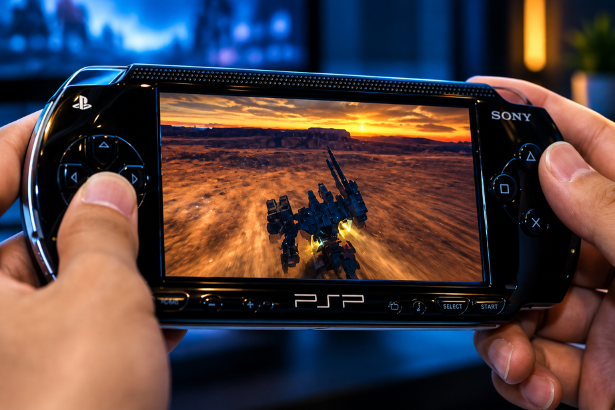
For years, Nintendo had a commanding position in portable gaming through the Game Boy family and, later, the Nintendo DS. Sony challenged that dominance with the PlayStation Portable, commonly known as the PSP, which brought a more console-like experience to a handheld device.
The PSP was a significant hardware success for a competitor entering Nintendo’s strongest territory. The report says the PSP sold around 76 million units, while the Nintendo DS exceeded 154 million. Those totals show the scale of Nintendo’s advantage, but they also make the PSP one of the most commercially successful non-Nintendo handheld platforms.
Sony followed the PSP with the PlayStation Vita. The Vita offered powerful hardware and sophisticated features, but it struggled to establish the same commercial momentum as the DS and other Nintendo platforms.
Layden’s recollections point to a recurring problem for Sony: how to give a portable platform enough resources without weakening the company’s broader console business. Marketing budgets, game development teams and executive attention all have limits. Supporting two platforms at once can become difficult when both need major releases and a clear message to consumers.
Latest Update or News Breakdown
1. The Nintendo text that captured the PSP rivalry
Layden recalled that a Nintendo-employed friend reacted to the PSP reveal with a short message: “You bastards.” He answered jokingly, framing the moment as part of the competitive spirit of the industry.
The exchange was personal, not an official statement from Nintendo. Its significance lies in what it illustrates: Sony’s move into handheld gaming was viewed as a serious challenge to a company that had dominated the category for years.
The exact year of the reveal was not firmly recalled in Layden’s anecdote. The PSP was introduced in the mid-2000s, and the exchange offers a glimpse of the competitive mood surrounding its arrival. Read the full report on Yahoo Tech.
2. Layden says Sony needs focus if it returns to handhelds
The more consequential part of Layden’s comments concerns the way Sony would organize a future handheld effort.
He said Sony has historically struggled to market a home console and a handheld platform at the same time. His suggested solution was to consider a separate organization dedicated to handheld development if Sony decided to re-enter the category.
That proposal is not an announced Sony plan. It is Layden’s assessment of how the company might avoid spreading its attention and marketing resources too thinly.
The argument is straightforward: a handheld needs more than hardware specifications. It needs a coherent product strategy, a steady stream of games and a team that can concentrate on its audience rather than compete internally for resources.
The discussion is also covered by Suaragarut’s report on Layden’s comments about Sony’s handheld strategy.
3. The PSP’s success came with complications
The PSP proved that Sony could attract a substantial audience in portable gaming. But Layden also discussed a challenge that affected the platform: piracy.
According to the interview summary published by GamesRadar, the PSP’s operating system was hacked and the device could be jailbroken relatively easily. That created problems for software sales, even when hardware adoption was strong.
Layden credited Monster Hunter with helping sustain the PSP’s popularity in Japan. Its cooperative play encouraged friends to own the system and participate together. The example illustrates an important lesson for hardware makers: a successful device needs games that give players a reason to buy it and keep using it.
4. The portable market has changed
Layden also questioned the idea that a handheld should simply reproduce the home-console experience in a smaller form. Looking back at the Vita, he suggested that Sony had placed too much emphasis on bringing console-style gaming to a portable device.
The modern market offers a more varied picture. Nintendo’s Switch family combines portable and television play, while PC handhelds such as the Steam Deck make existing game libraries more accessible away from a desk or television.
These devices do not all follow the same business model, but they demonstrate that portability can mean different things to different players. A future Sony device would need to decide whether it is a companion to PlayStation consoles, a standalone gaming platform or a hybrid built around access to an existing library.
Expert Insights or Analysis
Layden’s comments point to four strategic lessons for Sony and other hardware makers.
First, product identity matters more than raw power. Strong hardware can attract attention, but consumers also need to understand what makes a platform worth buying. A handheld designed around distinctive portable experiences may have a clearer proposition than one that simply tries to shrink a living-room console.
Second, exclusive software can shape a platform’s identity. The PSP’s success with games such as Monster Hunter illustrates how a title with strong social and cooperative appeal can encourage hardware adoption. A future handheld would need a convincing software lineup, whether through dedicated releases, cross-platform titles or a combination of both.
Third, separate products create resource pressure. Layden’s suggestion of a dedicated handheld organization reflects the reality that platforms compete for engineering resources, marketing attention and development budgets. A new device would need a plan for funding and supporting it over several years, not just a launch campaign.
Fourth, the economics must work for developers and players. Hardware adoption alone is not enough. Sony would need a business model that gives developers reasons to support the device and gives players a reason to purchase games on it. Pricing, battery life, library access, compatibility and ease of use would all influence that decision.
These are strategic interpretations of Layden’s comments, not confirmation of Sony’s current internal plans. Whether the company returns to handheld hardware remains a separate question.
Broader Implications
The discussion around Shawn Layden’s Sony handheld strategy reflects a wider shift in gaming. Players increasingly expect their games to follow them across devices, but they do not necessarily want every portable device to deliver the same experience.
Nintendo has built a strong identity around hybrid play and distinctive first-party software. PC handhelds have leaned on access to existing libraries and the flexibility of PC gaming. Sony, meanwhile, has a large PlayStation ecosystem that could be an advantage if it chose to pursue another portable product.
Yet the opportunity comes with trade-offs. A companion device that streams or remotely accesses console games may be easier to position than a fully independent platform, but its value depends on connectivity and the user’s existing setup. A standalone handheld offers more independence but requires a deeper investment in software support, hardware development and platform services.
For Sony, the question is not simply whether demand for portable gaming exists. It is whether the company can offer a product that stands apart, fits its broader PlayStation strategy and earns sustained support from developers.
For The Tech Marketer, this topic would pair naturally with an internal explainer on the evolution of gaming hardware and platform strategy. This is a suggested internal link; choose a relevant published article URL before publication.
Related History or Comparable Technologies
The PSP and Vita offer two different lessons from Sony’s history in portable gaming.
The PSP demonstrated that a company outside Nintendo could build a large handheld audience. It combined multimedia features with console-style gaming and developed a meaningful software library. But the platform’s piracy challenges complicated the relationship between hardware ownership and game sales.
The Vita, meanwhile, showed the difficulty of sustaining a portable ecosystem when developers and marketing resources are limited. Powerful hardware alone could not guarantee a broad audience or consistent software support.
Nintendo’s DS took a different route. Its dual-screen design and touch interface gave it a distinct identity, while its software appealed to a wide range of players. The eventual sales gap between the DS and PSP reflects more than technical specifications. It also reflects product positioning, software selection and the breadth of the audience each platform reached.
More recently, the Switch and Steam Deck have shown how portability can be integrated with existing gaming habits. One emphasizes a tightly managed console ecosystem, while the other gives players access to a broad PC library.
Sony would not need to copy either model. But their success suggests that the strongest handheld proposition is often about convenience, software and a clear use case, not simply packing more processing power into a smaller device.
What Happens Next
There is no confirmed new Sony handheld announcement in the reports discussed here. The most useful indicators to watch are therefore strategic rather than speculative.
- Official hardware announcements: Sony’s own communications would be the clearest evidence of a new portable product.
- PlayStation software strategy: More information about cross-device access, compatibility and game releases could indicate how Sony views portable play.
- Developer support: A credible handheld needs a software pipeline. Developer partnerships and a clear approach to game distribution would be important signals.
- Product positioning: Sony would need to explain whether a future device is a companion to the PS5 ecosystem or a standalone platform.
- Pricing and long-term support: Hardware costs, battery life, game availability and ongoing platform investment would help determine whether a new product could sustain demand.
Layden’s comments do not predict a launch date. They provide a framework for judging any future announcement: the device must have a clear purpose, enough support and an organization capable of keeping it relevant.
Conclusion
Shawn Layden’s reflections on the PSP and Sony’s handheld strategy offer more than a colorful story about a Nintendo employee’s reaction. They highlight the practical challenges behind competing in portable gaming, from software support and piracy to marketing focus and product identity.
The PSP proved that Sony could make a serious mark in Nintendo’s territory. The Vita showed that technical ambition alone could not guarantee a durable platform. Today’s portable gaming market has evolved, giving Sony new possibilities but also raising expectations around convenience, libraries and cross-device play.
If Sony returns to handheld hardware, its success will depend less on nostalgia or headline specifications than on whether it can define a product people genuinely want, support it consistently and give developers a compelling reason to build for it.
FAQ
1. What did Shawn Layden say about Sony’s handheld strategy?
Layden said Sony has historically struggled to market home consoles and handhelds at the same time. He suggested that a separate organization focused on handheld development could help if Sony re-entered the category.
2. What was Nintendo’s reaction to the PSP reveal?
Layden recalled that a friend working at Nintendo texted him, “You bastards,” after Sony showed the PSP. It was a personal anecdote, not an official Nintendo statement.
3. How many units did the PSP sell?
The report cited by Yahoo Tech puts PSP sales at approximately 76 million units. The Nintendo DS exceeded 154 million units, making it the stronger seller in that generation’s handheld competition.
4. Why did the PSP face challenges despite strong hardware sales?
Layden pointed to piracy and the ease of jailbreaking the system as problems for software sales. He also highlighted the importance of games such as Monster Hunter in sustaining demand.
5. Does Shawn Layden’s interview confirm a new PlayStation handheld?
No. His comments discuss what Sony might consider if it returned to handheld gaming. They do not confirm a new device, release date or official hardware plan.
6. What could make a future Sony handheld successful?
A clear product identity, compelling games, reliable developer support, attractive pricing and a sustainable relationship with the existing PlayStation ecosystem would all matter. The exact formula would depend on whether Sony chose a companion device or a standalone platform.
Sources & References
- “Ex-PlayStation boss recalls Nintendo employee’s reaction to the PSP reveal: ‘You bastards’”, GamesRadar+ via Yahoo Tech.
https://tech.yahoo.com/gaming/articles/ex-playstation-boss-recalls-nintendo-220006175.html - “Shawn Layden Urges Sony to Rethink Its Handheld Strategy”, SuaraGarut.
https://suaragarut.id/en/layden-sony-handheld-strategy - “Ex-PlayStation Executive Reveals Nintendo Employee’s Reaction to the PSP Reveal”, GoNintendo.
https://gonintendo.com/contents/65922-ex-playstation-executive-reveals-nintendo-employee-s-reaction-to-the-psp-reveal - “‘You Bastards’ – Ex-PlayStation Exec Shawn Layden Reveals What a Nintendo Counterpart Thought About PSP”, Time Extension.
https://www.timeextension.com/news/2026/10/you-bastards-ex-playstation-exec-shawn-layden-reveals-what-a-nintendo-counterpart-thought-about-psp