The FCC foreign robots power inverter ban became official on Tuesday, July 29, 2026, when the Federal Communications Commission added foreign-produced advanced robotic devices and connected power inverters to its Covered List, effectively blocking all new models of these products from receiving FCC equipment authorization for sale in the United States. The action follows national security determinations by a White House-convened executive branch interagency body that concluded both product categories create unacceptable cybersecurity and supply chain risks to American critical infrastructure. The ban covers two-legged humanoid robots, four-legged robot dogs, and other advanced mobile robotic devices, as well as the connected power inverters that enable renewable energy sources and batteries to interface with the electrical grid and data center equipment. Manufacturers located abroad can apply for exemptions through a new Conditional Approval process, but obtaining one requires sign-off from either the Department of War for robotics or the Department of Homeland Security for power inverters.
What the FCC Covered List Does and Why It Matters
The FCC’s Covered List is the agency’s primary mechanism for blocking communications equipment deemed to pose unacceptable national security risks from entering or remaining in the US market. Products added to the list become ineligible for FCC equipment authorization, which is required for any device that uses radio frequency communications to be legally sold in the United States. Previous additions to the list have included equipment from Huawei, ZTE, Hikvision, Dahua, and Hytera Communications, as well as a more recent ban on new foreign-made consumer internet routers. Tuesday’s addition of advanced robots and power inverters represents one of the most sweeping expansions of the list in terms of market impact, given the scale of Chinese manufacturing dominance in both categories.
The FCC said Tuesday’s action follows national security determinations by a White House-convened executive branch interagency body concluding foreign-produced power inverters and advanced robotic devices create unacceptable cybersecurity and supply chain risks. The action applies to new device models only, meaning products already sold and deployed in the United States are not immediately affected, though the long-term implication for installed base security is a separate and unresolved question that national security agencies have flagged as a concern.
Why Robots Are a National Security Threat
The specific security concerns the interagency body identified for advanced robotic devices center on data collection and the potential for remote manipulation. Robots “collect data that could be leveraged by malign actors to surveil Americans, enhance the capabilities of foreign intelligence services, or to remotely commandeer the robots,” the FCC said. Nextgov.com
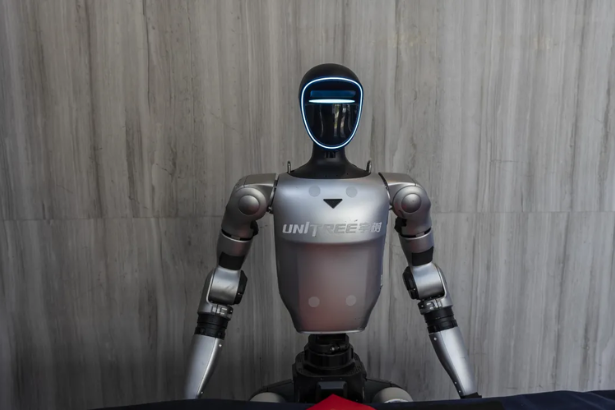
The two categories of advanced robots covered by the ban, humanoid bipedal robots and quadruped robot dogs, are the most commercially and industrially significant robotic form factors currently being deployed at scale in the United States. Humanoid robots are being adopted in manufacturing, logistics, and warehousing at an accelerating pace, while quadruped robots have been deployed in industrial inspection, security, and military applications. Both collect significant amounts of environmental data through cameras, lidar, and other sensors, and both maintain persistent wireless connectivity for remote monitoring and control.
Newly prohibited robotic devices cover two-legged and four-legged varieties. Such advanced devices could collect data used by foreign adversaries to surveil Americans and conduct espionage, the interagency determined. The concern is not hypothetical in the context of the broader US-China technology competition. Chinese robotic manufacturers including UBTECH, Unitree, and others have been rapidly expanding export operations into the United States and Europe, and the data collection capabilities of their devices have drawn scrutiny from security researchers and government officials for several years. Daily Sabah
Why Power Inverters Are a National Security Threat
The power inverter component of the ban targets a less immediately visible but potentially more consequential threat to American infrastructure. Power inverters are the devices that convert direct current electricity from solar panels, batteries, and other sources into the alternating current used by the electrical grid and by data center equipment. China is the world’s largest manufacturer of inverters, led by Sungrow Power Supply and Huawei, with Chinese manufacturers having expanded their share of the Western inverter market significantly by driving down prices.
For power inverters, the agencies cited risks tied to foreign-produced or controlled inverters and connected inverter components. The determination said remote connectivity could create vulnerabilities affecting the US power grid, including the potential for data theft, surveillance, remote access or cyberattacks. The grid vulnerability is not theoretical. Cybersecurity researchers have demonstrated that internet-connected inverters can be accessed remotely and that a coordinated attack on a significant number of grid-connected inverters could disrupt electricity supply at a regional or national scale. Nextgov.com
Cybersecurity experts and other governments have flagged power inverters as a mounting source of risk to the electric grid. The French government earlier this year limited sales of Chinese photovoltaic components and Lithuania effectively banned Chinese inverters from its solar installations. The US action is the most sweeping Western restriction on inverter sales to date and arrives as electricity demand continues to grow rapidly driven by data center expansion for AI infrastructure. Daily Sabah
The Conditional Approval Exemption Process
The ban is not absolute. Manufacturers may seek exemptions through a new Conditional Approval process if the Department of War, or in the case of power inverters, the Department of Homeland Security, determines a specific device or class of devices does not pose national security risks. The Conditional Approval pathway is designed to allow foreign manufacturers who can demonstrate adequate security controls, supply chain transparency, and manufacturing practices that reduce espionage risk to continue selling in the US market. In practice, obtaining conditional approval is expected to be a demanding process given the national security agency determinations underpinning the ban.
The restriction applies to all foreign countries, not solely to China, though the practical impact falls most heavily on Chinese manufacturers given their dominant market share in both advanced robotics and connected power inverters. Non-Chinese foreign manufacturers in Japan, South Korea, and Europe may find the Conditional Approval pathway more accessible given existing intelligence-sharing relationships and supply chain transparency standards.
FCC Chairman Brendan Carr and Congressional Support
FCC Chairman Brendan Carr was explicit about the action’s connection to the broader Trump administration national security posture. “I welcome these Executive Branch national security determinations, and I am pleased that the FCC has now added foreign produced advanced robotics and power inverters to the FCC’s Covered List. Following President Trump’s leadership, the FCC will continue to do our part to secure America’s critical supply chains and, with today’s action, the FCC is acting in lock step with our national security agencies to do just that,” Carr said. AOL
US Representative John Moolenaar, a Republican who chairs the House Select Committee on China and has proposed legislation targeting Chinese robots for national security reviews and potential bans, said the FCC move “protects our country and strengthens our nation’s robotics industry.” Moolenaar’s framing of the ban as benefiting the domestic robotics industry alongside its national security rationale reflects the dual-use logic that has characterized much of the Trump administration’s technology competition policy with China. Nextgov.com
Market Implications: Robot and Inverter Industry Reaction
The ban’s market implications are significant for both sectors. The FCC announced a ban on new foreign-made advanced robots and connected power inverters, citing “unacceptable risks” to national security. “These devices could create supply chain vulnerabilities that could disrupt US economic and national security,” the FCC said. The robotics ETF market, including ROBO, BOTZ, ARKQ, and IBOT, will be watched closely for how investors interpret the ban’s impact on both foreign manufacturers and domestic US robotics companies that now face reduced competition from Chinese imports in the new model market. Fox Business
For the solar and renewable energy sector, the inverter ban creates a more immediate infrastructure challenge. Chinese inverters are deeply embedded in existing US solar installations, and the ban on new models will push solar developers toward non-Chinese alternatives from companies like SolarEdge, Enphase, SMA, and Fronius, all of which have existing US market presence but will face significant demand increases. Whether those manufacturers have the production capacity to meet accelerated US demand without price increases or supply delays is an open question that the solar industry will be working through in the months following the ban’s announcement.
Latest Updates
The FCC announced the ban on Tuesday, July 29, 2026. The Verge reported the full scope of the FCC Covered List additions covering foreign robots and power inverters and the national security determination process behind the action. Bank Information Security confirmed the interagency determination process, FCC Chairman Carr’s statement, the Conditional Approval exemption pathway, and the parallel actions taken by France and Lithuania against Chinese inverters. The AI Insider confirmed China’s Ministry of Commerce response, which highlighted that Chinese industrial robot exports surged 18.6% and 3D printer exports rose 109.3% year over year in the first half of 2026, framing the export growth as a point of national pride even as the US ban was announced.
Sources: The Verge | Bank Information Security | Fox Business
Broader Implications
The FCC’s expansion of the Covered List to include advanced robots and power inverters marks a significant escalation in the US-China technology competition across two product categories that are central to the country’s infrastructure future. Advanced robots are being deployed throughout the manufacturing and logistics sectors that underpin the US economy. Connected power inverters are the enabling technology for the solar and battery storage systems that will carry an increasing share of the US electrical grid as the country builds out renewable energy capacity. Placing both categories under national security restriction simultaneously signals that the Trump administration views the AI and energy infrastructure buildout as a unified strategic battleground rather than two separate policy domains. For more tech and national security coverage, visit thetechmarketer.com.
3. FREQUENTLY ASKED QUESTIONS
- What did the FCC ban on foreign robots and power inverters cover?
The FCC added foreign-produced advanced robotic devices and connected power inverters to its Covered List on July 29, 2026, blocking new models of both product categories from receiving FCC equipment authorization for sale in the United States. The robotics ban covers two-legged humanoid robots and four-legged quadruped robot dogs. The inverter ban covers grid-connected power inverters used in solar, battery storage, and data center applications.
- Why did the FCC ban foreign-made robots and power inverters?
The FCC action follows national security determinations by a White House-convened interagency body that concluded both product categories create unacceptable cybersecurity and supply chain risks. Robots were flagged for their data collection capabilities that could enable foreign surveillance or remote commandeering. Power inverters were flagged for their remote connectivity to the electrical grid, which could enable cyberattacks, data theft, or grid disruption.
- Does the FCC foreign robot and power inverter ban apply only to Chinese products?
The ban applies to all foreign countries, not solely to China. However, the practical impact falls most heavily on Chinese manufacturers, who dominate global production of both advanced robots and connected power inverters. Non-Chinese foreign manufacturers can apply for Conditional Approval exemptions through the Department of War for robotics or the Department of Homeland Security for power inverters.
- Can foreign companies still sell robots and power inverters in the US after the ban?
Foreign manufacturers of new robot and power inverter models can apply for exemptions through a new Conditional Approval process. Exemptions require the Department of War to determine a robotic device, or the Department of Homeland Security to determine a power inverter, does not pose national security risks. Existing products already sold and deployed in the United States are not immediately affected by the ban.
- How does the FCC power inverter ban affect the US solar energy industry?
Chinese inverter manufacturers including Sungrow and Huawei have dominated the US solar market through aggressive pricing. The ban on new foreign-made connected power inverters will redirect solar developers toward non-Chinese alternatives such as SolarEdge, Enphase, SMA, and Fronius. Whether those manufacturers can meet accelerated US demand without significant price increases or supply delays is the central near-term question for the solar industry following the FCC action.
4. SOURCES AND REFERENCES
- The Verge: US to Ban Foreign Robots and Power Inverters Over National Security Concerns
- Bank Information Security: US FCC Bans Sales of Foreign-Made Power Inverters and Robots
- Fox Business: FCC Blocks New Foreign-Made Power Inverters and Advanced Robots Over National Security Risks