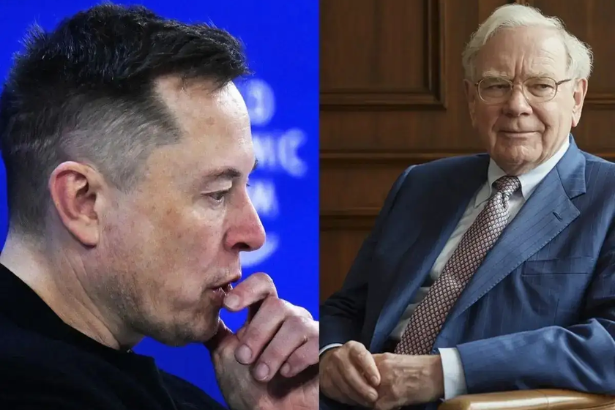
The Elon Musk national debt plan is not actually Elon Musk’s plan. It belongs to Warren Buffett, dates back to 2011, and involves one of the most elegantly brutal ideas ever proposed for fixing Washington’s chronic spending problem: make every sitting member of Congress ineligible for reelection the moment the federal deficit exceeds 3% of GDP. Musk endorsed it on X with three words. Now it is one of the most-discussed fiscal policy ideas in the country.
What Is the Elon Musk National Debt Plan?
Elon Musk has joined the likes of Bridgewater founder Ray Dalio and Treasury Secretary Scott Bessent in supporting a solution to lowering the national debt, made famous by former Berkshire Hathaway CEO Warren Buffett. Fortune
The idea itself originated in a 2011 CNBC interview with Buffett, who proposed a direct accountability mechanism targeting Congress’s spending incentives. Musk gave the plan his full endorsement, writing “This is the way” on X after sharing the original interview. Fortune
The proposal is simple. Pass a law stating that any time the federal deficit exceeds 3% of GDP, every sitting member of Congress becomes ineligible for reelection. Buffett’s argument is that the current system misaligns incentives. Politicians can run deficits without personal consequence. His proposal changes that calculus entirely by making fiscal discipline a condition of continued political survival.
The National Debt Numbers Driving This Conversation
The reason this proposal is gaining renewed attention in 2026 is not ideological. It is mathematical.
Last year, the national debt ballooned by $2.6 trillion and currently stands at $38.9 trillion, or 124% of the economy, according to the U.S. Treasury. Recently, the country’s public liabilities, the portion of the national debt the federal government owes people outside the government, exceeded the size of the economy for the first time since World War II. Fortune
Interest costs have become another pressure point. This cost exceeds $22 billion per week, according to the Congressional Budget Office. To put that figure in human terms: the United States is paying more in weekly interest on its debt than most countries spend on their entire annual defense budgets. clickpetroleoegas
The national debt is set to reach $40 trillion in the near future if it continues to grow at its current pace. That trajectory is what makes even historically radical ideas like Buffett’s worth reconsidering in serious policy circles. Fortune
Who Else Is Backing the Elon Musk National Debt Plan?
Musk’s endorsement matters because of his platform and reach, but he is not alone in supporting the 3% GDP deficit target. The coalition behind this idea is broader and more credentialed than a single X post suggests.
Bridgewater founder Ray Dalio and Treasury Secretary Scott Bessent have both joined in supporting a solution to lowering the national debt along the lines of the 3% of GDP framework. Dalio has spent years warning publicly about the long-term systemic risks of US debt levels. Bessent, as Treasury Secretary, brings direct policy authority to the conversation. Fortune
The Committee for a Responsible Federal Budget also endorses the 3% of GDP target. The nonpartisan think tank warned on March 9 that the average interest rate on the national debt could exceed economic growth by fiscal year 2031, and that once interest rates exceed the growth rate, primary deficits will lead debt to grow indefinitely. clickpetroleoegas
A bipartisan group of representatives introduced a resolution in January to lower the deficit to 3% of GDP, though the ineligibility mechanism Musk specifically endorsed has not gained traction among legislators, for obvious reasons. Fortune
Warren Buffett’s Own View on What Comes Next
Buffett’s position on the national debt goes beyond the five-minute proposal. He has been consistent for years in his warnings about where unchecked deficit spending eventually leads.
In 2024, Buffett predicted higher taxes were coming for businesses, saying that leaders may decide they don’t want the fiscal deficit to be so large, and that they may decide to take a larger percentage of corporate earnings rather than decrease spending significantly. At that point, the national debt was more than $34 trillion, or 122% of GDP. Fortune
In two years, the debt has grown from $34 trillion to $38.9 trillion, and the GDP ratio has worsened. Buffett’s prediction of an eventual tax reckoning is looking more like analysis than speculation. His best assessment remains that US debt will remain acceptable for a considerable period because there is not much alternative for global investors. That is not optimism. It is a measured acknowledgment that the dollar’s reserve currency status provides a buffer that other nations do not have. Fortune
The Political Problem With Buffett’s Idea
The elegance of the proposal is also its political impossibility. You are asking Congress to pass a law that punishes Congress for behavior Congress controls. The incentives to pass such a law are structurally misaligned with the incentives of the people who would need to vote for it.
Members of Congress have not shown receptiveness to the ineligibility mechanism advocated by the proposal, despite the bipartisan resolution introduced in January to address the 3% of GDP deficit target more broadly. Endorsing a lower deficit target is politically manageable. Endorsing a law that ends your career if the target is missed is a different conversation entirely. clickpetroleoegas
Musk’s DOGE work throughout 2025 and into 2026 has attempted to address the spending side of the equation through executive branch efficiency measures rather than legislative constraints on Congress. His endorsement of Buffett’s proposal represents a different strategy entirely: change the incentive structure that produces the spending in the first place.
Broader Implications: What the Debt Crisis Means for Tech and Markets
The conversation around the Elon Musk national debt plan is not happening in a vacuum. The CRFB has warned that once interest rates exceed economic growth, primary deficits will lead debt to grow indefinitely, creating a feedback loop that becomes increasingly difficult to exit without either significant tax increases, dramatic spending cuts, or both. Fortune
For the technology sector, the implications are direct. Government debt levels influence interest rates, which influence venture capital availability, startup valuations, and the cost of capital for every company building in the AI and hardware space. A fiscal spiral that forces the Fed’s hand would ripple through every sector of the economy Musk operates in. The endorsement of Buffett’s plan is not purely ideological. It is also self-interested in the most rational sense. For more on how fiscal policy intersects with the technology industry, visit The Tech Marketer.
Latest Updates
The national debt debate is accelerating in Washington and across financial media. Here is where to follow the full story:
- Fortune has the full breakdown of Musk’s endorsement of Warren Buffett’s five-minute deficit plan, including the history of the proposal and which major financial figures have joined in supporting it. Read more at Fortune
- CPG Click Petroleo e Gas has detailed coverage of the $38.9 trillion debt figure, the $22 billion weekly interest cost, and the bipartisan resolution introduced in January targeting the 3% of GDP deficit threshold. Read more at CPG Click
- Harian Basis covers Musk’s position on backing a federal law that would ban congressional reelection when deficit spending crosses the 3% of GDP threshold, and what it signals about his broader fiscal priorities. Read more at Harian Basis
FAQ: Elon Musk National Debt Plan
1. What is the Elon Musk national debt plan? The Elon Musk national debt plan refers to his endorsement of Warren Buffett’s 2011 proposal to make all sitting members of Congress ineligible for reelection whenever the federal deficit exceeds 3% of GDP.
2. How large is the US national debt in 2026? The US national debt stands at $38.9 trillion, equivalent to 124% of the economy, having grown by $2.6 trillion in the past year alone, with public liabilities exceeding GDP for the first time since World War II.
3. Who else supports the Elon Musk national debt plan’s 3% GDP target? In addition to Elon Musk, supporters of the 3% GDP deficit target include Bridgewater founder Ray Dalio, Treasury Secretary Scott Bessent, and the nonpartisan Committee for a Responsible Federal Budget.
4. Why hasn’t Congress passed the deficit-linked reelection ban? Members of Congress have not supported the ineligibility mechanism because it would directly penalize them for budget outcomes they influence but cannot fully control, creating an obvious conflict of interest in the legislative process.
5. What does Warren Buffett think will happen if the US debt keeps growing? Buffett has predicted that rising debt will eventually force lawmakers to raise corporate taxes significantly rather than cut spending, and has stated that US debt will remain acceptable for a long period due to the lack of an alternative global reserve currency.
Sources and References
- Fortune: ‘This is the way’: Elon Musk Endorses Warren Buffett’s Famed 5-Minute Plan to Fix the National Debt
- CPG Click Petroleo e Gas: US$38.9 Trillion Debt: Elon Musk Supports Warren Buffett’s Radical Plan That Promises to End the US Deficit in 5 Minutes
- Harian Basis: Musk Backs Federal Deficit Law to Ban Congressional Reelection