


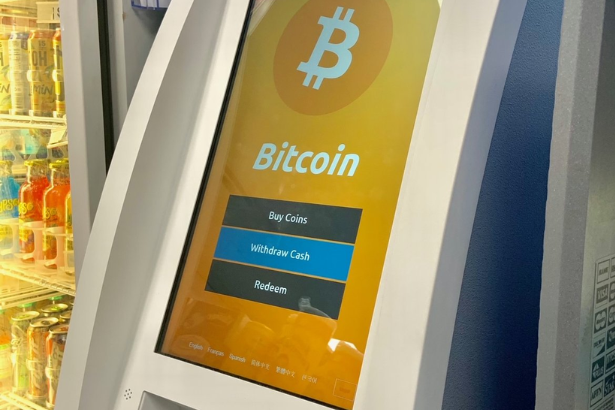
The Bitcoin ATM scam epidemic just hit two massive inflection points at the same time: the nation’s largest Bitcoin ATM operator filed for bankruptcy, and a retired Idaho couple sued that same company in federal court after losing every dollar of their retirement savings to criminals who used its machines as the collection mechanism. Neither story is a coincidence. They are the same story.
How the Bitcoin ATM Scam Actually Works
The mechanics are devastatingly simple, which is why they keep working. A scammer calls the target, usually an older adult, and impersonates a trusted authority: a Norton customer service agent, an FBI investigator, a Social Security officer. The false claim is always alarming: your accounts are linked to criminal activity, you’re about to be arrested, you owe back taxes, you’re compromised.
Then comes the “solution.” The target is told they must move their money to a secure wallet to protect it from the investigation, and they must do it immediately. They’re directed to a Bitcoin ATM, often located inside a gas station or convenience store, where they feed in cash. The machine converts it to cryptocurrency and sends it to a wallet the scammer controls. The transaction is instantaneous and irreversible.
Federal Trade Commission data cited in one complaint shows Bitcoin ATM fraud losses increased nearly tenfold between 2020 and 2023, with a median victim loss of $10,000. By 2025, the numbers got significantly worse. The FBI reported Americans lost $333 million to Bitcoin ATM fraud, with more than 10,000 victims in a single year. topclassactionsbitcoinmagazine
The $76,000 Case That Became a Federal Class Action
Karen and Robert Lacey of Idaho are now the face of this crisis in federal court. The couple say fraudsters posing as Norton customer service representatives and FBI agents convinced them their accounts were tied to child pornography and illegal gambling investigations, then directed them to deposit cash at Bitcoin Depot ATMs between August 9 and August 13, 2025. bitcoinmagazine
To reinforce the deception, the fraudsters caused wireless networks labeled “FBI” to appear on the Laceys’ phones, signals that remained visible for months after the deposits. They deposited $76,000 over five days, the entirety of their retirement savings. bitcoinmagazine
The class action lawsuit argues that despite obvious red flags, including first-time users making large cash deposits while visibly acting under telephone instructions from unknown parties, Bitcoin Depot’s ATM processed each transaction without meaningful intervention, taking its substantial cut before transferring the remainder to the scammer’s wallet. topclassactions
The company’s response was not proportionate. After the Laceys’ son filed a federal crime complaint, Bitcoin Depot issued two $1,000 refund checks, a total the lawsuit states did not cover even the fees the company had collected. topclassactions
Karen Lacey was retired when the fraud occurred and was subsequently forced back into the workforce, now working rotating hospital shifts as a result of losing her entire savings. topclassactions
The lawsuit, filed May 11, 2026 in the U.S. District Court for the District of Idaho, also points to the company’s own disclosures. The complaint cites Bitcoin Depot’s SEC filings, which state its services “may be exploited to facilitate illegal activity such as fraud” and that its risk management “may not be sufficient.” bitcoinmagazine
Bitcoin Depot Files Chapter 11: The Largest ATM Operator Collapses
The legal pressure didn’t arrive in isolation. Bitcoin Depot filed for voluntary Chapter 11 bankruptcy on May 18, 2026, and shut down its entire network of more than 9,000 ATMs across North America. The company had already been bleeding. Bitcoin Depot had disclosed a $3.6 million Bitcoin theft from its own wallets in March 2026 and reported a 49.2% revenue decline in Q1 2026. bitcoinmagazinebitcoinmagazine
The company’s CEO cited increasing regulation and some outright bans on the machines as part of the pressure facing the industry. That regulatory wave is not theoretical. State after state has been tightening rules, and Florida’s new legislation is among the most aggressive. wfla
The collapse of Bitcoin Depot does not resolve the Lacey case, or the thousands of other victims whose funds were processed through the company’s machines before it went dark. With the company now in bankruptcy proceedings, the path to recovery for fraud victims becomes significantly more complicated.
Florida’s New Law Targets Bitcoin ATM Fraud
Florida has been ground zero for Bitcoin ATM fraud, and state lawmakers have now passed legislation designed to slow the bleeding. The new law is expected to take effect in January and would limit deposits for new users to $2,000 per day, with higher thresholds of $10,000 per day for existing customers. The logic is simple: most fraud schemes require victims to make large transfers quickly. A $2,000 daily cap breaks that mechanism. wfla
One recent Florida case involved Beth Gibson, who says she lost $6,000 after falling victim to a scheme that began with a phone call from someone posing as law enforcement, who falsely claimed she would be arrested for missing jury duty. The caller directed her to pay “bail” through a Bitcoin ATM, with a promise the money would be refunded. wfla
Bill co-sponsor Michael Owen made clear what the law is and is not about. Owen said the legislation is not meant to put businesses out of business, but pointed to cases involving losses of up to $240,000 over a series of days, adding that “that’s just not something we can allow in Florida.” wfla
Authorities say these scams are difficult to combat because the machines are often located in gas stations and allow money to be transferred quickly and anonymously. Once funds are sent, recovery is nearly impossible. wfla
5 Red Flags That Signal a Bitcoin ATM Scam
Anyone who uses or helps family members use Bitcoin ATMs should know exactly what a scam looks like before it costs everything.
1. Authority impersonation. Any call from someone claiming to be the FBI, IRS, Social Security Administration, or a major tech company like Norton or Microsoft that leads to a financial request is fraudulent. These agencies never collect payments via cryptocurrency.
2. Urgency and secrecy. Scammers create artificial time pressure and often specifically tell targets not to tell family members what they’re doing. Real law enforcement does not operate this way.
3. On-phone instructions at the machine. The lawsuit against Bitcoin Depot specifically cited first-time users making large cash deposits while visibly acting under telephone instructions from unknown parties as a red flag the machines did not flag or respond to. topclassactions
4. Fees of up to 50%. Bitcoin Depot charged fees of up to 50% per transaction and relied primarily on on-screen warning stickers as its consumer protection mechanism, a safeguard the plaintiffs called demonstrably ineffective. Any ATM charging those rates is a hostile financial instrument for most legitimate uses. topclassactions
5. The “FBI network” trick. The Lacey case documented scammers spoofing wireless network names to display “FBI” on victims’ phones, a social engineering technique designed to reinforce the credibility of the fake investigation narrative.
What Victims Can Do After a Bitcoin ATM Scam
Recovery is hard, but it is not impossible. Victims should immediately file reports with the FTC at reportfraud.ftc.gov, the FBI’s Internet Crime Complaint Center at ic3.gov, and their state attorney general’s office. If a Bitcoin ATM company is named in a class action, victims may be able to join the lawsuit.
The Lacey case, formally titled Lacey, et al. v. Bitcoin Depot Inc., et al., Case No. 1:26-cv-00288-DKG, is being handled by attorneys at Barkley Smith Law PLLC and DannLaw. Anyone who suffered losses through Bitcoin Depot ATMs should review the case details for potential eligibility.
Latest Updates
All three major developments converged in late May 2026. Top Class Actions reported that plaintiffs Karen and Robert Lacey filed the class action in Idaho federal court, alleging Bitcoin Depot’s ATMs facilitated an impersonation scam that cost them $76,000 in savings. Bitcoin Magazine confirmed that Bitcoin Depot filed for Chapter 11 bankruptcy on May 18, 2026, shutting down its network of more than 9,000 ATMs across North America. WFLA’s investigative reporter Shannon Behnken confirmed that Florida lawmakers have approved a bill capping new-user Bitcoin ATM deposits at $2,000 per day, set to take effect in January. topclassactions + 2
Full sources: Top Class Actions | Bitcoin Magazine | WFLA
Broader Implications
The Bitcoin Depot collapse is not the end of the Bitcoin ATM industry. Thousands of machines from competing operators remain operational. The fraud playbook that destroyed the Laceys will be used again. What this moment represents is a regulatory and legal reckoning that has been building for years, one that kiosk operators benefiting from the opacity of cash-to-crypto transactions can no longer avoid.
The core problem is structural. Bitcoin ATMs make money on transaction fees. The higher the volume and the faster the transaction, the more revenue they generate. Fraud schemes require exactly the same conditions: large amounts, moved fast, no questions asked. Until regulations or liability exposure force operators to slow that down, the incentive structure remains misaligned.
Florida’s $2,000 daily cap is a start. Federal legislation may follow if the FTC and FBI data continues to mount. The Lacey lawsuit, if it survives the bankruptcy proceedings, could establish a precedent that ATM operators have a duty of care when obvious fraud patterns appear at their machines.
For more coverage of scams, consumer protection, and the intersection of tech and finance, visit The Tech Marketer.
Frequently Asked Questions
1. What is the Bitcoin ATM scam and how does it work? A Bitcoin ATM scam typically involves criminals posing as law enforcement, government agencies, or tech companies who convince victims they face legal or financial danger. Victims are instructed to withdraw cash and deposit it at a Bitcoin ATM to a wallet controlled by the scammer. Funds are transferred instantly and are nearly impossible to recover.
2. What happened to Bitcoin Depot in 2026? Bitcoin Depot, once the largest Bitcoin ATM operator in North America with over 9,000 machines, filed for Chapter 11 bankruptcy on May 18, 2026. The company had suffered a $3.6 million internal Bitcoin theft, a 49.2% revenue decline in Q1 2026, and mounting regulatory pressure before shutting down its entire network.
3. What is the Lacey vs. Bitcoin Depot lawsuit about? Karen and Robert Lacey of Idaho filed a federal class action against Bitcoin Depot after scammers used its ATMs to drain their $76,000 retirement savings over five days in August 2025. The lawsuit alleges the company failed to intervene despite obvious red flags, charged fees up to 50%, and relied on ineffective warning stickers as its only consumer protection.
4. What is Florida doing to stop Bitcoin ATM fraud? Florida passed new legislation capping Bitcoin ATM deposits for new users at $2,000 per day and $10,000 per day for existing customers. The law is expected to take effect in January and is designed to slow the rapid cash transfers that make fraud schemes possible.
5. What should I do if I was scammed through a Bitcoin ATM? Report the fraud immediately to the FTC at reportfraud.ftc.gov and the FBI at ic3.gov. Contact your state attorney general’s office and your local law enforcement. Review whether the machine was operated by a company named in active class action litigation to determine if you may be eligible to join a lawsuit.