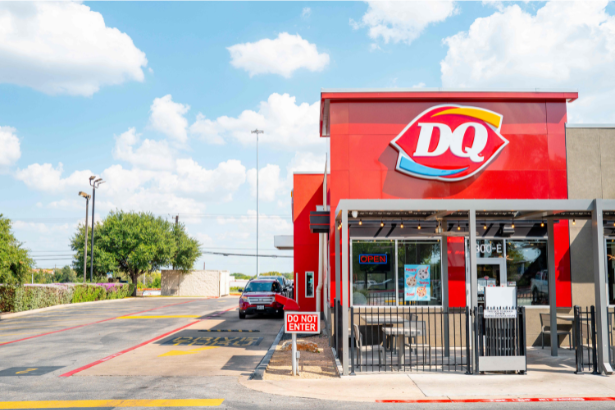
Dairy Queen closures 2026 have now reached at least 46 locations nationwide since early 2025, with the most recent wave arriving in Alaska on June 30, when three of the four remaining Dairy Queens in the state abruptly shut down, leaving just one location operating in Soldotna. The Alaska closures, which affected Anchorage, Wasilla, and Palmer, follow 42 Texas location closures driven by a franchise dispute between International Dairy Queen and a franchisee called Project Lonestar, plus a separate June 13 closure in Great Falls, Montana, where a location that had served the community for 39 years ended its run. The pattern reflects both specific franchisee-level legal disputes and the broader industry-wide pressure of rising costs, price-sensitive consumers, and franchise economics that are squeezing operators of the 86-year-old Berkshire Hathaway-owned ice cream chain.
The Alaska Closures: Abrupt, Unexplained, and Shocking to Locals
The most recent wave of Dairy Queen closures landed in Alaska on the last day of June, and the circumstances were as sudden as they were jarring for longtime customers.
A Dairy Queen franchisee abruptly closed locations in Anchorage, Wasilla, and Palmer, Alaska, on June 30 with no reason given. The closures left one Dairy Queen remaining in the 49th state, located in Soldotna. “The franchise owner of the Anchorage, Wasilla, and Palmer locations recently closed them,” an official with the Dairy Queen chain said in an email to the Anchorage Daily News, without providing the owner’s name.
The abruptness of the closures was striking to those with historical connections to the Alaska operation. Greg Todd, who launched the Tudor Road Dairy Queen in Anchorage and once owned five locations in Alaska before selling them on Valentine’s Day 2017, said that the Tudor Road location had set sales records when it opened. “Every Dairy Queen sales record they had, we broke in the first month” at the Tudor location, he said. “It’s sad to see that they’re closing down.”
Pete Ischi, who independently owns the Soldotna Dairy Queen with his former wife Val Ischi, called the closure of the other stores “shocking.” His location has no business ties to the three that closed. “We do not even have a remote thought of closing the Soldotna Dairy Queen,” Ischi said. International Dairy Queen said it is seeking new franchise owners in Alaska, with interested parties directed to dairyqueenfranchising.com.
The Texas Wave: 42 Closures and a $4 Million Lawsuit
The Alaska story is the most recent chapter in a pattern that began with a much larger franchise rupture in Texas in early 2025.
The largest wave of recent Dairy Queen closures happened in Texas, where franchisee Project Lonestar shut down 30 locations in February 2025 and another 12 in March 2025. American Dairy Queen pulled the franchises from franchisee Project Lonestar after it failed to remodel its locations, meaning those locations could no longer order supplies from the parent corporation and were forced to shut down. The dispute prevented Lonestar from selling its franchise locations, which forced it to close the Dairy Queens that it operated.
Project Lonestar sued Dairy Queen in February 2025, alleging the corporation caused $4 million in damages related to the dispute. “These closures are related to closures last month by the same franchise owner,” a Dairy Queen spokesperson said of the March 2025 Texas closings. “The closures are an isolated event, and we refrain from publicly sharing contract terms.”
The 42 Texas closures represent the single largest contributor to the 46-plus total closure count since early 2025. The remodel dispute at the core of the Texas situation reflects a recurring tension in franchise systems: corporate mandates for capital upgrades that individual operators may lack the liquidity or business confidence to fund, particularly in the current environment of higher borrowing costs and softer consumer spending.
The Montana Closure: 39 Years, Then One More
Between the Texas closures and the Alaska ones, a quieter but personally significant closure happened in Montana.
The Alaska Dairy Queen closings occurred just days after a Great Falls, Montana, franchisee closed its restaurant on June 13, 2026, after operating for 39 years at the location. The former owner, Steve Galloway, plans to replace the location with a Mediterranean restaurant called Zesty Eatz.
The Great Falls closure is the kind of local restaurant story that rarely generates national attention but carries enormous weight for the community that visited it for nearly four decades. A 39-year Dairy Queen is not merely a business: it is a generational institution, a place connected to graduation celebrations, family road trips, summer afternoons, and the specific geography of a mid-sized Montana city’s fast food landscape.
Why This Is Happening: Franchisee Economics in a High-Cost Environment
The closures are not random. They reflect the pressure points that independent restaurant operators face in 2025 and 2026 specifically.
Restaurant operators have been dealing with rising costs and more price-sensitive customers. Food-away-from-home prices rose 3.5 percent in the 12 months ending May 2026, according to the Bureau of Labor Statistics, putting more pressure on restaurants already managing labor, rent, and ingredient costs. James O’Reilly, a food industry executive with more than 15 years of restaurant marketing experience, said that middle- and lower-income households are facing financial pressure despite broader economic improvements. “In strong economic environments, price increases have historically been tolerated by restaurant guests. Over the past few years, that’s become far more difficult,” O’Reilly said.
The individual economics of a Dairy Queen franchise include franchise fees, required equipment and remodel investments, supply purchase mandates from the parent company, and labor costs that have risen sharply in states like Alaska. When a franchise dispute cuts off supply access, as happened in Texas, or when a long-running location simply can’t generate the returns needed to justify ongoing operation and potential remodel costs, closure becomes the rational outcome even for operators who were once breaking sales records.
The Parent Company: Berkshire Hathaway and 7,800 Global Locations
The closures are happening to what remains a very large, Berkshire Hathaway-backed global chain.
Minneapolis-based International Dairy Queen Inc. is the parent company of American Dairy Queen Corporation and Dairy Queen Canada Inc., and it develops, licenses, and services a system of 7,800 restaurants in 20 countries. The company is a wholly owned subsidiary of Berkshire Hathaway Inc., acquired in 1998 for $585 million. Dairy Queen opened its first location in Joliet, Illinois, in 1940, making it an 86-year-old brand with deep American cultural roots.
The 46 closures since early 2025, against a base of approximately 7,800 global locations, represents a closure rate of less than 1 percent. The pattern is concentrated in specific franchise disputes and geographic markets rather than reflecting any systemic corporate crisis. Despite the closings, the ice cream stores industry has grown by 5.8 percent to $7.4 billion in the five years through 2025, according to IBISWorld, and grew 0.9 percent in 2025 alone.
The Ice Cream Industry Context: Growth Despite Closures
The industry backdrop for these closures is more nuanced than the closure headlines suggest.
The ice cream and frozen dessert shop sector has actually expanded during the same period as the Dairy Queen franchise contractions. The sector has grown by 5.8 percent to $7.4 billion in the five years through 2025, according to IBISWorld. The growth reflects the continued consumer appetite for the category even as individual operators in specific markets have struggled.
The closures reflect franchisee-specific dynamics rather than consumer abandonment of the Dairy Queen brand. Where Dairy Queens have closed, the demand for Blizzards, dipped cones, and soft serve has not disappeared. The question is whether International Dairy Queen can find new franchise operators to fill the gaps left by the departures, particularly in a state like Alaska where only one location now serves the entire state.
Latest Update: One DQ Left in Alaska, Franchising Opportunities Available
The Dairy Queen closures 2026 story’s most immediate practical consequence is for Alaskans outside the Kenai Peninsula, who now have no Dairy Queen within their region.
International Dairy Queen confirmed it is seeking new franchise owners in Alaska. The company directed interested parties to its franchising website at dairyqueenfranchising.com. The Soldotna Dairy Queen, independently owned by the Ischi family, who have held it for more than 40 years, remains open and has no plans to close.
For the full local reporting and national coverage, follow Anchorage Daily News, Delish, and Economic Times.
Broader Implications: What 46 Closures Tell Us About Franchise Fast Food in 2026
The Dairy Queen closures 2026 pattern tells a story not just about one chain but about the structural pressures facing the entire QSR franchise industry in the current economic moment.
The combination of inflation-driven consumer price sensitivity, higher input costs, rising minimum wages in key markets, franchise remodel requirements that require capital investment at exactly the wrong time in the interest rate cycle, and the supply-cutoff nuclear option that corporate franchisors can use when disputes arise, is creating a cascade of closures across the fast food franchise landscape. Dairy Queen is not alone. As noted in the Mountain Mike’s Pizza bankruptcy covered earlier in this session, and in the broader pattern of Pizza Hut and Papa John’s closures, the franchise restaurant model’s apparent resilience as a business structure conceals real vulnerabilities at the unit-operator level.
For Dairy Queen specifically, the 7,800-location global footprint and Berkshire Hathaway ownership mean the corporate entity is not at risk. What is at risk is the network density that makes Dairy Queen part of the cultural geography of communities like Anchorage, Palmer, Wasilla, and Great Falls, a presence built over decades that cannot be replaced overnight even if new franchisees eventually emerge.
For more consumer and business news coverage, visit The Tech Marketer.
What Happens Next
International Dairy Queen is recruiting new franchise operators in Alaska to fill the three vacated markets. The Soldotna location remains open and under established family ownership with no closure plans. The Project Lonestar lawsuit in Texas remains unresolved in public court filings. No additional planned closures beyond the 46 tallied since early 2025 have been announced by corporate Dairy Queen as of publication.
FAQ
How many Dairy Queen locations have closed in 2026?
At least 46 Dairy Queen locations have closed across the United States since early 2025, with the most recent closures occurring on June 30, 2026, when three Alaska locations in Anchorage, Wasilla, and Palmer shut down without explanation. Additional closures included a Great Falls, Montana, location on June 13, 2026, and 42 Texas locations across February and March 2025.
Why did the Alaska Dairy Queens close?
International Dairy Queen confirmed only that “the franchise owner of the Anchorage, Wasilla, and Palmer locations recently closed them,” without providing the owner’s name or a reason for the closures. The closures appear to be a franchisee-level decision rather than a corporate mandate, and Dairy Queen has since announced it is seeking new franchise owners in Alaska.
How many Dairy Queens are left in Alaska?
Following the June 30, 2026, closures of three locations in Anchorage, Wasilla, and Palmer, just one Dairy Queen remains in Alaska: the independently owned location in Soldotna, operated by the Ischi family, who have owned it for more than 40 years and have no plans to close.
What was the Project Lonestar Dairy Queen dispute in Texas?
American Dairy Queen terminated the franchise agreement with Texas franchisee Project Lonestar after the operator failed to complete required remodels of its locations. Once the franchises were terminated, the locations could no longer order supplies from the parent corporation and were forced to close. Project Lonestar shut 30 locations in February 2025 and 12 more in March 2025, for a total of 42 Texas closures. Project Lonestar subsequently sued Dairy Queen alleging $4 million in damages.
Is Dairy Queen still in business despite all the closures?
Yes. International Dairy Queen, a wholly owned subsidiary of Berkshire Hathaway acquired in 1998 for $585 million, operates approximately 7,800 restaurants across 20 countries. The 46 closures since early 2025 represent less than 1 percent of its global footprint and reflect isolated franchise disputes and individual operator decisions rather than any systemic corporate issue.
Sources and References
- Anchorage Daily News (original submission, blocked — confirmed via search): https://www.adn.com/business-economy/2026/07/02/3-remaining-dairy-queens-abruptly-close-in-alaska-leaving-one-in-soldotna/
- Delish (original submission, blocked): https://www.delish.com/food-news/a71884599/dairy-queen-closures-nationwide/
- Economic Times (original submission, blocked): https://m.economictimes.com/news/new-updates/dairy-queen-franchisee-locations-closed-in-us-multiple-dairy-queen-locations-shut-down-in-these-places-heres-what-customers-should-know/articleshow/132284921.cms