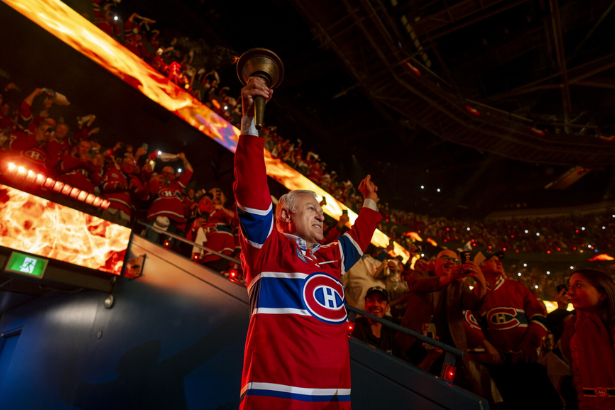
Claude Lemieux death 2026 — the four-time Stanley Cup champion, 1995 Conn Smythe Trophy winner, and one of the most polarizing players in NHL history died on Thursday, May 28, 2026. He was 60 years old. The Palm Beach County Sheriff’s Office confirmed that deputies responded to an apparent suicide shortly after 3 AM at a furniture showroom in Lake Park, Florida. Lemieux was found by his son at the furniture store, which he co-owned with his wife, Deborah. The announcement of his death came from the Montreal Canadiens, the franchise that drafted him in 1983. He is survived by his wife Deborah and their four children — Brendan, Claudia, Michael, and Christopher. Just three days before his death, Lemieux was honored as the torchbearer at the Bell Centre ahead of the Canadiens’ Game 3 of the Eastern Conference Final against the Carolina Hurricanes, receiving a standing ovation from the Montreal fans who once watched him become a champion.
The Final Public Appearance: Bell Centre, May 25
The Claude Lemieux death 2026 news arrived with a painful contrast that the hockey community is still processing. On Monday, May 25 — just three days before his death — Lemieux served as the torchbearer for the Montreal Canadiens ahead of Game 3 of the Eastern Conference Final against the Carolina Hurricanes at the Bell Centre.
He carried the torch through a tunnel of excited fans who cheered and filmed him on his walk through the arena. Upon reaching the arena bowl, he raised the torch and pumped his fist as the crowd roared for their former winger. The Bell Centre gave him a champion’s welcome — the kind of recognition that a player of Lemieux’s career accomplishments had earned completely. He was smiling, engaged, and present. Whatever private suffering he carried, it was not visible in those moments.
Three days later, he was gone. His son found him in the rear warehouse of the family furniture business in Lake Park, Florida, in the early hours of Thursday morning.
The Career: Four Cups, One Conn Smythe, a Legacy of Controversy
The Claude Lemieux death 2026 loss removes one of the defining figures of the NHL’s most competitive era. His statistical record speaks for itself: 379 goals, 407 assists, 786 points, and 1,777 penalty minutes in 1,215 NHL regular-season games across a 21-year career. In the playoffs, where Lemieux earned his reputation as “King of Spring,” he played 234 games — sixth-most in NHL history — scoring 80 goals, ninth-most ever, with 158 points including 19 game-winning goals.
Lemieux won the Stanley Cup four times — with the Montreal Canadiens in 1986, the New Jersey Devils in 1995, the Colorado Avalanche in 1996, and the Devils again in 2000. He became only the 10th player in NHL history to win the Cup in consecutive years with different teams when he captured his second championship with the Devils in 1995 and his third with Colorado in 1996.
His 1995 playoff performance remains one of the greatest in the history of the sport. He led all skaters with 13 goals in 20 games as the Devils swept the Detroit Red Wings in the Stanley Cup Final, earning the Conn Smythe Trophy as the most valuable player of the postseason. He was Lemieux at his most complete — a force of will whose playoff intensity transformed an already strong team into champions.
The 1996 Draper Hit: The Moment That Defined a Rivalry
No single moment defined the Claude Lemieux death 2026 legacy conversation more than the hit that occurred in Game 6 of the 1996 Western Conference Final. Lemieux drove Detroit Red Wings forward Kris Draper from behind, hard into the boards. Draper suffered facial injuries including a broken nose, cheekbone, and jaw that required surgery. Lemieux received a major penalty, a game misconduct, and a two-game suspension.
The hit ignited what became one of the most intense rivalry sequences in modern hockey history. The Red Wings exacted revenge the following March 1997 in a brawl-filled game in which Darren McCarty fought Lemieux and left him badly beaten on the ice while both goalies — Mike Vernon and Patrick Roy — famously brawled at center ice. The moment became one of the defining images of the era.
McCarty’s tribute to Lemieux on Thursday reflected the complexity of a rivalry that was real, physical, and mutual: “This is extremely sad no matter what feelings from past or present you hold. My thoughts and prayers to his family and friends and people who got to see the person off the ice wasn’t the person on.” The man who beat Lemieux bloody on the ice was the same man who offered one of the most compassionate tributes of the day.
Gary Bettman’s Statement
NHL Commissioner Gary Bettman issued a formal statement acknowledging both the difficulty of the moment and the magnitude of Lemieux’s career. “The National Hockey League mourns the passing of Claude Lemieux, a four-time Stanley Cup champion and one of the greatest big-game players in hockey history,” Bettman said. “Lemieux forged his postseason reputation and won the Cup for the first time as a rookie in 1986, when he scored 10 goals in the Playoffs for the Montreal Canadiens. He won the Conn Smythe Trophy as Playoffs MVP in 1995, scoring 13 goals in 20 postseason games with the New Jersey Devils. We send our deepest condolences to Claude’s wife, Deborah, and his four children, Brendan, Claudia, Michael and Christopher.”
Canadiens owner Geoff Molson said: “Today is a dark day for the Canadiens family and the entire hockey community. A fierce competitor who rose to the occasion in big moments, Claude was a relentless, courageous, and tenacious player who led the team to the highest honors. He embodied the very essence of being a Montreal Canadiens player.”
The CTE Discussion: What Is Being Said and What Is Not Known
Following the news of the Claude Lemieux death 2026 by suicide, social media discussions have included speculation about Chronic Traumatic Encephalopathy — the degenerative brain disease linked to repeated head trauma in contact sports. The discussion reflects a broader pattern that has followed the deaths of other former hockey and football players in recent years, as public awareness of CTE’s potential effects on mental health and behavior has grown significantly.
It is important to be clear about what is known and what is not. No medical determination about CTE has been made or announced in connection with Lemieux’s death. CTE can only be definitively diagnosed through post-mortem brain examination. Any connection between Lemieux’s death and CTE is, at this time, speculation. What is documented is that Lemieux played 21 seasons of physical professional hockey, absorbed significant physical contact throughout, and had a history of aggressive on-ice play that frequently involved contact with boards and other players.
The conversation itself — the instinct of hockey’s community to immediately connect a former player’s suicide to the long-term consequences of the sport’s physical demands — reflects how significantly CTE awareness has changed the way fans and former players understand mental health in professional athletics.
Life After Hockey: Player Agent, Family, Florida
In retirement, Lemieux remained deeply connected to hockey as a player agent with 4sports Hockey. His clients included Carolina Hurricanes goalie Frederik Andersen, Vegas Golden Knights defenseman Rasmus Andersson, New Jersey Devils forward Timo Meier, and Detroit Red Wings defenseman Moritz Seider — four current NHL stars whose contracts Lemieux negotiated in his post-playing career.
He and his wife Deborah co-owned a high-end furniture showroom in Lake Park, Florida, the business where his death occurred. He was 60 years old — born in Buckingham, Quebec, drafted in 1983, a four-time champion, a torchbearer in Montreal three days before his death, and gone before anyone who cheered him at the Bell Centre on Monday could have anticipated it.
The Polarizing Legacy and Its Resolution
In his playing career, Claude Lemieux was one of the most hated men in hockey — and he knew it, and wore it as a badge. “To be the most hated man in hockey and have your name on the Conn Smythe Trophy, it’s special,” he said after winning in 1995. He embraced the antagonist role because it was genuine, not manufactured.
The tributes that arrived Thursday from former adversaries — McCarty, the player who once bloodied him on the ice, among the most moving — suggest that hockey’s community resolved that polarization long before his death. The Bell Centre crowd that roared for him on Monday had already done the work of placing his legacy in its proper context: a fierce, sometimes dangerous competitor who played for keeps and won more than almost anyone.
Broader Implications: Mental Health in Professional Sports
The Claude Lemieux death 2026 comes at a moment when professional sports leagues are increasingly engaged with the mental health challenges that affect players during and after their careers. The NHL has expanded its player assistance programs in recent years, and the NHLPA maintains mental health and wellness resources for active and retired players.
For anyone who has followed Lemieux’s career — who cheered him or hated him, who watched him lift the Cup or drive Kris Draper into the boards — the news of his death by suicide is a reminder that the personalities who define a sport are full human beings whose interior lives extend far beyond what a crowd ever sees. The standing ovation at the Bell Centre on Monday was real. So was whatever brought him to Lake Park on Thursday morning. Both things are true. For more on the biggest stories in hockey and sports, visit The Tech Marketer.
Latest Updates
Claude Lemieux’s death was confirmed Thursday, May 28, 2026. Here is where to follow the full tribute coverage:
- ESPN has the complete Claude Lemieux death report including the four-time Stanley Cup champion career summary, the circumstances of his death as confirmed by police, and reactions from the hockey community. Read more at ESPN
- NHL.com has the official and complete Claude Lemieux tribute by Dave Stubbs — the full career story from his 1983 Canadiens draft to his four Cup titles to his retirement and life as a player agent, plus the Gary Bettman and Geoff Molson statements. Read more at NHL.com
- The Athletic/New York Times has the complete Claude Lemieux obituary including the Kris Draper hit analysis, the Avalanche-Red Wings rivalry context, and the era-defining significance of his playoff career. Read more at The Athletic
FAQ: Claude Lemieux Death 2026
1. How did Claude Lemieux die? The Palm Beach County Sheriff’s Office confirmed that deputies responded to an apparent suicide shortly after 3 AM on Thursday, May 28, 2026, at a furniture showroom in Lake Park, Florida. Lemieux was found by his son at the business, which he co-owned with his wife Deborah. He was 60 years old. If you or someone you know is in crisis, call or text 988 to reach the Suicide and Crisis Lifeline.
2. How many Stanley Cups did Claude Lemieux win? Claude Lemieux won four Stanley Cups across his 21-year NHL career — with the Montreal Canadiens in 1986, the New Jersey Devils in 1995, the Colorado Avalanche in 1996, and the New Jersey Devils again in 2000. He became only the 10th player in NHL history to win the Cup in consecutive years with different teams when he won with New Jersey in 1995 and Colorado in 1996.
3. What was Claude Lemieux doing in retirement? In retirement, Lemieux worked as a player agent with 4sports Hockey, representing current NHL stars including Carolina Hurricanes goalie Frederik Andersen, Vegas Golden Knights defenseman Rasmus Andersson, New Jersey Devils forward Timo Meier, and Detroit Red Wings defenseman Moritz Seider. He and his wife Deborah also co-owned a high-end furniture showroom in Lake Park, Florida.
4. What happened between Claude Lemieux and Kris Draper? In Game 6 of the 1996 Western Conference Final, Lemieux hit Detroit Red Wings forward Kris Draper from behind into the boards, leaving Draper with facial injuries including a broken nose, cheekbone, and jaw that required surgery. Lemieux received a major penalty, game misconduct, and two-game suspension. The hit ignited one of the most intense rivalries in modern NHL history, ultimately leading to a famous brawl in March 1997 in which Darren McCarty fought Lemieux while the two teams’ goalies — Mike Vernon and Patrick Roy — brawled at center ice.
5. What was Claude Lemieux’s playoff legacy? Claude Lemieux played 234 playoff games — sixth-most in NHL history — scoring 80 goals (ninth-most all-time) with 158 points and 19 game-winning goals. He won the 1995 Conn Smythe Trophy as playoff MVP after scoring 13 goals in 20 games with the Devils. He was known as the “King of Spring” for his ability to elevate his game in the playoffs, and his teams reached the Stanley Cup Playoffs in 15 consecutive seasons.