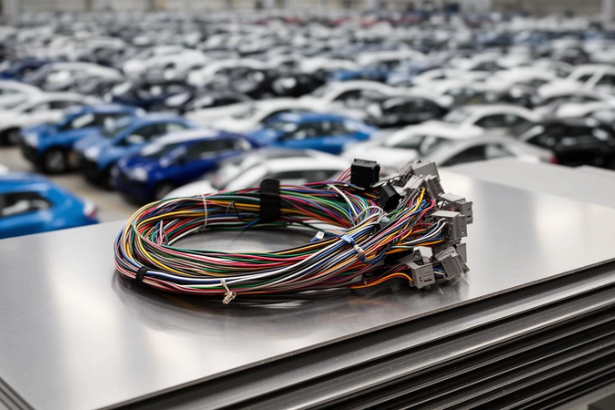
The automotive resin market is attracting fresh attention after Japan’s major automakers announced plans to standardize selected materials and components across the industry. The initiative, announced by the Japan Automobile Manufacturers Association (JAMA) on November 19, 2026, places recycled resin, steel and wire harnesses at the center of a broader effort to improve manufacturing efficiency.
The move is significant because Japanese automotive manufacturers have traditionally maintained different material specifications, procurement requirements and component standards. Although these differences have allowed companies to develop distinctive manufacturing approaches, they can also create unnecessary complexity for suppliers.
Now, Japan’s automotive industry wants to change that.
JAMA and the Japan Auto Parts Industries Association (JAPIA) are working toward common requirements for selected materials and components. The initial focus includes steel, resin and wire harnesses, with further standardization areas potentially considered later.
According to Reuters’ November 19 report, the initiative aims to strengthen component supply chains while improving the competitiveness of Japanese manufacturers.
The resin component is particularly interesting because the industry plans to focus initially on recycled materials. This could create new opportunities for material suppliers, recycling businesses and automotive manufacturers seeking more efficient resource utilization.
However, this is not simply a plastics procurement exercise. It represents a broader attempt to coordinate manufacturing standards across an industry facing increasingly intense international competition.
Background and Context: Why Japan Wants to Standardize Automotive Resin and Other Materials
Japan remains one of the world’s most important automotive manufacturing centers.
Companies such as Toyota, Honda, Nissan, Suzuki, Mazda and Subaru operate extensive manufacturing and supplier networks that support domestic production and international vehicle exports.
Despite their shared industry ecosystem, manufacturers have historically developed their own technical specifications and purchasing requirements for many materials and components.
This creates complexity throughout the supply chain.
A supplier serving several automakers may need to manage different material grades, evaluation procedures, quality requirements and production specifications.
Even when two components perform similar functions, differences in manufacturer requirements can make it difficult to consolidate production.
Japan’s new initiative seeks to address some of these inefficiencies.
The Japan Automobile Manufacturers Association and the Japan Auto Parts Industries Association are coordinating efforts to improve cooperation between vehicle manufacturers and their suppliers.
The initiative has three initial priorities:
- Steel: Consolidating low-volume material varieties and improving common evaluation standards.
- Resin: Promoting the use of recycled materials and improving standardization.
- Wire harnesses: Reducing the number of wire varieties and encouraging production automation.
The broader objective is to reduce procurement complexity and redirect resources toward advanced automotive technologies.
According to reporting by Nippon.com, JAMA represents 14 automaker members involved in the standardization initiative.
The announcement also reflects a wider change in how Japanese manufacturers are approaching competition.
Rather than relying exclusively on individual company-level efficiency improvements, automakers are increasingly considering areas where cooperation across the industry could produce better results.
Latest Update: Japan’s Automotive Industry Targets Steel, Resin and Wire Harness Standardization
The latest development emerged through Japanese media reporting on November 18 before being formally announced by JAMA on November 19.
The initiative was subsequently covered by Reuters, MarketWatch and other international publications.
1. Automotive resin becomes a priority for recycled material standards
Resin is widely used throughout modern vehicles.
It appears in interior components, exterior panels, protective elements, electrical housings and numerous other applications.
Manufacturers use different polymer materials depending on the component’s requirements, including strength, durability, flexibility, heat resistance and weight.
Japan’s new initiative initially focuses on recycled resin.
According to Reuters, manufacturers intend to work toward common requirements for recycled materials.
This is important because recycled automotive plastics can have different material characteristics depending on their source, processing methods and composition.
Establishing consistent evaluation requirements could make it easier for manufacturers and suppliers to assess whether recycled materials meet automotive specifications.
However, JAMA has not publicly established a single resin grade that every automaker must adopt. Nor has it announced a universal replacement of conventional automotive plastics.
The immediate objective is to improve coordination around material requirements.
2. Steel standardization could reduce procurement complexity
Steel is another major focus.
Vehicle manufacturers use different steel grades and specifications throughout their production processes.
Some materials are purchased in relatively small quantities, creating additional complexity for suppliers and procurement teams.
Reuters reports that Japanese manufacturers intend to consolidate low-volume steel materials.
The initiative also includes efforts to align evaluation requirements.
This could help suppliers streamline production and improve purchasing efficiency.
For automakers, the potential benefit comes from reducing unnecessary material variety while maintaining the performance requirements of individual vehicle components.
3. Wire harnesses are another major target
Wire harnesses are essential components in modern vehicles.
They connect electrical and electronic systems, distributing power and signals between different vehicle components.
Their importance has increased as automobiles have become more electronically sophisticated.
According to reporting by Bloomberg carried by TBS Cross Dig, Japanese automakers collectively use approximately 70,000 wire harness varieties.
The large number of variations creates challenges for production, procurement and automation.
The industry wants to reduce wire varieties and improve manufacturing processes.
This is particularly relevant because wire harness production remains labor-intensive.
Reducing unnecessary variations could make automation easier and help manufacturers respond to workforce shortages.
What the announcement means
The initiative is not limited to one manufacturer.
It represents an effort to improve efficiency across Japan’s automotive ecosystem.
The key distinction is that standardization is intended to simplify common requirements without eliminating the individual strengths of competing vehicle manufacturers.
Why Automotive Resin Matters to the Future of Vehicle Manufacturing
Resin is becoming increasingly important in automotive engineering.
Modern vehicles require materials that can balance weight, durability, safety, design flexibility and manufacturing costs.
Compared with many traditional metal components, suitable plastic materials can offer advantages in weight reduction and complex component design.
This makes automotive resin relevant across several vehicle systems.
Interior components
Automotive plastics are used in dashboards, door panels, instrument housings, center consoles and other cabin components.
Manufacturers select materials based on appearance, durability, temperature resistance and safety requirements.
Exterior components
Resin-based materials are used in selected bumpers, exterior trim, grilles and protective components.
They allow manufacturers to develop complex shapes while managing weight and manufacturing costs.
Electrical and electronic systems
As vehicles become more electronically sophisticated, polymer materials play an important role in connectors, protective housings, insulation and electrical components.
Material selection must account for electrical performance, thermal conditions and long-term durability.
Under-the-hood applications
Certain automotive polymers are used in engine compartments and other demanding environments.
These applications require resistance to heat, chemicals, vibration and mechanical stress.
The growing use of electronics and electrified powertrains creates additional opportunities for advanced polymer materials.
Recycled Automotive Resin: The Sustainability Opportunity Behind Japan’s New Initiative
One of the most important elements of Japan’s announcement is the focus on recycled resin.
Automotive manufacturers face increasing pressure to improve resource efficiency and reduce the environmental impact of vehicle production.
Recycled plastics offer one possible solution.
However, using recycled material in automotive manufacturing is more complicated than simply replacing virgin resin.
Material quality must remain consistent.
Manufacturers need to understand the polymer composition, contamination levels, processing history and mechanical characteristics of recycled feedstock.
These factors can affect the performance of the finished component.
Why standardization could help recycled plastics
A more coordinated industry approach could make it easier for manufacturers and suppliers to establish consistent evaluation requirements.
Potential benefits include:
- More predictable material quality.
- Better supplier qualification processes.
- Reduced duplication in testing requirements.
- Improved opportunities for recycling businesses.
- Greater consistency in procurement.
- More efficient integration of recycled materials into vehicle production.
These are potential benefits of standardization rather than confirmed savings or measured outcomes from the new initiative.
The challenge of maintaining quality
Automotive components must satisfy demanding performance requirements.
A recycled plastic used in an interior trim component may not be suitable for an electrical housing or an under-the-hood application.
Different applications require different material characteristics.
Standardization therefore needs to distinguish between material categories and performance requirements.
The goal should not be to make every automotive plastic identical.
Instead, manufacturers need reliable common evaluation frameworks that preserve the technical requirements of each application.
How Japan’s Standardization Plan Could Affect Automotive Suppliers
The initiative could have important consequences for companies supplying materials and components to Japanese vehicle manufacturers.
Resin producers
Resin producers may benefit from clearer requirements and greater opportunities to supply recycled materials across multiple automotive customers.
However, suppliers will need to demonstrate consistent quality and meet the technical requirements established by participating manufacturers.
Recycled plastic manufacturers
Recycling businesses could become more important partners in the automotive supply chain.
If common evaluation requirements reduce qualification complexity, recycled resin producers may find it easier to approach multiple automotive customers.
This could encourage investment in sorting, processing and quality-control capabilities.
Steel manufacturers
Steel suppliers may benefit from reduced material variety and more consistent evaluation procedures.
Consolidating low-volume materials could help simplify procurement and production planning.
Wire harness manufacturers
Suppliers of automotive wiring systems could see increased pressure to reduce product variations and improve automation.
Companies capable of delivering flexible manufacturing systems may be better positioned to support the industry’s transition.
Smaller automotive suppliers
Smaller suppliers may face both opportunities and challenges.
Common standards could reduce the need to maintain multiple customer-specific specifications.
However, meeting new testing, documentation and production requirements could require investment.
The overall impact will depend on how the standards are designed and implemented.
Broader Implications: Japan’s Response to Growing Chinese Automotive Competition
Japan’s standardization initiative comes at a time when international competition in the automotive industry is intensifying.
Chinese manufacturers have gained market share in several global automotive markets.
Their competitive strengths include extensive domestic supply chains, fast product development and growing capabilities in electric vehicles and automotive software.
These developments have increased pressure on traditional manufacturers.
Japan’s response involves more than reducing vehicle production costs.
The industry is looking for ways to improve development speed, supply chain resilience and resource allocation.
Standardizing selected materials and components could help support these goals.
Moving resources toward next-generation vehicles
Reducing unnecessary procurement complexity could allow manufacturers to direct more attention toward technologies that differentiate their products.
These include:
- Electric vehicle platforms.
- Advanced driver-assistance systems.
- Autonomous driving technologies.
- Software-defined vehicles.
- Battery technology.
- Connected vehicle systems.
- Advanced manufacturing automation.
The strategic objective is to avoid spending excessive resources managing variations that do not necessarily improve vehicle competitiveness.
Cooperation without eliminating competition
The initiative also introduces an interesting industrial strategy.
Automakers generally compete aggressively in vehicle design, branding, technology and pricing.
However, they can still cooperate in selected areas where common standards offer advantages.
JAMA Chairman Koji Sato has emphasized that standardization should not become an objective in itself.
The broader goal is to strengthen individual manufacturers by allowing them to concentrate resources on their competitive strengths.
This distinction will be important as the initiative develops.
Related History: How Automotive Material Standardization Has Evolved
Material standardization is not new to the automotive industry.
Manufacturers have long relied on common technical specifications, quality systems and supplier requirements to improve production efficiency.
However, Japan’s latest initiative takes the concept further by encouraging cooperation between competing manufacturers.
Shared vehicle platforms
Automotive manufacturers have increasingly used shared platforms and component architectures to reduce development costs.
Volkswagen Group, Toyota and other global manufacturers have developed platform strategies that allow different vehicle models to share underlying engineering structures.
This approach demonstrates how common technical foundations can support multiple products.
Automotive plastics and lightweight engineering
The use of plastics and advanced polymer materials has expanded as manufacturers seek to reduce vehicle weight and improve design flexibility.
Engineers increasingly evaluate materials based on their performance across the vehicle lifecycle.
Recycled materials are now another important consideration.
Electrification increases component complexity
Electric vehicles introduce additional requirements for electrical insulation, thermal management, battery protection and high-voltage wiring.
This makes material consistency increasingly important.
The growing complexity of vehicle electronics also increases the importance of reliable wire harness manufacturing.
Japan’s latest initiative builds on these broader developments by targeting selected materials and components across multiple manufacturers.
What Happens Next? Five Developments to Watch
The November 19 announcement establishes the direction of the initiative, but several important questions remain.
1. Detailed automotive resin specifications
The industry will need to establish which recycled resin categories and evaluation requirements should be prioritized.
The announcement does not yet specify a universal resin grade or implementation schedule.
2. Supplier participation
Automotive manufacturers will need to coordinate with resin producers, steel suppliers and component manufacturers.
The effectiveness of the initiative will depend heavily on supplier participation.
3. Expansion beyond the initial three categories
JAMA and JAPIA may consider extending standardization efforts to additional materials and components.
The broader ambition is to cover more areas of vehicle manufacturing.
4. Manufacturing automation
Wire harness production is an important area to watch.
Reducing product variations could support greater automation and help manufacturers address labor shortages.
5. International cooperation
Japanese industry representatives have indicated interest in expanding discussions with overseas manufacturers and suppliers.
International participation could make common material requirements more influential across global automotive supply chains.
Conclusion: Japan’s Automotive Industry Is Preparing for a More Standardized Future
Japan’s decision to standardize selected automotive materials and components represents an important development for the global manufacturing industry.
By focusing initially on steel, resin and wire harnesses, JAMA and JAPIA are addressing areas where supplier complexity and manufacturing inefficiencies can create unnecessary costs.
The focus on recycled automotive resin is particularly significant.
As manufacturers face growing pressure to improve resource efficiency, reliable material standards could help expand the use of recycled plastics in vehicle production.
However, the real impact will depend on how the initiative develops.
Manufacturers must balance common requirements with the performance, safety and quality demands of individual vehicle applications.
For suppliers, the announcement creates an opportunity to prepare for more coordinated procurement and material evaluation requirements.
For Japanese automakers, it represents a broader strategy: cooperate where common standards create efficiencies, while continuing to compete through product innovation and advanced technology.
The automotive resin story is therefore part of something much larger.
It is about how one of the world’s most established automotive industries is reorganizing its manufacturing ecosystem to remain competitive in a rapidly changing global market.
FAQ: Automotive Resin and Japan’s 2026 Standardization Initiative
1. What is automotive resin?
Automotive resin refers to polymer-based materials used in vehicle manufacturing. These materials appear in interior components, exterior trim, electrical housings, insulation systems and various other automotive applications.
2. Why is Japan standardizing automotive resin?
Japan’s automakers want to improve procurement efficiency, reduce unnecessary material variations and strengthen supply chains. The initial resin focus includes recycled materials.
3. Which Japanese automakers are involved?
The initiative is being coordinated through the Japan Automobile Manufacturers Association, which represents 14 automaker members. Toyota, Honda, Nissan, Suzuki, Mazda and Subaru are among Japan’s major automotive manufacturers.
4. Does Japan plan to replace all conventional automotive plastics?
No such decision has been announced. The initiative focuses on improving common requirements, initially emphasizing recycled resin.
5. What other automotive materials will be standardized?
The initial categories include steel, resin and wire harnesses. The industry plans to reduce low-volume steel varieties, improve recycled resin standards and reduce wire harness variations.
6. How could recycled automotive resin benefit manufacturers?
It could improve resource efficiency, create additional material sourcing opportunities and help manufacturers integrate recycled plastics into vehicle components while maintaining required quality standards.
7. What is a wire harness in an automobile?
A wire harness is an organized assembly of electrical wires, connectors and related components that distributes power and signals throughout a vehicle.
8. Why are Japanese automakers cooperating on standardization?
The industry wants to reduce manufacturing complexity, strengthen supply chains and improve its ability to compete with international manufacturers, particularly growing Chinese automotive companies.
9. Could automotive resin standardization benefit suppliers?
Potentially. Common material evaluation requirements could reduce duplicated qualification work and create opportunities for suppliers serving multiple automakers.
10. When will the new automotive resin standards take effect?
JAMA’s November 19, 2026 announcement establishes the initiative’s direction, but a detailed implementation timetable and universal resin specifications have not yet been publicly established.
Sources & References
- Reuters: Japan Auto Industry Targets Common Standards to Strengthen Supply Chain. November 19, 2026.
- NHK World-Japan: Japan Automakers to Standardize Key Parts, Materials. November 18, 2026.
- MarketWatch / Yomiuri Shimbun: Japanese Automakers Set to Standardize Steel, Resin, Wire Harnesses. November 19, 2026.
- Nikkei Asia: Japan Automakers to Standardize Parts, Materials for Efficiency.
- Nippon.com / Jiji Press: Japan Automakers to Standardize Some Materials, Parts. November 19, 2026.
- TBS Cross Dig with Bloomberg: Toyota and Other Japanese Automakers to Standardize Steel, Resin and Other Materials. November 19, 2026.