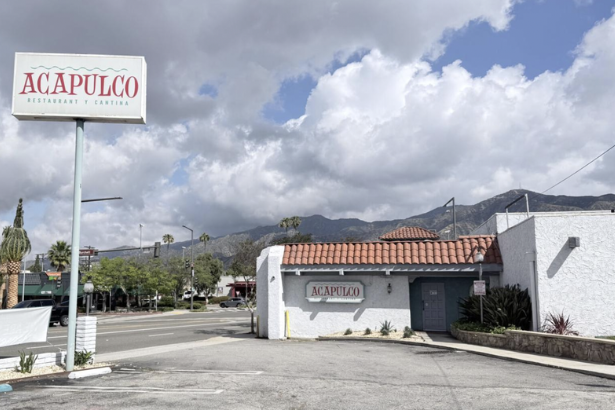
Acapulco Restaurant closing locations news dominated Southern California food media this week — and then took a dramatic turn. The 66-year-old Mexican restaurant chain, once operating 39 locations across California and beyond, has now shuttered 38 of them. The Glendale location at 722 Pacific Avenue was set to close on Mother’s Day, May 10, replaced by a two-story car wash. The community responded with a petition, hundreds of emails to City Hall, and a flood of social media testimonials. Now the restaurant says it will remain open until further notice. Here is the full story of how a beloved California institution reached the edge of extinction — and what came next
The Glendale Demolition Approval That Triggered Everything
The Acapulco Restaurant closing locations story in Glendale did not begin with an Instagram post. It began at City Hall in March.
Plans to demolish the Acapulco Mexican restaurant in Glendale and replace the establishment with a self-serve car wash were approved on Friday, March 27, by City Manager and interim Community Development Director Roubik Golanian. According to the city’s decision letter, the design review application for the project to demolish the restaurant and construct a new two-story, 5,878 square-foot self-service car wash building with 29 on-site parking spaces for self-service vacuums was approved with conditions. Social Media Today
During the public comment period, staff received input from community members regarding the proposed car wash project, including approximately 141 emails and 19 phone messages, reflecting a range of perspectives both in support of and in opposition to the project. Those in opposition raised concerns regarding incompatible land use, traffic congestion, noise, water usage, the historic preservation of Acapulco, and the administrative versus design review board decision process. Social Media Today
141 emails and 19 phone calls to a city planning department over the proposed demolition of a restaurant is not a routine level of public engagement. It reflects a community that understood what was being lost before the restaurant even announced its closure.
The Change.org Petition: Tim Leaton and 919 Signatures
On March 30, following the approval of project plans, Glendale resident Tim Leaton started a petition on Change.org with the goal to save Acapulco from being demolished. As of early April, the petition had garnered 919 signatures. Leaton told the Glendale News-Press that for the past 15 years, he has gone to Acapulco every Friday night after long work weeks. When Leaton learned that the city approved the project, he shared the news on Facebook. He wasn’t expecting much and instead received an immediate overwhelming response with people sharing their own memories from the Glendale Acapulco. Social Media Today
Leaton said: “I certainly have respect for property owners and understand the realities of business and development, but when decisions like this are made, community impact has to matter too.” Social Media Today
A man who has eaten at the same restaurant every Friday night for 15 years is not a casual customer. He is a neighbor. His petition and Facebook post did not generate a standard social media pile-on. They generated a specific, local, emotionally authentic wave of shared memory that no marketing campaign could replicate.
What the City Councilmember Said
The political dimension of the Acapulco Restaurant closing locations story adds a layer of complexity that most restaurant closure stories do not have.
Glendale City Councilmember Dan Brotman said at a meeting on March 24: “We’re not getting rid of the Acapulco restaurant. I don’t think any of us really want to see the restaurant go, but it happens to be private property. We’re not the owners. There’s an owner, and the owner in this world gets to decide what they want to do with their property.” Social Media Today
That statement is honest and legally accurate — and it is also exactly the kind of institutional response that frustrates communities watching beloved institutions disappear one property sale at a time. The city did not approve the car wash because it wanted a car wash. It approved it because it had no legal mechanism to deny it. The gap between what communities want and what property law allows is the space in which every story like this plays out.
“We Will Remain Open Until Further Notice”
Originally set to shut its doors on Mother’s Day, May 10, 2026, the restaurant announced it would now remain open indefinitely due to an “overwhelming response” from loyal customers. In a heartfelt update, the restaurant shared: “Because of you, our company has decided to fight to stay open. We will remain open until further notice.” They emphasized that “this isn’t a promotion or a tactic. It’s a heartfelt decision inspired by our community.” Engadget
The 57-year-old Glendale location was originally scheduled to close on Mother’s Day, May 10, but restaurant workers told KTLA that the restaurant will remain open for about two more months. “This place has been more than just a restaurant — it’s been home to so many memories, celebrations, and friendships. We are beyond grateful for every guest who walked through our doors and became a part of our family,” the restaurant said in an Instagram post. Engadget
The phrase “this isn’t a promotion or a tactic” is doing significant work in that statement. It is preemptively answering the cynical read — that the closure announcement was a sales tactic designed to drive a farewell rush of business. Whether that cynical read is correct is something only Xperience Restaurant Group’s internal numbers could answer. What the statement does confirm is that the community response was real enough to change the business calculus, at least temporarily.
The Full Scope: 38 of 39 Locations Gone
The Glendale closure is the second-to-last act of a decades-long decline that accelerated after the 2008 financial crisis and has never fully recovered.
Acapulco, currently owned by Mexican restaurant chain operator Xperience Restaurant Group, had 39 locations before downsizing as a result of the Great Recession of 2008 and its then-owner Real Mex Restaurants Inc.’s Chapter 11 bankruptcy in October 2011. Real Mex filed for bankruptcy a second time in August 2018 and sold its assets to Z Capital Group, which rebranded as Xperience Restaurant Group in October 2018 after the sale. Engadget
Once the Acapulco Restaurant closes, the 66-year-old dining chain’s last remaining location will be at 6270 Pacific Coast Highway in Long Beach, Calif. The chain had as many as 39 locations, but will have closed 38 restaurants when the Glendale unit permanently closes. Engadget
Xperience has not publicly committed to the Long Beach location’s future. Xperience has not commented further on the status of the remaining Long Beach location. Xperience Restaurant Group operates 11 brands of Mexican restaurant chains and individual establishments, totaling 66 units, including 24 El Torito locations in California, 23 Chevy’s units across the country, and 5 Sol Mexican Cocina restaurants. Engadget
Where Acapulco Came From: Pasadena, 1960
Xperience operates two of the oldest Mexican restaurant chains in the U.S., as El Torito opened its first location in Encino, Calif., in 1954, while Acapulco opened its initial restaurant in Pasadena, Calif., in 1960. Engadget
The Pasadena original opened the same year John F. Kennedy won the presidency. It served California’s growing Mexican-American community and the broader Southern California dining public through every economic cycle, earthquake, and pandemic that followed. The Glendale location opened 57 years ago — meaning it predates the first iPhone by nearly four decades and has outlasted most of the other businesses that once surrounded it on Pacific Avenue.
The Broader Mexican Restaurant Crisis of 2025-2026
The Acapulco Restaurant closing locations story is part of a sustained contraction across the Mexican casual dining segment that has now claimed dozens of brands and hundreds of locations.
Economic challenges Mexican restaurant chains faced in 2025, which led to the closing of dozens of locations and, in some cases, bankruptcy filings, are continuing this year. Last year, Mexican dining chains, including On The Border Mexican Grill, Abuelo’s, and Taco Cabana, closed dozens of underperforming locations in restructurings. Chains cited rising inflation for higher costs of labor and food products, which in turn forced restaurants to raise their prices. Many consumers reacted to higher prices by not dining out, which affected restaurant revenue. Engadget
On The Border Mexican Grill and Cantina had about 120 locations early last year and began closing underperforming restaurants and those with leases that no longer made sense. The 44-year-old Mexican restaurant chain filed for Chapter 11 bankruptcy on March 4, 2025, kept closing locations, and now operates 47 locations. Engadget
The pattern is consistent across every chain in this category: inflation raises costs, prices rise to compensate, traffic falls, weaker locations become unviable, closures accelerate. Acapulco’s trajectory since 2008 is the textbook version of this cycle extended over an 18-year timeline.
What Glendale Has Lost and Is Still Losing
The most resonant comment from the entire Acapulco Restaurant closing locations story came not from a corporate spokesperson or a city official but from a regular customer on Instagram.
A Glendale local wrote: “Glendale just isn’t Glendale anymore. First Marie Callender’s, then Shakers, the marketplace frogs fountain, Conrad’s, now Acapulco. I can’t even see the sky anymore on Central Avenue because of all the apartment buildings. The charm of home is gone.”
That comment is not about a restaurant. It is about the cumulative experience of watching a neighborhood transform in ways that prioritize commercial density over community character. Every name on that list — Marie Callender’s, Shakers, the frog fountain, Conrad’s — represents a place where people gathered, recognized each other, and felt at home. Acapulco is the latest entry on a list that keeps growing.
Broader Implications: When Communities Push Back
The Acapulco Restaurant closing locations story matters beyond Mexican food and Glendale. It is one of the clearest recent examples of community sentiment visibly influencing a corporate restructuring decision in real time. A petition started by one Friday-night regular. Hundreds of emails to City Hall. A flood of Instagram memories. And a restaurant that was going to close deciding, at least for now, to stay open.
The chain has struggled significantly closing 38 of its 39 historical locations over the years. The Glendale site faced demolition to make way for a car wash, sparking intense community backlash and a petition to save the 57-year-old landmark. Engadget
Whether that decision survives the economics that drove 38 previous closures is genuinely unknown. The demolition permit is still approved. The car wash developer still holds the property rights. What the community did was buy time — not a reversal. How that time gets used, and whether Xperience Restaurant Group can find a path to sustainable operation at the Glendale location, will determine whether this story has a different ending than the previous 38. For more on the biggest stories in business and consumer culture, visit The Tech Marketer.
Latest Updates
The Acapulco Restaurant closing locations story is active and developing. Here is where to follow it:
- TheStreet has the full chain-wide breakdown of the Acapulco closing, including the 38-of-39 closure history, the Real Mex bankruptcy background, the Xperience Restaurant Group ownership structure, and the broader Mexican dining industry crisis context. Read more at TheStreet
- KTLA has the original Glendale closure report including the car wash demolition approval details, the community’s social media reaction, and the employee confirmation that the restaurant will stay open approximately two more months. Read more at KTLA
- The Sun has the full delay announcement update, including why the community’s overwhelming response led Acapulco to postpone the Mother’s Day closure and how the petition and social media pressure changed the company’s short-term decision. Read more at The Sun
FAQ: Acapulco Restaurant Closing Locations
1. How many Acapulco Restaurant locations are closing? Acapulco Restaurant and Cantina has closed 38 of its original 39 locations. The Glendale, California location at 722 Pacific Avenue is in the process of closing, which will leave only one remaining Acapulco at 6270 Pacific Coast Highway in Long Beach.
2. Why is the Glendale Acapulco Restaurant still open after announcing its closure? After an overwhelming wave of community support — including a Change.org petition with 919 signatures started by 15-year regular Tim Leaton and hundreds of emails to City Hall — Acapulco announced it would remain open until further notice. The restaurant posted: “Because of you, our company has decided to fight to stay open. This isn’t a promotion or a tactic. It’s a heartfelt decision inspired by our community.”
3. What is replacing the Glendale Acapulco Restaurant? The City of Glendale conditionally approved demolition of the 57-year-old restaurant on March 27, 2026, to make way for a two-story, 5,878 square-foot self-service car wash with 29 surface parking spaces. The demolition approval remains in place regardless of the restaurant’s current decision to stay open.
4. Who owns Acapulco Restaurant and what happened to the chain? Acapulco is currently owned by Xperience Restaurant Group, formerly Real Mex Restaurants Inc. Real Mex filed for Chapter 11 bankruptcy in 2011 and again in 2018 before Z Capital Group acquired the assets and rebranded as Xperience. The chain peaked at 39 locations and has since closed 38 of them across California and other states.
5. What other Mexican restaurant chains have been closing in 2025-2026? On The Border Mexican Grill filed Chapter 11 bankruptcy on March 4, 2025 and reduced from approximately 120 locations to 47. Abuelo’s and Taco Cabana also closed dozens of locations during 2025 restructurings. All cited rising inflation, higher labor and food costs, and consumers cutting back on restaurant spending as the primary drivers.