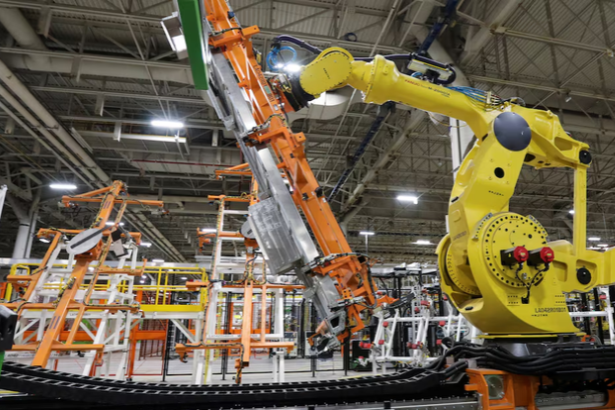
GM Robotics Automation Plan a labor cost problem it cannot shake. The automaker is aiming to raise the use of robots and other automation across its North American factories by 20% by 2028, according to a Reuters report citing two people familiar with the matter. The news lands the same week the Federal Reserve confirmed that US manufacturing output grew 0.3% in October, exceeding forecasts as motor vehicle production rebounded and sectors tied to artificial intelligence infrastructure expanded. investing
Latest Update
The GM story is specific and, by Reuters’ own account, new. General Motors is aiming to increase use of robots and other automation by 20 percent at its North American factories by 2028, two people familiar with the matter said, as the automaker grapples with higher labor and onshoring costs. That detail alone reframes the usual “automakers are automating” narrative into something with a number and a deadline attached. arynews
What makes this particular plan notable is where the robots are coming from. The Detroit automaker is developing its own robots and assembling them at its Kokomo, Indiana, plant, the sources and two other people said, and is focused on using autonomous mobile robots to move parts around its plants. GM is not abandoning outside suppliers in the process. GM is still buying robotics equipment from outside suppliers while developing its own in-house, an effort that company executives outlined last year. The split strategy suggests GM wants both speed from vendors and control over the systems it considers most strategic. detroitnewsmvariety
Supplier relationships themselves are changing shape because of this push. GM grades those efforts on a scorecard, and the results weigh into contract decisions. In practical terms, a parts supplier’s willingness to automate is becoming a factor in whether it keeps GM’s business, not just its pricing or quality record. qz
The timing is not incidental. U.S. automakers have increased automation to contain manufacturing costs since the United Auto Workers won record contract gains in 2023 and President Donald Trump’s drive to bring more factory work home put pressure on production costs. Labor economics and reshoring pressure are colliding, and robotics is the release valve automakers keep reaching for. detroitnews
That collision point has not gone unnoticed by labor leaders. GM last year said it had about 100 roboticists, AI engineers and hardware specialists working on advanced robotics systems, and the broader push is expected to draw scrutiny from the union representing GM’s shop floor. Automation is likely to emerge as a key issue in the United Auto Workers’ next round of contract talks, according to the Reuters report, since every robot added to a line is a job question for someone wearing a union badge. detroitnewsarynews
The Manufacturing Backdrop
GM’s announcement did not arrive in a vacuum. The Federal Reserve’s October industrial production report, released November 17, showed manufacturing production rose 0.3 percent in October for its third consecutive monthly gain. That streak matters because it suggests the sector’s momentum is not a one-month blip tied to a single catalyst. federalreserve
The details underneath that headline number tell a more complicated story. Factory production climbed 0.3% in October, beating forecasts; motor vehicles surged 4.4% while total industrial output fell 0.4% due to weak utilities and mining. Vehicles were doing the heavy lifting. Strip that category out and the picture softens considerably: excluding motor vehicles and parts, manufacturing output declined 0.1%. briefspolandinsight
Year-over-year, the trend still looks like genuine strength rather than a rebound from a weak base. Output was 2.2% above a year earlier, the strongest since March 2022. Capacity utilization, meanwhile, slipped slightly. Capacity utilisation slipped to 76.4%, a figure that leaves room for factories to add output without new capital spending, at least on paper. briefspolandinsight
Investing.com’s reporting on the release connected a thread that matters directly to the GM story: the role of artificial intelligence infrastructure in pulling factory output higher. The increase matched September’s growth rate and topped the 0.2% rise predicted by economists. Manufacturing output climbed 2.2% compared to October of the previous year. AI-adjacent manufacturing, from data center components to the chips that run them, is increasingly cited alongside autos as a swing factor in these monthly reports. investing
Mining and utilities dragged on the overall industrial figure even as factories gained ground. Mining output decreased 0.8 percent and the index for utilities fell 4.3 percent. That divergence is why economists increasingly separate “manufacturing output” from “total industrial production” when describing the health of the factory sector specifically. devdiscourse
Why GM’s Timing Makes Sense
Put the two stories side by side and a logic emerges. Manufacturing output is climbing, but the gains are concentrated and fragile, propped up by autos and AI-linked production rather than broad-based strength. A company sitting inside that concentrated gain, like GM, has every incentive to lock in an advantage before costs rise further.
Onshoring policy is adding fuel to that incentive. Companies that bring production back to US soil inherit US labor costs, and robotics is one of the few levers available to offset that without raising prices. GM’s robotics automation plan, framed that way, is less a futuristic bet and more a defensive cost play dressed in automation language.
The Kokomo, Indiana detail reinforces this. Building autonomous mobile robots in-house, rather than buying every unit from an outside vendor, lets GM control both the pace of its rollout and the cost curve as it scales. It is the kind of vertical integration move that tends to show up when a company expects a multi-year cost pressure rather than a temporary one.
Broader Implications
Automation announcements like GM’s tend to ripple outward into supplier networks long before they show up in a factory’s headcount numbers. A parts maker that reads GM’s automation scorecard as a signal will start investing in robotics capacity of its own, simply to stay competitive for contracts. That dynamic is already playing out across the auto supply chain, and it is one more reason manufacturers and marketers covering this space need current operational intelligence rather than annual trend pieces.
The Tech Marketer tracks these intersections of manufacturing policy, federal economic data, and corporate automation strategy as they develop, because the companies making procurement and automation decisions right now are the ones that will define the next industrial cycle. For readers tracking how manufacturing technology adoption is reshaping supply chains in real time, broader coverage and analysis is available at The Tech Marketer.
The UAW angle is the other shoe still waiting to drop. With automation emerging as a likely flashpoint in upcoming contract talks, GM’s 20% target by 2028 is not just an engineering roadmap. It is a negotiating position that will be tested at the bargaining table well before that deadline arrives.
FAQ
1. What is GM’s robotics automation plan?
GM is aiming to increase the use of robots and other automation across its North American factories by 20% by 2028, according to a Reuters report, partly by building its own robots in-house at its Kokomo, Indiana plant.
2. Why is GM increasing automation now?
The automaker is responding to higher labor costs and onshoring pressure, using automation as a way to control production costs while expanding domestic manufacturing.
3. Does GM’s automation plan mean fewer jobs?
The report does not detail workforce reductions, but automation is expected to be a major issue in the next UAW contract negotiations, since expanded robotics use directly affects shop floor staffing decisions.
4. How does GM’s plan relate to the October manufacturing data?
The Federal Reserve reported manufacturing output rose 0.3% in October, its third straight monthly gain, with motor vehicle production surging 4.4%, the same sector GM’s automation push targets directly.
5. Is GM buying robots from outside companies or building its own?
Both. GM continues purchasing robotics equipment from outside suppliers while simultaneously developing and assembling its own autonomous mobile robots in-house.
Sources and References
- Reuters (via Detroit News) — GM plans 20% boost in robotics as factory costs rise
- Federal Reserve — G.17 Industrial Production and Capacity Utilization, October 2026
- Investing.com — US factory output rises in October on vehicle and AI gains