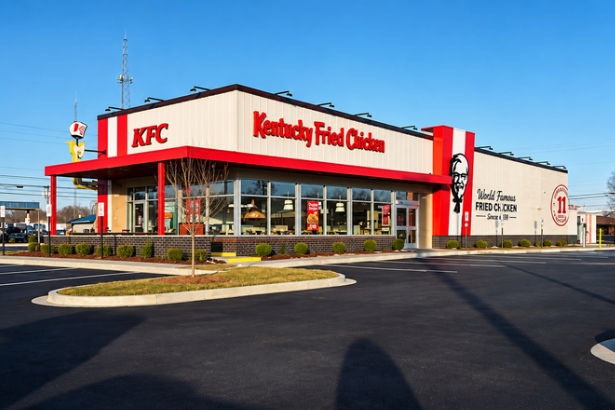
The Tasty Chick’n LLC bankruptcy is putting 84 KFC and KFC-Taco Bell restaurants under the spotlight after the Texas-based franchise operator filed for Chapter 11 protection on November 16, 2026.
Operating from Plano, Texas, Tasty Chick’n manages 75 KFC restaurants and nine co-branded KFC-Taco Bell locations across 10 states. The company has been struggling with three consecutive years of declining sales, rising food and labor expenses, higher rent and expensive restaurant renovation requirements.
Its financial position has deteriorated significantly. The company entered bankruptcy with approximately $73 million in funded debt and around $15.7 million in unpaid franchise royalties, advertising contributions and other fees owed to Yum! Brands.
The filing does not mean KFC itself has declared bankruptcy. Instead, it involves an independent franchise operator whose financial difficulties have placed its restaurant portfolio and franchise agreements at risk.
According to Inc.’s November 17 report, the company intends to pursue a court-supervised sale of its restaurants while seeking financing to continue operations during the bankruptcy process. Inc.com+1
Background and Context: Who Is Tasty Chick’n LLC?
Tasty Chick’n LLC is an independent restaurant franchise operator headquartered in Plano, Texas.
The company was established in 2021 and expanded its portfolio through two major acquisitions.
It purchased 90 restaurants from Fowler Foods in 2021 and acquired another 64 locations from JRN Inc. in 2024.
Its current restaurant portfolio includes:
- 75 KFC restaurants.
- 9 co-branded KFC and Taco Bell restaurants.
- 84 total restaurant locations.
- Operations across 10 US states.
Florida represents its largest market, with 23 restaurants, followed by Tennessee with 22.
The remaining locations are distributed across Virginia, Arkansas, Kentucky, Illinois, Missouri, Alabama, Mississippi and Indiana.
The company grew through acquisitions, but its expansion also brought significant operational responsibilities.
Restaurant operators must manage staffing, food procurement, rent, maintenance, marketing contributions and franchise obligations. They must also keep their locations aligned with brand requirements.
For Tasty Chick’n, those expenses became increasingly difficult to manage as restaurant sales declined.
Its bankruptcy filing is therefore not simply a story about a restaurant chain losing customers. It is also a case study in how debt, operating costs and franchise agreements can combine to create financial pressure.QSR Magazine+1
Latest Update: Why Tasty Chick’n Filed for Chapter 11 Bankruptcy
Chapter 11 filed November 16, 2026
The bankruptcy filing followed several years of deteriorating financial performance.
Tasty Chick’n reported declining restaurant sales in each of the previous three years.
Tasty Chick’n annual sales performance
2024
-11.4%
2025
-1.4%
2026 YTD
-2.8%
-15.6%
Approximate cumulative sales decline over three years, as reported in the bankruptcy coverage.
The individual annual figures help explain how the business reached its current position.
Sales fell 11.4% in fiscal 2024, another 1.4% in 2025 and 2.8% during 2026 to date.
The decline was accompanied by higher food, labor, operating and rental expenses.
Restaurant profit margins fell sharply
One of the most revealing financial indicators is the decline in restaurant-level profit margins.
| Financial indicator | FY 2023 | FY 2026 YTD |
|---|---|---|
| Restaurant-level profit margin | 11.8% | 4.0% |
| Restaurant-level EBITDA | $12.4 million | $7.1 million |
Restaurant-level profit margin deterioration
Reported restaurant-level margin in fiscal 2023 versus 2026 year to date.
0%4%8%12%16%FY 2023FY 2026 YTD
The restaurant-level EBITDA figure also fell from approximately $12.4 million in the comparable prior-year period to $7.1 million for the trailing 12 months of fiscal 2026.
EBITDA measures earnings before interest, taxes, depreciation and amortization. It helps illustrate the operating performance of a business before financing and certain accounting expenses.
The figures suggest that Tasty Chick’n was generating considerably less operating earnings from its restaurant portfolio while carrying substantial financial obligations.
The company’s difficulties were also complicated by franchise-mandated remodeling and upgrades affecting nearly 40 restaurants through 2029.
These investments can be important for maintaining brand standards, but they require capital at a time when the operator was already experiencing declining profitability.QSR Magazine+1
Nearly $73 million in debt adds to the pressure
The bankruptcy filing reveals a significant financial burden.
Tasty Chick’n reported approximately $67.2 million in secured debt owed to lenders led by MidCap Financial Trust, along with a $5 million note owed to JRN.
Its funded debt therefore approached $73 million.
The company also faced approximately $15.68 million in unpaid amounts claimed by Yum! Brands.
These obligations include:
- Approximately $7.9 million in advertising contributions.
- Approximately $5.6 million in franchise royalties.
- Other outstanding fees and obligations.
The distinction matters because the franchise-related amounts are separate from the company’s funded debt.
The combined obligations help explain why the operator sought bankruptcy protection rather than attempting to resolve the situation through ordinary business operations.
Bloomberg’s November 17 report on the franchisee’s bankruptcy describes the financial conflict involving the franchise agreements, rising expenses and declining restaurant sales. Bloomberg Law+2
Yum! Brands threatens to terminate franchise agreements
One of the most serious problems facing Tasty Chick’n involves its relationship with Yum! Brands, the parent company of KFC and Taco Bell.
The franchise operator began delaying royalty payments in mid-2025 and largely stopped making those payments in November of that year.
Yum! Brands issued a notice of breach and default in December 2025.
The situation escalated in September 2026, when the franchisor issued a notice of intent to terminate the franchise agreements.
The amount claimed by Yum! was approximately $15.68 million.
Losing those agreements would have major consequences for Tasty Chick’n.
Without the right to operate under the KFC and Taco Bell brands, the company could lose the commercial value associated with its restaurants, customer recognition and established franchise relationships.
It could also trigger a default under its existing credit agreements.
The bankruptcy filing therefore provides the operator with an opportunity to address its financial position while attempting to preserve the value of the restaurant portfolio.
However, Chapter 11 does not automatically guarantee that all 84 restaurants will remain open or retain their current branding.
Any proposed sale remains subject to the relevant court process and franchise approvals. QSR Magazine+1
Tasty Chick’n seeks $20 million in bankruptcy financing
Il vero problema dei ristoranti non sono i costi, sono i tavoli vuoti | Plateform
The company is also seeking up to $20 million in debtor-in-possession financing, commonly known as DIP financing.
This type of financing allows eligible companies to obtain funding while operating under Chapter 11 bankruptcy protection.
The proposed facility from MidCap Financial Trust is intended to support operations and the bankruptcy process.
Bondoro’s November 17 docket update provides additional details about the proposed financing structure:
| Financing component | Reported terms |
|---|---|
| Total proposed facility | $20 million |
| New money component | $5 million |
| Initial interim availability | $2.5 million |
| Potential debt roll-up | Up to $15 million |
| Interest | 14% PIK |
| Reported sale milestone | January 22, 2027 |
PIK means payment-in-kind interest, which is generally added to the outstanding debt rather than paid entirely in cash as it accrues.
The proposed arrangement also includes a requirement for a sale order covering substantially all assets by January 22, 2027.
These are reported proposed financing terms, not a statement that every component has received final court approval.
The financing could provide the company with additional time to keep operating while it searches for buyers or explores restructuring alternatives.
Bondoro’s weekly bankruptcy docket update provides a more detailed summary of the proposed transaction. Bondoro
Expert Analysis: Three Reasons the KFC Franchisee Bankruptcy Matters
1. Restaurant demand is not the only problem
The bankruptcy raises an important question about the economics of fast-food franchising.
A restaurant can still attract customers and sell popular products while its operator struggles financially.
Food prices, employee wages, insurance, utilities, rent and required renovations can significantly affect profitability.
For franchisees, these expenses exist alongside royalty payments and other obligations to the parent brand.
Tasty Chick’n’s experience demonstrates how declining sales and increasing operating costs can weaken a restaurant business even when the broader product category remains popular.
Inc’s reporting includes restaurant analyst John Gordon’s assessment that KFC’s wider business has faced years of declining performance and weakening store-level economics.
Gordon also argues that the brand needs to improve its strategic focus and adapt to changing consumer preferences. Inc.com
2. Franchise agreements can become a major financial risk
Franchise agreements provide operators with access to established brands, business systems, marketing and customer recognition.
However, they also create obligations.
Operators must pay royalties, contribute to advertising and maintain locations according to the franchisor’s requirements.
In Tasty Chick’n’s case, the conflict over unpaid franchise obligations became one of the central issues behind the bankruptcy.
The situation illustrates a difficult balance: franchisees need the brand to generate revenue, while franchisors need operators to meet contractual and financial requirements.
If the relationship breaks down, the value of the restaurant portfolio itself can be affected.
3. Expansion through acquisitions can create financial pressure
Tasty Chick’n expanded rapidly after acquiring restaurant portfolios in 2021 and 2024.
Acquisitions can create economies of scale, but they also bring additional debt, staffing requirements, property obligations and capital expenditure.
When sales decline across the acquired portfolio, those fixed costs can become increasingly difficult to absorb.
The company’s financial deterioration highlights the importance of evaluating restaurant-level profitability before expanding through acquisitions.
Broader Implications: What the Bankruptcy Means for KFC and the Fast-Food Industry
Major KFC franchisee KBP Brands is testing an SMS loyalty program
KFC faces another challenge in its US business
The bankruptcy comes at a difficult time for KFC’s American operations.
The brand has faced challenges involving declining sales and market share, while its parent company Yum! Brands has been exploring changes to improve its competitive position.
Inc reported that Yum! Brands has been testing new concepts, including Saucy! by KFC.
These initiatives suggest that the company is looking for new ways to attract customers and strengthen its position in the restaurant market.
However, rebuilding a restaurant brand takes time.
The financial health of franchisees is also important because operators need sufficient resources to maintain restaurants, invest in improvements and deliver consistent customer experiences.
Could more KFC locations close?
The bankruptcy does not mean that all 84 restaurants are closing.
Tasty Chick’n is pursuing a court-supervised sale of its assets, which could allow another operator to acquire some or all of the restaurants.
The company has been marketing its portfolio in several possible configurations:
- As a single restaurant portfolio.
- By individual geographic markets.
- Through combinations of restaurant locations.
The process is intended to preserve business value and identify potential buyers.
However, nine franchise agreements associated with closed or closing restaurants are being rejected as part of the bankruptcy proceedings, and the company is also seeking relief from related leases.
The future of individual locations will depend on the court process, potential buyers and the necessary franchise approvals. QSR Magazine+1
More than 1,600 employees could be affected
The financial consequences extend beyond investors and creditors.
According to QSR Magazine, Tasty Chick’n employs approximately 1,646 people.
Restaurant workers, managers, suppliers, landlords and local communities all have an interest in the outcome.
If the portfolio is successfully sold, many locations could continue operating under new ownership.
If the restructuring fails, however, additional restaurant closures and employment disruption could follow.
The bankruptcy therefore represents a significant development for the local restaurant markets where Tasty Chick’n operates.
Related History: Why Restaurant Franchise Operators Are Facing Growing Pressure
The Tasty Chick’n case is part of a wider pattern of financial challenges affecting restaurant franchise operators.
Large restaurant portfolios can appear attractive because they generate substantial annual revenue.
But revenue alone does not guarantee profitability.
Franchisees must maintain margins while dealing with food inflation, employee expenses, property costs and brand requirements.
The difference between a restaurant chain and its franchisee
It is important to distinguish between a franchisor and a franchise operator.
KFC is a restaurant brand owned by Yum! Brands.
Tasty Chick’n is an independent business that operates restaurants under franchise agreements.
The bankruptcy of an operator does not automatically mean the parent company or the entire restaurant brand is insolvent.
This distinction is essential when interpreting bankruptcy headlines.
The financial problems of one franchisee may affect dozens of restaurants without necessarily threatening the entire national chain.
A broader fast-food profitability challenge
Fast-food companies have traditionally relied on relatively efficient operating models, recognizable brands and repeat customers.
However, franchisees must increasingly balance affordability with profitability.
Consumers want competitive prices, while restaurant operators face higher expenses.
This creates a difficult operating environment.
If menu prices rise too much, customers may reduce visits. If prices remain unchanged while costs increase, restaurant margins can shrink.
Tasty Chick’n’s declining profitability illustrates the pressure created when these forces move in the wrong direction simultaneously.
What Happens Next? The Future of Tasty Chick’n’s 84 Restaurants
The next stage of the bankruptcy will focus on financing, potential buyers and the future of the company’s franchise agreements.
Several developments deserve attention.
1. Court-supervised restaurant sale
Tasty Chick’n intends to sell its restaurant assets, either as a complete portfolio or in smaller geographic groups.
2. DIP financing approval
The company is seeking up to $20 million in bankruptcy financing from MidCap Financial Trust to support operations during the case.
3. Negotiations with Yum! Brands
The future of the KFC and Taco Bell franchise agreements remains important because brand authorization affects the commercial value of the restaurants.
4. Creditor negotiations
The company must address its substantial secured debt, franchise obligations and other outstanding liabilities.
5. Restaurant and employee continuity
Potential buyers may determine whether locations continue operating and whether existing employees retain their positions.
The reported January 22, 2027 sale milestone is an important date to watch, although the bankruptcy process and court approvals will determine the actual outcome.
Conclusion
The Tasty Chick’n LLC bankruptcy highlights the financial difficulties that can develop when restaurant sales decline while operating expenses, debt and franchise obligations continue rising.
The operator’s 84 KFC and KFC-Taco Bell restaurants represent a substantial business, but its declining margins and nearly $73 million in funded debt have made restructuring increasingly important.
The company’s Chapter 11 filing is an attempt to protect the value of its restaurant portfolio, obtain financing and pursue a court-supervised sale.
For Yum! Brands, the situation presents another challenge in managing franchise relationships and strengthening KFC’s US business.
For employees, suppliers and local communities, the outcome could determine the future of dozens of restaurant locations.
One distinction remains particularly important: KFC is not filing for bankruptcy. Its independent franchisee, Tasty Chick’n LLC, is.
The bigger question now is whether a new owner or restructuring agreement can restore the profitability of these restaurants.
Frequently Asked Questions
1. What is Tasty Chick’n LLC?
Tasty Chick’n LLC is a restaurant franchise operator headquartered in Plano, Texas. It operates 75 KFC restaurants and nine co-branded KFC-Taco Bell locations across 10 states.
2. Why did Tasty Chick’n LLC file for bankruptcy?
The company cited three consecutive years of declining sales, rising food and labor expenses, higher rent, operating costs, franchise obligations and significant debt.
3. Is KFC going bankrupt in 2026?
No. KFC itself has not filed for bankruptcy. The Chapter 11 case involves independent franchise operator Tasty Chick’n LLC.
4. How many restaurants does Tasty Chick’n operate?
The company operates a portfolio of 84 restaurants, consisting of 75 KFC locations and nine KFC-Taco Bell co-branded restaurants.
5. How much debt does Tasty Chick’n have?
The company reported approximately $73 million in funded debt, in addition to approximately $15.68 million in unpaid franchise-related obligations claimed by Yum! Brands.
6. Will the 84 KFC restaurants close?
Not necessarily. Tasty Chick’n intends to pursue a court-supervised sale of its restaurants. Some locations have closed or are closing, but the bankruptcy does not automatically mean all 84 restaurants will shut down.
7. Who owns KFC?
KFC is owned by Yum! Brands, which also owns Taco Bell and other restaurant businesses.
8. What happens next in the Tasty Chick’n bankruptcy?
The company is seeking up to $20 million in DIP financing and pursuing a court-supervised sale of its restaurant assets while exploring restructuring alternatives. The proposed sale process includes a reported January 22, 2027 milestone.
Sources & References
The following sources support the Tasty Chick’n LLC bankruptcy article. The strongest references are the bankruptcy case summary, the financing details and reporting from established restaurant and business publications.
1. Primary bankruptcy and financial sources
1. Bondoro: Tasty Chick’n LLC: Chapter 11 Case Summary
- Confirms the Chapter 11 filing and 84-restaurant portfolio.
- Details approximately $72.9 million in funded debt.
- Explains the $15.68 million in unpaid franchise-related obligations.
- Documents declining sales, shrinking profit margins and franchise disputes.
- Covers the proposed court-supervised restaurant sale. Chapter 11 Case Summary
2. Bondoro: Tasty Chick’n LLC: Chapter 11 DIP Financing Terms
- Explains the proposed $20 million financing facility.
- Details the $5 million new-money component.
- Covers the proposed $15 million debt roll-up.
- Explains the 14% payment-in-kind interest.
- Lists the proposed January 2027 sale milestones. Chapter 11 DIP Terms
3. Bondoro: Weekly Docket Update 57
- Summarizes Tasty Chick’n’s bankruptcy filing.
- Provides a concise overview of the financial restructuring.
- Includes the proposed DIP financing and sale process. Bondoro
2. Business and industry news coverage
4. Inc.: A KFC Franchisee With 84 Restaurants Just Filed for Bankruptcy. Demand for Chicken Isn’t the Problem
- Covers the bankruptcy announcement.
- Explains the company’s operating challenges.
- Discusses rising labor, food and operational costs.
- Includes restaurant industry analyst John Gordon’s perspective. Inc.com
5. Bloomberg: KFC Franchisee Blames Bankruptcy on Rising Costs, Falling Sales
- Additional business reporting on the bankruptcy.
- Useful for the broader financial and restaurant industry context.
Note: Bloomberg’s article could not be independently retrieved during verification, so use it as supplementary coverage rather than the sole support for specific figures.
6. Nation’s Restaurant News: KFC Franchisee Tasty Chick’n Files for Chapter 11 Bankruptcy
- Confirms the 84-restaurant portfolio.
- Details the three-year sales decline.
- Reports declining restaurant-level profitability.
- Covers the franchise agreement disputes and proposed financing. Nation’s Restaurant News