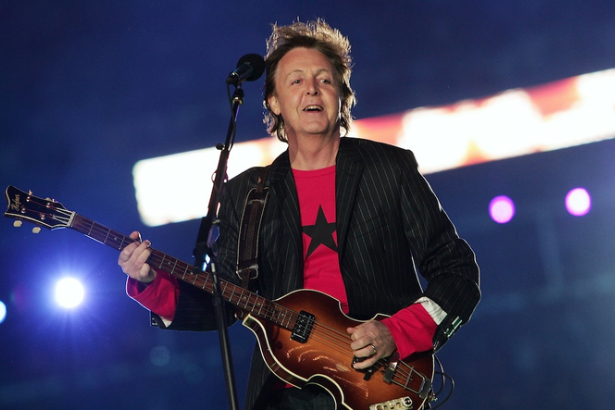
The Paul McCartney billionaire milestone marks another extraordinary chapter in the career of one of popular music’s most successful artists. At 84, the legendary Beatles songwriter has reached an estimated net worth of $1.4 billion, according to a new Forbes assessment published on November 9, 2026.
That valuation makes McCartney the world’s third-richest musician, behind Jay-Z, estimated at $2.8 billion, and Taylor Swift, estimated at $2 billion.
But there is a fascinating business story behind the headline.
McCartney did not become a billionaire simply because he helped write some of the most popular songs in music history. In fact, the early Beatles years were financially less rewarding than many people might imagine.
His fortune reflects decades of decisions involving music publishing, copyright ownership, business acquisitions, touring and intellectual property.
One particularly surprising detail is that McCartney earns money from music that has nothing to do with The Beatles. His publishing company owns rights to works by Buddy Holly, Broadway productions and familiar Christmas standards.
In other words, the man who helped write Yesterday and Hey Jude also built a business that generates royalties from songs performed by entirely different artists.
And that may be the most interesting part of his billionaire story.
Background and Context: How Paul McCartney Went From Liverpool Musician to Billionaire
Astrid Kirchherr | ASTRID KIRCHHERR (* 1938) Paul McCartney, Germany 1960 | MutualArt
Born in Liverpool in 1942, Paul McCartney became internationally famous as a member of The Beatles alongside John Lennon, George Harrison and Ringo Starr.
The band transformed popular music during the 1960s.
Songs such as Yesterday, Let It Be, Hey Jude, Penny Lane and Eleanor Rigby became global hits, establishing McCartney as one of the most commercially successful songwriters in history.
However, worldwide popularity did not automatically translate into personal wealth.
During the Beatles’ early recording years, publishing arrangements and record contracts meant the musicians did not retain as much control over their compositions as their success might suggest.
Their publisher, Dick James, controlled important songwriting rights through Northern Songs.
McCartney eventually recognized that owning music could be more financially valuable over time than simply receiving payments for performing it.
That realization changed the direction of his career.
Latest Update: Forbes Estimates Paul McCartney’s Fortune at $1.4 Billion
Paul McCartney announces first album in five years | rova
On November 9, Forbes announced that McCartney had joined its billionaire ranks with an estimated fortune of $1.4 billion.
The assessment appeared in the publication’s new newsletter, The Billie, which focuses on billionaire wealth.
According to Forbes, McCartney is now the third-richest musician in the world.
Forbes estimate, November 2026
World’s three richest musicians
Jay-Z and Roc Nation Sports: Good Business? | Hypebeast
1. Jay-Z
$2.8 billion
THE LIFE OF A SHOWGIRL (album) – TAYLOR SWIFT | comment – Molecole Urban | Podcast on Spotify
2. Taylor Swift
$2 billion
Paul McCartney | American Academy of Arts and Sciences
3. Paul McCartney
$1.4 billion
Figures are Forbes estimates, not independently audited personal balance sheets.
The report, written by Forbes journalist Chase Peterson-Withorn, provides an unusually detailed explanation of how McCartney accumulated his wealth.
The publication identifies several major sources:
- Music publishing and catalogue ownership.
- Beatles-related royalties and commercial earnings.
- Songwriting copyrights.
- International touring.
- Property investments.
- An extensive art collection.
The key takeaway is that McCartney’s wealth is supported by multiple income streams rather than a single successful music catalogue.
Read Forbes’ full investigation: The $1.4 Billion Beatle.
Expert Analysis: The Five Business Engines Behind Paul McCartney’s Billionaire Status
Paul McCartney | News | You Gave Me the Answer: How do you and Nancy spend your days off at home?
The Paul McCartney billionaire story becomes particularly interesting when examining how his assets generate money.
Here are five important components of his estimated fortune.
1. MPL Communications: The Publishing Empire Worth at Least $250 Million
Paul McCartney | The 7” Singles Box
Perhaps the most important part of McCartney’s business empire is MPL Communications.
McCartney established the company in 1969, shortly before The Beatles officially separated.
The objective was straightforward: gain greater control over his musical future.
Instead of depending entirely on external publishers, he wanted to own and manage more of his publishing rights.
Over the following decades, MPL expanded well beyond his own songwriting.
It acquired copyrights and publishing interests connected to other artists, composers and musical productions.
Forbes identifies the company’s holdings as including music by Buddy Holly, Broadway musical scores and popular Christmas standards.
Its catalogue reportedly includes:
- Blue Suede Shoes
- It’s Beginning to Look a Lot Like Christmas
- The Christmas Song
- Blue Christmas
- Baby, It’s Cold Outside
According to Forbes, MPL is worth at least $250 million and is McCartney’s largest individual business asset.
The economics are simple but powerful.
Whenever someone streams a covered song, performs a copyrighted composition publicly or stages a musical involving rights administered by the company, royalties may be generated.
That creates recurring revenue without requiring McCartney to record or perform every composition himself.
2. Beatles Royalties: A Business That Continues Generating Money
The Beatles | News | 50 Jahre “Abbey Road”: Die Beatles feiern mit einer 50th Anniversary Edition
The Beatles remain a major contributor to McCartney’s wealth.
The band’s Apple Corps holding company reportedly generates more than $50 million annually through streaming, vinyl sales and merchandise.
McCartney receives 25% of its earnings, alongside Ringo Starr and the estates of John Lennon and George Harrison.
Forbes estimates the value of each beneficiary’s interest at more than $150 million.
That is a substantial asset built on the continuing popularity of a band that released its final studio album in 1970.
The Beatles catalogue has also benefited from renewed interest among younger audiences.
Streaming services, anniversary releases, documentaries and merchandise keep the group’s music commercially relevant.
This demonstrates why iconic intellectual property can remain valuable long after the original recording sessions end.
3. Songwriting Copyrights: The Value of Owning the Music
McCartney’s relationship with Beatles songwriting rights is another important part of the story.
The rights to the Lennon-McCartney catalogue went through several ownership changes.
Michael Jackson famously acquired the Northern Songs catalogue in 1985, before Sony subsequently became involved in the business.
McCartney spent decades pursuing greater control over the publishing rights to his compositions.
Forbes estimates that his Beatles songwriting copyrights are worth at least $200 million.
The publication also estimates that these rights generate approximately $10 million in annual income.
This is a particularly important distinction.
A recording artist can earn money from performing a song, but the songwriter and publisher can also receive royalties when the underlying composition is used.
Ownership therefore creates opportunities for earnings across different platforms and formats.
4. Touring: Decades of Live Performances
Sir Paul McCartney to Conclude ‘Got Back 2025’ Tour with Grand Finale
Despite being in his 80s, McCartney has continued performing internationally.
His Got Back tour ran between 2022 and 2025 and included 79 performances, according to Forbes.
Large-scale touring generates revenue through ticket sales, merchandise and related commercial arrangements.
McCartney’s career has benefited from an unusually deep catalogue of recognizable songs.
Audiences do not simply attend his concerts to hear new material. They want to experience music that has accompanied several generations.
That gives his live performances a unique commercial advantage.
Touring also complements his publishing income, creating another major revenue stream connected to the same body of music.
5. Property and Art: Assets Beyond the Music Industry
McCartney’s estimated fortune also includes valuable properties in the United Kingdom and the Hamptons, along with an art collection containing works by artists such as Pablo Picasso and René Magritte.
These assets diversify his wealth beyond music rights and performance income.
However, Forbes does not provide a complete audited breakdown of every individual property or artwork included in its estimate.
The $1.4 billion figure should therefore be understood as an overall wealth assessment rather than a precise valuation of each asset.
Broader Implications: How Paul McCartney Changed the Economics of Music Ownership
The Beatles In Mono: 14 LP Box Set – The Beatles
The Beatles “Abbey Road” Vinyl Record Album | Pristine Auction
7
The billionaire milestone is not simply a celebrity wealth story. It illustrates a larger transformation in the music industry.
For decades, musicians were often rewarded primarily through recording contracts, performance fees and touring revenue.
McCartney’s career demonstrates the financial advantages of owning intellectual property.
The Difference Between Recording Music and Owning Music
Consider two different business models.
| Traditional recording model | Music ownership model |
|---|---|
| Earns through performances and recording contracts | Earns through ownership and administration of copyrights |
| Revenue depends heavily on continued activity | Rights can generate royalties over decades |
| Limited control under some publishing arrangements | Greater control over licensing and exploitation |
| Income can fluctuate with touring schedules | Potential for recurring publishing income |
The second model can create considerable long-term value.
A song can be recorded once and generate royalties through streaming, radio, films, advertisements, live performances and theatrical productions for decades.
That is why music catalogues have become increasingly attractive to investors.
Why MPL Is More Than a Celebrity Business
MPL demonstrates how an artist can build an intellectual property company around music.
McCartney did not limit the business to his own compositions.
By acquiring publishing interests in other writers’ works, he created a portfolio with different sources of royalty income.
That diversification matters.
A company that owns multiple catalogues is not dependent on the popularity of one artist or one generation of music listeners.
The business can benefit from renewed interest in older songs, holiday playlists, theatre productions and licensing opportunities.
The Growing Music Catalogue Investment Market
Music Streaming Royalties Decoded: A Musician’s Financial Roadmap
McCartney’s financial success also reflects a broader industry trend.
Music catalogues have increasingly become investment assets.
Institutional investors, private equity firms and specialist music companies have purchased publishing rights and recording catalogues in transactions worth millions or even billions of dollars.
The attraction is understandable.
Popular music can have unusually long commercial lifespans, and successful catalogues can produce income across multiple markets.
However, catalogue ownership is not automatically profitable. Royalties depend on licensing arrangements, copyright ownership, audience demand and the costs of administering rights.
McCartney’s advantage is that he has spent decades building and expanding his publishing interests.
For more reporting on intellectual property, technology and the business of entertainment, readers can explore The Tech Marketer.
Related History: From The Beatles’ Early Contracts to MPL’s Publishing Empire
Un mes de The Beatles en el Streaming
Paul McCartney’s ‘Wings at the Speed of Sound’ Songs Ranked Worst to Best – AOL
McCartney’s Eighties Singles Top 10 – macca-news
8
The evolution of McCartney’s wealth becomes clearer when looking at three stages of his career.
The 1960s: Beatlemania Without Full Financial Control
The Beatles became one of the world’s biggest musical acts, but the group’s early recording and publishing arrangements limited how much control the musicians had over their compositions.
The Northern Songs publishing structure became particularly important because it controlled rights to many Lennon-McCartney compositions.
The experience taught McCartney an important business lesson: creative success and ownership are not the same thing.
1969 Onward: The MPL Strategy
McCartney founded MPL Communications in 1969.
The company became the foundation of his long-term publishing strategy.
He began acquiring music rights and developing a catalogue that extended beyond his own compositions.
The decision would eventually become one of the most financially consequential moves of his career.
The Modern Era: Music Rights Become Valuable Financial Assets
The music business has changed dramatically since the 1960s.
Streaming platforms, digital distribution, international licensing and film soundtracks have created additional ways for older recordings to generate income.
McCartney’s publishing interests have benefited from these developments.
His story also demonstrates why musicians increasingly negotiate ownership and licensing rights as carefully as recording contracts.
The lesson extends beyond The Beatles: owning the rights to creative work can sometimes be more financially valuable than simply being the person who performs it.
What Happens Next: Will Paul McCartney’s Fortune Continue Growing?
ポール・マッカートニー、メキシコのフェスでジャック・ホワイト&セイント・ヴィンセントと共演 | Daily News | Billboard JAPAN
McCartney’s billionaire status is a major milestone, but his business activity and musical career are far from over.
Several developments could influence his wealth in the coming years.
1. Music Publishing Will Remain Central
MPL’s catalogue is likely to remain the foundation of his long-term financial position.
The continued popularity of The Beatles and other compositions in its portfolio creates opportunities for licensing and royalty income.
2. Streaming Will Keep Older Music Relevant
Streaming platforms have changed how listeners discover music.
Younger audiences can access The Beatles catalogue alongside contemporary releases, helping historic recordings reach new listeners.
3. Touring and Live Performances Could Continue
McCartney remains an active performer.
Future concerts and special appearances could generate additional income, although touring schedules naturally depend on his personal and professional decisions.
4. The Beatles Catalogue Will Retain Cultural Importance
The Beatles’ music remains deeply embedded in popular culture.
Anniversary releases, documentaries, films and merchandise can renew commercial interest in the band’s work.
5. Music Publishing Could Become an Even Bigger Business
As catalogue transactions continue attracting investors, established publishing portfolios may receive additional attention.
MPL’s extensive collection of copyrights gives it a position within this wider market.
That does not guarantee a particular future valuation, but it highlights why McCartney’s business strategy has remained important long after his most famous recording years.
Conclusion
Paul McCartney’s billionaire status is an extraordinary achievement, but the most interesting part of the story is how he got there.
The former Beatle did not rely exclusively on the commercial success of his recordings.
He built a publishing business, acquired valuable music rights, pursued ownership of his songwriting catalogue, continued touring and accumulated assets beyond the music industry.
Forbes’ $1.4 billion estimate reflects decades of those decisions.
His story also offers a valuable lesson for the wider entertainment industry: creating something popular can make you famous, but owning the rights to it can create lasting wealth.
McCartney helped write the soundtrack to several generations.
He also understood that the business behind the music could be just as important as the music itself.
And that is what makes his journey from Liverpool songwriter to one of the world’s richest musicians so remarkable.
Frequently Asked Questions
1. Is Paul McCartney officially a billionaire?
According to Forbes’ November 9, 2026 assessment, yes. The publication estimates his net worth at $1.4 billion. This is an independent wealth estimate rather than a publicly audited personal balance sheet.
2. What is Paul McCartney’s net worth in 2026?
Forbes estimates Paul McCartney’s net worth at approximately $1.4 billion, making him the third-richest musician in its ranking.
3. Who are the richest musicians in the world?
According to the Forbes estimates reported on November 9, 2026, the top three are Jay-Z at $2.8 billion, Taylor Swift at $2 billion and Paul McCartney at $1.4 billion.
4. How did Paul McCartney become a billionaire?
His wealth comes from music publishing, Beatles royalties, songwriting copyrights, touring, real estate and art. His publishing company, MPL Communications, is a particularly important asset.
5. What is MPL Communications?
MPL Communications is the music publishing company founded by McCartney in 1969. It manages his publishing interests and owns or administers rights to compositions by various other artists and songwriters.
6. How much is Paul McCartney’s music publishing company worth?
Forbes estimates MPL Communications is worth at least $250 million.
7. Does Paul McCartney still earn money from The Beatles?
Yes. He receives a 25% share of Apple Corps’ earnings and also earns royalties from songwriting copyrights associated with Beatles compositions.
8. How much does Paul McCartney earn from Beatles songwriting royalties?
Forbes estimates that his songwriting copyrights generate approximately $10 million annually and are worth at least $200 million.
9. Is Paul McCartney richer than Taylor Swift?
No. Forbes estimates Taylor Swift’s wealth at $2 billion, compared with McCartney’s $1.4 billion.
10. Does Paul McCartney own Christmas songs?
Through MPL Communications, McCartney owns or controls publishing interests in several well-known Christmas compositions, including It’s Beginning to Look a Lot Like Christmas, The Christmas Song and Blue Christmas.
Sources & References
1. Forbes: The $1.4 Billion Beatle: How Paul McCartney Became the World’s Third-Richest Musician
2. The Guardian: Paul McCartney Becomes a Billionaire and World’s Third-Richest Musician
3. Consequence: Paul McCartney Is Officially a Billionaire, Third Wealthiest Musician
4. Forbes Australia: Paul McCartney Is a Billionaire: How He Got There
5. The Irish Times: Paul McCartney Becomes Billionaire and World’s Third-Richest Musician