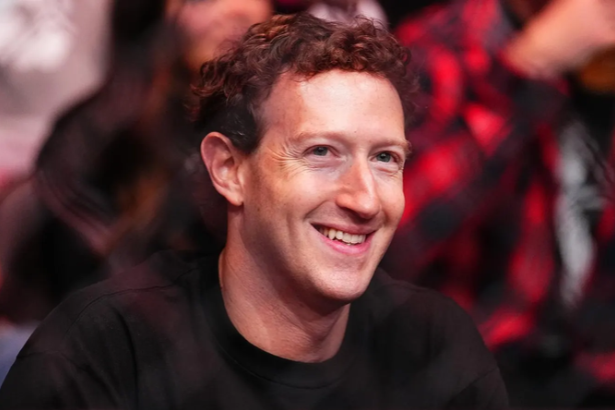
Mark Zuckerberg net worth 200 billion story has taken an interesting turn in November 2026. The Meta founder’s fortune has moved beyond the $200 billion milestone, with Forbes’ real-time billionaire tracker estimating his wealth at approximately $220.3 billion on November 10.
But the headline attracting attention isn’t simply about another technology billionaire getting richer.
It is about inheritance, philanthropy and a decision Mark Zuckerberg and his wife, Priscilla Chan, announced more than a decade ago.
In December 2015, following the birth of their first daughter, Maxima, the couple pledged to give away 99% of their Facebook shares during their lifetimes through their philanthropic initiative.
At the time, those shares were valued at approximately $45 billion.
Today, Zuckerberg’s fortune exceeds $200 billion, and the couple have three daughters. Yet the family has maintained its commitment to directing the vast majority of its pledged wealth toward philanthropic objectives rather than traditional inheritance.
The development has renewed interest in one of Silicon Valley’s most closely watched fortunes.
It also highlights an important distinction: Zuckerberg can remain extraordinarily wealthy and retain control of Meta while committing the majority of his shares to a philanthropic mission.
That is what makes this story about much more than money.
Background and Context: How Mark Zuckerberg Built His Billion-Dollar Fortune
Світ, у якому кожен має мету: що сказав Марк Цукерберг випускникам Гарварда – Радіо MAXIMUM
The story of Mark Zuckerberg begins in 2004, when he launched Facebook while studying at Harvard University.
What started as a social networking platform for college students quickly expanded into a global technology business.
Facebook became one of the defining internet platforms of the 2000s and 2010s, connecting billions of users and changing how people communicated, shared content and consumed advertising.
Zuckerberg’s wealth grew alongside the company’s expansion.
Several major milestones helped transform Facebook into one of the world’s most valuable technology companies:
- 2004: Facebook launches at Harvard.
- 2006: The platform opens to the general public.
- 2012: Facebook goes public through an initial public offering.
- 2014: Facebook acquires WhatsApp and expands its mobile ecosystem.
- 2018: Instagram and WhatsApp become increasingly important parts of its business.
- 2021: Facebook changes its corporate name to Meta, signaling a broader focus on the metaverse.
- 2023 onward: Meta increases its investment in artificial intelligence and large-scale computing infrastructure.
Today, Meta operates Facebook, Instagram, WhatsApp and other technology products.
Its advertising business generates substantial revenue, while its investments in artificial intelligence, recommendation systems, smart glasses and computing infrastructure are central to its longer-term strategy.
Zuckerberg’s personal fortune is closely tied to the company’s stock market performance.
That means his wealth can rise or fall dramatically as investors reassess Meta’s value.
Latest Update: Mark Zuckerberg’s Net Worth Reaches $220.3 Billion
Meta Connect 2026: Zuckerberg Keynote Highlights AI Safety Push | Technology
The latest Forbes real-time billionaire profile places Zuckerberg’s fortune at approximately $220.3 billion as of November 10, 2026.
He is ranked fourth globally in that live snapshot.
The figure is higher than the $200 billion milestone highlighted in Fortune’s November 7 report.
The difference reflects the constantly changing value of Zuckerberg’s Meta holdings and other assets.
Forbes live estimate
Mark Zuckerberg
$220.3 billion
November 10, 2026 snapshot
Global wealth ranking
#4
Meta ownership
~13%
The approximately 13% figure refers to his reported equity stake, not his voting power. Zuckerberg retains majority voting control through Meta’s share structure.
Source: Forbes Real-Time Billionaires and Mark Zuckerberg profile.
According to Forbes, Zuckerberg owns approximately 13% of Meta’s stock, making his wealth particularly sensitive to movements in the company’s share price.
The technology company’s market valuation is therefore central to understanding his personal fortune.
Forbes’ live profile also highlights his three children, his self-made wealth and the couple’s 2015 pledge to donate 99% of their Meta shares over their lifetimes. Forbes+1
Why Did His Fortune Cross $200 Billion?
The answer is largely connected to Meta’s stock market value.
Zuckerberg’s personal wealth is not sitting in a bank account as $220 billion in cash.
A substantial portion is represented by ownership in Meta.
When the company’s shares increase in value, his estimated net worth generally rises. When they fall, his fortune can decline.
This distinction is particularly important for technology founders.
Their wealth is often tied to company equity rather than traditional salary income.
Meta’s advertising operations, artificial intelligence investments and continued position in the global social media market all influence how investors value the company.
The Forbes estimate should therefore be treated as a moving valuation, not a permanent financial figure.
Expert Analysis: Why Zuckerberg’s Three Daughters Won’t Inherit Most of His Fortune
The most widely discussed aspect of Zuckerberg’s fortune is not its size. It is what he and Priscilla Chan intend to do with it.
The couple have three daughters: Maxima, August and Aurelia.
Despite their father’s extraordinary wealth, the children are not expected to inherit most of his fortune.
That decision goes back to December 2015.
1. The 99% Pledge Began With a Letter to Their First Daughter
Following Maxima’s birth, Zuckerberg and Chan published an open letter explaining their hopes for the next generation.
The letter announced the creation of the Chan Zuckerberg Initiative (CZI).
The couple committed to giving away 99% of their Facebook shares during their lifetimes to advance human potential and promote equality.
At the time, the shares were valued at approximately $45 billion.
Their original areas of focus included:
- Curing, preventing and managing diseases.
- Improving education through personalized learning.
- Expanding internet access.
- Building stronger communities.
- Promoting equality and opportunity.
The letter was significant because it framed philanthropy as a long-term responsibility rather than simply a charitable activity after retirement.
More than a decade later, the commitment remains a central part of their public financial philosophy.
2. The Couple’s Children Are Not the Intended Beneficiaries of Most of the Wealth
Maxima, August et Aurelia : les trois filles longtemps désirées de Mark Zuckerberg
The Fortune report published November 7 highlights an important consequence of the pledge.
Zuckerberg and Chan do not intend for their daughters to inherit most of the wealth represented by the pledged shares.
Instead, those resources are intended to support the couple’s philanthropic mission.
This places the family in a group of extremely wealthy households that have publicly committed to directing substantial portions of their fortunes toward charitable or social objectives.
However, there is an important distinction.
The 99% pledge does not mean that Zuckerberg has transferred 99% of his entire net worth immediately.
It is a commitment to give away 99% of their Meta shares over their lifetimes.
It also does not mean their daughters will receive absolutely nothing.
The precise future inheritance arrangements have not been publicly disclosed.
The more accurate description is that the couple do not intend for their children to inherit most of their wealth.
3. Zuckerberg Can Remain a Billionaire While Giving Away Most of His Shares
This is perhaps the most misunderstood part of the story.
A billionaire can commit substantial assets to philanthropy without immediately losing control of the company that generated the wealth.
According to Fortune, Zuckerberg continues to hold approximately 13% of Meta’s shares while retaining majority voting control.
Meta uses a dual-class share structure, which gives different classes of shares different voting rights.
This allows Zuckerberg to retain significant influence over the company despite owning a minority of its overall equity.
It also explains why his philanthropic commitment and his continued position as Meta’s controlling executive can coexist.
His personal wealth, equity ownership and voting authority are related, but they are not interchangeable.
4. Why Priscilla Chan Plays an Important Role
Mark Zuckerberg and Priscilla Chan Donate $3 Billion to Rid the World | Vanity Fair
Priscilla Chan is not simply associated with the initiative because she is Zuckerberg’s wife.
She is a pediatrician and educator whose professional background has influenced the couple’s philanthropic priorities.
The Chan Zuckerberg Initiative has supported research, education and community-focused programs.
Its recent direction has increasingly emphasized technology-driven biomedical research, including the use of artificial intelligence to advance scientific discovery.
That focus reflects the couple’s broader belief that technology can accelerate progress in healthcare and other areas.
Their partnership therefore combines Zuckerberg’s technology background with Chan’s experience in medicine and education.
Broader Implications: What the Zuckerberg Fortune Says About Billionaire Philanthropy
The Mark Zuckerberg net worth story raises a broader question about the role of billionaire wealth in modern society.
When a technology founder accumulates hundreds of billions of dollars, decisions about ownership and philanthropy can have consequences extending far beyond one family.
The Chan Zuckerberg Initiative Is Not a Traditional Foundation
One of the most interesting details in Fortune’s report concerns the structure of CZI.
Unlike a conventional private foundation, the Chan Zuckerberg Initiative operates as a limited liability company.
That structure provides greater flexibility in how the organization operates.
It can:
- Support nonprofit organizations.
- Invest in for-profit businesses.
- Fund scientific research.
- Participate in policy advocacy.
- Support projects through different financial arrangements.
This is an important distinction because philanthropic organizations do not all operate under identical legal structures.
A traditional private foundation has specific regulatory and distribution requirements.
An LLC structure can provide a broader range of operational and investment options, although it also raises different questions about transparency, accountability and public oversight.
AI and Biomedical Research Are Becoming Central Priorities
La inteligencia artificial será clave en el desarrollo farmacéutico a partir de 2026 – Infobae
CZI’s priorities have evolved since its launch in 2015.
Its early work included education, housing affordability, criminal justice reform and access to technology.
More recently, the initiative has placed greater emphasis on biomedical research and the application of artificial intelligence to scientific problems.
This is particularly relevant as AI systems become increasingly important in:
- Biological data analysis.
- Medical imaging.
- Drug discovery.
- Cellular research.
- Scientific collaboration.
- Understanding complex diseases.
The ambition is to use technology to accelerate research that could take traditional scientific methods much longer.
However, philanthropic funding and AI research do not automatically translate into medical breakthroughs.
Scientific progress depends on experimentation, independent validation, clinical evidence and long-term investment.
The Wealth Transfer Question
The Fortune report also places Zuckerberg’s decision within the wider discussion about intergenerational wealth.
An enormous transfer of assets is expected as older generations pass their wealth to younger family members.
Billionaires who choose to direct large portions of their assets toward philanthropy instead of inheritance create an alternative model.
That model raises several questions:
- Should wealthy families prioritize generational inheritance?
- Can private philanthropy address problems that governments struggle to solve?
- How much influence should billionaire donors have over scientific research and education?
- What accountability should apply when private wealth supports public-interest projects?
These are important debates, particularly as technology founders accumulate increasingly large fortunes.
For more coverage of technology, business leadership and the economics of innovation, readers can explore The Tech Marketer.
Related History: From Facebook’s Harvard Origins to Meta’s Global Empire
Harvard Partners With Facebook For Tech Research | News | The Harvard Crimson
How Facebook Finds Exceptional Employees – Business Insider
Mark Zuckerberg’s Journey Of Transformation: From…
6
Zuckerberg’s financial journey is closely connected to the evolution of the internet itself.
2004: Facebook Begins at Harvard
Facebook started as a university social networking platform.
Its early popularity helped establish the foundation for a much larger global business.
2012: Facebook Goes Public
The company’s initial public offering turned Zuckerberg’s ownership stake into an increasingly visible source of wealth.
As Facebook’s share price developed over subsequent years, his personal fortune expanded.
2014: WhatsApp Acquisition
Facebook acquired WhatsApp for a multibillion-dollar consideration, strengthening its position in global messaging.
The acquisition became an important part of the company’s long-term platform strategy.
2021: Facebook Becomes Meta
The corporate rebranding reflected Zuckerberg’s ambition to build beyond traditional social networking.
The company began emphasizing the metaverse, virtual reality and related technologies.
2023 to 2026: The Artificial Intelligence Era
Meta has increasingly directed resources toward artificial intelligence.
Its investments in computing infrastructure, AI models and recommendation systems have become central to its technology strategy.
These developments have helped shape how investors view the company’s future and, consequently, Zuckerberg’s wealth.
The journey from a Harvard student project to a company worth hundreds of billions of dollars is one of the most significant business stories of the internet era.
What Happens Next: Five Things to Watch in Zuckerberg’s Wealth and Philanthropy
Meta Connect 2026: AI, Smart Glasses and the Battle for the Next Interface – ASO World
marketingtrending.asoworld.com
Several developments could influence the future of Zuckerberg’s fortune and the couple’s philanthropic commitments.
1. Meta’s Share Price Will Continue Influencing His Net Worth
Because Zuckerberg’s wealth is heavily tied to Meta equity, the company’s stock performance remains a major variable.
AI investment, advertising growth, regulatory developments and competition will all influence investor expectations.
2. The 99% Philanthropic Commitment Will Remain Under Scrutiny
The pledge is a lifetime commitment.
The pace, structure and destinations of future contributions will determine how the promise translates into actual philanthropic outcomes.
3. CZI’s Biomedical Research Strategy Could Expand
Artificial intelligence and scientific research are becoming increasingly important parts of the initiative’s work.
The results of those investments will be worth monitoring over the coming years.
4. The Family’s Inheritance Arrangements Will Attract Attention
The couple’s stated intention not to pass most of their wealth to their daughters is unusual among families with fortunes of this size.
However, their complete estate planning arrangements remain private.
5. Zuckerberg’s Global Wealth Ranking Will Continue Changing
The Forbes estimate of $220.3 billion is a snapshot rather than a fixed figure.
Movements in Meta shares and other assets could alter both his net worth and his position among the world’s richest people.
Conclusion
Mark Zuckerberg’s $200 billion milestone tells only part of the story.
Forbes’ November 10 estimate places his fortune at approximately $220.3 billion, making him one of the world’s richest technology entrepreneurs.
But the more unusual aspect of his wealth is what he and Priscilla Chan intend to do with it.
Their 2015 pledge to give away 99% of their Meta shares represents a different approach to inheritance, family wealth and philanthropy.
Rather than building a traditional multigenerational financial empire for their three daughters, the couple have committed most of their pledged shareholding to a broader mission involving healthcare, education, scientific research and equality.
That does not mean Zuckerberg is immediately giving away his entire fortune or surrendering control of Meta.
He continues to hold a substantial ownership position and majority voting control.
The distinction is important.
Ultimately, Zuckerberg’s story is about two forms of power: the economic influence created by owning a major technology company and the social influence that comes from directing enormous resources toward philanthropy.
As Meta continues investing in AI and the Chan Zuckerberg Initiative expands its research priorities, both sides of that legacy will remain worth watching.
Frequently Asked Questions
1. What is Mark Zuckerberg’s net worth in November 2026?
Forbes’ real-time billionaire profile estimated Mark Zuckerberg’s net worth at approximately $220.3 billion on November 10, 2026. The figure changes with market conditions.
2. Is Mark Zuckerberg worth more than $200 billion?
Yes. Fortune reported on November 7 that his fortune had surpassed $200 billion, while Forbes’ November 10 estimate placed it at approximately $220.3 billion.
3. How did Mark Zuckerberg become so wealthy?
Zuckerberg built his fortune primarily through his ownership of Meta Platforms, the parent company of Facebook, Instagram and WhatsApp. His wealth is heavily connected to Meta’s stock market valuation.
4. How much of his wealth has Mark Zuckerberg pledged to donate?
Mark Zuckerberg and Priscilla Chan pledged to give away 99% of their Facebook shares, now Meta shares, during their lifetimes through their philanthropic mission.
5. Will Mark Zuckerberg’s daughters inherit his fortune?
The couple have stated that they intend to give away 99% of their Meta shares rather than pass most of that wealth to their children. Their complete inheritance arrangements have not been publicly disclosed.
6. Who is Priscilla Chan?
Priscilla Chan is a pediatrician, educator and philanthropist. She co-founded the Chan Zuckerberg Initiative with her husband in 2015.
7. What is the Chan Zuckerberg Initiative?
The Chan Zuckerberg Initiative is a philanthropic organization established by Mark Zuckerberg and Priscilla Chan. It supports scientific research, education, technology and community-focused projects.
8. Why did Zuckerberg pledge 99% of his Facebook shares?
The couple announced the pledge in a 2015 open letter to their first daughter, Maxima. They said their goal was to advance human potential and promote equality for future generations.
9. Does Mark Zuckerberg still control Meta?
Yes. Although he owns approximately 13% of Meta’s stock, the company’s dual-class share structure gives him majority voting control.
10. Is the Chan Zuckerberg Initiative a traditional charity?
No. It is structured as a limited liability company rather than a conventional private foundation. This allows it to use a broader range of funding and investment arrangements.
Sources & References
1. Fortune: Mark Zuckerberg’s Fortune Tops $200 Billion. His 3 Daughters Won’t Inherit Most of It
2. Forbes: Mark Zuckerberg: Real-Time Net Worth Profile
3. The Times of India: Mark Zuckerberg and Priscilla Chan Have Pledged to Donate 99% of Their Meta Shares
5. Chan Zuckerberg Initiative: About the Chan Zuckerberg Initiative
6. Meta: Meta Investor Relations