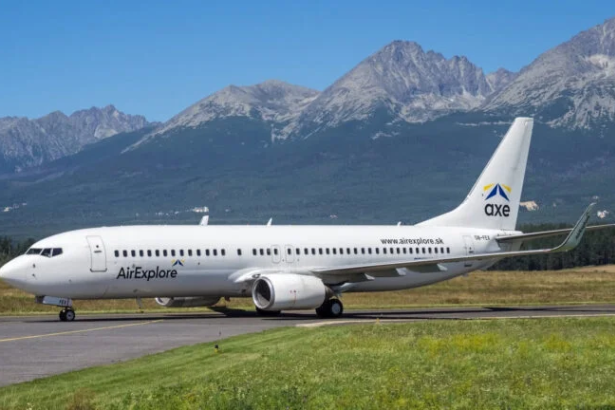
The AirExplore airline shutdown has become another significant development in Europe’s increasingly challenging aviation market.
The Slovakian carrier officially ceased operations on November 10, 2026, and submitted a request to surrender its Air Operator Certificate (AOC), ending 16 years of aviation operations.
Based in Bratislava, AirExplore specialized in charter flights and ACMI services, providing aircraft and operational support to other airlines.
Its closure comes at a difficult time for the European aviation sector, where smaller operators are facing rising fuel prices, financial pressure, weaker cargo economics and growing uncertainty surrounding seasonal flight contracts.
According to Aviation Week, AirExplore’s parent group, Avia Solutions Group, identified cargo market difficulties, increased operating costs and significant financial losses as major challenges.
The group also reported unauthorized transfers of company funds totaling €3.3 million in late 2025.
AirExplore’s shutdown is not an isolated development.
Spanish charter airline AlbaStar also suspended commercial operations on November 10, citing pandemic-era debt, geopolitical tensions and rising fuel costs.
Together, these developments highlight the financial pressure facing smaller European airlines that depend on charter demand, wet leasing and seasonal contracts.
Background and Context: What Is AirExplore and Why Does Its Closure Matter?
AirExplore was a Slovakian airline headquartered in Bratislava.
Founded in 2008, the carrier began flight operations in 2010 with a Boeing 737-400.
Unlike traditional passenger airlines that focus primarily on selling tickets directly to travelers, AirExplore developed its business around charter operations and ACMI services.
ACMI stands for:
- Aircraft
- Crew
- Maintenance
- Insurance
Under this arrangement, an airline provides another carrier with an aircraft, pilots, cabin crew, maintenance support and insurance.
The customer airline can then use that capacity to operate additional flights without purchasing and managing another aircraft itself.
This business model is particularly useful during busy holiday periods, seasonal demand increases and situations where established airlines experience aircraft shortages.
Why AirExplore was important to European aviation
AirExplore operated behind the scenes of the aviation industry.
Passengers might have booked tickets through another airline without realizing that an AirExplore aircraft and crew were operating their flight.
Its services helped airlines manage temporary capacity requirements.
The company also expanded into cargo operations, using converted Boeing 737 freighters.
In June 2023, AirExplore became part of Avia Solutions Group, expanding the group’s portfolio of aviation businesses.
However, the airline eventually faced increasing financial pressure, culminating in the November 2026 shutdown.
Its closure illustrates how even specialized aviation operators can struggle when operating costs rise and contracts become difficult to secure. AGN+2
Latest Update: AirExplore Officially Ceases Operations on November 10, 2026
The role ACMI plays in making air travel more sustainable | AviaSG
AirExplore confirmed that it stopped operating on November 10, 2026.
The airline published a brief announcement stating that it had ceased operations and submitted a request to surrender its Air Operator Certificate.
The AOC is an essential authorization that allows an airline to conduct commercial aviation operations.
Without this certification, an airline cannot continue operating commercial flights under its existing authorization.
The company thanked its employees, customers and business partners for their support throughout its operating history.
Read the official AirExplore announcement.
What the airline’s shutdown means
The announcement represents more than a temporary reduction in flights.
It marks the end of AirExplore’s operating activities under its existing airline certification.
However, surrendering an AOC and entering formal insolvency proceedings are different legal developments. The official shutdown announcement should not automatically be described as confirmation of bankruptcy.
Aviation Week reported that AirExplore had faced substantial commercial and financial challenges before stopping operations.
The company had struggled to secure winter-season cargo contracts while facing increasing operating expenses.
The announcement also raises questions about the future of its employees, aircraft, outstanding contracts and business relationships.
AirExplore shutdown: Key facts
| Detail | Information |
|---|---|
| Airline | AirExplore |
| Country | Slovakia |
| Headquarters | Bratislava |
| Founded | 2008 |
| Operations began | 2010 |
| Parent group | Avia Solutions Group |
| Shutdown date | November 10, 2026 |
| Main aircraft | Boeing 737 family |
| Business model | ACMI, charter and cargo |
| Regulatory development | Request to surrender AOC |
| Operating history | 16 years |
Sources: AirExplore official announcement and Aviation Week. airexplore.aero+2
Why Did AirExplore Shut Down? Five Financial Pressures Behind the Closure
Aergo Capital completes sale of two 737-800BCF
AirExplore’s closure followed a combination of financial, commercial and operational difficulties.
Aviation Week’s November 11 report provided important details about the company’s deteriorating financial position.
The parent group identified several problems, including cargo market losses, rising fuel costs, difficulty securing winter contracts and unauthorized financial transfers.
1. Cargo operations recorded €25.5 million in losses
One of the most significant figures in the shutdown announcement was the financial performance of AirExplore’s cargo business.
According to Avia Solutions Group, cargo operations had recorded losses of €25.5 million, approximately $28.3 million, since January 2025.
This created additional pressure on an airline already dealing with wider financial challenges.
Cargo aviation can be particularly sensitive to market conditions.
Freight operators depend on reliable contracts, competitive rates and sufficient aircraft utilization to cover fuel, maintenance, crew and leasing expenses.
When freight rates fall while operating costs remain elevated, margins can quickly deteriorate.
For AirExplore, the cargo business became a substantial financial burden.
2. Difficulty securing winter-season contracts
Another important challenge was the inability to secure sufficient contracts for the winter season.
ACMI airlines depend on agreements with other carriers.
These contracts allow airlines to obtain additional aircraft capacity during periods of higher demand.
However, when customers reduce their requirements or negotiate lower prices, ACMI providers can struggle to maintain profitable operations.
Avia Solutions Group said difficult conditions in the cargo market and broader industry pressures had made winter contracts harder to secure.
Without enough contracted flying, aircraft can remain underutilized while fixed expenses continue.
3. Rising fuel and operating costs
Fuel is one of the largest operating expenses for airlines.
AirExplore’s parent group cited rising fuel prices, increased operating costs and geopolitical uncertainty as additional challenges.
The wider aviation industry has also been affected by instability in international energy markets.
For smaller carriers, rising costs can be particularly difficult to absorb because they have less financial flexibility than major international airlines.
Other expenses include:
- Aircraft leasing payments.
- Crew salaries.
- Aircraft maintenance.
- Insurance.
- Airport charges.
- Regulatory compliance.
- Ground handling.
Even modest increases across several expense categories can significantly affect profitability.
4. Unauthorized transfers totaling €3.3 million
One of the most serious disclosures involved unauthorized transfers of company funds.
Avia Solutions Group stated that €3.3 million had been transferred to overseas bank accounts belonging to companies unknown to AirExplore.
The group attributed these transactions to the airline’s former chief financial officer.
According to its statement, the transactions occurred in late 2025 and were reported to Slovak police.
Lithuanian authorities were also assisting with the investigation.
The group said that less than 10% of the transferred amount had been recovered at the time of its announcement.
These allegations add another dimension to the company’s financial difficulties.
However, the reported transfers should be distinguished from a final legal finding of criminal responsibility.
5. Mounting financial losses
AirExplore’s wider financial position had also deteriorated.
TheStreet reported that the airline’s debt increased from approximately €12 million to €22.4 million.
These financial difficulties reduced the company’s ability to absorb further operating losses.
The combination of cargo losses, rising costs and financial uncertainty left the airline without a commercially sustainable path forward.
Sources: Aviation Week+2
AirExplore Fleet: What Happened to Its Boeing 737 Aircraft?
AirExplore earns approval for operations in the United States | AviaSG
AirExplore operated a fleet built around the Boeing 737 family.
Its aircraft were used for passenger charter operations and cargo services.
According to Avia Solutions Group’s statement reported by Aviation Week, the airline operated eight passenger aircraft and three freighters at the end of 2025.
By the time operations ended, the airline was operating just one passenger aircraft.
The group also stated that all flight programmes had been completed and agreements had been reached with the majority of aircraft lessors.
Why aircraft utilization matters
Airlines must generate sufficient revenue from their aircraft to cover the costs associated with operating and maintaining them.
An aircraft that spends too much time on the ground can become a financial liability.
For ACMI operators, aircraft utilization depends heavily on contracts with other airlines.
When those contracts disappear, revenue can decline even though leasing, maintenance and staffing expenses continue.
AirExplore’s shrinking operational footprint reflected these challenges.
What happens to the aircraft now?
The closure does not necessarily mean that all AirExplore aircraft will disappear from the aviation market.
Aircraft can be returned to lessors, transferred to other operators or placed into storage.
Some may eventually operate under different airline certificates and commercial arrangements.
Avia Solutions Group said it had reached agreements with most lessors concerning the aircraft.
The precise future allocation of every aircraft should be confirmed through subsequent fleet and leasing announcements. Aviation Week+1
AlbaStar Also Suspends Operations: Why Two European Airlines Stopped Flying Together
AirExplore is not the only European airline facing difficulties in November 2026.
Spanish charter airline AlbaStar also suspended commercial operations on November 10.
The development has attracted attention because both airlines stopped flying on the same day, although their individual financial circumstances are different.
According to TheStreet, AlbaStar cited its difficult economic and financial position.
Its management pointed to debt accumulated since the COVID-19 pandemic, geopolitical tensions and higher fuel prices.
What happened to AlbaStar?
AlbaStar was founded in 2009 and operated charter and business flights from destinations across Europe and North Africa.
Its fleet included Boeing 737-800 aircraft.
The company specialized in holiday travel and charter services, particularly flights serving Mediterranean destinations.
On November 10, chief executive Oriol Hernández announced the suspension of commercial operations while the company prepared to file for insolvency.
Management also indicated that discussions with potential investors were continuing.
The airline described the suspension as temporary and did not rule out the possibility of finding a solution that could allow operations to resume.
However, no confirmed restart date was announced in the reporting reviewed.
AirExplore versus AlbaStar
| Comparison | AirExplore | AlbaStar |
|---|---|---|
| Country | Slovakia | Spain |
| Headquarters | Bratislava | Palma de Mallorca |
| Founded | 2008 | 2009 |
| Operations began | 2010 | 2010 |
| Main business | ACMI, charter and cargo | Charter and holiday flights |
| Suspension date | November 10, 2026 | November 10, 2026 |
| Main financial concerns | Cargo losses, operating costs and financial irregularities | Legacy debt, fuel costs and geopolitical uncertainty |
| Announced development | Ceased operations and requested AOC surrender | Suspended commercial operations and prepared insolvency filing |
| Potential investor discussions | Parent group restructuring context | Reported ongoing investor discussions |
The important distinction is that AirExplore announced that it had ceased operations, while AlbaStar described its suspension as temporary.
Neither development should be treated as proof that the other airline has entered the same legal insolvency process.
Sources: Aviation Week+2
The Bigger European Aviation Crisis: Why Smaller Airlines Are Struggling
The closure of AirExplore and the suspension of AlbaStar point to a broader challenge facing smaller European aviation businesses.
Large airlines generally have greater financial resources, larger route networks and more opportunities to diversify revenue.
Smaller charter and ACMI operators often depend on a narrower range of customers and contracts.
This can make them more vulnerable when demand changes.
1. The post-pandemic debt burden
Many aviation businesses accumulated debt during the COVID-19 pandemic.
Airlines experienced a dramatic decline in passenger demand and faced significant disruption to their operations.
Although travel demand subsequently recovered, some businesses continued carrying financial obligations from the pandemic period.
AlbaStar specifically cited debt accumulated during those years as one of the reasons behind its financial difficulties.
2. Geopolitical instability
International conflicts and changing trade conditions can influence aviation markets.
Fuel prices, flight routes, insurance costs and customer demand can all be affected by geopolitical developments.
AirExplore’s parent group specifically identified conflict in the Gulf as a factor contributing to broader industry uncertainty.
3. The economics of charter aviation
Charter airlines operate differently from major scheduled carriers.
They often depend on contracts with tour operators, travel companies and other airlines.
If a major customer reduces its requirements, the operator may suddenly have aircraft and employees without sufficient revenue-generating work.
This makes contract security particularly important.
4. Pressure on the ACMI business model
ACMI operators provide capacity to other airlines, often during peak travel periods.
The business can be profitable when aircraft are consistently utilized and contract pricing covers expenses.
However, intense competition can put pressure on rates.
When fuel, maintenance and staffing costs rise, smaller providers may struggle to maintain sustainable margins.
5. Industry consolidation
Financial pressure can accelerate consolidation.
Larger aviation groups may restructure operations, combine management functions or concentrate aircraft under fewer operating certificates.
AirExplore’s closure therefore raises questions about the future structure of the European ACMI market.
For customers and airline partners, the challenge will be finding alternative operators with available aircraft, crews and regulatory approvals.
What Does the AirExplore Shutdown Mean for Passengers and Airline Partners?
Ryanair Exits Berlin Base, Blames Rising Costs | Aviation Week Network
Although AirExplore primarily operated as an ACMI and charter provider, its closure could still affect passengers indirectly.
Many travelers may have flown on an AirExplore aircraft without purchasing a ticket directly from the company.
This is common in wet-leasing arrangements, where one airline supplies aircraft and crew to another carrier.
Potential impact on passengers
Passengers should distinguish between an airline’s operating brand and the company physically operating their flight.
If an airline used AirExplore under an ACMI agreement, the customer airline may need to arrange replacement aircraft or alternative capacity.
Potential consequences include:
- Changes to aircraft assignments.
- Replacement wet-lease providers.
- Schedule adjustments.
- Operational delays.
- Changes to charter arrangements.
A shutdown does not automatically mean every flight previously operated by AirExplore has been cancelled.
Avia Solutions Group stated that all flight programmes had been completed in full before the shutdown.
What should affected travelers do?
Travelers who believe their flight was operated by AirExplore should:
- Check their booking confirmation.
- Contact the airline or tour operator that sold the ticket.
- Confirm whether the flight remains scheduled.
- Request written confirmation of any aircraft or operator changes.
- Review applicable refund or passenger-rights arrangements if a flight is cancelled.
Passengers should avoid assuming that a booking is automatically cancelled simply because an operating airline has stopped flying.
The contractual responsibilities may belong to the airline or tour operator that sold the journey.
Expert Analysis: Five Lessons the Aviation Industry Can Learn From AirExplore
The AirExplore shutdown highlights several important lessons for airline executives, aircraft lessors and aviation investors.
1. Fleet expansion must match contracted demand
Operating more aircraft does not automatically produce higher profits.
Airlines need reliable demand and contracts that cover aircraft-related expenses.
2. Cargo operations require disciplined financial management
Cargo markets can experience rapid changes in pricing and demand.
Operators must monitor route profitability, freight rates and fuel exposure.
3. Financial controls are essential
The reported €3.3 million unauthorized transfers highlight the importance of internal financial controls.
Airlines should maintain appropriate transaction authorization procedures, independent audits and financial oversight.
4. Fuel risk requires careful planning
Smaller airlines may have less flexibility to absorb sudden increases in fuel costs.
Fuel hedging, operational efficiency and commercial contract structures can help manage this exposure, although none guarantees profitability.
5. Diversification matters
Businesses relying on a limited number of customers, aircraft types or seasonal contracts can become vulnerable when market conditions change.
A diversified commercial strategy can provide additional resilience.
The wider lesson is that airline survival depends on more than aircraft, passenger demand and route availability. Financial discipline and contract quality are equally important.
What Happens Next? Five Developments to Watch
FLY4 Airlines pushes forward with 737NG fleet upgrades
The next developments will determine the longer-term consequences of AirExplore’s closure.
1. AOC surrender: Follow the Slovak aviation authority’s handling of the airline’s request to surrender its operating certificate.
2. Financial proceedings: Monitor whether the company enters formal insolvency or other restructuring proceedings.
3. Employee situation: Watch for announcements concerning employment arrangements and outstanding payments.
4. Aircraft redistribution: Track whether the Boeing 737 aircraft are returned to lessors, stored or transferred to other operators.
5. Avia Solutions Group restructuring: Watch for changes to the group’s airline portfolio and ACMI operations.
AlbaStar’s investor negotiations will also be important because a successful restructuring could provide a different outcome from AirExplore’s closure.
Conclusion: AirExplore’s Closure Signals Growing Pressure on Europe’s Airline Industry
The AirExplore shutdown marks the end of a 16-year aviation business that played an important supporting role in European charter and wet-lease operations.
The airline’s financial challenges were substantial.
Its cargo division recorded €25.5 million in losses, winter-season contracts became harder to secure, operating costs increased and its parent group disclosed unauthorized financial transfers totaling €3.3 million.
The simultaneous suspension of AlbaStar adds another warning sign for smaller European aviation operators.
However, the two situations are not identical. AirExplore has ceased operations and requested to surrender its AOC, while AlbaStar has suspended flights and is pursuing possible investor support.
For the aviation industry, the developments highlight the importance of sustainable contracts, strong financial controls and the ability to manage fuel and operating costs.
AirExplore’s departure is more than the closure of one Slovak airline. It is another reminder that the economics of keeping aircraft in the air are becoming increasingly challenging for smaller aviation operators.
The next chapter will depend on how the company’s remaining obligations are handled and whether other carriers can fill the capacity it once provided.
Frequently Asked Questions
1. Why did AirExplore shut down?
AirExplore ceased operations following significant financial and commercial difficulties. Its parent group cited cargo losses, rising operating costs, difficulty securing winter contracts and financial losses.
2. When did AirExplore stop flying?
The Slovakian airline officially ceased operations on November 10, 2026.
3. Where was AirExplore based?
AirExplore was headquartered in Bratislava, Slovakia.
4. Who owned AirExplore?
AirExplore was part of Avia Solutions Group, which acquired the airline in June 2023.
5. How much money did AirExplore lose?
Avia Solutions Group reported that AirExplore’s cargo operations had accumulated losses of €25.5 million since January 2025.
6. What happened to AirExplore’s money?
Avia Solutions Group reported unauthorized transfers totaling €3.3 million in late 2025. The transactions were reported to Slovak police, with Lithuanian authorities assisting the investigation.
7. What is ACMI in aviation?
ACMI stands for Aircraft, Crew, Maintenance and Insurance. It is an arrangement in which one airline provides another airline with an aircraft and the operational services needed to fly it.
8. What happened to AirExplore’s Boeing 737 aircraft?
The parent group said agreements had been reached with most aircraft lessors. The future allocation of individual aircraft depends on leasing and operational arrangements.
9. Is AlbaStar also shutting down?
AlbaStar suspended commercial operations on November 10, 2026, while preparing for insolvency proceedings and continuing discussions with potential investors. It described the suspension as temporary.
10. Will AirExplore passengers receive refunds?
Passengers should contact the airline or tour operator that sold their tickets. Refund rights depend on the booking arrangement and applicable passenger-protection rules.
11. What is an Air Operator Certificate?
An Air Operator Certificate is regulatory authorization required for an airline to conduct commercial flight operations.
12. Is AirExplore officially bankrupt?
The company confirmed that it ceased operations and requested to surrender its AOC. These announcements alone do not establish that a formal bankruptcy or insolvency proceeding has been completed.
Sources & References
1. Aviation Week: Two More European Carriers Fall to Economic Headwinds
2. FlightGlobal: Slovakian Carrier AirExplore Ceases Operations
3. AirExplore Official Website: Company Announcement: AirExplore Has Ceased Operations
4. TheStreet: Another Holiday Airline in Bankruptcy, Cancels All Flights
5. Aerospace Global News: Slovakian ACMI Carrier AirExplore Shuts Down After 16 Years of Operations
6. Aviacionline: AlbaStar, a Former Flybondi Provider, Suspends Operations and Files for Creditor Protection
7. Aviation24: AlbaStar Suspends Flights and Prepares Insolvency Filing