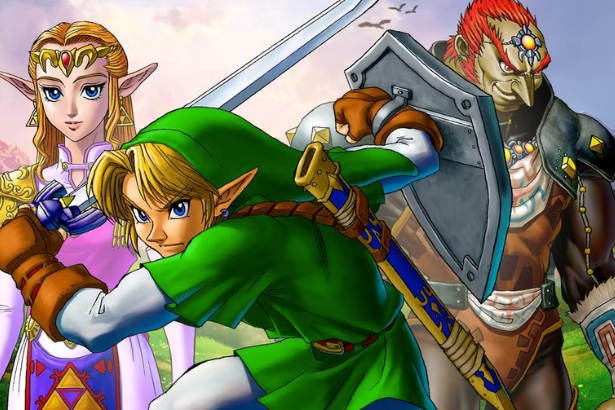
The Zelda Ocarina of Time remake is becoming a major talking point among Nintendo fans, with online interest rising around character redesigns, the return of one of gaming’s most unsettling enemies and reports of possible exclusive downloadable content. But in the rush to separate rumor from reality, one distinction matters: Nintendo has confirmed the remake, while some of the more attention-grabbing claims circulating online still need official confirmation.
Nintendo announced a new version of The Legend of Zelda: Ocarina of Time for Nintendo Switch 2 in 2026. The company’s September anniversary presentation confirmed a November 5 release date and described a substantial modernization of the classic adventure, including overhauled visuals, voiced cutscenes, expanded character dialogue, orchestral music and updated camera and movement controls.
That makes the project more than a simple resolution upgrade. It also raises a difficult question for a game with a devoted following: how much can Nintendo change before a beloved classic stops feeling like itself?
Background and Context: Why Ocarina of Time Still Matters
First released for the Nintendo 64 in 1998, Ocarina of Time helped establish many of the conventions that would define 3D action-adventure games. Its lock-on targeting, exploration, puzzle-filled dungeons and time-spanning story made it a landmark release for Nintendo and the wider industry.
The game follows Link as he travels through Hyrule, learns the power of the Ocarina of Time and confronts Ganondorf’s threat. Its mix of memorable characters, atmospheric locations and sometimes genuinely frightening encounters has kept it relevant for decades.
A remake therefore faces a different challenge from a new entry. It must welcome players who have never explored Hyrule while satisfying longtime fans who remember the original’s specific look, sounds and rhythms.
Nintendo’s official announcement confirms a modern reworking for Switch 2. It does not, by itself, validate every leak, fan theory or third-party report about additional content.
Latest Update: Character Redesigns and DLC Claims
Nintendo is updating the look of Hyrule
Nintendo’s remake has already prompted discussion about its visual direction. The new presentation moves beyond the Nintendo 64’s angular models, adding more detailed character designs and a refreshed look for the world.
Recent coverage has focused on redesigned characters and how the remake handles familiar faces. An IMDb news item covering the character redesign discussion reflects the attention these changes are receiving. For context, IMDb hosts and republishes entertainment coverage from other outlets, so readers should follow the original reporting when assessing specific claims.
The debate is not simply about whether the new graphics look better. Realistic textures and updated facial animation can make characters feel more present, but they can also alter the stylized charm that helped define the original. The most successful redesigns will preserve recognizable silhouettes and personality while making the characters feel at home in a modern game.
The Dead Hand redesign is fueling horror discussions
Another point of interest is Dead Hand, the disturbing enemy encountered in the original game’s Bottom of the Well and Shadow Temple sections. The creature’s unsettling appearance and encounter design made it one of the game’s most memorable scares.
Screen Rant’s coverage of the Dead Hand redesign explores the reaction to the new interpretation. Its popularity as a topic shows how even a relatively brief enemy encounter can become part of a game’s identity.
For a remake, the goal is not necessarily to make every monster more graphic. Strong lighting, animation, sound design and careful pacing can make an encounter frightening without losing the eerie, surreal quality of the original. Fans will be watching to see whether the updated Dead Hand preserves that balance.
Is exclusive DLC confirmed?
The claim that the remake is getting exclusive downloadable content has also drawn attention. OpenCritic’s report on the DLC discussion is one of the links circulating around the topic.
However, readers should not treat exclusive DLC as confirmed solely on the basis of this report. Nintendo’s official September 2026 Zelda anniversary presentation confirms the remake and its release date, but the official announcement material reviewed here does not establish the specific exclusive-DLC claim.
The distinction matters. A feature tied to a console, an amiibo-related unlock, a companion app feature and a paid expansion are not interchangeable. Until Nintendo provides clear details about downloadable content, its availability and whether it is exclusive, the DLC claim should be described as unconfirmed.
Expert Insights and Analysis: The Remake Has to Preserve More Than Graphics
The remake’s biggest test is likely to be its design philosophy. Modern visuals are easy to advertise in a trailer. Preserving the emotional impact of a game built around exploration, mystery and carefully paced discovery is harder.
Three elements will matter most.
First, character redesigns need consistency. More detailed models can make Hyrule feel tangible, but a coherent art direction is essential. Characters should look as though they belong to the same world, even when they come from very different regions and cultures.
Second, horror needs atmosphere. Dead Hand works because the encounter is strange and uncomfortable, not simply because the creature looks frightening. Audio, camera framing and the player’s limited understanding of what is happening are just as important as visual detail.
Third, new features should respect the original’s pacing. Updated controls and voiced scenes could make the adventure easier to approach for modern players. But additions should strengthen exploration and storytelling rather than bury them under unnecessary systems.
These are analytical considerations, not predictions about features Nintendo has not confirmed. The remake’s final quality will depend on how its changes work together in the complete game.
Broader Implications: What Zelda’s Remake Says About Gaming Nostalgia
The renewed interest in Ocarina of Time reflects a broader trend in the games industry: publishers are revisiting influential older titles for new hardware and new audiences. Remakes can preserve important games, make them easier to play and introduce their worlds to people who missed the original release.
They also create expectations that can be difficult to satisfy. Longtime fans may want a faithful recreation, while newcomers expect contemporary controls, presentation and accessibility. A remake has to find a middle ground without making either group feel that the original experience has been lost.
The discussion also demonstrates how quickly rumors can shape a game’s online reputation. Headlines about character redesigns or exclusive content can travel faster than official clarification. Readers should distinguish between a confirmed release feature, a media report, a leak and a fan interpretation.
For more coverage of gaming releases, consumer technology and the business behind major launches, see The Tech Marketer’s gaming and technology coverage at thetechmarketer.com.
Related History: From the Nintendo 64 to Modern Zelda
The original Ocarina of Time helped move the Zelda formula into 3D, creating a template for navigation, combat and environmental puzzles. Later entries built on that foundation in different ways.
The Wind Waker adopted a stylized, cel-shaded look that initially divided some fans before becoming a defining part of the series’ identity. Twilight Princess moved toward a darker visual style. More recently, Breath of the Wild and Tears of the Kingdom emphasized open-ended exploration and player-driven problem-solving.
Those games illustrate why a remake’s visual direction can become such a major debate. There is no single look that defines every Zelda adventure. The challenge is to create a coherent interpretation of Ocarina of Time while retaining the atmosphere and character that made it memorable.
The 2026 remake also arrives during the franchise’s 40th-anniversary year, giving Nintendo an opportunity to revisit a foundational game at a moment when both nostalgia and new-player interest are high.
What Happens Next?
The next meaningful milestone is the game’s scheduled November 5, 2026 release for Nintendo Switch 2. In the lead-up to launch, players will be looking for more substantial gameplay footage, details about the remake’s systems and clarification of any additional content.
Three things deserve particular attention:
- Official feature details: Nintendo’s own announcements should be the benchmark for confirming new mechanics and content.
- Full gameplay footage: Longer demonstrations can reveal whether the updated controls, camera and combat work smoothly in practice.
- DLC clarification: Any expansion or exclusive-content claim should be checked against an official product page or Nintendo announcement.
Until more information is published, the safest reading is that the remake is real and scheduled for release, while specific claims about exclusive DLC should remain unconfirmed.
Conclusion
The Zelda Ocarina of Time remake is attracting attention because it brings together two powerful forces: nostalgia for a landmark game and curiosity about how Nintendo will reinterpret it for modern hardware. Character redesigns and the return of unsettling enemies such as Dead Hand give fans plenty to discuss, but the larger question is whether the new version can preserve the original’s sense of wonder.
Nintendo has confirmed the remake for Switch 2 and announced a November 5, 2026 release date. The details of exclusive DLC, however, should not be presented as settled without stronger official confirmation. For now, the most useful approach is to enjoy the discussion while separating verified announcements from speculation.
FAQ
1. Is the Zelda Ocarina of Time remake officially confirmed?
Yes. Nintendo announced a remake of The Legend of Zelda: Ocarina of Time for Nintendo Switch 2 in 2026 and later confirmed a November 5 release date.
2. When does the Ocarina of Time remake release?
Nintendo’s official September 2026 presentation lists November 5, 2026 as the release date.
3. Is exclusive DLC confirmed for the remake?
The exclusive-DLC claim has appeared in online coverage, but it is not confirmed by the Nintendo announcement material reviewed for this article. Look for a direct statement from Nintendo before treating it as official.
4. Why are fans discussing the character redesigns?
The remake updates the game’s presentation for modern hardware. Fans are debating how the new character models balance additional detail with the distinctive style and atmosphere of the 1998 original.
5. Is Dead Hand returning in the remake?
Dead Hand is a major subject of recent coverage about the remake’s visual changes. For definitive details about its role and final design, players should look to Nintendo’s official footage and game information.
6. Which console will the remake be available on?
Nintendo has announced the remake for Nintendo Switch 2. Check Nintendo’s official product listing for the latest regional availability and purchase information.
Sources & References
- Nintendo: The Legend of Zelda 40th Anniversary celebration revealed in new Nintendo Direct presentation
- Nintendo Direct: The Legend of Zelda 40th Anniversary Direct, September 8, 2026
- IMDb News: Zelda: Ocarina of Time Remake Officially Unveils Major Character Redesign
- OpenCritic: Zelda: Ocarina of Time Remake Officially Getting Exclusive DLC
- Screen Rant: Zelda: Ocarina of Time Remake Dead Hand Redesign Leaves Gamers Split