WWDC 2026 opens June 8 at Apple Park in Cupertino, and for the first time in years, the industry is watching with genuine anticipation rather than cautious skepticism. This is Tim Cook’s last Worldwide Developers Conference as CEO before handing the role to John Ternus on September 1. It is also Apple’s most consequential software event since the original iPhone introduction, because the rebuilt Siri running on Google’s Gemini AI is either the moment Apple rejoins the AI race or confirms the fears of every investor who has worried that Apple Intelligence has been all promise and no delivery.
What Is WWDC 2026 and When Does It Start?
WWDC 2026 runs from Monday, June 8 to Friday, June 12 at Apple’s Cupertino, California headquarters, with a keynote presentation on June 8 beginning at 10 a.m. Pacific / 1 p.m. Eastern. The conference streams free on Apple.com, the Apple TV app, YouTube, and the Apple Developer app. Developers and students can also attend a one-day special event in person on June 8.
The most exciting part of June 8th is the expected release of the first iOS 27 Beta. This could include the debut of the rebuilt Siri.
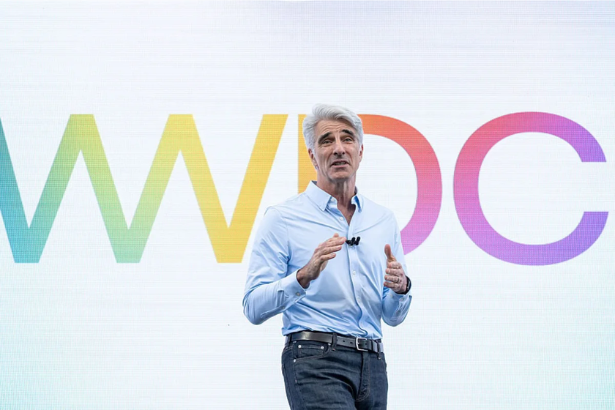
For those watching at home, the keynote format will follow Apple’s standard structure: Tim Cook opens with a performance summary, then hands to software chief Craig Federighi for the OS announcements. This year, Federighi’s segment will carry unusual weight because the operating system updates are where the AI story either lands or doesn’t.
Siri 2.0: Google Gemini Powers the Most Important Upgrade in Apple’s History
The digital assistant landed on iPhones with a good deal of fanfare in 2011 but has largely languished over the years. Siri’s deficiencies have become even clearer with the advent of generative AI models, chatbots, and, more recently, AI agents. Apple initially announced a revamped AI version of its helper in 2024, but ran into issues getting it out the door.
Apple is expected to unveil a rebuilt Siri powered by a 1.2-trillion-parameter Gemini model. The new Siri will have its own app, and you’ll be able to communicate with it in a way similar to leading chatbots like ChatGPT and Anthropic’s Claude. Siri will also get multi-step functionality, so you’ll be able to tell it to handle several tasks in a single request. It will also be able to draft emails on your behalf.
The assistant will now appear at the top of the iPhone’s screen in the Dynamic Island, and a new search box, accessible by swiping down from the center of the top of the screen, will let you ask questions and give commands via text. Siri will also be available in the Camera app, where users can quickly look up nutrition information from nutrition labels and import it for meal tracking.
According to Bloomberg’s Mark Gurman, iOS 27 may also let you choose which AI model powers Apple Intelligence features such as Writing Tools and Image Playground, with the option to lean on ChatGPT or Anthropic’s Claude. Tom’s Guide confirms that Siri will live within the Dynamic Island and offer extensions for ChatGPT, Gemini and Anthropic.
iOS 27: Liquid Glass Design, AI Features, and Which Devices Are Supported
iOS 27 introduces refined Liquid Glass UI, generative AI features, and Apple Intelligence tools like Image Playground and Writing Tools. The design language continues the visual direction established in iOS 26, with glass-like translucency and depth effects across the system interface.
iOS 27 is rumoured to support the iPhone 12 and newer, dropping the iPhone 11. The catch is that Apple Intelligence, and so most of the new Siri smarts, still needs an iPhone 15 Pro, 15 Pro Max, or any iPhone 16 or later. A chip requirement, not a new cable, decides whether you get the headline feature.
The full public release of iOS 27 is expected in September 2026, alongside the iPhone 18. Developer betas will be available immediately following the June 8 keynote. Public betas are expected in mid-July.
All Apple operating systems will shift to the OS 27 naming convention, with stability and AI features front and centre. That means macOS 27, iPadOS 27, watchOS 27, and tvOS 27 will all be announced alongside iOS 27, maintaining the unified numbering Apple introduced with the 26 generation.
Apple Intelligence 2026: Writing Tools, Image Playground, and Visual Intelligence
Apple has launched its Apple Intelligence platform, which includes features such as writing tools, image editing, and the company’s Visual Intelligence capabilities. WWDC 2026 is expected to expand all of these significantly.
Siri 2.0, powered by Google’s Gemini AI, offers advanced contextual understanding, cross-app task execution, and a new swipe-down gesture for activation. Visual Intelligence tools have been expanded with new camera-based capabilities. Writing Tools, which allow AI-assisted editing directly in any text field, are being integrated more deeply across first-party apps.
Apple has fallen troublingly behind in the AI race, and the company could put that all behind it with a strong showing at WWDC. The new Siri, which will be powered by Google Gemini and offer a lot more capabilities than before, is the star.
Apple’s AI strategy has been publicly vindicated as sound in principle by analysts even when the execution has lagged. The company distributes to approximately 1.25 billion active iPhone users, a base no competitor can match. If the AI features are compelling, the installed base turns Apple’s late start into a distribution advantage rather than a liability.
Tim Cook’s Last Keynote: What It Means for Apple’s Future
The event, Tim Cook’s last as CEO of the company, will serve as a kind of reboot of Apple’s AI strategy, which has lagged behind competing firms’ efforts to date.
Cook announced on April 20, 2026, that he will step down as Apple CEO on September 1. His tenure since August 2011 saw Apple’s annual revenue more than quadruple and the company reach a market capitalization of approximately $4 trillion. Cook will remain with the company as Executive Chairman.
Whatever Cook announces, this keynote will carry the weight of a legacy statement. The outgoing CEO has one more shot to frame Apple’s AI narrative on his own terms before handing the reins to John Ternus. That context matters because Apple’s AI story, so far, has been more promise than delivery, and the industry knows it.
A separate lawsuit led by South Korea’s National Pension Service, which argues that Apple’s AI delays caused billions in stock-market losses, remains active. The legal pressure adds further urgency to WWDC delivering a Siri that demonstrably works.
John Ternus: The Next Apple CEO Waiting in the Wings
John Ternus, currently Senior Vice President of Hardware Engineering and one of the longest-tenured executives in Apple’s leadership team, will take over as CEO on September 1, 2026. He is expected to be present at WWDC 2026 alongside Cook, with the transition already publicly acknowledged.
WWDC is the stage where that rebuild has to start showing results. The person who has to make it work takes over ten weeks later. That is the real measure of WWDC 2026: watch for two things on Monday. First, whether Apple gives the new Siri a firm release date and says it works on the phone already in your pocket. Second, how confidently Cook and Ternus present the AI plan together, because the person who has to make it work takes over ten weeks later.
Ternus brings a hardware engineering background rather than an operations or software background, which raises the question of whether Apple’s AI software acceleration will continue under his leadership or whether the company’s engineering culture will refocus on device hardware during his tenure.
The Stakes: Why This WWDC Matters More Than Any in a Decade
Apple’s AI stumbles have been well-documented. The smarter Siri previewed at WWDC 2024 was delayed repeatedly. Apple Intelligence launched with features that reviewers described as useful but not transformative. The gap between Apple’s AI capabilities and those of OpenAI, Google, and Anthropic became a recurring story in the technology press throughout 2025 and into 2026.
Apple Inc. will unveil a new artificial intelligence strategy on Monday at its annual Worldwide Developers Conference, aiming for redemption two years after its first AI rollout was plagued by subpar technology and delayed features.
The decision to power the new Siri with Google’s Gemini, rather than building a frontier model internally, is itself a strategic admission. Apple’s on-device AI processing advantage is genuine and important for privacy. But for the conversational intelligence that makes Siri feel like a real assistant rather than a voice search engine, Apple has concluded that partnering with a frontier model is faster and better than building one from scratch.
What Analysts Say: iCloud-Style AI Subscriptions and EPS Upside
Despite not offering its own high-end frontier AI model, analysts say Apple could reap significant rewards from its improved AI push.
“Apple Intelligence presents a huge opportunity to reinvent the company, accelerate product replacement cycles, and drive increased services revenue,” Bernstein analyst Mark Newman wrote in an investor note. “We estimate 13% upside to earnings per share from an accelerating replacement cycle and a further 16% upside to EPS from upselling a premium version of Apple Intelligence.”
Evercore ISI analyst Amit Daryanani wrote in a note that Apple could benefit from an “iCloud-style AI subscription” and from potential App Store fees for third-party AI apps. “We don’t think Apple needs to win the frontier-model race to monetize AI, but rather its edge is in distribution to a ~1.25B iPhone install base,” he wrote.
The analysts are right that distribution is Apple’s moat. What WWDC 2026 has to prove is that the product is good enough to activate that moat. A great Gemini-powered Siri that runs on 1.25 billion iPhones is a more powerful AI business than any frontier model company, because the addressable audience already has the device in their pocket.
Latest Updates
All WWDC 2026 details are from the June 5-8, 2026 pre-keynote coverage period. Yahoo Finance confirmed that WWDC 2026 is Tim Cook’s last as CEO, that the new Siri will run on Google’s Gemini AI models, that it will appear in the Dynamic Island, and that Bernstein and Evercore analysts project 13% and 16% EPS upside respectively from the Apple Intelligence rollout. Bloomberg’s Mark Gurman confirmed iOS 27 details including the Liquid Glass UI, the device support cutoff at iPhone 12, the AI model choice feature for Writing Tools and Image Playground, and the firm plans for Siri’s Camera app integration. Reuters reported on Apple’s two-year history of Siri stumbles and the pressure on WWDC 2026 to deliver the AI turnaround the market has been waiting for.
Full sources: Reuters | The Verge | Yahoo Finance
Broader Implications
WWDC 2026 is not just an Apple story. It is a story about whether the smartphone installed base can be the platform on which AI gets delivered to billions of people who will never pay for a ChatGPT subscription or set up an API account.
If Apple’s Gemini-powered Siri delivers genuinely useful conversational intelligence to 1.25 billion iPhone users by default, it will do more to mainstream AI than any frontier model announcement. The question is not whether Apple can win the frontier model race, it cannot, and it has stopped trying. The question is whether it can build the best AI distribution layer in the world on top of the hardware it already owns.
For Tim Cook, WWDC 2026 is the coda to a CEO tenure that transformed Apple from a hardware company into a services and subscription business with $4 trillion in market capitalization. The AI chapter is the one he did not finish. He is handing it to John Ternus with the outline drawn but the work unproven.
What happens in Cupertino today matters for every iPhone owner, every AAPL investor, and every company trying to figure out where AI lives in a world where most people experience it through their phones.
For more Apple, WWDC, and AI coverage, visit The Tech Marketer.
Frequently Asked Questions
1. When is WWDC 2026 and how do I watch? WWDC 2026 opens June 8, 2026 with the keynote at 10 a.m. Pacific / 1 p.m. Eastern and runs through June 12 at Apple Park in Cupertino, California. It streams free on Apple.com, the Apple TV app, YouTube, and the Apple Developer app.
2. What is the biggest announcement expected at WWDC 2026? The biggest expected announcement is a completely rebuilt Siri powered by Google’s Gemini AI at 1.2 trillion parameters. The new Siri will operate from the Dynamic Island, function as a chatbot, handle multi-step tasks, draft emails, and include Camera app integration for nutrition label scanning and meal tracking.
3. What devices will support iOS 27? iOS 27 is expected to support iPhone 12 and newer, dropping support for iPhone 11. However, Apple Intelligence features and the full new Siri capabilities require an iPhone 15 Pro, 15 Pro Max, or any iPhone 16 or later due to chip requirements. The public release is expected in September 2026 alongside iPhone 18.
4. Is WWDC 2026 really Tim Cook’s last keynote? Yes. Apple confirmed in April 2026 that Tim Cook will step down as CEO on September 1, 2026, with hardware engineering chief John Ternus taking over. Cook will remain as Executive Chairman. WWDC 2026 is his last developers conference keynote as chief executive, making it one of the most consequential in Apple’s recent history.
5. What is Apple Intelligence and what’s new in 2026? Apple Intelligence is Apple’s on-device AI platform launched in 2024. WWDC 2026 is expected to expand it significantly with an upgraded Siri powered by Gemini, expanded Visual Intelligence in the Camera app, Writing Tools enhanced with multi-model support (ChatGPT, Gemini, and potentially Anthropic’s Claude), and Image Playground updates across iOS 27, macOS 27, and iPadOS 27.