


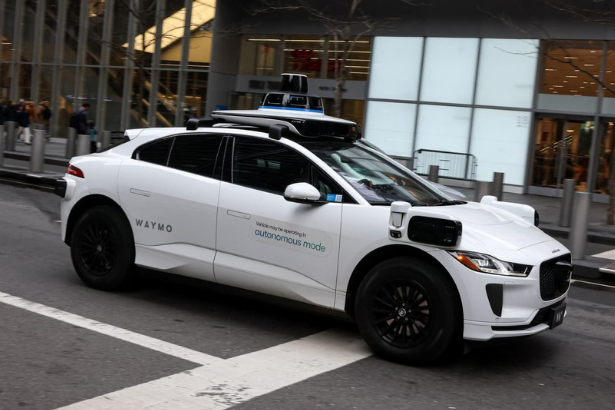
Waymo expansion 2026 New Cities has reached its most ambitious single-week moment. On July 8, Waymo announced the launch of fully driverless commercial rides in four new U.S. cities, San Diego, California; Las Vegas, Nevada; Tampa, Florida; and Denver, Colorado, extending the Alphabet-owned robotaxi company’s network across the country’s most consequential leisure, tech, and weather-diverse markets in one announcement. The simultaneous expansion into all four cities marks a step-change acceleration of a rollout that had previously moved city by city over months, and brings Waymo meaningfully closer to its stated goal of more than one million weekly trips across 20-plus cities by the end of 2026.
The Four New Markets: What Each City Means for Waymo
Each of the four new cities represents a distinct strategic test for the Waymo platform.
San Diego, California, was always the most expected of the four additions. It sits within Waymo’s California regulatory approval zone, extending the company’s Southern California footprint south from Los Angeles along the coast to the U.S.-Mexico border. Waymo began testing in San Diego in late 2025, and California Mayor Todd Gloria said when the expansion was announced: “By welcoming innovative and promising technologies like Waymo’s autonomous vehicle service, we’re exploring how to make transportation more accessible, more sustainable, and more connected for everyone in our community.” San Diego riders will book via the Waymo app in what the company described as a gradual rollout from initial invite-based access toward full public availability.
Las Vegas, Nevada, tests Waymo’s capabilities in a uniquely dense, event-driven urban environment. The Las Vegas Strip is one of the most complex drop-off and pick-up zones in American transportation, with hotel and casino porte-cochères, heavy pedestrian traffic, and continuous special-event loads. Nevada is also the sixth-most dangerous state for driving, with Las Vegas accounting for 43 percent of the state’s car crashes. Waymo will also face direct competition in Las Vegas from Amazon’s Zoox, which operates its own robotaxi service there. The Las Vegas service area will initially focus on the Strip, with plans to expand toward the airport eventually.
Tampa, Florida, represents a new geography and a new challenge: a sprawling, car-dependent Sun Belt city with frequent rainstorms and a significant tourist overlay. The Tampa Bay Business Journal’s coverage of the announcement highlighted the city’s enthusiasm to position itself as a technology hub, with local officials viewing the Waymo launch as a marker of Tampa’s broader evolution.
Denver, Colorado, is the most operationally ambitious addition of the four. Waymo announced autonomous testing in Denver as early as September 2025, describing it as the company’s coldest testing city at the time. Denver receives an average of 56 inches of seasonal snowfall, presenting significant challenges for autonomous vehicle sensors. The successful launch of driverless rides there would significantly expand the range of North American climates Waymo can claim to operate in, unlocking future expansion to Chicago, Boston, Minneapolis, and other northern markets.
The Fleet: Jaguar I-Pace, Zeekr RT, and the Ojai Generation
The vehicles that will operate in the four new cities reflect a transition moment in Waymo’s hardware evolution.
Waymo is deploying a mix of Jaguar I-Pace vehicles with the fifth-generation Waymo Driver and next-generation Zeekr RT vehicles equipped with the sixth-generation system in its new markets. The Zeekr RT, built on a vehicle base from Chinese automaker Geely, represents a significant cost reduction compared to the Jaguar I-Pace, which Waymo acknowledges is approaching end-of-life as a production platform.
The sixth-generation system, called Ojai, features upgraded lidar and radar that benefit from significant industry cost reductions over the past five years and offers better performance in harsh weather conditions, a capability essential to Waymo’s expansion into Denver and future northern markets. The company said its sixth-generation lidar leverages cost reductions that have made affordable lidar increasingly common in consumer vehicles. Ojai vehicles have been providing driverless rides to Waymo employees and guests in San Francisco and Los Angeles since February 2026, building operational confidence before public rollout.
The Waymo Premier Upgrade
The new cities launch alongside a service tier upgrade that Waymo announced in June but which becomes more meaningful as the network scales.
Waymo also launched Waymo Premier in June 2026, an elevated rider experience tier above the standard service. Premier rides offer enhanced in-cabin features, premium routing, and priority availability for riders who opt into the higher service level. The introduction of a premium tier reflects Waymo’s confidence in the reliability and consistency of its service as it scales from experimental to routine.
1 Million Weekly Trips and 20+ Cities: The Target and the Math
The four-city simultaneous launch is the clearest signal yet that Waymo is operating against a specific timeline.
Waymo co-CEO Tekedra Mawakana has repeatedly stated the company is targeting more than one million weekly trips by the end of 2026. As of early 2026, the company was providing more than 400,000 weekly trips across its existing markets. The more than four hundred thousand weekly trips provide a baseline against which the new market additions must be measured.
In 2026, Waymo’s full expansion target includes Dallas, Denver, Detroit, Houston, Las Vegas, Nashville, Orlando, San Antonio, San Diego, and Washington, D.C., plus London for its first international market. With the July 8 announcement moving San Diego, Las Vegas, Tampa, and Denver from testing to live service, the company is visibly executing against that target list. Riders in new markets receive invitations through the Waymo app on a rolling basis before the full public launch, a graduated access approach that allows Waymo to manage demand and quality before opening to all.
Competition: Tesla, Zoox, and the Autonomous Race
The competitive context for Waymo’s expansion is important to understand accurately.
Waymo is the only U.S. company operating a commercial fully autonomous ride-hailing service without safety drivers at scale. Tesla launched a paid robotaxi service in Austin in June 2025 using modified Model Y vehicles, but continues to operate with a human safety monitor in the front passenger seat, a distinction Waymo emphasizes in its own positioning. Amazon-owned Zoox operates in Las Vegas but at a smaller scale and with a different vehicle architecture. Chinese robotaxi companies including Baidu-owned Apollo Go and WeRide have been expanding internationally at a faster pace than Waymo, though without comparable U.S. scale.
A Goldman Sachs estimate from 2025 valued the global driverless ride-hailing market at more than $25 billion by 2030. Waymo’s lead in U.S. operational scale, measured in miles driven, safety data, and the diversity of environments it has trained across, is its most durable competitive advantage as that market develops.
The Regulatory Achievement Behind Each New City
Every new Waymo market requires a specific regulatory achievement that is often invisible in coverage of the launches themselves.
Waymo needed California DMV approval to expand into San Diego. Nevada DMV testing approval was required before commercial rides could begin in Las Vegas. Michigan requires a transportation network company permit before Waymo can launch in Detroit, a city that is still in the queue. Colorado’s Governor Jared Polis has supported autonomous vehicles, vetoing Teamster-backed legislation that would have banned large driverless trucks in Colorado, giving Waymo a favorable regulatory environment for its Denver entry.
The regulatory fragmentation of autonomous vehicle law across U.S. states is one of the most consequential structural challenges facing the robotaxi industry. The states and cities that have created clear legal pathways, California, Arizona, Texas, Florida, Nevada, and Colorado, are the ones where Waymo has been able to build commercial momentum. The states that have not, Massachusetts, New York, and Washington, appear as notable absences from Waymo’s 2026 expansion map despite having large, transit-hungry urban populations.
Latest Update: Driverless Testing Becomes Live Service Across Four Cities
The Waymo expansion 2026 announcement of July 8 converts what had been testing and employee-access operations in San Diego, Las Vegas, Tampa, and Denver into commercial public rides.
Select riders will receive invitations through the Waymo app starting this week, with additional access rolling out gradually ahead of full public availability in each market. Riders in early access cities receive invitations on a rolling basis to ensure a seamless experience during the initial launch period.
For full coverage of the expansion, follow CNBC, San Diego Union-Tribune, and Tampa Bay Business Journal.
Broader Implications: What the Four-City Simultaneous Launch Signals
The Waymo expansion 2026 New Cities four-city simultaneous announcement is operationally different from every prior Waymo launch, and the difference matters.
Previous Waymo city expansions happened sequentially over weeks or months as the company worked through regulatory approval, mapping data, and operational readiness in each market individually. Launching San Diego, Las Vegas, Tampa, and Denver on the same day signals that Waymo has matured from a startup executing city-by-city proofs-of-concept to a company with sufficient systems, fleet capacity, and operational infrastructure to execute multi-city rollouts simultaneously.
That operational maturity, combined with the million-trips target, the Ojai vehicle generation, and the Waymo Premier service tier, paints a coherent picture of a company in the transition from demonstrating feasibility to building a scalable commercial business. The next frontier will be the harder regulatory environments in New York and Massachusetts, international markets in London and Tokyo, and weather challenges in the northern cities that Denver’s successful winter operation would unlock.
For more technology and autonomous vehicle coverage, visit The Tech Marketer.
What Happens Next
Select riders in San Diego, Las Vegas, Tampa, and Denver will receive app invitations this week, with full public access rolling out gradually. Detroit, Washington D.C., Nashville, and London remain the next announced markets in Waymo’s expansion pipeline. The one-million-weekly-trips target for end of 2026 is now being measured against a network that has just added four major markets simultaneously. Waymo’s Ojai sixth-generation vehicle rollout will continue in existing and new markets as the Jaguar I-Pace fleet is phased out over the coming vehicle cycles.
FAQ
Which cities are getting Waymo driverless rides in 2026?
Waymo announced the launch of fully driverless commercial rides in four new U.S. cities on July 8, 2026: San Diego, California; Las Vegas, Nevada; Tampa, Florida; and Denver, Colorado. Select riders will receive invitations through the Waymo app on a rolling basis before full public access opens in each city.
How do I get a Waymo ride in San Diego, Las Vegas, Tampa, or Denver?
Download the Waymo app on iOS or Android and sign up for access in your city. Waymo sends invitations on a rolling basis to manage the early access experience, with full public availability following as the fleet scales in each new market. The app allows you to join a waitlist and track your access status.
How many cities does Waymo operate in as of July 2026?
Waymo’s full network includes Phoenix, San Francisco Bay Area, Los Angeles, Miami, Orlando, Dallas, Houston, San Antonio, Nashville, Austin, Atlanta, and the newly announced San Diego, Las Vegas, Tampa, and Denver, plus early access in additional cities. The company is targeting 20 or more cities and more than one million weekly trips by the end of 2026.
What vehicles does Waymo use in its 2026 expansion cities?
Waymo is deploying a mixed fleet of Jaguar I-Pace vehicles with its fifth-generation Waymo Driver and Zeekr RT vehicles with the sixth-generation Ojai system in its new markets. The Ojai system offers improved lidar, radar, and weather performance at lower hardware costs, making it central to Waymo’s fleet scaling plans.
How does Waymo compare to Tesla’s robotaxi service in 2026?
Waymo is the only U.S. company offering fully autonomous commercial ride-hailing without a safety driver at scale. Tesla launched a paid robotaxi service in Austin in June 2025 using modified Model Y vehicles but continues to operate with a human safety monitor in the front passenger seat. Amazon’s Zoox operates in Las Vegas as a smaller-scale competitor in that specific market.
Sources and References
- CNBC (original submission, blocked): https://www.cnbc.com/2026/07/08/waymo-starts-driverless-rides-in-san-diego-las-vegas-tampa-denver.html
- San Diego Union-Tribune (original submission, blocked): https://www.sandiegouniontribune.com/2026/07/08/waymo-moves-to-driverless-testing-in-san-diego/
- Tampa Bay Business Journal (original submission, blocked): https://www.bizjournals.com/tampabay/news/2026/07/08/waymo-next-phase.html