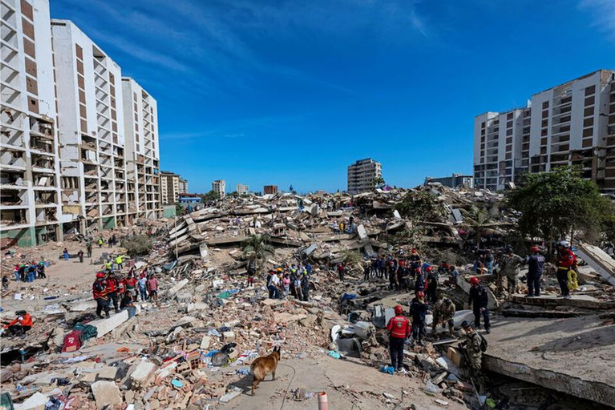
Venezuela earthquake relief 2026 has entered a critical new phase three weeks after twin earthquakes devastated the country’s northern coast, as the United States government announced a formal partnership with the Venezuelan American Medical Association to collect and distribute medical supplies to earthquake survivors. State Department spokesperson Tommy Pigott announced the VAMA alliance on July 13, describing it as part of the ongoing U.S. response to the earthquakes that struck Venezuela on June 24 and left at least 4,500 people confirmed dead, more than 16,700 injured, and an estimated 40,000 or more missing, with 80 percent of buildings in the coastal state of La Guaira collapsed. An NGO confirmed this week that it has been distributing aid provided by the United States to approximately 40,000 affected families. The humanitarian situation in the shelters and improvised camps that house tens of thousands of displaced Venezuelans remains acute, complicated by the pre-existing fragility of Venezuela’s healthcare infrastructure, government access restrictions, and continuing aftershock activity.
What Happened on June 24: The Twin Earthquakes
Three weeks into the response, the scale of the disaster that triggered it requires clear documentation.
Venezuela’s twin earthquakes struck on June 24, 2026, at 6:04 and 6:05 p.m. local time, just 39 seconds apart, with magnitudes of 7.2 and 7.5. Their epicenters were in Veroes Municipality, west of San Felipe in Yaracuy state, approximately 160 kilometers west of Caracas. The two quakes occurred on separate faults within the Boconó fault system, with seismologists suggesting the first event activated the second by increasing stress along the nearby, shallower fault. The 7.5 magnitude mainshock was the strongest earthquake in Venezuela since the 1900 San Narciso earthquake, more than 125 years ago.
The destruction was concentrated in La Guaira state, where 80 percent of buildings collapsed, and in the capital Caracas, particularly in the densely populated neighborhoods of Catia la Mar, Caraballeda, and Los Palos Grandes in east Caracas. Approximately 590,000 buildings were damaged across the country in satellite imagery analysis. The UN Office for Disaster Risk Reduction estimated total direct damages at $37 billion. As of early July, Venezuelan government officials had confirmed more than 3,800 to 4,700 deaths, with more than 40,000 people missing. The USGS’s PAGER system projected the final death toll could exceed 10,000.
The VAMA Alliance: What It Is and What It Does
The U.S. Department of State’s formal partnership with the Venezuelan American Medical Association represents the latest layer in a multi-week relief operation.
Pigott announced on July 13 on X: “As part of our ongoing response to the earthquakes in Venezuela, the Department of State finalized a partnership with the Venezuelan American Medical Association, a U.S. charitable organization of Venezuelan physicians living and working in the United States. VAMA is collecting, transporting, and distributing medical supplies for the relief efforts following the devastating earthquakes.”
VAMA is composed of more than 60 Venezuelan-born physicians who live and practice medicine in the United States. The organization both provides medical guidance to its members and prepares them to respond to natural disasters and healthcare crises in Venezuela. It considers the true magnitude of the tragedy still uncertain given the scale of the earthquakes in a country already navigating a fragile transition period marked by uncertainty. The practical role VAMA is filling, collecting supplies in the United States, transporting them to Venezuela, and distributing them to affected communities, addresses one of the most persistent logistical challenges of the response: getting medical supplies into communities where the government has restricted access for outside relief organizations.
The Scale of Medical Need on the Ground
The medical situation in La Guaira and Caracas three weeks after the earthquakes is severe and compounded by Venezuela’s pre-existing healthcare crisis.
Not only food but also medical assistance is insufficient in the field hospitals and shelters, the latter under chaotic logistics in some cases, according to reports. This compounds the longstanding shortages of staff and medical supplies in La Guaira’s and Caracas’s main hospitals that predate the earthquakes entirely. Venezuela had already been experiencing critical shortages of medicine, medical equipment, and healthcare workers for years before June 24, meaning the earthquake response is operating on a baseline of institutional weakness rather than a functional public health system.
The UN is preparing assistance centers in La Guaira for families who have lost their homes, offering medical care, food, water, sanitation, protection, and psychosocial support. OCHA’s Vanessa May described the emotional dimension: “There are people who need a hug,” she said of families waiting for news of loved ones or already knowing relatives remain buried under debris. The UN has reached an agreement with Venezuelan authorities to procure 10,000 body bags, with the UN explicitly expressing hope that the actual death toll will be lower than that number.
The US Relief Commitment: $150 Million and Search Teams
The VAMA alliance is one component of a substantially larger U.S. response that began on June 24.
The United States pledged $150 million in aid following the earthquakes. The State Department announced a $100 million contribution to a UN humanitarian fund for Venezuela and $50 million to aid organizations already working in the country. Secretary of State Marco Rubio said the U.S. was deploying search and rescue teams from Fairfax County, Virginia, and Los Angeles. The U.S. Defense Department provided aircraft to assess damage, find injured victims, and deliver life-saving assistance. U.S. Marine helicopters were documented flying over quake-hit areas in Caraballeda in the days after the disaster.
World Vision reported that it mobilized alongside more than 2,000 local church partners through its Hope Without Borders program, reaching 45,000 people across La Guaira, Caracas, and Miranda with emergency food aid, hygiene and water kits, recreational kits, and psychosocial support. Direct Relief is coordinating with local and regional organizations to support medical supply needs and has dedicated 100 percent of Venezuela earthquake donations to that specific response.
The Political Dimension: González’s Transparency Call and Maduro’s Obstacles
No account of the Venezuela earthquake relief effort can ignore the political context in which it is operating, and both sides of the situation deserve representation.
Venezuelan opposition leader Edmundo González Urrutia publicly called for transparency in the distribution of earthquake aid, raising concerns that relief supplies could be diverted or controlled by the Maduro government rather than reaching the people who need them. His statement reflected a concern expressed by multiple international humanitarian organizations that access to the most affected areas has been inconsistent and government-controlled in ways that slow delivery.
NPR’s reporting from the ground in the week after the earthquakes documented specific obstacles. Police and army troops set up roadblocks demanding government permits from doctors and rescue workers trying to access disaster zones. A construction worker named Julio Meléndez told NPR it took him two days to get a jackhammer into a disaster zone because police required both a permit and the sales receipt. “The only thing the authorities do is get in the way,” he said. The Venezuelan government for its part said it is opening large camps to house homeless people, building new homes, and establishing a presidential commission to assess housing and infrastructure damage.
The Maduro government’s acting president Delcy Rodríguez warned that the death count was likely to continue rising, specifically citing La Guaira as a disaster zone where deaths had not been fully verified. She said on state television that work would begin on new homes “in a very short time.”
The Missing: 40,000 People and the Limits of the Official Count
The number of missing persons in the Venezuela earthquake is one of the most significant data points in the entire humanitarian picture, and it is worth understanding why.
According to Britannica and Wikipedia’s earthquake documentation, more than 40,000 people remain missing as of early July. That figure, alongside 4,700 or more confirmed dead and 16,700 injured, represents the scale of devastation from 800 collapsed buildings, 189 of which were completely leveled. The most affected communities, at the time of the earthquakes, had approximately 30,000 people in Caraballeda and Catia la Mar alone, of whom 13,400 managed to rescue themselves from rubble.
The 72-hour survival window for earthquake victims passed within days of the June 24 disaster, after which rescue became recovery. Six days after the quakes, a 3-year-old boy was pulled alive from the rubble in La Guaira, described as a miraculous rescue. After that point, the 1,115 aftershocks recorded through July 8 continued to destabilize damaged structures and complicate the work of recovery teams. The true scope of deaths will likely not be known for months, if ever.
Latest Update: NGO Reaches 40,000 Families, Aid Flows Continue
The Venezuela earthquake relief 2026 three-week update is a story of aid arriving but inadequate to the scale of the catastrophe.
An NGO confirmed this week that it is distributing U.S.-provided assistance to approximately 40,000 affected families, as reported by RFI. VAMA’s medical supply alliance with the State Department is now operational. World Vision’s network has reached 45,000 people. The UN is scaling up its assistance centers. And the death toll, which may ultimately far exceed 4,700, continues to be revised upward as recovery operations in the most destroyed areas of La Guaira reach communities that have had no outside contact since June 24.
For full coverage, follow San Antonio Express-News, RFI, and Diario Las Américas.
Broader Implications: Humanitarian Crisis Inside a Political Crisis
The Venezuela earthquake relief 2026 response is being mounted in one of the most politically and economically fragile countries in the Western Hemisphere, and that context shapes every dimension of the humanitarian effort.
Venezuela was already navigating a political transition of uncertain outcome after years of authoritarian governance, economic collapse, and mass emigration of an estimated 7 to 8 million citizens, many of whom now constitute the Venezuelan-American community from which VAMA’s 60-plus physicians are drawn. The earthquake struck a country whose hospitals already lacked medicine, whose infrastructure was already in decay, and whose government already had a documented pattern of controlling the flow of humanitarian aid for political purposes.
The U.S. decision to partner with VAMA, an organization of Venezuelan-born American physicians, rather than operating solely through the Venezuelan government or international institutions, reflects a calculation about how to route medical supplies most effectively given those realities. Whether that channel proves sufficient for the scope of the need is a question that the coming months of recovery will answer.
For more world news and humanitarian coverage, visit The Tech Marketer.
What Happens Next
The Venezuelan government’s presidential commission continues assessing housing and infrastructure damage. UN assistance centers in La Guaira are expanding their capacity. VAMA is actively collecting, transporting, and distributing medical supplies under the State Department partnership. The final death toll, likely far above the current confirmed figure of 4,700, will be determined over months as recovery operations reach all affected communities. Aftershock activity continues at reduced intensity.
FAQ
What caused the Venezuela earthquake in June 2026?
Two back-to-back earthquakes struck Venezuela on June 24, 2026, at 6:04 and 6:05 p.m. local time, 39 seconds apart, measuring 7.2 and 7.5 magnitude. Their epicenters were in Veroes Municipality in Yaracuy state, approximately 160 kilometers west of Caracas. The earthquakes occurred on separate faults within the Boconó fault system, which forms part of the strike-slip boundary between the Caribbean and South American tectonic plates. The 7.5-magnitude mainshock was Venezuela’s strongest earthquake in more than 125 years.
How many people were killed in the Venezuela earthquake 2026?
Venezuelan government officials confirmed more than 4,500 to 4,700 deaths as of mid-July 2026, with more than 16,700 people injured and an estimated 40,000 or more missing. The USGS projected the final death toll could exceed 10,000. La Guaira state, where 80 percent of buildings collapsed, has been the hardest-hit area, with the full extent of casualties there still being confirmed as recovery operations continue.
What is the Venezuelan American Medical Association and why is it involved in earthquake relief?
The Venezuelan American Medical Association, or VAMA, is a U.S. charitable organization composed of more than 60 Venezuelan-born physicians who live and practice medicine in the United States. The U.S. State Department formalized a partnership with VAMA on July 13, 2026, tasking it with collecting, transporting, and distributing medical supplies to earthquake survivors in Venezuela. The alliance addresses the challenge of routing medical aid into communities where government restrictions have complicated direct NGO access.
How much aid has the United States provided to Venezuela after the 2026 earthquakes?
The United States pledged $150 million in aid following the June 24 earthquakes, including a $100 million contribution to a UN humanitarian fund for Venezuela and $50 million to aid organizations already working in the country. The U.S. also deployed search and rescue teams from Fairfax County, Virginia, and Los Angeles, and provided Defense Department aircraft for damage assessment and aid delivery. The State Department also formalized the VAMA medical supply alliance on July 13 as part of its ongoing response.
Why has earthquake relief distribution been difficult in Venezuela?
Access to the most affected areas has been complicated by the Venezuelan government’s requirement for permits for relief workers and heavy equipment entering disaster zones. NPR reported that police and army troops set up roadblocks demanding government permits from doctors and rescue workers, and that a construction worker was delayed two days trying to bring a jackhammer into a disaster zone. Venezuela’s pre-existing healthcare crisis, with hospitals already facing medicine and staff shortages before the earthquakes, has further compounded the medical relief challenge.
Sources and References
- San Antonio Express-News (original submission, blocked): https://www.expressnews.com/news/article/fluye-la-ayuda-humanitaria-desde-eeuu-a-venezuela-22344777.php
- RFI (original submission, blocked): https://www.rfi.fr/es/m%C3%A1s-noticias/20260715-una-ong-asegura-que-reparte-ayuda-de-eeuu-a-40-000-familias-afectadas-por-los-sismos-en-venezuela
- Diario Las Américas (fully accessed): https://www.diariolasamericas.com/america-latina/eeuu-hace-alianza-medicos-venezolanos-el-pais-reforzar-ayuda-los-devastadores-sismos-n5398795