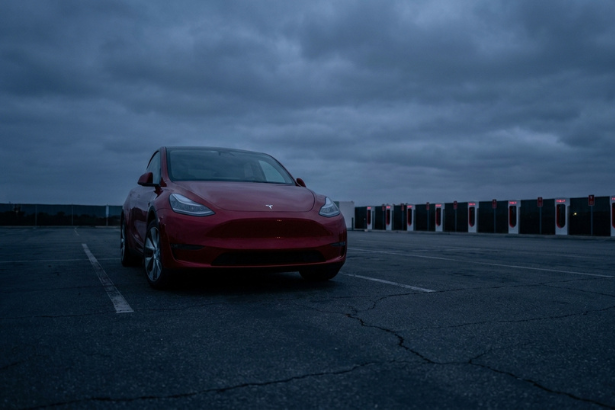
The numbers are in and they are worse than almost anyone predicted. California’s EV revolution is in full retreat.
Tesla California sales crash data released April 21, 2026, shows the company registered just 31,958 vehicles in California during Q1 2026, down from 42,211 in the same period last year. That is a decline of 10,253 units and a 24.3% drop in the state that has long served as the proving ground for America’s electric vehicle transition. But Tesla’s numbers are not even the most alarming part of this story. The broader California EV market collapsed by 40.2% year over year in Q1, with zero-emission vehicle market share falling to 13.7%, the lowest level since Q4 2021. Hybrids now outsell EVs in California for the first time in years. Gas-powered vehicles are climbing back. And the primary cause is a single policy decision made in Washington.
Background and Context
California has been the engine of the American EV market for over a decade. The state accounts for roughly 29.6% of all US zero-emission vehicle registrations. When California’s EV market moves, the national numbers follow. What happened in Q1 2026 is not a blip. It is a structural reversal driven by the removal of the financial incentive that had been making EVs economically competitive for millions of buyers.
The $7,500 federal EV tax credit expired on September 30, 2025, as part of the One Big Beautiful Bill Act, and nothing has replaced it. The impact has been immediate and severe. Electrek
Q1 2026 is the first full quarter of California registration data captured entirely after that expiration. The connection between the tax credit’s removal and the market’s contraction is no longer a theory. It is confirmed by the data.
Nationally, Americans purchased just 212,600 new EVs in the first quarter, down from 296,304 in Q1 2025, a 28% decline. EV market share fell to an estimated 5.8% of total new vehicle sales, well below the 7.5% peak reached in Q3 2025. Electrek
California’s Q1 numbers are even more severe, confirming the hangover extended deep into the new year.
Latest Update
The data came from the California New Car Dealers Association’s Q1 2026 Auto Outlook report, and coverage landed across all major automotive publications on April 21, 2026.
Full reporting from today’s data release:
- Tesla’s California Sales Crash 24% as State’s EV Market Plunges to Lowest Since 2021 — Electrek
- Tesla’s California Sales Slide Deepens as Hybrids Displace EVs — Bloomberg
- Tesla Registrations Plunge in California, Industry Body Says — Reuters
Key numbers from the Q1 2026 CNCDA report:
- Tesla registered 31,958 vehicles in California during Q1 2026, down from 42,211 in Q1 2025, a decline of 10,253 units electrek
- Total ZEV registrations in California dropped 40.2% year over year, falling from 95,520 to just 57,111 units electrek
- ZEV market share plunged from around 21% in 2025 to just 13.7%, the lowest level since Q4 2021 electrek
- Hybrid registrations grew to roughly 21% of the California market, the first time hybrid share has meaningfully exceeded ZEV share in the nation’s most EV-friendly state Evxl
- Gas-powered vehicles climbed back to 61.1% of registrations, up from 54% in 2025 electrek
Expert Insights and Analysis
The scale of collapse across every EV brand in California tells a story that goes well beyond Tesla’s individual numbers.
Mercedes-Benz ZEV registrations collapsed 81.9%, Chevrolet dropped 59.6%, BMW fell 58.9%, Ford declined 58.8%, Kia dropped 48.2%, and Rivian plunged 35.9%. Even Hyundai, which has been gaining ground in the EV market, saw a 30.4% decline in ZEV registrations. electrek
These are not competitive losses. They are demand destruction across the entire category simultaneously. That kind of synchronized collapse across brands with different price points, different customer demographics, and different product lineups points to a single systemic cause: the removal of the $7,500 federal purchase credit.
Overall California vehicle registrations fell 8.9% in the quarter, making Tesla’s 24.3% drop roughly 2.7 times the broader market’s decline. Buyers are not delaying purchases. They are choosing something that is not a Tesla, and often not a ZEV at all. Evxl
There is one number that partially cushions Tesla’s pain even within the carnage. Tesla’s ZEV market share within California actually rose from 44.2% to 56.0% as competitors fell even harder. electrek Tesla is losing fewer units than everyone else in percentage terms, which means it is consolidating its position as the dominant EV brand in the state even as the overall market contracts around it.
New EV inventory has ballooned to 130 days’ supply, 46% higher than the 89 days’ supply for combustion vehicles. That glut is forcing automakers to pile on incentives. EV prices fell to an average transaction price of $55,300 in February, narrowing the gap with gas cars to a record-low $6,500. Electrek The price gap is closing. The policy support that helped consumers cross the line has vanished.
Broader Implications
What is happening in California has implications that stretch far beyond one quarter of registration data.
California has long been the leading indicator for the national EV market. The state sets emissions standards that other states adopt. It is the largest single EV market in the country. When ZEV market share falls from 21% to 13.7% in one quarter in California, it signals that the conditions the EV industry relied on to achieve its growth trajectory have fundamentally changed.
BNEF now projects that EVs and plug-in hybrids will make up around 27% of US car sales by 2030, far below the 48% share estimated in pre-policy-change forecasts. Pure EVs are now projected at roughly 19% of sales by 2030, revised down from 37%. InsideEVs
The hybrid surge is the most consequential data point in this report for the long-term industry structure. Hybrid registrations grew to roughly 21% of the California market, the first time hybrid share has meaningfully exceeded ZEV share in the nation’s most EV-friendly state. Evxl Consumers are not rejecting electrification entirely. They are choosing the version of electrification that does not require a $7,500 subsidy to pencil out.
That is a significant market signal for every automaker. Toyota’s hybrid strategy, long criticized by EV advocates as a delaying tactic, is being validated by consumer behavior in real time. The brands posting gains in California in Q1 2026, notably Lexus and Toyota, are predominantly hybrid sellers.
For the full analysis of how the EV market’s policy dependency is reshaping the automotive industry’s investment strategy and what it means for technology investors in 2026, The Tech Marketer covers the intersection of energy technology, policy, and market dynamics.
Related History and Comparable Situations
The relationship between EV adoption and financial incentives has been demonstrated repeatedly across multiple markets. Norway, the world’s most EV-saturated market, built its adoption rate through aggressive tax exemptions and preferential treatment on tolls, parking, and ferry fees. When those incentives were gradually reduced, growth slowed proportionally. The US federal credit was a blunter instrument, but the underlying dynamic is identical.
The last time California’s ZEV market share was at this level was Q4 2021, when the EV market was emerging from supply chain disruptions and semiconductor shortages that constrained production across the industry. That context made the low numbers understandable. In Q1 2026, supply is not the problem. Demand is.
The only EV brand to post meaningful growth in California was Lucid, whose registrations surged 37.1%, rising from 959 to 1,315 units. The Gravity electric SUV is clearly finding buyers in the luxury segment, where the $7,500 credit was never the primary purchase motivator. electrek That data point illustrates the bifurcation clearly: at the ultra-premium end of the market, where buyers are not price-sensitive to a $7,500 swing, demand held. Everywhere else, it collapsed.
What Happens Next
The policy environment makes a near-term recovery difficult to project with confidence. The $7,500 federal credit is gone and there is no current legislative path to restoration. California maintains its own state incentives, but those programs are smaller in dollar value and more restricted in eligibility than the federal credit was.
Cox Automotive’s full-year 2026 forecast projects 15.8 million total new vehicle sales, down 2.6% from 2025, with lease penetration expected to fall and used EV sales continuing to surge as buyers seek affordable entry points into electrification. Electrek
For Tesla specifically, the California data lands on top of a year already defined by brand reputation challenges tied to CEO Elon Musk’s political visibility. The company is navigating simultaneous pressure from reduced government support for EVs, intensifying competition from Chinese manufacturers in international markets, and a domestic consumer base that is increasingly price-sensitive in an inflationary environment.
The Model Y’s position as California’s best-selling vehicle of any powertrain with 22,907 registrations is a genuine bright spot. The Model 3 registered 5,688 units, more than double the Mercedes C-Class at 2,289 and the BMW 3-Series at 2,136. electrek Tesla’s products remain competitive. The market conditions around those products have deteriorated sharply.
Conclusion
The Tesla California sales crash is not primarily a Tesla story. It is an EV industry story, a policy story, and a consumer behavior story that happens to have Tesla’s name in the headline because Tesla is the largest player in the market that just fell off a cliff.
California’s ZEV market share is at its lowest point in four years. Hybrids now outsell EVs in the state. Gas vehicles are reclaiming market share that most analysts assumed was permanently lost. And the single biggest contributing factor is a policy decision that removed $7,500 from the purchase equation for millions of potential buyers.
The EV transition is not over. But Q1 2026 in California is a clear demonstration that the timeline, the trajectory, and the policy support assumptions it was built on have all shifted significantly. The industry now has to figure out how to grow without the bridge it relied on to get here.
FAQ
1. How much did Tesla California sales crash in Q1 2026? Tesla registered 31,958 vehicles in California during Q1 2026, down from 42,211 in Q1 2025. That is a decline of 10,253 units and a 24.3% year-over-year drop, according to the California New Car Dealers Association’s Q1 2026 Auto Outlook report.
2. Why did the Tesla California sales crash happen? The primary cause is the expiration of the $7,500 federal EV tax credit on September 30, 2025. Q1 2026 was the first full quarter without that credit, and the impact on consumer demand was immediate and severe across every EV brand, not just Tesla.
3. How did the broader California EV market perform in Q1 2026? Total zero-emission vehicle registrations in California dropped 40.2% year over year, falling from 95,520 to 57,111 units. ZEV market share fell to 13.7%, the lowest level since Q4 2021. Hybrids surged to 20.9% market share, exceeding ZEV share for the first time in years.
4. Which EV brands were hit hardest by the California sales decline? Mercedes-Benz ZEV registrations collapsed 81.9%, Chevrolet dropped 59.6%, BMW fell 58.9%, Ford declined 58.8%, Kia dropped 48.2%, and Rivian plunged 35.9%. Lucid was the only major EV brand to post growth, with registrations rising 37.1%.
5. What happens to Tesla’s California market share after the sales crash? Despite selling 10,253 fewer vehicles, Tesla’s share of the California ZEV market actually rose from 44.2% to 56.0% because competitor brands declined even faster. The Model Y remained California’s best-selling vehicle of any powertrain with 22,907 registrations.
Sources & References
- Tesla’s California Sales Crash 24% as State’s EV Market Plunges to Lowest Since 2021 — Electrek
- Tesla’s California Sales Slide Deepens as Hybrids Displace EVs — Bloomberg
- Tesla Registrations Plunge in California, Industry Body Says — Reuters
- New EV Sales Drop 28% in Q1 2026 — Electrek
- Tesla California Registrations Drop 24.3% in Q1 2026 — EVXL