James Talarico enters national spotlight amid equal time rule debate, FCC pressure, and questions over whether corporate media is caving to political intimidation
Introduction
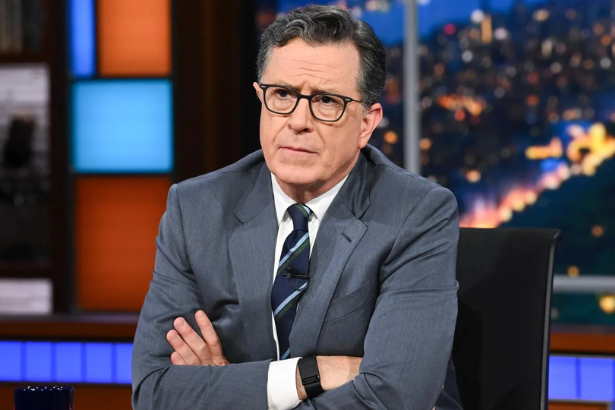
Talarico surged on Google Trends this week after late-night host Stephen Colbert said CBS blocked a planned interview with Texas state representative James Talarico, citing concerns tied to the Federal Communications Commission’s “equal time” rule.
The dispute quickly evolved into a national flashpoint over media censorship, political speech, and whether television networks are preemptively self-censoring to avoid running afoul of an administration that has made clear it wants tighter control over broadcast content.
Colbert aired the interview anyway — on YouTube, where FCC rules do not apply. The timing was not incidental. Early voting in Texas’s Democratic Senate primary began the day of the broadcast.
Background and Context
James Talarico is a Democratic Texas state representative running for U.S. Senate in a heated primary against U.S. Rep. Jasmine Crockett and a third candidate, Ahmad Hassan. Talarico has built a national profile through viral social media clips, particularly around education policy and his sharp critiques of President Trump and Republican governance.
Crockett, a Dallas congresswoman, has led in some recent polling, though other surveys show the race as a dead heat. She previously appeared on “The Late Show with Stephen Colbert” in October 2024 and again in May 2025, several months before launching her Senate run.
The controversy began when Colbert opened his Monday night show with an announcement: the scheduled interview with Talarico would not air on the CBS broadcast. CBS lawyers had called the show directly and told staff “in no uncertain terms” that the interview could not be broadcast. Colbert said he was further instructed that he could not even mention that Talarico had been blocked from appearing.
He proceeded to do both.
“Because my network clearly doesn’t want us to talk about this, let’s talk about this,” Colbert said.
The issue, according to CBS, was the FCC’s equal time rule — a decades-old provision that requires broadcast stations to offer comparable airtime to legally qualified political candidates. Late-night and daytime talk shows have historically been exempt under the “bona fide news” exception. But in January 2026, FCC Chairman Brendan Carr released a public notice suggesting that exemption might no longer apply to programming “motivated by partisan purposes.”
Latest Update or News Breakdown
Multiple outlets confirmed the details of the Colbert-CBS standoff. Here is what happened, based on verified reporting from PBS NewsHour, Axios, CNBC, Variety, The Hollywood Reporter, and CBS News:
Colbert’s Account:
- CBS lawyers told “The Late Show” staff directly that Talarico could not appear on the broadcast
- Colbert was instructed not to have him on and not to mention that he had been blocked
- The network cited concerns that airing the interview would trigger the FCC’s equal time rule, requiring CBS to offer equivalent airtime to Crockett and Hassan
- Colbert could not show a photo, video, or even a drawing of Talarico under FCC rules prohibiting candidate appearances “by voice or picture” — so he held up a drawing of Snoopy instead
CBS’s Response: In a statement Tuesday, CBS said: “The Late Show was not prohibited by CBS from broadcasting the interview with Rep. James Talarico. The show was provided legal guidance that the broadcast could trigger the FCC equal-time rule for two other candidates, including Rep. Jasmine Crockett, and presented options for how the equal time for other candidates could be fulfilled. The Late Show decided to present the interview through its YouTube channel with on-air promotion on the broadcast rather than potentially providing the equal-time options.”
The Interview Aired on YouTube: Colbert conducted the interview as planned and posted it to “The Late Show” YouTube channel, where it has been viewed hundreds of thousands of times. In the conversation, Talarico and Colbert discussed the FCC controversy, Trump’s policies, economic inequality, education, and the role of religion in government.
“They are trying to control what we watch, what we say, what we read, and this is the most dangerous kind of cancel culture, the kind that comes from the top,” Talarico said during the interview.
FCC Commissioner Weighs In: Anna Gomez, the lone Democratic commissioner on the FCC, appeared on PBS NewsHour and called CBS’s decision “another troubling example of corporate capitulation in the face of this administration’s broader campaign to censor and control speech.”
She clarified that the equal time rule contains a “bona fide news” exemption that has historically applied to late-night talk shows. “The FCC has longstanding practice of declaring entertainment programs to be newsworthy,” she said, citing precedents including “The Tonight Show,” “Politically Incorrect,” and “Donahue.”
Related FCC Investigation: Fox News reported earlier in February that the FCC launched an equal-time probe into ABC’s “The View” after Talarico appeared on that program as well. Gomez responded at the time: “Let’s be clear on what this is. This is government intimidation, not a legitimate investigation.”
Search Spike: Google Trends data shows searches for “Talarico” surged sharply following Colbert’s Monday night broadcast.
Expert Insights or Analysis
Equal Time Rule and the “Bona Fide News” Exemption
The equal time rule, codified in Section 315 of the Communications Act, applies to broadcast license holders and is designed to prevent networks from favoring one legally qualified candidate over another during an election.
However, exemptions exist for:
- Bona fide newscasts
- News interviews
- News documentaries
- On-the-spot coverage of bona fide news events
Late-night talk shows have historically fallen under the “news interview” or “bona fide news” exemption, meaning they could interview political candidates without triggering equal time obligations. The FCC has relied on broadcasters’ “reasonable good faith judgment” about the newsworthiness of their programming rather than dictating content decisions.
FCC Chairman Brendan Carr’s January notice, however, suggested that exemption might not apply to programming “motivated by partisan purposes.” The ambiguity created by that notice is what CBS lawyers appear to have cited when advising “The Late Show.”
Media Legal Risk vs. Editorial Independence
Large broadcast networks operate under strict regulatory compliance frameworks. Even minimal legal uncertainty can result in preemptive decisions to avoid potential FCC complaints or enforcement actions.
Critics argue this approach chills speech and allows political pressure to shape editorial decisions. Supporters counter that corporations must manage legal exposure carefully, especially during election cycles.
Adam Bonin, a Philadelphia-based lawyer specializing in political law, wrote on social media that Carr “is leveraging his position to force late night and daytime talk show hosts to exclude Democratic candidates.” He added: “When one candidate does something newsworthy, you’re not required to interview everyone. CBS could choose to fight this.”
Why This Went Viral
The controversy combined multiple elements that reliably drive digital attention:
- A celebrity platform (Colbert)
- Regulatory tension (FCC enforcement)
- Free speech implications (First Amendment concerns)
- Election law ambiguity (equal time interpretation)
- Corporate-political dynamics (Paramount’s regulatory interests)
Talarico posted a clip of the interview on X with the caption: “This is the interview Donald Trump didn’t want you to see.” The framing worked. The clip went viral.
Broader Implications
For Broadcast Networks
The incident highlights how legacy broadcast networks face stricter regulatory oversight than streaming or digital-native platforms. As audiences continue migrating to YouTube, TikTok, and other online platforms, the regulatory asymmetry between broadcast and digital becomes harder to justify — and harder for broadcasters to manage.
If networks believe airing interviews with political candidates will trigger equal time obligations, campaign strategy will shift even faster toward podcasts, streaming, and social media.
For Political Candidates
Rising politicians rely heavily on late-night and entertainment media to reach broader, younger, and less politically engaged audiences. If equal time uncertainty restricts those appearances, candidates will bypass traditional television entirely.
Talarico’s interview on YouTube received more attention — and generated more national press — than it likely would have if it had simply aired on CBS. The controversy became the story.
For Paramount and Corporate Interests
CBS is owned by Paramount, which is currently pursuing a merger with Warner Bros. Discovery and needs federal regulatory approval to proceed. That context makes the network’s decision to preemptively pull the interview more fraught.
Colbert himself referenced this dynamic on air, noting that Paramount recently settled a lawsuit with Trump over a “60 Minutes” interview. Three days later, CBS announced it would be canceling “The Late Show” in May 2026 — a move Colbert and two U.S. senators publicly questioned, suggesting it might have been motivated by political pressure rather than purely financial considerations.
For Tech and Platform Evolution
YouTube, TikTok, Instagram, and other digital platforms are not subject to FCC equal time rules. That regulatory exemption gives them a massive structural advantage over broadcast networks during election cycles. The Talarico controversy is a textbook example of how that advantage plays out in practice.
Related History or Comparable Cases
The equal time rule has surfaced repeatedly during election cycles, often creating friction between broadcasters and candidates:
- Saturday Night Live has faced equal time questions when presidential candidates appear as guests or hosts
- Celebrity-hosted political town halls on broadcast networks have triggered equal time debates
- Debate access disputes have led candidates to demand equal treatment from networks
Each case reflects the same underlying tension: entertainment programming operates in a gray zone between news and politics, and the FCC has historically given broadcasters wide discretion to decide what qualifies as newsworthy.
Chairman Carr’s January notice suggested that discretion might be narrowing.
What Happens Next
Several outcomes are possible:
CBS could publicly clarify its legal rationale. The network’s Tuesday statement framed the decision as giving “The Late Show” options rather than prohibiting the interview, but Colbert’s account suggests the guidance was more directive than that.
The FCC may issue further guidance. If networks continue to preemptively pull political interviews, the commission may need to clarify whether late-night shows are actually exempt from equal time obligations or not.
Political campaigns may increasingly bypass broadcast television. If appearing on network TV requires offering equal time to every primary opponent, candidates will simply go to YouTube, podcasts, and streaming platforms instead.
The controversy could fade as the Texas primary concludes. Early voting began February 17, 2026. The primary is March 3. Once the Democratic nominee is decided, the equal time question becomes moot — at least until the general election.
For now, Talarico’s name recognition has expanded dramatically beyond Texas.
Conclusion
The Talarico controversy illustrates how election law, media risk management, and corporate regulatory interests collide in ways that shape what Americans see on television. What began as a blocked interview became a national debate over censorship, self-censorship, and whether the FCC is using regulatory ambiguity to pressure networks into limiting political speech.
Anna Gomez, the lone Democratic FCC commissioner, called it what she believes it is: “corporate capitulation in the face of this administration’s broader campaign to censor and control speech.”
CBS called it legal guidance. Colbert called it censorship. Talarico called it cancel culture from the top.
The interview aired anyway, on YouTube, where hundreds of thousands of people watched it. The controversy generated far more attention than the interview itself likely would have. And the Texas Democratic Senate primary, which had been a relatively low-profile race, is now a national story.
As broadcast networks operate under legacy FCC rules and digital platforms operate with nearly total freedom, the future of political speech on television may increasingly look like this: the interviews will happen. They just won’t happen on TV.
FAQ
Q1: Who is James Talarico? James Talarico is a Texas state representative and Democratic candidate for U.S. Senate. He is running in a March 3, 2026, primary against U.S. Rep. Jasmine Crockett and Ahmad Hassan. Early voting began February 17.
Q2: What is the equal time rule? The equal time rule, codified in Section 315 of the Communications Act, requires broadcast stations to offer comparable airtime to legally qualified political candidates. However, exemptions exist for “bona fide news” programming, including news interviews and documentaries.
Q3: Did the FCC require CBS to block the interview? No. The FCC has not issued a formal enforcement action. CBS says it provided legal guidance to “The Late Show” that airing the interview could trigger equal time obligations for other candidates, and the show chose to air it on YouTube instead.
Q4: Does the equal time rule apply to cable and streaming? The rule primarily applies to broadcast license holders (network and local stations). Cable channels and digital platforms like YouTube are generally not subject to the same equal time requirements.
Q5: Why is Talarico trending? Search activity surged after Stephen Colbert announced Monday night that CBS had blocked a planned interview with Talarico, citing FCC equal time concerns. The interview aired on YouTube instead, generating significant national attention.
Sources and References
PBS NewsHour: After Colbert says CBS blocked interview, FCC commissioner weighs in on ‘equal time’
Axios: James Talarico, Colbert: What to know about the FCC equal time rule
The Atlantic: Censorship and political media debate