Introduction
Barbera Thornhill has become a trending search topic after President Donald Trump’s administration confirmed her appointment as the US ambassador-at-large responsible for monitoring and combating human trafficking.
Thornhill took over the State Department’s Office to Monitor and Combat Trafficking in Persons in October 2026. The position places her at the center of US government efforts to address a crime that exploits vulnerable people across international borders.
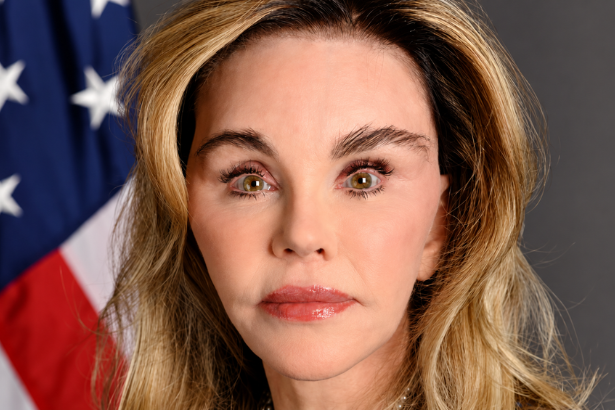
But her appointment has attracted attention for reasons beyond the responsibilities of the office. An official portrait shared by a State Department official circulated widely on social media, prompting users to search for Thornhill’s identity, professional history and previous public appearances.
Coverage from Yahoo, BuzzFeed and other outlets helped turn the appointment into a broader online story. BuzzFeed’s October 13 profile highlighted Thornhill’s business background, charitable involvement and earlier nomination to a different diplomatic position.
The interest raises two distinct questions: who is Barbera Thornhill, and what does her appointment mean for the US government’s work against human trafficking?
The answers require separating verified biographical details and official records from social media speculation and commentary about her appearance.
Background and Context
Who is Barbera Thornhill?
Barbera Hale Thornhill is a business executive and philanthropist who previously served as president of Impact Design, a business-focused interior design firm based in Los Angeles.
According to the biographical information included in a 2019 White House announcement, Thornhill was involved in several philanthropic and civic organizations, including groups supporting children affected by poverty, abuse and neglect.
Her background is unusual for someone taking charge of a major State Department policy office because her publicly documented career has included business and charitable work rather than a long, prominent career in government service.
That distinction does not, by itself, establish whether someone is qualified for a public appointment. Evaluating qualifications requires examining the responsibilities of the role, the nominee’s relevant experience and the confirmation process.
Thornhill’s appointment has attracted particular scrutiny because the office she now leads works on a serious international human rights issue involving law enforcement, victim protection, diplomacy and cooperation with foreign governments.
Thornhill’s earlier diplomatic nomination
Thornhill was not entirely new to presidential appointments.
In September 2019, Trump announced his intention to nominate her to serve as US ambassador to Singapore. The archived White House announcement identified her as the president of Impact Design and described her involvement in philanthropic organizations.
That earlier nomination did not result in her serving as ambassador to Singapore. The nomination was subsequently withdrawn after the presidential transition in 2021.
Her later appointment to lead the anti-trafficking office is a different position with different responsibilities. The earlier nomination is relevant to her professional history, but it should not be confused with her current role.
Latest Update: Barbera Thornhill’s Appointment and Viral Portrait
A new role at the State Department
The Trump administration nominated Thornhill to lead the Office to Monitor and Combat Trafficking in Persons, with the rank of ambassador-at-large.
The White House’s May 11, 2026, nomination announcement listed her nomination among several appointments sent to the Senate.
The Senate Foreign Relations Committee held a nomination hearing on June 25. Committee members subsequently advanced her nomination in July, and the Senate’s confirmation records list August 7, 2026, as the confirmation date.
These official records establish the sequence of her appointment more reliably than social media posts or headlines that refer to her simply as Trump’s new ambassador.
Her position is specifically ambassador-at-large to monitor and combat trafficking in persons. It is not an appointment to serve as the US ambassador to a particular country.
The distinction matters because the job is focused on a global policy issue rather than representing the United States in a single foreign capital.
Why is Barbera Thornhill trending?
Interest in Thornhill accelerated after an official portrait circulated online in October.
BuzzFeed published a profile on October 13 titled “9 Surprising Facts About Trump’s New Ambassador”, outlining her professional background, political donations, charitable involvement and earlier diplomatic nomination.
Yahoo News also featured a report about Trump’s appointment, while online discussions increasingly focused on the portrait and comparisons with other public figures.
A separate Bored Panda article covered comparisons involving Thornhill’s portrait and photographs of Susan Dell.
The spread of those comparisons helps explain the search spike, but online commentary about a photograph is not evidence about someone’s professional competence or public record.
The more substantive questions concern Thornhill’s experience, the Senate confirmation process and how she approaches the responsibilities of her new position.
What does her new position involve?
The Office to Monitor and Combat Trafficking in Persons is part of the US Department of State. It coordinates US diplomatic and policy efforts to prevent human trafficking, support victims and encourage governments to address trafficking-related crimes.
Its work includes international engagement, policy development, reporting and collaboration with other governments and organizations.
The ambassador-at-large serves as a senior representative on these issues. The position carries responsibilities that extend beyond public statements, including helping shape diplomatic priorities and the government’s response to trafficking.
For an overview of the department’s work, readers can consult the US State Department’s trafficking in persons resources.
Expert Insights and Analysis
Why the appointment matters beyond the headlines
Human trafficking is a complex international crime that can involve forced labor, sexual exploitation and other forms of coercion. Addressing it requires coordination among law enforcement agencies, social services, diplomats, civil society organizations and foreign governments.
The ambassador-at-large role is therefore more than a symbolic appointment. It provides senior leadership for an area of US foreign policy that involves prevention, victim protection and accountability.
A meaningful assessment of Thornhill’s performance will require looking at the policies she supports, the partnerships her office develops and the outcomes the government reports.
It would be premature to draw conclusions about those outcomes from the initial news cycle alone.
Business and philanthropic experience in public service
Thornhill’s documented background includes leadership in a private business and involvement with charitable organizations.
Business experience can involve management, budgeting, organizational planning and coordination among different stakeholders. Philanthropic work can provide exposure to social problems and nonprofit operations.
However, experience in those areas does not automatically demonstrate expertise in international trafficking policy. The relevant question is how an appointee’s experience translates into the specific demands of a government position.
The Senate confirmation process is one mechanism for examining a nominee’s background and suitability. Subsequent oversight and public reporting provide further opportunities to assess performance.
A balanced analysis should distinguish Thornhill’s documented career history from claims about what that history means for her effectiveness in office.
The difference between a viral portrait and a public record
Thornhill’s case illustrates how social media can make an official photograph a major part of a political news story.
Images are easy to share, compare and discuss. They can attract attention more quickly than policy documents or detailed biographies, particularly when a public figure is unfamiliar to a broad audience.
But a photograph reveals little about a person’s responsibilities, qualifications or performance. Comparisons circulating online should not substitute for examining official appointment records and the work of the office.
For publishers, the challenge is to explain why a person is trending without turning appearance-based commentary into an unsupported assessment of professional ability.
Broader Implications
What Thornhill’s appointment means for anti-trafficking policy
The appointment comes with significant responsibilities for an office that coordinates US efforts to combat trafficking in persons internationally.
Key areas to watch include the office’s policy priorities, cooperation with foreign governments, support for survivors and the government’s reporting on trafficking conditions.
The effectiveness of anti-trafficking efforts depends on implementation, resources, coordination and measurable outcomes. Public statements about combating trafficking are important, but their significance ultimately depends on what governments do.
Thornhill’s tenure will provide opportunities to examine how the administration approaches these issues and whether its stated priorities translate into concrete action.
Public scrutiny and political appointments
Presidential appointments frequently attract scrutiny over a nominee’s experience, political affiliations, financial history and policy views.
Thornhill’s previous nomination to a diplomatic position, her business background and her charitable involvement are relevant biographical details. They should be evaluated alongside the responsibilities of her current role and the record established through official proceedings.
Political donations may also be part of a nominee’s public record, but donations alone do not establish the reasons for an appointment or prove that a particular decision was improper.
A careful account identifies what public records show, attributes allegations to their sources and avoids presenting inference as fact.
Why search trends matter for news publishers
The supplied Google Trends screenshot shows search interest in Barbera Thornhill rising sharply before declining toward the end of the displayed period.
That pattern is consistent with a burst of attention around a developing news event. It does not establish how many people approve of the appointment, whether they support the administration or what they think about Thornhill’s qualifications.
Google Trends reports normalized relative search interest rather than an absolute count of every search. A spike can indicate that people want to identify an unfamiliar public figure or understand why a photograph or announcement is circulating.
For digital publishers, the most useful response is to provide a clear biography, explain the appointment and link readers to official records.
For additional reporting on technology, digital media and search trends, visit The Tech Marketer.
Related History and Comparable Appointments
A recurring path from private life to public office
Presidents routinely appoint people from business, academia, advocacy and other professional backgrounds to government positions.
Some nominees bring extensive policy expertise. Others contribute management experience, specialized knowledge or relationships developed outside government.
The relevant requirements vary by position. A diplomatic post in a particular country differs from a policy leadership role focused on a global issue such as human trafficking.
Thornhill’s earlier nomination to serve as ambassador to Singapore provides context for her public-service history, but it does not mean that the two roles are interchangeable.
The ambassador-at-large model
An ambassador-at-large typically represents the United States on a specific issue or set of responsibilities that crosses national boundaries.
Unlike a traditional country-specific ambassador, an ambassador-at-large may work with governments and institutions across multiple regions.
For trafficking policy, that can involve diplomatic engagement, cooperation on enforcement and prevention, and coordination with organizations that assist victims.
This structure allows the State Department to maintain senior leadership on issues that require international cooperation rather than bilateral relations with one country alone.
What Happens Next?
Several developments will help establish the direction of Thornhill’s tenure.
First, attention will turn to her public statements and policy priorities as head of the anti-trafficking office. These will help clarify which issues the administration intends to emphasize.
Second, the office’s reporting, international engagements and coordination with partner governments will provide evidence of how those priorities are implemented.
Third, oversight and public reporting can help establish whether the office has the resources and institutional support needed to carry out its responsibilities.
The wider conversation around Thornhill may also move beyond her official portrait as audiences become more familiar with her background and role.
For readers, the most useful indicators will be documented policy decisions, the office’s published work and independently verifiable outcomes, rather than speculation driven by a viral image.
Conclusion
Barbera Thornhill has entered the public spotlight after taking charge of the US State Department’s Office to Monitor and Combat Trafficking in Persons.
Her business and philanthropic background, earlier diplomatic nomination and recent appointment help explain the interest in her biography. The circulation of her official portrait added another dimension to the news cycle, driving searches and online comparisons.
Yet the more important story is the responsibility attached to her new role. Human trafficking is an international problem that requires sustained policy coordination, prevention efforts, victim support and cooperation across borders.
Thornhill’s record in office will provide the evidence needed to assess her approach. Until then, official records and carefully attributed reporting offer a firmer foundation than speculation about a photograph or assumptions about the reasons behind a political appointment.
Frequently Asked Questions
1. Who is Barbera Thornhill?
Barbera Thornhill is a business executive and philanthropist who previously served as president of Impact Design, a Los Angeles-based interior design firm. In 2026, she became the US ambassador-at-large responsible for monitoring and combating trafficking in persons.
2. What is Barbera Thornhill’s new position?
She leads the US State Department’s Office to Monitor and Combat Trafficking in Persons, serving with the rank of ambassador-at-large.
3. When was Barbera Thornhill confirmed?
The US Senate’s confirmation records list August 7, 2026, as the date of her confirmation.
4. Why is Barbera Thornhill trending online?
Interest increased after an official portrait circulated widely on social media in October 2026. Coverage of her appointment and biography also contributed to the search spike.
5. Was Barbera Thornhill previously nominated to another diplomatic role?
Yes. In 2019, Trump announced his intention to nominate her as US ambassador to Singapore. That nomination did not result in her serving in the position.
6. What is the purpose of the Office to Monitor and Combat Trafficking in Persons?
The office coordinates US diplomatic and policy efforts to prevent human trafficking, support victims and encourage international cooperation against trafficking-related crimes.
7. What was Barbera Thornhill’s professional background before government service?
Her publicly documented background includes business leadership at Impact Design and involvement with charitable and civic organizations.
8. Does Google Trends show whether people support Thornhill’s appointment?
No. Google Trends measures relative search interest. It does not directly measure approval, disapproval or public opinion about an appointment.
Sources & References
- Yahoo News: Donald Trump’s new appointee Barbera Thornhill goes viral after announcement
- BuzzFeed: 9 Surprising Facts About Trump’s New Ambassador
- Bored Panda: New Ambassador’s Portrait Draws Comparisons to Susan Dell
- The White House, 2019: President Donald J. Trump Announces Intent to Nominate and Appoint Personnel to Key Administration Posts
- The White House, 2026: Nominations and Withdrawal Sent to the Senate
- US Senate Committee on Foreign Relations: June 25, 2026, nominations hearing
- US Department of State: Trafficking in Persons