The search for voting polls is climbing sharply as the United States holds its 2026 midterm elections on November 3. The Google Trends snapshot accompanying this article shows interest accelerating toward the end of the previous 24-hour period, with related searches focused on which party could control Congress, election-day results, and when the country will know the outcome.
The timing is significant. Every seat in the House of Representatives is being contested, 35 Senate seats are on the ballot, and voters in 36 states are choosing governors. The election is also unfolding against a backdrop of economic anxiety, intense partisan divisions, and questions about election administration.
Yet there is an important distinction between what polls measure and what election results establish. Polls capture opinion at a particular moment. Votes determine who takes office. On Election Day, that difference matters more than ever.
Background and Context: Why the 2026 Midterms Matter
The November 2026 midterms are the first nationwide federal election since Donald Trump returned to the White House for a second term in January 2025.
The stakes extend beyond individual candidates. The election will determine which party controls the two chambers of Congress for the remainder of Trump’s term, shaping the legislative environment for budgets, taxation, immigration, healthcare, government spending, and oversight of the administration.
The House has 435 voting seats, all of which are up for election every two years. A party needs 218 seats to hold a majority. The Senate has 100 seats, with 35 contests taking place in this election cycle.
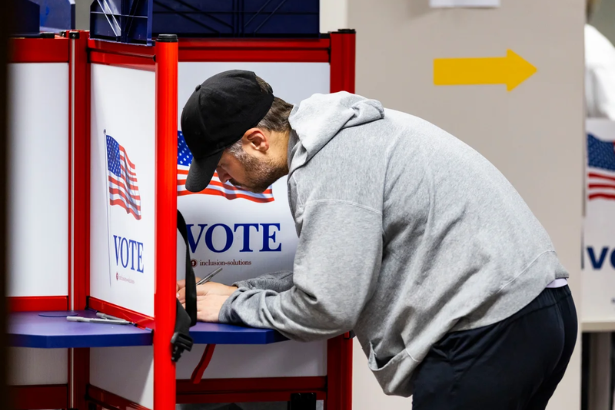
According to CBS News’ November 3 election-day coverage, more than 58 million Americans had already voted early by the time polls were opening across the country. The outlet also identified 11 Senate battleground states and 49 competitive House districts.
That scale helps explain why searches for voting polls have become so prominent. Voters, journalists, investors, political organizations, and analysts are all watching for clues about the balance of power in Washington.
Latest Update: What Voting Polls Say on Election Day
The latest polling discussion is centered on the national political mood, the economy, and the possibility that voter enthusiasm could affect turnout.
A November 2 analysis published by CNN and carried by Chicago public broadcaster WTTW, titled “What Polls Do and Don’t Tell Us About the 2026 Midterms”, describes a consistent Democratic advantage in national generic-ballot polling. The analysis also notes that the precise size of that advantage, and its implications for individual races, remain less certain.
The same analysis points to several recurring themes in surveys:
- Economic concerns: Cost-of-living pressures and dissatisfaction with the economy are prominent in the polling picture.
- Presidential approval: The analysis reports that surveys have repeatedly placed Trump’s national approval rating in the mid-to-low 30s.
- Voter enthusiasm: Democratic respondents have reported greater motivation to vote than Republican respondents in many surveys.
- Local variation: National polling does not necessarily translate into the same pattern in individual House districts or Senate contests.
These are survey findings, not election results. They describe what respondents told pollsters, not how every eligible voter will ultimately cast a ballot.
Early voting adds another layer
The Associated Press reported on November 3 that millions of Americans had already voted before Election Day, with early voting on pace to exceed the previous midterm cycle.
Its report, “Election Day arrives after a surge in early voting, with observers keeping close watch at the polls”, also describes election-administration disputes, legal challenges, and weather-related disruptions affecting access to some polling locations.
Early voting figures are useful for understanding participation. They do not, by themselves, establish which party or candidate is winning.
The live election picture
For ongoing developments, readers can follow the CNN live coverage of the 2026 midterm elections, which tracks the contests and developments throughout Election Day.
The key distinction is between three different kinds of information:
- Pre-election polls: Surveys of voter preferences before ballots are counted.
- Exit polls: Surveys of voters conducted as they leave polling places or through other election-day methods.
- Official results: Vote counts reported by election authorities, which may remain unofficial until certification.
Treating these as interchangeable can create confusion, particularly while results are still being counted.
Expert Insights: Why Voting Polls Can Be Misleading
One of the most useful explanations of the 2026 polling environment comes from Ashley Koning, director of the Eagleton Center for Public Interest Polling at Rutgers University.
In an October 30 interview published by Rutgers University, Koning explains that polls are snapshots of public opinion rather than instruments designed to predict exact election outcomes.
That distinction has practical consequences.
A survey can accurately measure the preferences of the people who responded and still differ from the eventual result if the people who vote are not representative of the people who answered.
The turnout problem
Pollsters must estimate which respondents are likely to vote. That is difficult because the final electorate is not known until voting ends.
A person may tell a pollster they intend to vote but never make it to the polling place. Another voter may decide to participate late in the campaign. Turnout can also vary between age groups, education levels, regions, and political affiliations.
Koning notes that the national generic ballot can help describe the country’s political mood, but it cannot be converted directly into a prediction of the number of congressional seats each party will win.
The challenge of local races
National polling can hide important differences between districts and states.
A Senate contest is shaped by state-level political conditions, candidate profiles, and the voters who participate. A House contest operates on a smaller geographic scale, where local issues and district boundaries can have a major influence.
Smaller polling samples can also produce wider margins of error. A national survey may provide a broad picture, while a district-level survey can be more sensitive to changes in a relatively small number of respondents.
Polling is not the same as forecasting
The distinction is especially important when political commentary uses poll numbers to make confident claims about the likely result.
A poll measures responses collected during a defined period. A forecast combines polling with assumptions about turnout, historical voting patterns, and other variables. Neither is an official count.
For readers following voting polls, the most useful questions are therefore straightforward:
- Who conducted the survey?
- When were respondents interviewed?
- Were respondents registered voters or likely voters?
- How many people participated?
- What was the margin of error?
- Was the survey national, statewide, or district-specific?
Without that information, a headline featuring a percentage can be more attention-grabbing than informative.
Broader Implications: What the Midterms Could Mean for Washington
The 2026 midterms will shape the political environment in which the federal government operates for the next two years.
Congress has substantial influence over legislation, federal spending, taxation, investigations, and confirmation processes. A change in control of either chamber can alter the legislative agenda and the relationship between the White House and lawmakers.
A divided Congress can make major legislation more difficult to pass. A unified government may have a clearer route for advancing its priorities, although internal party disagreements and Senate procedures can still complicate the process.
The outcome also matters for oversight. Congressional committees can investigate administration decisions, conduct hearings, and scrutinize federal agencies. The party controlling a chamber has significant influence over its leadership and committee structure.
Why markets and technology companies are watching
Election outcomes can also influence the business environment.
Technology companies monitor Washington for developments involving artificial intelligence regulation, antitrust enforcement, data privacy, cybersecurity, semiconductor policy, and government contracts.
Changes in congressional leadership may affect which issues receive hearings, which bills advance, and how federal agencies are questioned or funded. However, election results do not automatically translate into immediate regulatory changes. Legislation still requires votes, negotiations, and often presidential approval.
For more coverage of the intersection between technology, policy, and business, readers can explore The Tech Marketer’s technology and business coverage.
Related History: Why Midterm Elections Often Become a Referendum on the White House
Midterm elections have traditionally served as an important test of the president’s party.
Unlike presidential elections, midterms do not determine who occupies the White House. Instead, they give voters an opportunity to reshape Congress while the sitting president remains in office.
The historical pattern has often been difficult for the president’s party. The party holding the White House has frequently lost congressional seats in midterm elections, although the size and distribution of those losses vary considerably.
That history helps explain why national approval ratings, economic sentiment, and generic-ballot surveys attract so much attention during midterm campaigns.
But historical patterns are context, not a guarantee. Individual races can move in different directions, and the national political mood does not determine every local result.
The 2026 election also takes place in a media environment that looks very different from previous midterms. Voters can follow live counts, polling averages, candidate statements, and social media commentary almost continuously. That makes access to information easier, but it also increases the risk of confusing early indicators with final outcomes.
What Happens Next: From Polling Data to Certified Results
As voting continues and polling locations close, attention will shift from pre-election surveys to reported vote totals.
The sequence matters:
- Polls close: Closing times vary by state and locality.
- Initial results emerge: Election officials begin reporting ballots that have been processed and counted.
- More ballots are added: Mail ballots, provisional ballots, and other outstanding votes may take additional time to process.
- News organizations assess races: Organizations such as the Associated Press use their own decision processes to determine when a race can be called.
- States certify results: Official certification follows the procedures and deadlines established by state law.
A media organization calling a race is not the same as a state certifying the result. A race can be called before every ballot has been counted if the remaining votes cannot change the outcome, but the official process continues.
Readers should also be cautious with screenshots or isolated figures circulating online. A partial count from one county or one group of polling locations does not necessarily represent the full electorate.
For verified updates, use state election offices and established live results pages rather than relying solely on viral posts or unverified claims.
Conclusion: Voting Polls Are a Starting Point, Not the Final Answer
The sharp rise in searches for voting polls reflects the scale of public attention surrounding the 2026 midterm elections. With control of Congress at stake, millions of early votes already cast, and competitive races across the country, Americans are looking for a clearer picture of the political landscape.
Polling offers useful evidence about voter preferences, economic concerns, and political enthusiasm. It can help explain the issues shaping an election. But it cannot replace the count.
The most responsible way to follow the 2026 midterms is to read surveys with attention to their methods, distinguish national trends from local contests, and wait for election officials to report and certify the results.
The polls describe the political moment. The ballots determine the outcome.
FAQ: Voting Polls and the 2026 Midterm Elections
1. Why are voting polls trending on Google?
Search interest is rising as Americans follow the November 3, 2026 midterm elections. Searches include questions about which party could control Congress, when results will become available, and how polling compares with actual vote counts.
2. What do voting polls measure?
Voting polls measure the opinions or reported voting preferences of a surveyed group. Depending on the survey, respondents may be registered voters, likely voters, or adults more broadly.
3. Can polls accurately predict who will control Congress?
Polls cannot establish the final result. They measure opinion at a particular time, while turnout, late decisions, local conditions, and counting procedures all influence the eventual outcome.
4. How many congressional seats are being contested in 2026?
All 435 voting seats in the House of Representatives are up for election. There are also 35 Senate seats on the ballot in the 2026 cycle.
5. What is a generic ballot poll?
A generic ballot poll asks voters which political party they would prefer to see control the House of Representatives, rather than asking them to choose between specific candidates in a particular district.
6. What is the difference between an exit poll and an election result?
An exit poll surveys voters about their choices and other characteristics. An election result is based on ballots counted and reported by election authorities. Exit polls are not official vote totals.
7. When will the 2026 midterm election results be final?
Some races may be called on Election Night, while others can take longer because of close margins or outstanding ballots. Official results become final through state certification procedures, which vary by jurisdiction.
8. Where can readers follow reliable 2026 election updates?
Readers can follow established live coverage from CNN, CBS News, and the Associated Press. State election offices remain the authoritative source for official results and certification.
Sources & References
1. CNN, “Midterm Elections Live: America Heads to the Polls to Decide Control of Congress”
Read the CNN live coverage
2. Associated Press, “Election Day Arrives After a Surge in Early Voting, with Observers Keeping Close Watch at the Polls”
Read the AP report via 10TV
3. The New York Times, “Midterms, Democrats, Republicans and the Senate”
Read the opinion article
4. CNN, “What Polls Do and Don’t Tell Us About the 2026 Midterms”
Read the analysis via WTTW
5. Rutgers University, “What Are the Polls Telling Us About the 2026 Midterm Elections?”
Read the polling expert’s analysis