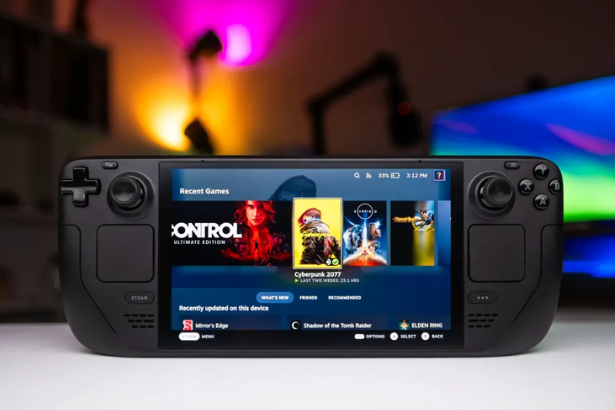
The Steam Deck price hike 2026 arrived quietly on May 27 when Valve updated its Steam store page to reflect new pricing on both Steam Deck OLED models. The 512GB OLED jumped from $549 to $789 — a $240 increase representing a 44% price hike. The 1TB OLED went from $649 to $949 — a $300 increase representing a 46% jump and the largest single price hike among any major gaming hardware maker in 2026. The cause is the global memory and storage shortage that the gaming industry has dubbed “RAMageddon” — the same AI datacenter buildout consuming HBM4 and GDDR7 capacity is depleting the LPDDR5 and NVMe supply used in handheld gaming hardware. The 1TB Steam Deck now costs more than a PS5 Pro. The device that defined affordable handheld gaming PC computing is no longer affordable.
The New Prices: What You Pay Now
The Steam Deck price hike 2026 numbers require a moment to absorb. Here is the complete before-and-after:
Steam Deck OLED 512GB: was $549, now $789 — up $240 (44% increase). Steam Deck OLED 1TB: was $649, now $949 — up $300 (46% increase). The price hikes apply across all major markets — Canada, the United Kingdom, Europe, Australia, and Poland have all seen equivalent percentage increases in their local currencies alongside the US adjustment.
Valve’s statement accompanying the price change was brief and deliberate: the new prices “reflect the current state of component costs and other global logistical challenges across the industry as a whole.” The company was specific that “Steam Deck itself hasn’t changed” — this is not a hardware revision or a new model. It is the same device at a dramatically higher price because the components inside it have become dramatically more expensive to source.
Why It Happened: RAMageddon and the AI Memory Crisis
The Steam Deck price hike 2026 is the consumer gaming consequence of an industrial-scale supply chain collision. The global AI infrastructure buildout — the same wave of datacenter investment that drove Micron’s stock to $1 trillion and sent Snowflake surging 36% — is consuming semiconductor manufacturing capacity at a rate that is leaving insufficient supply for consumer electronics.
LPDDR5 RAM and NVMe storage — the components inside the Steam Deck that Valve specifically cited as cost drivers — are manufactured on the same production lines and by the same suppliers as the HBM4 memory that fills AI accelerators. When AI datacenter demand for memory surges, wafer production capacity allocated to consumer LPDDR5 and NVMe shrinks. Prices rise. Manufacturers pass the cost downstream. Valve — which had already acknowledged in February 2026 that Steam Deck shortages were “due to memory and storage shortages” — has now converted those supply chain pressures into direct consumer pricing.
Valve also postponed the announcement of pricing and availability for its broader Steam Hardware lineup — including the Steam Machine, Steam Controller, and Steam Frame VR headset — in February 2026, citing the same component shortage issue. That postponement now looks like preparation for a pricing reality that was going to be difficult to communicate.
The Price Comparison That Changes Everything
The Steam Deck price hike 2026 most significant competitive consequence is the destruction of the Steam Deck’s value proposition relative to home consoles. The 1TB Steam Deck OLED at $949 is now $50 more expensive than the Sony PlayStation 5 Pro, which retails at $899. It is $50 cheaper than the ASUS ROG Xbox Ally X handheld gaming PC, which retails at $999.
That pricing triangle — a handheld gaming PC that now costs more than a 4K home console and nearly as much as its premium handheld competitor — fundamentally changes the Steam Deck’s market position. The device launched in 2022 at $399 for the base model. Its affordability relative to other PC gaming hardware was its primary competitive advantage over the ROG Ally, Legion Go, and other Windows-based handheld gaming PCs. At $789 for the 512GB model, that advantage is significantly reduced. At $949 for the 1TB, it is gone entirely against the PS5 Pro.
The Industry-Wide Context: Nintendo, Microsoft, Sony All Raised Prices Too
The Steam Deck price hike 2026 did not happen in isolation. Valve’s increase is the largest single price jump among major gaming hardware makers, but it is part of an industry-wide pattern that has been building throughout 2026.
Nintendo announced in May 2026 that Switch 2 prices would increase by $50 — citing “various changes in market conditions which are expected to extend over the medium to long term.” Sony cited “continued pressures in the global economic landscape” when raising PlayStation hardware prices in March 2026. Microsoft announced a second Xbox price hike in September 2025 — pointing to “changes in the macroeconomic environment” — following an earlier hike in May 2025. Valve’s increase is the largest percentage adjustment (+44-46%) versus Nintendo’s ($50 flat increase) and Microsoft’s ($150 maximum for the Xbox Series X 1TB).
The convergence of all four major gaming hardware makers raising prices within the same 12-month window — driven by the same underlying component cost pressures — represents the most significant industry-wide gaming hardware inflation event since the semiconductor shortage of 2020-2021.
The Steam Machine: What This Means for Valve’s Next Hardware
The Steam Deck price hike 2026 raises an urgent question that the gaming community is asking loudly: what will the Steam Machine cost? Valve’s upcoming living room gaming PC — the long-awaited successor to the original Steam Machines of 2015 — has reportedly already arrived in the United States as finished hardware. Community response to the Steam Machine’s hardware specifications has been described as generally positive, with excitement tempered by wariness about pricing.
In February 2026, Valve postponed Steam Machine pricing announcements specifically because of the component shortage. The same memory and storage costs that drove the Steam Deck up by $300 will have shaped the Steam Machine’s manufacturing cost structure. If Valve prices the Steam Machine below the component-driven floor that the market demands, it risks the same stock shortages that plagued the Steam Deck for the first half of 2026. If it prices at market rates, it may face sticker shock from a gaming community that expected the Steam Machine to be a value-oriented alternative to PlayStation and Xbox.
International Impact: UK, Canada, Europe, Australia, Poland
The Steam Deck price hike 2026 was not limited to US pricing. Steam Deck OLED price hikes were announced simultaneously across the UK, Canada, Europe, Australia, and Poland — all at equivalent percentage increases in local currencies.
The international scope of the price adjustment reflects the genuinely global nature of the underlying supply chain pressure. The memory shortage driving RAMageddon is a worldwide manufacturing phenomenon, not a US-specific tariff or trade policy issue. Every market where the Steam Deck is sold is experiencing the same component cost inflation that Valve cited in its announcement.
What Buyers Should Do
For anyone who was considering a Steam Deck purchase before this announcement, the calculus has changed significantly. The refurbished Steam Deck program — which Valve operates directly — is now meaningfully more attractive than it was at the previous OLED pricing. A refurbished 512GB OLED at a discount to the new $789 retail price represents better value than a new unit at the new price.
Anyone who had been comparing the Steam Deck to Windows-based handheld gaming PCs from ASUS and Lenovo should re-run those comparisons against the new pricing. The ROG Xbox Ally X at $999 and the Steam Deck 1TB at $949 are now essentially the same price — and the Windows handheld offers broader software compatibility. For casual buyers who want SteamOS and the Steam library on a handheld, the 512GB at $789 still makes sense if the use case fits. For everyone else, the decision is no longer as simple as it was at the original pricing.
Broader Implications: The End of Affordable Handheld Gaming PC Computing
The Steam Deck price hike 2026 represents a genuine inflection point for the handheld gaming PC category that Valve invented in 2022. When the Steam Deck launched at $399, it created a new market segment — personal computer gaming performance in a handheld form factor at console pricing. That segment has now been repriced out of the consumer value tier that defined it. At $789 for the entry OLED model, the Steam Deck is competing directly with mid-range gaming laptops and premium home consoles. The era in which a handheld gaming PC was the obvious value choice for anyone who wanted to play PC games portably is over — not because the Steam Deck got worse, but because the components inside every piece of gaming hardware got dramatically more expensive simultaneously. For more on the biggest stories in gaming, technology, and consumer electronics, visit The Tech Marketer.
Latest Updates
The Steam Deck price hike 2026 was announced May 27. Here is where to follow the full coverage:
- The Verge has the full analysis of the Steam Deck price hike and what it means for the end of the affordable handheld gaming era — including the competitive pricing context, the RAMageddon supply chain backdrop, and what comes next for the Steam Machine. Read more at The Verge
- Bloomberg has the confirmed price figures from Valve’s store page update — 512GB OLED to $789, 1TB OLED to $949 — and the chip shortage context including the AI datacenter demand driving the underlying memory and storage cost crisis. Read more at Bloomberg
- Power Up Gaming has the complete industry-wide price hike comparison — Nintendo Switch 2 +$50, Xbox multiple hikes, Sony’s increases — and the Steam Machine pricing implications now that the Steam Deck has crossed above the PS5 Pro price point. Read more at Power Up Gaming
FAQ: Steam Deck Price Hike 2026
1. How much did the Steam Deck price increase in 2026? Valve raised Steam Deck OLED prices on May 27, 2026. The 512GB OLED increased from $549 to $789 — a $240 increase representing a 44% price hike. The 1TB OLED increased from $649 to $949 — a $300 increase representing a 46% price hike. Both models also saw equivalent percentage increases in Canada, the UK, Europe, Australia, and Poland.
2. Why did Valve raise Steam Deck prices? Valve cited “the current state of component costs and other global logistical challenges across the industry as a whole” and stated “Steam Deck itself hasn’t changed.” The underlying cause is the global memory and storage shortage — nicknamed RAMageddon — driven by AI datacenter demand consuming the same manufacturing capacity that produces the LPDDR5 RAM and NVMe storage components inside the Steam Deck.
3. Is the Steam Deck 1TB now more expensive than the PS5 Pro? Yes. The Steam Deck OLED 1TB at $949 is now $50 more expensive than the PlayStation 5 Pro, which retails at $899. It is also only $50 cheaper than the ASUS ROG Xbox Ally X handheld gaming PC, which retails at $999. The price hike effectively ends the Steam Deck’s position as a value alternative to both home consoles and competing Windows-based handheld gaming PCs.
4. How does the Steam Deck price hike compare to other gaming hardware increases in 2026? Valve’s 44-46% increase is the largest percentage price hike among major gaming hardware makers in 2026. Nintendo raised Switch 2 prices by $50. Microsoft raised Xbox prices multiple times in 2025 and 2026, with the largest single increase of $150 on the Xbox Series X 1TB. Sony raised PlayStation hardware prices in March 2026. All four companies cited component costs and global supply chain pressures as the cause.
5. What does the Steam Deck price hike mean for the Steam Machine? Valve’s upcoming Steam Machine gaming PC — which has reportedly already arrived in the US as finished hardware — will be priced in the same component cost environment that drove the Steam Deck up by $300. Valve postponed Steam Machine pricing announcements in February 2026 due to the memory shortage. The Steam Deck price hike suggests Steam Machine pricing will reflect the same elevated component costs, raising concerns about whether Valve can deliver a competitively priced living room gaming PC in the current market.