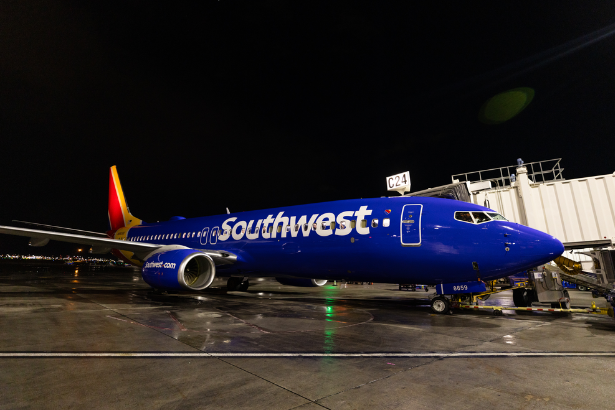
The Southwest Flight WN139 emergency 2026 unfolded over the dark Pacific Ocean on the night of Sunday, July 5, when a Boeing 737 MAX 8 red-eye flight from Maui to Las Vegas reversed course approximately 90 minutes into its journey, squawked the international emergency code 7700, and diverted to Honolulu instead of pressing on toward the mainland. Southwest Airlines Flight WN139, registration N8773Q, departed Kahului Airport on Maui at approximately 8:40 PM Hawaii Standard Time and climbed normally onto its eastbound course before executing a sharp U-turn at 32,000 feet over open ocean. The aircraft landed safely at Daniel K. Inouye International Airport in Honolulu at approximately 11:48 PM HST after 3 hours and 17 minutes in the air. No injuries were reported among passengers or crew. Southwest has not disclosed what triggered the emergency declaration, and as of Monday morning the aircraft remained grounded at Honolulu, out of service.
The Timeline: A Red-Eye That Never Made It to the Mainland
The sequence of events on the night of July 5 is documented in flight tracking data and confirmed by two separate aviation publications.
Southwest Flight 139 departed Kahului on schedule Sunday evening, July 5, aboard a Boeing 737 MAX 8, registration N8773Q, bound for Harry Reid International in Las Vegas. Flight tracking shows the aircraft pushed back on schedule, departed around 8:40 PM HST, and climbed normally onto its usual east-northeast course toward the mainland.
About one and a half hours into the crossing, while cruising at 32,000 feet, the aircraft reversed course over open ocean, and the crew reportedly squawked 7700, the international transponder code used to request priority handling from air traffic control. By itself, that code does not identify the type of problem or indicate how serious it may be.
Instead of returning to Kahului, the aircraft diverted to Honolulu, where it landed safely at about 11:48 PM HST after roughly 3 hours 17 minutes in the air. Emergency vehicles were positioned at the airport as a standard precautionary measure, and no injuries were reported among passengers or crew.
Why 7700? What the Squawk Code Actually Means
The appearance of transponder code 7700 in a flight tracking feed is the most alarming-looking piece of data in this story, and also the most frequently misunderstood.
The flight crew squawked 7700, the standard international transponder code signaling an inflight emergency. It is the universal signal to air traffic control that a flight requires priority handling. What it does not tell controllers, or anyone monitoring the flight tracker, is what kind of problem has occurred or how serious the situation is.
A squawk 7700 can be triggered by anything from a medical emergency to a mechanical system alert to smoke detection to a pressurization concern. It can accompany a life-threatening situation or a precautionary alert that resolves within minutes. The code is a request for priority handling and immediate attention from ATC, not a confirmation of a specific emergency type or severity level.
In this case, the code was squawked approximately 90 minutes into a Maui-to-Las Vegas overwater crossing. As Beat of Hawaii noted, “that code does not identify the type of problem or indicate how serious it may be.”
Why the Plane Turned Around Instead of Continuing
The decision to reverse course rather than press on is the one that most passengers find counterintuitive, and ETOPS regulations are the key to understanding it.
Long overwater flights involve a different set of considerations than flights over the continental United States. When a crew identifies something that warrants added caution, they weigh distance to suitable airports, fuel, weather, and the nature of the issue they are evaluating. Early in an ocean crossing, turning back toward Hawaii often offers more and better options than continuing farther from available airports.
Southwest Flight WN139’s turnaround point was approximately 90 minutes into the flight. At that stage, the aircraft was still within a reasonable reach of Hawaiian airports and had not yet passed the ETOPS point of no return, sometimes called the equal-time point, after which continuing to the mainland would be faster than turning back. The timing of the turn back places the crew’s decision squarely within the conservative choices airline pilots make when they want the widest range of options while the aircraft is still reasonably close to Hawaii.
Beat of Hawaii’s assessment was direct: “None of that reveals what the crew saw Sunday night, but the timing of the turn back places it squarely within the conservative choices crews make when they want the widest range of options while the aircraft is still reasonably close to Hawaii.”
Why Honolulu and Not Maui
The choice to fly to Honolulu rather than return directly to Maui’s Kahului Airport also deserves explanation, since it is another decision that looks unusual from a passenger’s perspective.
Reader Matthew B left a comment on Beat of Hawaii that the aviation community widely agreed with: “The choice of Honolulu is easy. There is only one runway at OGG. It would be easy for an incident to close the only runway. That very same runway is the preferred way of taking critical care cases over to Honolulu if there are any. A better, bigger fire department, multiple local hospitals and many long runways make it a logical and responsible choice.”
Southwest has not said why Honolulu was chosen over Kahului, so no official confirmation of the rationale has been released. Even so, Honolulu offers the widest range of aviation resources in Hawaii, including longer runways, extensive emergency response capabilities, maintenance support, and full airline operations infrastructure. Diverting to Honolulu does not mean the situation was any worse than a return to Maui would have implied. It reflects the crew selecting the airport that gives them the most options once on the ground, whatever those options turn out to require.
The Aircraft: Boeing 737 MAX 8, Registration N8773Q
The aircraft at the center of this incident is one of the most scrutinized commercial jets in aviation history, and its role in this diversion warrants context.
Southwest Airlines Flight WN139 was operated by a Boeing 737 MAX 8, registration N8773Q. The 737 MAX family was grounded globally from March 2019 to November 2020 following two fatal crashes, the Lion Air Flight 610 crash in October 2018 and the Ethiopian Airlines Flight 302 crash in March 2019, both attributed to the now-corrected MCAS flight control system.
The specific cause of Sunday’s emergency has not been confirmed, and there is no official suggestion that this diversion was related to the MCAS system or to any known 737 MAX-specific issue. The aircraft is one of hundreds of MAX 8s flying daily across the world’s airline fleets in 2026. Southwest’s Hawaii routes are operated entirely on the 737 MAX fleet, given the aircraft’s ETOPS certification for overwater flying.
As of Monday morning, July 6, N8773Q remained at Honolulu and had not returned to service. The aircraft staying on the ground while Southwest investigates is standard procedure following any declared inflight emergency, regardless of the outcome.
What Southwest Has Not Said
The airline’s silence on the specifics is itself a piece of information.
Southwest has not confirmed what prompted the turnback, and no official cause has been released. Until that changes, the more useful story for Hawaii travelers is why an aircraft might turn around early over the Pacific, why it headed for Honolulu instead of simply returning to Maui, and why those decisions can be reassuring rather than alarming.
The absence of passenger injury reports and the fact that emergency response vehicles were positioned as a standard precaution rather than deployed in response to a developing crisis on the ground suggests the aircraft landed without active emergency conditions. That is consistent with a precautionary diversion rather than an active emergency that continued through landing.
Southwest’s standard procedure in these situations is to investigate the cause, inspect the aircraft, and release information once the cause is established and verified. That process can take hours to days depending on the nature of the issue.
The Passenger Reality: Overnight Disruption and Rebooking
While the safety outcome was positive, the human experience for those aboard was significantly disruptive.
For everyone aboard, however, the disruption was real because a red-eye that should have arrived in Las Vegas instead returned to a different Hawaii airport at near midnight, leaving travelers facing an unexpected overnight interruption and rebooking situation.
Passengers on a Maui-to-Las Vegas red-eye are typically traveling on a tight itinerary, expecting to arrive in Las Vegas in the early morning hours after a sleepless Pacific crossing. Instead, they landed in Honolulu at midnight, at an airport they did not intend to visit, on an island different from the one they departed. Arranging accommodation, rebooking flights, and managing connecting flights or ground transportation from Las Vegas all become immediate practical problems.
Southwest’s standard passenger care in diversion situations includes rebooking assistance, hotel accommodation vouchers where applicable, and meal vouchers, though specific commitments in this case have not been publicly confirmed.
Latest Update: Aircraft Grounded, Cause Unknown
The Southwest Flight WN139 emergency 2026 investigation was still in its early stages as of Monday morning, July 6.
As of Monday morning, the aircraft hasn’t returned to service and has remained at Honolulu following the diversion. Southwest Airlines had not released any statement identifying the cause of the emergency declaration as of the time of publication.
The FAA, which investigates all declared inflight emergencies involving U.S. carriers, will receive a report from Southwest. Whether the agency opens a formal investigation separate from Southwest’s internal review depends on what the investigation reveals about the nature of the incident.
For full coverage and ongoing updates, follow AIRLIVE and Beat of Hawaii.
Broader Implications: What This Incident Tells Us About Hawaii Overwater Flying
The Southwest Flight WN139 emergency 2026 is unusual in its scale of public attention but not unusual in its nature as an aviation event. Overwater diversions from Hawaii routes happen multiple times a year across multiple carriers, and most are resolved without public explanation of the cause.
Beat of Hawaii has documented multiple prior overwater diversions involving Southwest on Hawaiian routes, including a 2024 Kona diversion after 4 hours over the Pacific and multiple 2022 and 2023 events. In each case the crew made a conservative decision, the aircraft landed safely, and the cause was either never fully disclosed or attributed to a mechanical system alert that did not represent a danger to the aircraft or its occupants.
The consistent lesson from Hawaii overwater diversions is that the system works the way it is supposed to. Flight crews have well-defined decision points early in trans-Pacific crossings where they retain maximum flexibility to return to Hawaiian airports. When something triggers concern before those decision points are passed, crews act conservatively. That conservatism is the feature, not the flaw.
For more aviation and travel news, visit The Tech Marketer.
What Happens Next
Southwest Airlines is expected to release a statement identifying the cause of the WN139 diversion once its internal investigation concludes. Aircraft N8773Q will remain grounded at Honolulu pending that investigation and any required inspections or maintenance. Passengers who were diverted are being rebooked by Southwest on the next available service from Honolulu to Las Vegas. The FAA will receive the airline’s standard emergency report and determine whether further agency action is warranted.
FAQ
What happened to Southwest Flight WN139 in 2026?
Southwest Flight WN139, a Boeing 737 MAX 8 operating the Maui to Las Vegas red-eye on Sunday July 5, 2026, turned around approximately 90 minutes into the Pacific Ocean crossing and diverted to Honolulu. The crew squawked transponder code 7700, declaring an inflight emergency, before landing safely at Daniel K. Inouye International Airport at approximately 11:48 PM HST. No injuries were reported.
What does squawk 7700 mean on a flight?
Squawk 7700 is the universal aviation transponder code for an inflight emergency. When a crew sets this code, air traffic control immediately grants the flight priority handling. The code does not specify what type of emergency has occurred or how serious it is. It can be triggered by anything from a medical situation to a mechanical alert, and its appearance on a flight tracker does not confirm the severity of whatever issue prompted the crew to set it.
Why did Southwest Flight WN139 divert to Honolulu instead of returning to Maui?
Honolulu offers significantly more aviation resources than Maui’s Kahului Airport, which has only a single runway. Honolulu provides longer runways, full emergency response capability, extensive airline maintenance infrastructure, and multiple hospitals accessible from the airport. Aviation readers familiar with Hawaii operations noted that closing Maui’s single runway during an emergency response would block subsequent flights, making Honolulu the more practical and safer diversion choice.
Has Southwest had other overwater diversions from Hawaii routes?
Yes. Beat of Hawaii has documented multiple Southwest overwater diversions on Hawaiian routes in recent years, including a 2024 Kona diversion after 4 hours over the Pacific and several 2022 and 2023 events. Overwater diversions from Hawaii routes occur multiple times a year across different carriers and are generally handled through established ETOPS protocols that give crews well-defined decision points early in trans-Pacific crossings.
Was the Boeing 737 MAX 8 involved in any safety issues related to this diversion?
Southwest has not confirmed the cause of the WN139 emergency, and there is no official suggestion that this diversion was related to the 737 MAX’s MCAS system or any other known MAX-specific issue. The 737 MAX was grounded globally from 2019 to 2020 following two fatal crashes and subsequently returned to service after extensive recertification. N8773Q remained grounded at Honolulu on Monday morning pending the airline’s investigation, which is standard procedure following any declared inflight emergency.