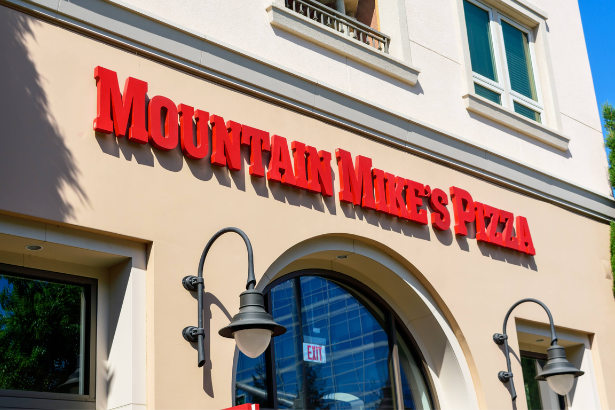
Mountain Mike’s Pizza bankruptcy 2026 has arrived, and it comes from an unexpected direction. While Mountain Mike’s corporate has been in aggressive expansion mode, opening 24 restaurants in 2025 and planning 25 more in 2026, one of its Oregon franchise operators is heading in the opposite direction. Rogue Fare LLC, which operates five Mountain Mike’s Pizza locations across southern Oregon, filed for Chapter 11 bankruptcy protection on July 1, 2026, in the U.S. Bankruptcy Court for the District of Oregon in Eugene, listing up to $50,000 in assets against between $1 million and $10 million in debts. The filing adds another data point to one of 2026’s most consistent business stories: the American pizza industry is under severe financial pressure, and even growing chains are not immune to franchisee-level financial distress.
Who Is Rogue Fare LLC and Which Locations Are Affected
The company at the center of this filing is a small, Oregon-based franchise operator that has been running Mountain Mike’s locations in the southern part of the state.
Rogue Fare LLC, based in Medford, Oregon, operates five Mountain Mike’s Pizza restaurants. The locations span Klamath Falls, Grants Pass, Roseburg, and two locations in Medford, according to a May 22, 2024, filing with the Oregon Secretary of State office.
The petition was signed by James Smith, the company’s sole member, with attorney Keith Y. Boyd serving as legal counsel. The case number is 26-61830-kfe11, filed in the Eugene Division of the U.S. Bankruptcy Court for the District of Oregon. The filing type is an active, voluntary Chapter 11 petition.
The debtor did not give a reason for filing for bankruptcy in its petition, as is common in early-stage Chapter 11 filings. Chapter 11 allows a company to continue operating while restructuring its debts under court supervision, meaning the five Oregon locations are not immediately closed by virtue of the filing.
The Debt Picture: $2.9 Million to First Bank, $1.5 Million to First Internet Bank
The creditor list attached to the Rogue Fare filing reveals a debt stack that spans multiple institutional lenders, federal programs, and vendor partners.
The debtor’s largest creditors include First Bank of the Lake, owed over $2.9 million; First Internet Bank of Indiana, owed over $1.5 million; the U.S. Small Business Administration, owed over $120,000; Credit Associates Inc., owed over $63,000; Parifin-DoorDash, owed over $13,000; and Performance Food Group, owed over $10,000.
The SBA debt is consistent with pandemic-era Economic Injury Disaster Loan exposure, which many small restaurant operators took on during 2020 and 2021 and are still servicing years later. The DoorDash debt reflects the financing arrangements some operators used to fund delivery infrastructure and commission advances.
The gap between assets of up to $50,000 and liabilities between $1 million and $10 million tells a stark story. Even under a best-case reorganization scenario, Rogue Fare will need to negotiate substantial debt reductions or payment deferrals to emerge from Chapter 11 as a viable operating entity.
Mountain Mike’s Corporate Is Doing the Opposite
The contrast between the franchisee’s distress and the corporate chain’s expansion is striking and important to understand.
Mountain Mike’s Pizza has launched an opposite strategy to Pizza Hut and Papa John’s, opening 24 restaurants in six new markets in 2025, including one in Las Vegas that became its 300th companywide location. The pizza chain plans to open 25 new locations in 2026 as it is developing 100 locations across 16 states.
Mountain Mike’s Pizza currently has restaurants in nine states, including Arizona, Idaho, Nevada, Oregon, Utah, Colorado, Texas, Washington, and Wisconsin. The chain is developing new restaurants in Florida, Oklahoma, Arkansas, Tennessee, and Virginia, and has longer-term expansion plans across New Mexico, Kansas, Missouri, Georgia, North Carolina, and South Carolina.
The chain was founded in 1978 with a single restaurant next to Stanford University in Palo Alto, California. Its current owners, co-CEOs Chris Britt and Ed St. Geme, acquired the company from private equity firm Levine Leichtman Capital Partners in 2022. Systemwide sales surpassed $250 million in 2021. The chain now has over 300 restaurants.
This divergence between corporate expansion and franchisee financial distress is a pattern that has appeared across multiple fast food and pizza chains in recent years: corporate metrics can look healthy while individual franchise operators struggle with the unit-level economics of running restaurants in specific local markets.
Why Pizza Franchisees Are Struggling in 2026
The Rogue Fare filing does not exist in isolation. It is part of a documented, industry-wide pattern of pizza operator financial distress.
Rising pizza prices have been a major reason for a decline in industry sales. Technomic’s 2025 Pizza Consumer Trend Report found that the average price of a pizza is $17.61, up 3% year over year and more than 15% in the last five years. Those price increases have had a measurable impact on consumer behavior, with 35% of consumers reporting they order restaurant pizza less frequently because it has become too expensive.
The Rogue Fare Chapter 11 filing is unusual, as bankruptcy filings are not common for Mountain Mike’s. But the broader pizza dining sector has faced headwinds since the COVID-19 pandemic, as rising prices driven by inflation reduced consumer demand and discouraged diners from eating out at price points that felt reasonable just three years ago.
North County Pizza, Inc., an independent Domino’s franchise operator, filed for bankruptcy with over $3 million in debt in March 2026. That filing involved a single Oceanside, California location and reflected a similar dynamic of pandemic-era debt meeting post-pandemic consumer softness.
Pizza Hut and Papa John’s: The Chains That Chose Contraction
While Mountain Mike’s has been expanding, the two largest pizza chains in the country have been aggressively closing underperforming locations, framing the industry backdrop against which the Rogue Fare filing lands.
Troubled locations have forced Pizza Hut’s parent Yum Brands to shutter 250 underperforming restaurants in the first half of 2026 as part of its Hut Forward restructuring plan. Pizza Hut parent Yum Brands sought to strengthen the brand amid shrinking profit margins and declining customer traffic, with the 250 closures representing approximately 3% of its total U.S. footprint.
Papa John’s announced in its fourth-quarter earnings call that it will close 200 locations by the end of 2026, on top of approximately 226 restaurants it closed in 2025. The company also plans to reduce its company-owned restaurant portfolio through refranchising, continuing a broader restructuring of its North American business following a difficult 2025 marked by weak consumer demand, declining profits, and flat sales.
The combined closures at Pizza Hut and Papa John’s alone represent hundreds of locations disappearing from the American restaurant landscape in a compressed period, driven by the same economic forces now showing up in Rogue Fare’s bankruptcy filing at the franchisee level for Mountain Mike’s.
The Oregon Market Context
Southern Oregon is a specific market with specific dynamics that may help explain why Rogue Fare is in distress while Mountain Mike’s elsewhere continues to grow.
The southern Oregon cities where Rogue Fare operates, Klamath Falls, Grants Pass, Roseburg, and Medford, are smaller markets with more price-sensitive consumer bases than Mountain Mike’s typical growth targets, which have included Las Vegas and new Sun Belt markets. These are communities where the $17.61 average pizza price documented by Technomic represents a meaningful share of discretionary spending.
Oregon also carries a higher minimum wage than many of the states where Mountain Mike’s is currently expanding, which adds to labor costs for franchise operators. The SBA debt in Rogue Fare’s creditor list, combined with institutional bank debt from two separate lenders, suggests the company took on significant capital during either the pandemic period or a subsequent expansion of its local footprint that has not been serviced sustainably by current revenue levels.
Latest Update: Filing Status and What Comes Next for the Locations
The Mountain Mike’s Pizza bankruptcy 2026 filing is at its earliest stage, with no reorganization plan yet published.
The petition was filed July 1, 2026, with case number 26-61830-kfe11 in the Eugene Division. As of the time of reporting, no reorganization plan has been filed, and the company has not publicly disclosed its intentions for the five locations beyond seeking restructuring under court supervision.
Under Chapter 11, the debtor typically has 120 days to file an exclusive reorganization plan and 180 days to have it confirmed by creditors, though these timelines can be extended by the court. During that period, the locations can continue operating unless the court orders otherwise or the business cannot sustain itself.
For full coverage of the filing, follow TheStreet, The Sun, and WhatNow.
Broader Implications: When Expansion and Distress Happen Simultaneously
The Mountain Mike’s Pizza bankruptcy 2026 story raises a question that matters for anyone watching the American restaurant franchise industry: how does a chain’s corporate growth story coexist with individual operator bankruptcies?
The answer lies in the franchise model itself. Mountain Mike’s corporate earns royalties and fees from franchise operators. Its growth metrics, number of locations, systemwide sales, new market entries, reflect the corporate entity’s performance. What they do not capture is the unit-level P&L reality for individual operators managing high labor costs, rising food costs, SBA debt servicing, and soft consumer demand in specific local markets.
The divergence between Mountain Mike’s 300-plus locations and growing expansion targets on one hand, and a five-location Oregon operator filing Chapter 11 with up to $10 million in debt on the other, is not a contradiction. It is the structural reality of the franchise restaurant model, where corporate success and franchisee distress can coexist within the same brand at the same time.
For more consumer and business news, visit The Tech Marketer.
What Happens Next
Rogue Fare LLC’s next obligation is to file its schedules, statement of financial affairs, and eventually a reorganization plan within the deadlines set by the Eugene bankruptcy court. Its major creditors, including First Bank of the Lake at $2.9 million and First Internet Bank of Indiana at $1.5 million, will be central participants in any restructuring negotiation. Mountain Mike’s Pizza corporate has not issued a statement on the filing. The five Oregon locations remain open for now under Chapter 11 protection.
FAQ
What is the Mountain Mike’s Pizza bankruptcy 2026 about?
Rogue Fare LLC, an independent franchisee that operates five Mountain Mike’s Pizza locations in southern Oregon, filed for Chapter 11 bankruptcy protection on July 1, 2026, in the U.S. Bankruptcy Court for the District of Oregon. The company listed up to $50,000 in assets and between $1 million and $10 million in debts. The filing does not affect Mountain Mike’s corporate or its other franchisees.
Which Mountain Mike’s Pizza locations are affected by the bankruptcy?
The five locations operated by Rogue Fare LLC are in Klamath Falls, Grants Pass, Roseburg, and two locations in Medford, all in southern Oregon. These locations continue to operate under Chapter 11 protection while the company reorganizes under court supervision.
Who are the largest creditors in the Mountain Mike’s Pizza bankruptcy?
The largest creditors listed in the Rogue Fare LLC filing are First Bank of the Lake, owed over $2.9 million; First Internet Bank of Indiana, owed over $1.5 million; the U.S. Small Business Administration, owed over $120,000; Credit Associates Inc., owed over $63,000; Parifin-DoorDash, owed over $13,000; and Performance Food Group, owed over $10,000.
Is Mountain Mike’s Pizza itself in financial trouble in 2026?
No. Mountain Mike’s corporate is in expansion mode, having opened 24 restaurants in six new markets in 2025 and reaching its 300th location milestone. The chain plans to open 25 more locations in 2026 across 16 states. The bankruptcy applies only to Rogue Fare LLC, the independent franchise operator running five Oregon locations, and does not reflect the financial condition of Mountain Mike’s corporate or the broader franchise system.
Why are pizza chain franchisees filing for bankruptcy in 2026?
Pizza franchisees are facing a combination of pressures including rising ingredient and labor costs, softening consumer demand as average pizza prices have risen more than 15% in five years to $17.61, pandemic-era SBA loan debt that still needs servicing, and competition from grocery store and frozen pizza alternatives. Technomic’s 2025 Pizza Consumer Trend Report found that 35% of consumers are ordering restaurant pizza less frequently because it has become too expensive.
Sources and References
- TheStreet (fully accessed): https://www.thestreet.com/restaurants/mountain-mikes-pizza-chain-franchisee-files-chapter-11-bankruptcy
- The Sun (original submission, blocked): https://www.the-sun.com/money/16646257/pizza-hut-rival-locations-jeopardy-franchisee-bankruptcy/
- WhatNow (fully accessed): https://whatnow.com/news/trending/popular-regional-pizza-chain-franchisee-files-for-chapter-11-bankruptcy/