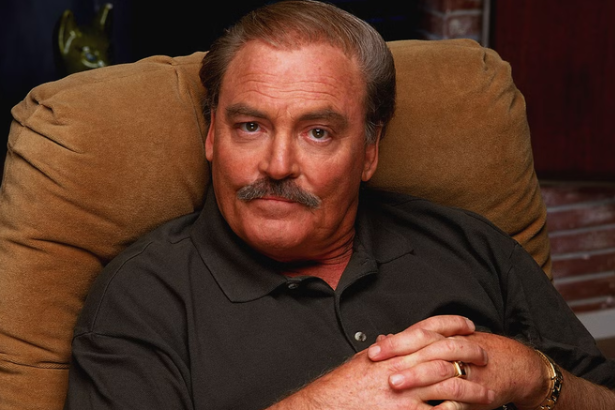
Stacy Keach death has prompted an outpouring of tributes across Hollywood and the entertainment industry. The veteran American actor, whose career stretched across nearly six decades, died on November 10, 2026, at the age of 85.
Keach died at his home in Magdalenka, Poland. His wife, Małgosia Tomassi Keach, confirmed the news and said he had faced a prolonged battle with a serious heart condition and heart failure.
For millions of television viewers, Keach will forever be associated with the hard-boiled private investigator Mike Hammer. But reducing his career to one character would overlook an extraordinary body of work spanning cinema, television, Broadway and classical theatre.
From the troubled boxer in Fat City to Ernest Hemingway, Shakespeare’s King Lear and the calculating prison warden in Prison Break, Keach repeatedly demonstrated an ability to inhabit dramatically different characters.
His death marks the end of a remarkable chapter in American acting.
Background and Context: Who Was Stacy Keach?
Born Walter Stacy Keach Jr. on June 2, 1941, in Savannah, Georgia, Keach grew up in a family closely connected to the performing arts.
His father, Walter Stacy Keach Sr., worked as an actor and director, while his mother, Mary Cain Peckham, was also an actress. That environment helped introduce him to performance at an early age.
Keach studied English and dramatic arts at the University of California, Berkeley, before continuing his education at the Yale School of Drama. He also received a Fulbright scholarship to study at the London Academy of Music and Dramatic Art.
These experiences helped establish the foundation for a career that would move comfortably between American film productions and some of the most demanding traditions of classical theatre.
Unlike performers who build their identities around a single genre, Keach pursued a wide range of opportunities. He performed Shakespeare, appeared in crime dramas, explored complex historical characters and became a familiar presence on television.
His career also included two Golden Globe nominations and a Tony Award nomination, reflecting his work across different entertainment mediums.
Latest Update: Stacy Keach Death Confirmed at 85
The news emerged on November 10, with Keach’s wife confirming his death through a statement shared with entertainment media.
According to PEOPLE’s report, Keach died at the family’s residence in Magdalenka, Poland, following a prolonged illness involving a serious heart condition and heart failure.
His wife described the actor as a beloved husband and the heart of their family, remembering his extraordinary spirit, determination and strength.
Forbes also confirmed the news, highlighting his performances in Mike Hammer, Prison Break and Nebraska.
The Associated Press obituary provided further details about his final years and the remarkable career that made him a familiar face across generations.
What was Stacy Keach’s cause of death?
Keach died following a long and difficult battle with a serious heart condition and heart failure, according to his wife’s statement.
The family has publicly identified these complications as the circumstances surrounding his death. There is no need to speculate about additional medical details beyond what has been confirmed.
The actor had previously experienced a heart attack while performing onstage in Chicago in 2017. That incident led to the cancellation of his theatrical production, Pamplona.
His eventual return to professional work demonstrated his continued commitment to acting, even in the later stages of his career.
Mike Hammer: The role that made Stacy Keach a television icon
Mike Hammer – Série (1984) – SensCritique
For television audiences, Keach’s defining character was Mike Hammer, the fictional private investigator created by crime novelist Mickey Spillane.
Keach played the detective in Mickey Spillane’s Mike Hammer, which became a recognizable crime television series during the 1980s.
His interpretation combined toughness, dry humor and an unmistakable screen presence. Hammer was not a conventional television detective. He was a hard-edged private investigator navigating dangerous situations, criminal networks and morally complicated cases.
Keach brought a distinctive personality to the character, helping establish the series as one of the memorable detective dramas of its era.
His association with Mike Hammer continued through later productions, including Mike Hammer: Private Eye in the late 1990s.
The role became such a significant part of his public identity that many audiences continued to associate him with the fictional detective decades after the original series ended.
Fat City: The performance that showcased his dramatic range
Long before Mike Hammer became his best-known television character, Keach delivered one of his most celebrated film performances in John Huston’s 1972 boxing drama Fat City.
He portrayed Billy Tully, an aging boxer struggling with disappointment, fading opportunities and the difficult realities of life.
The film explored the less glamorous side of professional boxing. Instead of presenting a conventional sports success story, Huston focused on people whose ambitions were colliding with economic hardship and personal setbacks.
Keach’s performance captured the vulnerability and frustration of a man attempting to recover a sense of purpose.
His collaboration with Huston also included The Life and Times of Judge Roy Bean, another 1972 production.
Fat City remains an important part of Keach’s filmography because it demonstrated the emotional depth he could bring to characters far removed from traditional television heroes.
Expert Insights: Why Stacy Keach Was More Than a Television Star
Keach’s career is particularly interesting because it moved between three distinct areas of performance: classical theatre, character-driven cinema and mainstream television.
That combination is increasingly uncommon in an entertainment industry where performers often become strongly associated with a particular franchise or genre.
A respected Shakespearean performer
Stacy Keach delves into late-life anguish of Hemingway in ‘Pamplona’ – Chicago Sun-Times
Keach was widely respected for his Shakespearean performances.
His stage work included Hamlet, King Lear, Henry V, Macbeth and Richard III. He also appeared in productions of The Crucible, Death of a Salesman and Frost/Nixon.
His portrayal of Buffalo Bill in the Broadway production Indians earned him a Tony Award nomination in 1969.
He was also inducted into the American Theatre Hall of Fame in 2015.
These achievements reveal a different dimension of an actor who was often recognized by television audiences primarily for his crime and drama roles.
His Golden Globe-winning portrayal of Ernest Hemingway
One of Keach’s most significant television performances came in the 1988 miniseries Hemingway.
He portrayed the celebrated American writer Ernest Hemingway, transforming himself physically and emotionally to capture the author’s personality.
The performance earned Keach a Golden Globe Award for Best Actor in a Miniseries or Television Film in 1989.
It also demonstrated his ability to take on complicated historical figures rather than relying exclusively on fictional characters.
Prison Break introduced him to another generation
Prison Break (TV Series 2005–2017) – Stacy Keach as Warden Henry Pope, Henry Pope – IMDb
For audiences who discovered Keach through modern television, his performance as Warden Henry Pope in Prison Break may be especially familiar.
The series, which premiered in 2005, featured Keach as the prison’s administrator, a character whose relationship with protagonist Michael Scofield became an important part of the show’s early storyline.
His portrayal added authority and emotional complexity to the series.
Keach also appeared in productions including Titus, Blue Bloods, The Bourne Legacy, American History X, Nebraska and Jay Kelly.
He additionally became a familiar voice as the narrator of CNBC’s American Greed, contributing to more than 220 episodes, according to PEOPLE.
Broader Implications: What Stacy Keach’s Death Means for Hollywood
The passing of Stacy Keach represents more than the loss of a recognizable television performer.
His career reflected an era when actors could move between Broadway, classical theatre, cinema and network television without being confined to a single professional identity.
The importance of character actors
Hollywood often celebrates leading performers, but character actors provide much of the depth that makes films and television productions memorable.
Keach repeatedly played complicated men, including detectives, prisoners, historical figures, authority figures and troubled individuals.
These performances helped create memorable stories without requiring him to occupy the spotlight in every production.
His career is a reminder of how important experienced supporting and character performers remain to the entertainment industry.
A career that connected multiple generations
Keach’s work reached audiences through very different entertainment eras.
- Theatre audiences experienced his Shakespearean performances.
- Film audiences remember Fat City, The Long Riders and Nebraska.
- Television viewers associate him with Mike Hammer, Titus and Prison Break.
- Documentary audiences recognize his narration of American Greed.
This variety explains why news of his death has attracted interest across different age groups and entertainment communities.
For more coverage of major entertainment and technology developments, readers can explore The Tech Marketer’s editorial coverage.
Related History: Stacy Keach and the Evolution of American Television
Keach’s rise as Mike Hammer coincided with a period when television crime dramas were becoming increasingly influential.
The 1980s offered audiences a wide range of detective characters, police procedurals and private-investigator stories.
Mike Hammer stood apart because of his connection to the hard-boiled detective tradition associated with classic American crime fiction.
Mickey Spillane’s original character had already developed a substantial literary following before Keach brought him to television.
Keach’s interpretation helped translate that literary personality into a television format that connected with mainstream audiences.
His career also reflected the transition from traditional network television to more complex serialized dramas.
When Prison Break premiered in 2005, television storytelling was increasingly embracing longer character arcs, complicated relationships and interconnected narratives.
Keach adapted to that changing environment without abandoning the theatrical discipline that had shaped his earlier career.
His appearances in later productions, including Jay Kelly in 2025, showed that he remained active in the industry well into his eighties.
What Happens Next?
Following Keach’s death, attention is likely to remain focused on tributes, retrospectives and renewed interest in his most recognizable performances.
Several aspects of his legacy deserve particular attention.
- Hollywood tributes: Fellow actors, directors and television personalities are likely to continue acknowledging his contribution to the entertainment industry.
- Mike Hammer retrospectives: His iconic detective performances may attract renewed attention from streaming audiences and classic television fans.
- Film rediscovery: Interest in Fat City and his collaborations with John Huston could introduce his dramatic work to younger audiences.
- Theatre legacy: His Shakespearean performances and contributions to American stage acting remain an important part of his professional history.
- Family remembrance: His wife, children and extended family will continue to preserve his personal and professional legacy.
For viewers wanting to revisit his career, Mike Hammer, Fat City, Prison Break and Hemingway offer four very different starting points.
Conclusion
Stacy Keach’s death at 85 marks the end of a career that refused to remain within conventional boundaries.
He could play a hard-boiled detective, a struggling boxer, a Shakespearean king and a complicated prison administrator with equal conviction. His performances connected generations of audiences and demonstrated the lasting value of versatility in acting.
Although many viewers will remember him first as Mike Hammer, his contribution to American entertainment was considerably broader.
From the theatre stage to Hollywood films and television dramas, Keach built a body of work that deserves to be remembered well beyond the headlines announcing his passing.
His voice, commanding screen presence and commitment to his craft leave behind a legacy that will continue to resonate with audiences.
Frequently Asked Questions
1. Did Stacy Keach die?
Yes. Stacy Keach died on November 10, 2026, at the age of 85. His wife confirmed his death.
2. What was Stacy Keach’s cause of death?
Keach died following a prolonged battle with a serious heart condition and heart failure, according to his wife’s statement.
3. How old was Stacy Keach when he died?
He was 85 years old. He was born on June 2, 1941.
4. Who played Mike Hammer in the television series?
Stacy Keach portrayed the fictional detective Mike Hammer in Mickey Spillane’s Mike Hammer and subsequent productions featuring the character.
5. What movies and television shows was Stacy Keach famous for?
His notable credits include Fat City, The Long Riders, The Ninth Configuration, American History X, Nebraska, Prison Break, Titus, Blue Bloods and Jay Kelly.
6. Did Stacy Keach win a Golden Globe?
Yes. He won a Golden Globe in 1989 for his portrayal of Ernest Hemingway in the television miniseries Hemingway.
7. Was Stacy Keach married and did he have children?
Yes. He was married to Małgosia Tomassi Keach. They had two children, Karolina and Shannon.
8. What happened to Stacy Keach during his acting career?
In 1984, Keach was arrested at London’s Heathrow Airport on cocaine-related charges. He pleaded guilty and served six months in prison. He subsequently returned to acting and continued building his career.
9. What was Stacy Keach’s most famous role?
His best-known television role was private investigator Mike Hammer. However, his Shakespearean performances, portrayal of Ernest Hemingway and film work also earned considerable recognition.
Sources & References
- Variety: Stacy Keach, Star of ‘Mike Hammer,’ ‘Fat City,’ Dies at 85
- Forbes: Stacy Keach, ‘Mike Hammer, Private Eye’ Star, Dies at 85
- PEOPLE: Stacy Keach, Bourne Legacy Star and Renowned Stage Actor, Dies at 85
- Associated Press: Stacy Keach, star of stage and ‘Mike Hammer’ series, dies at 85
- The Guardian: Stacy Keach, Mike Hammer actor whose career spanned stage and screen, dies aged 85