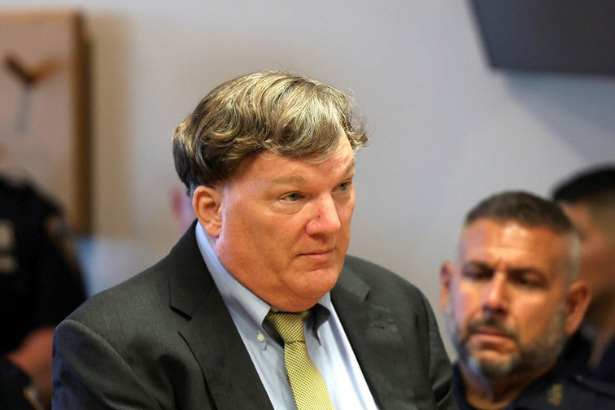
Rex Heuermann sentenced to life in prison without the possibility of parole on Wednesday, June 17, 2026, closing a 33-year span between his first known killing and final judgment in one of the most notorious serial murder cases in recent American history. Judge Timothy Mazzei handed down three consecutive life sentences without parole, followed by four consecutive sentences of 25 years to life, the maximum possible under New York law, for the murders of eight women committed between 1993 and 2010 on Long Island.
The Sentence: Three Life Terms Plus Four 25-to-Life Terms
The sentencing hearing at Suffolk County Court in Riverhead, New York, represented the formal end of a case that had stretched across more than three decades from the first killing to final judgment.
Judge Mazzei handed down three consecutive sentences of life with no parole followed by four consecutive sentences of 25 to life, the maximum possible under New York law. Heuermann, 62, fatally strangled eight women over a 17-year period beginning in 1993.
After giving him the maximum possible sentence, Mazzei told bailiffs to “get him out of here.” Heuermann is expected to be transferred to a New York state prison by the end of the week, where he will begin serving the consecutive life sentences without any possibility of parole.
Heuermann’s Statement: “I Am Responsible”
When given the opportunity to address the court directly, Heuermann’s statement was brief and offered little beyond an acknowledgment of guilt.
Rex Heuermann Sentenced was seated when he first began to speak, and Judge Mazzei directed him to stand up. “I’m responsible,” he said. “The words I would say have no meaning.” In a quiet voice that was nearly inaudible in the courtroom, he added: “There are no words I can say.”
During the victims’ family statements that preceded his own, Heuermann showed little outward reaction. He sat stone-faced, his hands crossed on the table in front of him, looking down and declining to make eye contact with the family members speaking about their loved ones.
Judge Mazzei’s Rebuke: “A Disgusting and Despicable Small Man”
The judge did not limit himself to procedural sentencing language, directly confronting Heuermann about whether he felt genuine remorse for his crimes.
One of the victims’ families told him to speak up. Mazzei stepped in and said: “I know that you’re sorry you got caught. I assume you’re sorry for what you did to your wife and children. Are you at least a little bit sorry for what you did to these eight women?” Heuermann nodded yes and said he is.
Mazzei’s response was direct and unsparing. “You’re a disgusting and despicable small man, if you’re a man at all,” he said. “And you’re a coward.” The judge was visibly moved at multiple points during the hearing, becoming emotional during one cousin’s victim impact statement.
The Victims: Eight Women Remembered by Name
The eight women Heuermann pleaded guilty to murdering, along with the eighth victim he confessed to without formal charges, were identified by name during the proceedings: Sandra Costilla, 28, found in North Sea; Karen Vergata, 34, found on Fire Island and near Tobay Beach; Valerie Mack, 24, found in Manorville and along Ocean Parkway near Gilgo Beach; Jessica Taylor, 20, found in Manorville and along Ocean Parkway; and the so-called Gilgo Four, all found just east of Gilgo Beach: Maureen Brainard-Barnes, 25; Melissa Barthelemy, 24; Megan Waterman, 22; and Amber Lynn Costello, 27.
The victims were found concealed across different parts of Long Island, from the Hamptons to Gilgo Beach. Some were dismembered. All had been strangled. Heuermann pleaded guilty to seven of the murders on April 8, 2026, and confessed to the uncharged eighth at that time.
Family Impact Statements: Decades of Grief and Unanswered Questions
Before the sentencing, family members of the victims delivered emotional statements that sought to restore the humanity of women who had, in many cases, been reduced in public discussion to little more than case file photographs.
Valerie Mack had a “fire inside of her that lit up the world around her,” her sister Danielle Mack said. Mack’s adoptive father told Heuermann that despite the atrocities committed against his daughter, “you never touched her soul,” adding that “Valerie is the one who is free today, and you are not.”
Jessica Taylor, who would have turned 43 on the day of the sentencing, “was pure sunshine” and a “spunky, smart, beautiful friend,” her cousins said, one of them wishing her “Happy birthday, Jess” during her statement. Maureen Brainard-Barnes was “loving, selfless and unforgettable” with a “nurturing spirit,” according to her sister Melissa “Missy” Cann, who recalled the final words her sister spoke to her: “I love you. I’ll see you tomorrow.” Cann said she made it her life’s mission to see Heuermann identified and brought to justice, telling the court: “He took my sense of safety, he took my peace of mind. In many ways, I became one of his victims, too.”
Melissa Barthelemy “was a fighter for love, for family, for a better life,” her sister Amanda Funderburg said. Megan Waterman “dreamed of building a wonderful life for herself and her daughter,” her aunt Elizabeth Meserve said, criticizing former Suffolk County leaders for failing to solve the case for years before a task force was established in 2022. Waterman’s daughter, Liliana, who was only 7 years old when her mother was killed, told the court she is now older than her mother was at the time of her death, and said the victims “mattered infinitely more” than Heuermann, calling him “a coward who takes out his own shortcomings on others.”
How Investigators Finally Caught Heuermann
The path from the initial killings to Heuermann’s arrest spanned more than a decade and involved a wider investigation than the case that ultimately led to his capture.
Concerns of a serial killer first emerged in late 2010 after the disappearance of Shannan Gilbert, a 23-year-old woman who placed panicked 911 calls from the Oak Beach community before vanishing into the surrounding marsh. During a search for her, police uncovered 10 other victims in the area before they finally found her remains in December 2011. While her death was deemed accidental, the broader search ultimately led police to Heuermann 12 years later.
Prosecutors have alleged that Heuermann transferred DNA from his ex-wife and daughter to some of the victims. Detectives recovered a computer file where Heuermann kept notes on how to get away with the crimes, including supplies for his kill kits, the locations of traffic cameras, and a reminder to use push-pins to hang a drop cloth rather than tape. His family has not been accused of assisting in any of the crimes; according to court documents, they were out of town during each murder.
The Gilgo Four and the Discovery That Started It All
The four victims discovered together along an isolated stretch of Ocean Parkway near Gilgo Beach in 2010 became the case’s namesake and the discovery that set the broader investigation in motion.
Waterman was among the four women whose remains were found on the isolated stretch off Ocean Parkway, earning them the nickname the “Gilgo Four.” That gruesome discovery set off a wider search that ultimately uncovered at least 10 sets of human remains in the area.
Heuermann worked roughly 45 miles east of New York City in the area, and lived about 15 miles from Gilgo Beach in Massapequa Park, where he resided with his family for years while committing the murders without their knowledge.
What Comes Next: Asian Doe and Other Possible Victims
Even with Heuermann’s sentencing complete, the broader Gilgo Beach investigation remains open on several fronts that authorities continue to pursue.
Several family members raised the possibility that Heuermann had other victims beyond the eight women in this case. He has not been charged in connection to any other offenses. Suffolk County District Attorney Ray Tierney, asked repeatedly whether he believes Heuermann has additional victims, responded that it doesn’t matter what he “believes,” it matters what he can prove in a court of law. “If I had evidence, I’d put it into a grand jury and an indictment, and then we’d come and talk about it. Until I have that, I’m not going to talk about it,” he said.
Most immediately, Tierney said, investigators are still hoping to identify the remains of “Asian Doe,” an unidentified person whose remains were found near Gilgo Beach in 2011 during the search for Shannan Gilbert. Believed to be of southern Chinese ancestry and between 17 and 23 years old at the time of death, which investigators estimate came in April 2006 or earlier, authorities are trying to identify the victim using investigative genetic genealogy to give them “some dignity and also give us some investigative leads,” Tierney said.
Separately, three other victims found in the Gilgo Beach area have not been linked to Heuermann. Andrew Dykes, a 66-year-old from Florida, has been charged with the 1997 murders of Tanya Denise Jackson, 27, and their 2-year-old daughter, Tatiana Marie Dykes.
Latest Updates
Rex Heuermann was sentenced on Wednesday, June 17, 2026, at Suffolk County Court in Riverhead, New York. Fox News confirmed the full sentencing details including Judge Mazzei’s exchange with Heuermann, the maximum sentence breakdown, all eight victims’ names and where their remains were found, and the evidence prosecutors presented including the DNA transfer allegations and the recovered notes file. CNN confirmed the victims’ family impact statements in detail, the 33-year span since Heuermann’s first known killing, Heuermann’s muted in-court statement, and District Attorney Ray Tierney’s comments on the ongoing effort to identify “Asian Doe” and investigate whether Heuermann has additional uncharged victims.
Full sources: CNN | Fox News | AP News
Broader Implications
Rex Heuermann’s sentencing closes the legal chapter of a case that took 33 years from the first known killing to a final judgment, a gap that reflects both the difficulty of the original investigation and the years of institutional failures that victims’ family members directly criticized during their impact statements. The establishment of a dedicated task force in 2022, more than a decade after the Gilgo Four were discovered, was the development that ultimately led to Heuermann’s identification and arrest.
For the families who spoke in court, the sentencing represented an end point to a process some had pursued for years, but several made clear that the case’s full resolution remains incomplete. The unresolved status of Asian Doe, the unlinked Tanya Denise Jackson and Tatiana Marie Dykes murders, and the open question of whether Heuermann has additional uncharged victims all mean the broader Gilgo Beach investigation continues even after its most prominent figure has been sentenced.
For the eight women at the center of this case, the family statements delivered in court served a purpose beyond the legal proceedings themselves: restoring their individual identities, relationships, and humanity in a case that for years was discussed primarily through the lens of the killer rather than the people he killed.
For more breaking news and crime coverage, visit The Tech Marketer.
Frequently Asked Questions
1. What sentence did Rex Heuermann receive?
Rex Heuermann was sentenced to three consecutive life terms without parole followed by four consecutive terms of 25 years to life, the maximum possible under New York law. He will serve the sentence for the murders of eight women committed between 1993 and 2010.
2. What did Rex Heuermann say at his sentencing?
When directed to stand and address the court, Heuermann said “I’m responsible,” adding “The words I would say have no meaning.” He later said “There are no words I can say” in a quiet, nearly inaudible voice. When the judge directly asked if he felt sorry for what he did to the eight women, Heuermann nodded and confirmed he did.
3. Who were Rex Heuermann’s victims?
Heuermann’s eight victims were Sandra Costilla, Karen Vergata, Valerie Mack, Jessica Taylor, and the “Gilgo Four”: Maureen Brainard-Barnes, Melissa Barthelemy, Megan Waterman, and Amber Lynn Costello. He pleaded guilty to seven of the murders in April 2026 and confessed to the eighth without formal charges.
4. How was Rex Heuermann caught?
Heuermann was identified and arrested in 2023, 12 years after the 2011 discovery of the “Gilgo Four” remains near Ocean Parkway. Investigators used DNA evidence, including allegations that Heuermann transferred DNA from his ex-wife and daughter to some victims, along with a recovered computer file containing detailed notes on how to evade capture.
5. Are there other suspected victims connected to the Gilgo Beach case?
Yes. Investigators continue trying to identify “Asian Doe,” an unidentified victim found near Gilgo Beach in 2011, using investigative genetic genealogy. Heuermann has not been charged in connection with any victims beyond the eight in this case. Separately, Andrew Dykes has been charged with two other 1997 murders found in the same area, unconnected to Heuermann.