Introduction
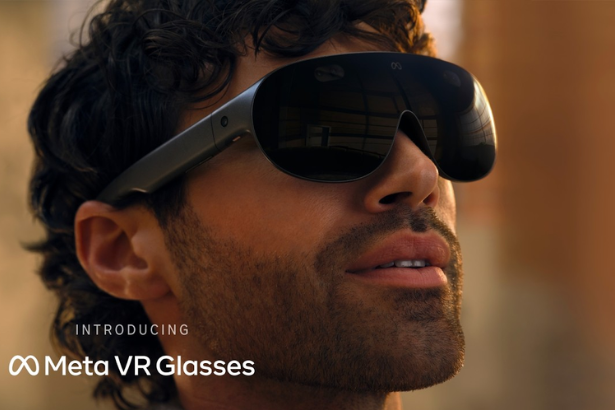
Meta VR Glasses are now official, and they are only one part of Meta’s much larger hardware push unveiled at Connect 2026. The company introduced a 100-gram virtual reality device priced at $1,299.99, a pocket-sized Muse Charm for interacting with its new AI agent, and an expanded range of Ray-Ban Meta glasses.
The announcements show Meta pursuing several different versions of the same idea: computing should increasingly happen around you rather than inside a phone. Some of the products put displays in front of your eyes. Others keep cameras out entirely. Muse, meanwhile, is becoming the software layer connecting many of them.
Background and Context
Meta has spent years trying to move computing beyond the traditional smartphone and PC.
Its Quest headsets established the company’s presence in virtual reality, while the Ray-Ban Meta partnership brought cameras, microphones, speakers and AI into a familiar pair of glasses. In September 2026, Meta also launched Muse, its personal AI agent designed to complete tasks rather than simply answer questions.
Meta says Muse can browse the web, fill out forms, send emails, book travel and continue working on longer tasks after a user leaves the app. It operates through a dedicated secure virtual machine and asks for permission before certain sensitive actions.
Connect 2026 was effectively the next step in that strategy.
Instead of presenting AI as one app, Meta is putting Muse into multiple physical formats.
Latest Update: Meta VR Glasses, Muse Charm and New AI Glasses
Meta VR Glasses Put a 100-Gram Computer on Your Face
The headline hardware is Meta VR Glasses, which Meta describes as a new VR platform built into a glasses-style form factor.
The device weighs about 100 grams, roughly the weight of a deck of cards. Meta says it is about five times lighter than the Quest 3 because the system separates the glasses from the main computing hardware. The glasses contain the displays and sensors, while an optical cable connects them to a separate compute puck containing the processor, battery and storage.
The display system uses micro-OLED panels with what Meta calls a 5K Infinite Display, delivering 37 pixels per degree. The glasses also include Dolby Vision and Dolby Atmos, while Qualcomm’s Snapdragon Reality Elite processor handles the computing workload.
Meta is positioning the device as more than a VR headset.
It can function as a private multi-screen workstation, a gaming device and an immersive entertainment system. Users can control the interface through voice, eye tracking and hand gestures. Meta also says any flat surface can become a virtual keyboard and touchpad.
For entertainment, Meta says the device will support 3D content from partners including Disney+, Prime Video, YouTube, ESPN and others. The company also says more than 75 games will be playable using hand gestures at launch.
The price is set at $1,299.99, with sales planned for spring 2027.
Muse Charm Shrinks the AI Assistant Into a Pocket Device
The more unexpected announcement was Muse Charm.
Meta unveiled the device as a small, dedicated way to interact with Muse without relying on a smartphone or wearing glasses. Meta itself describes it as a pocket-sized device combining Muse with its real-time voice model.
Bloomberg and Reuters reporting provides additional hardware details. The device is roughly the size of an Apple AirPods case, with a touchscreen measuring around two inches and built-in 5G connectivity. Meta says it plans to make the device available around the December holiday period, although a price has not been announced.
The form factor is deliberately different from conventional wearables.
Instead of putting a screen or camera directly in front of your eyes, Muse Charm is designed to be carried, held or attached to something such as a keychain. Reports describe it as a “holdable”, effectively turning the AI assistant into a small physical companion.
That makes the product an interesting bridge between a smartphone app and a wearable computer.
Ray-Ban Meta Audio Takes Cameras Out of the Equation
Meta also introduced Ray-Ban Meta Audio, its first dedicated audio glasses.
The 43-gram glasses are designed around open-ear audio, calls and AI interaction. Meta says they can provide up to 12 hours of use on a charge, with another 48 hours available through the charging case. They launch in Clubmaster and Burbank designs with 23 color and lens combinations.
Pre-orders start at $349, with shipping scheduled for October 13.
The camera-free design is notable because Meta’s existing smart glasses have made cameras a defining part of the category. Audio-only glasses offer another route into AI assistance without making image capture part of the hardware.
Ray-Ban Meta Gen 3 Adds More Battery and Better Audio
Meta’s Ray-Ban Meta Gen 3 glasses were also announced.
The new generation starts at $449 and comes in 27 color and lens combinations across Aviator, Zena and Wayfarer designs. Meta says battery life reaches up to nine hours, while a six-microphone array is designed to reduce background noise by more than 90%.
The glasses also feature a 12-megapixel camera capable of 3K Ultra HD video recording.
Meta says the glasses will eventually support Dolby Atmos capture, adding spatial audio to videos recorded through the device.
Expert Insights or Analysis
The most important part of Meta’s announcement may not be any individual product.
It is the way the products fit together.
The company is effectively building several interfaces for the same AI system:
- Smartphone and desktop: Muse can operate as an AI agent.
- AI glasses: Muse can become hands-free and respond to what the wearer is seeing.
- Muse Charm: Muse becomes a dedicated pocket device.
- Meta VR Glasses: Muse and AI become part of a spatial computing environment.
This approach reduces the importance of any single form factor.
Yahoo Finance’s Brian Sozzi described Muse Charm as a new “holdable” category while noting that Meta’s broader hardware strategy now stretches across smart glasses, AI and spatial computing.
The financial-market reaction is also part of the story. Analysts have been watching Muse closely after its September launch, with Reuters reporting that Wall Street has viewed the AI assistant as a potential new growth avenue for Meta. Those analyst assessments are expectations rather than established results, and the long-term commercial impact remains uncertain.
The hardware strategy therefore has two dimensions. Meta is trying to make AI more physically accessible, while also creating more surfaces through which people can use its software.
Broader Implications
The smartphone has dominated personal computing for roughly two decades because it combines a display, camera, connectivity, sensors and applications in one portable device.
Meta’s latest lineup takes the opposite approach.
Instead of one universal device, the company is distributing computing across different objects.
That could make AI more contextual. A pair of glasses can hear a question while showing you what is directly in front of you. A pocket device can provide quick voice access without requiring you to pull out a phone. VR glasses can create a large private workspace without a physical monitor.
There are also obvious trade-offs.
More devices can mean more complexity, more charging requirements and more questions about privacy and data. Meta’s Muse architecture is designed with permissions and a secure virtual machine, according to the company, but consumers will still have to decide how much access they want to give an AI agent that can act on their behalf.
For more coverage of the shift toward AI-first hardware, see the AI and emerging technology coverage at The Tech Marketer.
Related History or Comparable Technologies
Meta’s hardware strategy follows several earlier attempts to make computing more ambient.
Google Glass introduced the idea of putting information directly into a user’s field of view, although its early consumer rollout generated substantial privacy and social concerns.
Smartwatches then established another model: rather than replacing the smartphone, a wearable can handle small interactions while the phone remains the primary computer.
Meta’s Ray-Ban partnership moved smart glasses closer to ordinary eyewear by emphasizing familiar designs rather than a futuristic headset aesthetic.
The Muse Charm concept belongs to a different lineage. Devices such as Tamagotchi demonstrated decades ago that a small physical object can become an interface for a persistent digital character. Modern AI companions are applying a similar concept with far more capable conversational software.
Meta is now attempting to connect those ideas into one ecosystem.
What Happens Next
The immediate timeline is fairly clear.
Ray-Ban Meta Audio: Pre-orders begin at $349, with shipping planned for October 13.
Ray-Ban Meta Gen 3: Available from $449.
Muse Charm: Meta says more details will arrive later in 2026, with the device expected around the holiday season.
Meta VR Glasses: Scheduled for spring 2027 at $1,299.99.
The next major questions will be practical ones: how well Muse works through glasses, how consumers respond to the Charm form factor, how long the VR glasses battery lasts in real-world use, and whether developers build experiences specifically around these new interfaces.
Meta also says it expects more than 100 AI glasses options across Ray-Ban, Oakley and Meta Glasses by the end of 2026.
Conclusion
Meta VR Glasses may be the most ambitious hardware announcement from Connect 2026, but the broader story is about Meta trying to make Muse an operating layer for everyday computing.
The $1,299.99 VR glasses target spatial computing. Ray-Ban Meta Audio targets lightweight, camera-free AI interaction. Gen 3 continues the camera-equipped smart-glasses strategy. Muse Charm takes the assistant off the phone and puts it into a small physical object.
Together, they point toward a future in which AI is less of a destination you open and more of a service available through whatever device is closest to you.
Whether consumers actually want that future will depend less on the novelty of the hardware than on whether these devices make everyday tasks genuinely easier.
FAQ
What are Meta VR Glasses?
Meta VR Glasses are a glasses-style virtual reality and spatial computing device announced at Meta Connect 2026. They weigh about 100 grams and use a separate compute puck for processing, battery and storage.
How much do Meta VR Glasses cost?
Meta VR Glasses are priced at $1,299.99 in the United States and are scheduled to go on sale in spring 2027.
What is Muse Charm?
Muse Charm is a small dedicated device designed to let users interact with Meta’s Muse AI assistant. Meta says it combines Muse with a real-time voice model in a pocket-sized form factor.
When will Muse Charm be available?
Meta says Muse Charm is planned for release around the 2026 holiday season. The company has not yet announced a price. Reuters reported that Meta expects it to ship in December.
What are Ray-Ban Meta Audio glasses?
Ray-Ban Meta Audio glasses are Meta’s first dedicated audio glasses. They use open-ear audio and AI without a camera, weigh 43 grams and offer up to 12 hours of battery life according to Meta. Prices start at $349.
Does Muse work with Meta’s smart glasses?
Yes. Meta says Muse will come to its AI glasses in the coming months, allowing users to access the assistant hands-free and interact with it based on what they are seeing.
Sources & References
- “Introducing Meta VR Glasses: A Cinema, Courtside Seat, and Workspace in Just 100 Grams”, Meta Newsroom. Read the Meta VR Glasses announcement
- “Introducing Ray-Ban Meta Audio and More AI Glasses Styles”, Meta Newsroom. Read Meta’s AI glasses announcement
- “Meta Debuts Dedicated ‘Charm’ Device for Using Muse AI”, Bloomberg, September 23, 2026. Read the Bloomberg report
- “Here’s what Wall Street thinks of Meta’s new smartglass lineup and first Muse ‘holdable'”, Yahoo Finance, September 24, 2026. Read the Yahoo Finance analysis
- “Meta launches AI gadget Charm as race for post-smartphone hardware heats up”, Reuters, September 24, 2026. Read the Reuters report
GOOGLE TRENDS SECTION
Google Trends Image Suggestion
Image: Use the supplied Google Trends screenshot showing the sharp 24-hour search increase for “meta vr glasses”, with related searches including “meta glasses,” “vr glasses,” and “meta connect.”
Trend Tags / Keywords
meta vr glasses · Meta VR Glasses 2026 · Meta Muse · Muse Charm · Meta Connect 2026 · Ray-Ban Meta · AI glasses · spatial computing