Apple’s own regulatory compliance website prematurely exposed the MacBook Neo name, confirming what months of leaks had been pointing toward: a new, lower-cost MacBook powered by an iPhone chip is coming.
Apple didn’t need a leak from a supply chain insider this time. The company did it itself. A regulatory document for a device listed as “MacBook Neo” appeared on Apple’s European compliance portal on March 3, one day before the company’s invite-only media experience in New York. There were no specs, no images, and no pricing details — just a name that confirmed the product is real and imminent.
The MacBook Neo has been circulating in rumor circles for months under various names. Now it has one, and the broader picture of what it actually is has come into sharper focus ahead of its expected official announcement.
What the MacBook Neo Leak Actually Confirmed
A regulatory document for a “MacBook Neo” appeared on Apple’s European regulatory compliance website, with no further details or images available at the time of publication. The timing was unmistakable. Apple had been running a three-day product rollout starting March 2, with a Special Apple Experience media event closing out the week in New York, London, and Shanghai on March 4.
The regulatory filing is the kind of document Apple typically submits ahead of a product launch, covering compliance requirements in the European Union. Its appearance one day before the media event left little room for interpretation.
The Specs Behind the MacBook Neo
While the regulatory filing itself was bare, additional details surfaced from Apple’s own documents shortly after, reported by MacRumors and 9to5Mac.
Details include I/O which consists of two USB-C ports as well as a MagSafe charging port. The latest leak also points to the inclusion of Wi-Fi 7, but no Apple N1 wireless networking chip.
That port configuration mirrors what Apple already offers on the M2 MacBook Air and later models, a deliberate choice that avoids repeating the mistake of the discontinued 12-inch MacBook, which shipped with only a single USB-C port and no dedicated charging connector. That machine became notorious for requiring users to choose between charging and using any peripheral.
On the processor side, MacBook Neo is expected to run on an A18 Pro chip originally designed to power the iPhone 16 Pro, although Apple could use the A19 Pro chip inside the iPhone 17 Pro. Either way, this marks the first time Apple has put an iPhone-class chip inside a Mac, a move that makes sense given the efficiency and thermal profile of these processors, which require minimal cooling and run on compact battery configurations.
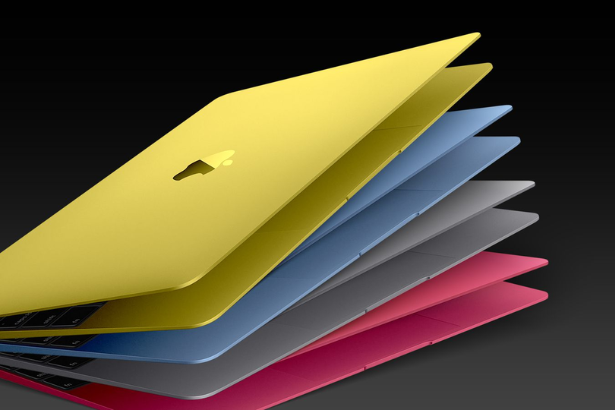
The device is expected to feature a 12.9-inch display and come in multiple colors, with green and yellow among the options confirmed by pre-announcement leaks. Color availability in this range would represent a significant departure from the typical silver and space gray Mac palette.
The Price That Changes Everything
The MacBook Neo’s entire market case rests on one number. The low-cost MacBook is expected to be priced well under $1,000, with many reports indicating pricing could fall between $599 and $799. The MacBook Air M4 is currently priced at $999, though it frequently drops to around $749 on sale. BookBrowse
That pricing window, if accurate, would position MacBook Neo squarely against Chromebooks and budget Windows laptops — the segment Apple has historically ceded to competitors. Bloomberg’s Mark Gurman reported that Apple retail employees were being prepared for a customer rush on par with new iPhone launch days, with the low-cost MacBook expected to drive significant numbers of switchers from Windows machines and Chromebooks. BookBrowse
A RAM supply shortage has complicated the pricing picture somewhat. Some reports suggest the device could land closer to $699–$749 due to component costs, which would still represent a meaningful step below the MacBook Air but with less dramatic headline impact than a $599 entry point.
How MacBook Neo Fits Apple’s Broader Strategy
Apple’s Mac lineup has long operated across two clear tiers: the MacBook Air for everyday users and the MacBook Pro for professionals. MacBook Neo introduces a third category below both, designed for users who want macOS and Apple Silicon performance but cannot justify the Air’s starting price.
Apple reportedly expects the new low-cost MacBook to attract students, first-time Mac buyers, and users switching from Windows devices and Chromebooks, with retail stores preparing for a surge of customers unlike anything seen outside of an iPhone launch week. BookBrowse
This mirrors Apple’s existing tiering strategy across other product lines. The iPhone 17e sits below the standard iPhone. The iPad Air occupies the space between the base iPad and iPad Pro. MacBook Neo slots naturally into that same pattern for the Mac lineup.
The choice of an A18 Pro chip rather than a dedicated M-series processor is telling. It keeps manufacturing costs lower while still delivering performance that substantially exceeds any Chromebook or budget Windows machine in its price range. Apple Intelligence, Apple’s suite of on-device AI features, is fully supported by the A18 Pro, meaning MacBook Neo buyers will not be locked out of the platform’s AI capabilities.
The March Event Context
Apple structured its March 2026 product announcements across three days rather than the traditional single keynote. The rollout began March 2 with the iPhone 17e and an updated iPad Air with M4 chip, continued March 3 with new MacBook Pro models powered by M5 Pro and M5 Max chips and a new M5 MacBook Air, and closed March 4 with the Special Apple Experience media event in New York.
MacBook Neo was widely expected to be the centerpiece of that final event. The regulatory filing appearing on March 3 functioned as an unintentional preview of the main attraction.
What Comes Next
The March 4 media experience is expected to be where Apple officially reveals MacBook Neo with full specifications, confirmed pricing, and availability details. Pre-orders and shipping timelines would typically follow within days of an official announcement.
For consumers sitting on aging Intel Macs or considering a first Mac purchase, the arrival of a sub-$1,000 machine with Apple Silicon performance and a full port complement represents a more compelling entry point than anything Apple has offered in years.
FAQ
Q1: What is MacBook Neo? MacBook Neo is Apple’s new lower-cost MacBook, confirmed by a regulatory filing that appeared on Apple’s own European compliance website on March 3, 2026, one day before Apple’s media experience event.
Q2: What chip does MacBook Neo use? MacBook Neo is expected to use the A18 Pro chip from the iPhone 16 Pro, though Apple could opt for the newer A19 Pro chip found in the iPhone 17 Pro.
Q3: How much will MacBook Neo cost? Most reporting points to a price well under $1,000, with estimates ranging from $599 to $799, positioning it below the MacBook Air M4 which starts at $999.
Q4: What ports does MacBook Neo have? Leaked details confirmed two USB-C ports and a MagSafe charging port, along with Wi-Fi 7 support.
Q5: How is MacBook Neo different from MacBook Air? MacBook Neo sits below the MacBook Air in price and uses an A-series iPhone chip rather than an M-series Mac chip. It targets students, first-time Mac buyers, and users switching from Chromebooks and budget Windows laptops.