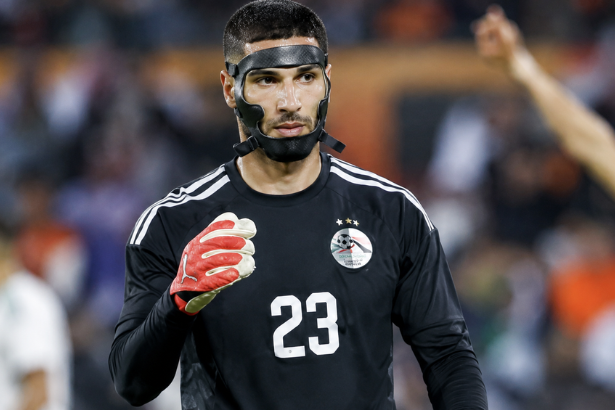
Luca Zidane started in goal for Algeria’s 2026 World Cup opener against defending champions Argentina, and the broadcast attention was immediate the moment viewers spotted the Zidane name on the back of his kit. The 28-year-old goalkeeper, son of French football legend Zinedine Zidane, chose to represent Algeria rather than his father’s France, honoring his paternal grandparents’ Algerian heritage. He took the field wearing a specialized protective face mask, the visible result of a severe facial injury suffered in late April that nearly cost him his place in the tournament entirely.
Who Is Luca Zidane and Why Does He Play for Algeria?
Many remember Zinedine Zidane as one of France’s most notable players, but his son Luca is the goalkeeper for Algeria at the 2026 World Cup.
Zidane plays for Algeria due to his father’s parents being born in Algeria. The goalkeeper was born in France and lived in Spain for the majority of his life, due to his father’s career at Real Madrid beginning in 2001 and his position as Real Madrid’s manager during the 2010s.
The Algeria national team’s selection of Luca Zidane represents a milestone for the program, particularly given his surname’s weight in world football and the symbolism of seeing a member of the Zidane family compete in a World Cup without representing France. Algeria’s qualification campaign benefited directly from his presence, with manager Vladimir Petkovic relying on him as the squad’s primary goalkeeper through their successful path to the tournament.
The Triple Citizenship: French, Spanish, and Algerian Heritage
The eligibility question behind Luca Zidane’s international career involves a layered citizenship situation that ultimately came down to a personal decision about heritage.
Holding triple citizenship, French by birth, Spanish through his mother, and Algerian through his paternal lineage, Zidane ultimately chose to honor his grandparents, who originally emigrated from Algeria to France. Harnessing those ancestral roots, he filed an official change-of-federation request with FIFA.
While he did represent France on their U17 team, Zidane ultimately chose to represent Algeria in 2025, a decision that closed off any future path back to the French senior national team his father once captained to World Cup glory. The choice to formally switch federations, rather than simply remaining uncapped and eligible for either nation, reflects a deliberate commitment to representing Algeria specifically rather than keeping his international options open.
The Switch From France: FIFA Approval and the 2025 Decision
The bureaucratic process behind Zidane’s international allegiance switch took several months to complete, with FIFA’s formal sign-off arriving in late 2025.
Zidane received the formal green light from FIFA in September 2025 to permanently defend the colors of Les Fennecs, Algeria’s national team nickname. FIFA approved a change of national eligibility two weeks before Zidane’s first Algeria call-up, which came as the team pursued World Cup qualification against Somalia and Uganda.
Algeria coach Vladimir Petkovic picked Zidane in a 26-player squad for those crucial qualifying games, with Algeria leading their qualifying group by four points at the time, needing only a win in either fixture to secure their place at the 2026 World Cup. The Algerian federation’s pursuit of Zidane reflected a broader pattern across international football, where federations increasingly recruit players with diaspora heritage connections to strengthen their talent pools, particularly for positions like goalkeeper where elite depth can be scarce.
The Mask Explained: A Devastating April Injury
The protective face mask that immediately drew attention from World Cup broadcasters and viewers traces back to a serious on-field collision just weeks before the tournament began.
While playing for Spanish club Granada back in late April, the 28-year-old goalkeeper endured a devastating aerial collision during a match against Almeria, resulting in a fractured jaw, a fractured chin, and a severe concussion. The protective hardware is a direct response to that severe facial injury, deployed to safeguard a fragile recovery area from any further on-field trauma.
The injury sidelined Zidane for the remainder of Granada’s domestic campaign, putting his World Cup aspirations in serious jeopardy as the summer approached. He had collided with Thalys, a player on Almeria, in an aerial challenge that left him with multiple fractures requiring careful, extended recovery management in the weeks before Algeria’s tournament opener.
Why Zidane Chose the Mask Over Surgery
The decision Zidane faced after his injury was not simply about recovery timeline but about a fundamental trade-off between long-term health management and his immediate World Cup ambitions.
Luca Zidane had the opportunity to undergo surgery, but according to TyC Sports, he prioritized being in the World Cup, so he didn’t have surgery and kept using the mask. The surgery would have ruled him out entirely, and it’s likely he gets the surgery after the World Cup.
He managed to recover and returned to training wearing a protective mask, convincing the coaching staff led by Vladimir Petkovic to keep him involved in the World Cup project. The mask provides protection for the affected jaw and chin areas, allowing Zidane to compete at the tournament’s highest level while managing the risk of aggravating an injury that medical staff would normally treat with surgical intervention under less time-sensitive circumstances.
Algeria’s Return to the World Cup After 12 Years
Zidane’s presence in goal carries additional significance given the broader context of Algeria’s long-awaited return to football’s biggest stage.
The Algerian national team returns to the World Cup after 12 years with a blend of experience and talent led by Riyad Mahrez, Ismaël Bennacer, and Luca Zidane. The 12-year gap since Algeria’s previous World Cup appearance makes the team’s qualification, and the specific contributions of players like Zidane during that campaign, a significant moment for Algerian football more broadly.
Zidane made five appearances for Algeria during the 2025 Africa Cup of Nations with a brilliant 81.8% save percentage and three clean sheets, performances that established him as Algeria’s clear first-choice goalkeeper heading into World Cup qualification and the tournament itself.
Facing Messi: Luca Zidane’s World Cup Debut Against Argentina
The opponent for Zidane’s World Cup debut could hardly have been more demanding: defending champions Argentina, led by a player widely considered the greatest of his generation.
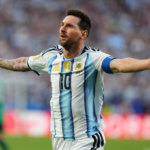
Luca Zidane is the starting goalkeeper for Algeria’s debut in the 2026 World Cup against defending champions Argentina. Lionel Messi’s hat trick against Algeria at the 2026 World Cup, which tied Miroslav Klose’s all-time World Cup scoring record, came against the goalkeeper wearing the protective mask.
If the injury eventually makes Zidane unable to continue playing during the tournament, Algeria would turn to one of the backup goalkeepers called up by manager Vladimir Petkovic, either Oussama Benbot from USM Alger or Melvin Mastil from Stade Nyonnais. Algeria hopes it does not come to that, given Zidane is by a margin the most coveted of the three goalkeepers in the squad.
The Zidane Name: Living Up to and Away From a Legacy
The attention surrounding Luca Zidane’s World Cup appearance is inseparable from the legacy of his father, one of the most decorated and celebrated figures in the history of the sport.
The decision drew attention because his father, Zinedine Zidane, became an absolute legend of French football after winning the 1998 World Cup and the European Championship with Les Bleus. However, Luca chose to follow a different path and build his own identity on the international stage, inevitably moving away from comparisons with one of the greatest figures in football history.
Zinedine Zidane was a member of Real Madrid’s famous “Galacticos” squad, a team of players built by president Florentino Perez who all had expensive price tags and were generally renowned for their attacking prowess, a sharp contrast to Luca’s chosen position between the posts as a goalkeeper rather than a creative attacking midfielder like his father.
What’s Next for Zidane and Algeria
Beyond his World Cup debut against Argentina, Zidane’s path forward involves both the remainder of Algeria’s tournament campaign and the medical decision he deferred to prioritize playing.
Zidane was banned for two games earlier in 2026 for on-field clashes following Algeria’s exit from the Africa Cup of Nations, a sanction the Algerian federation appealed, with the ban ultimately set to be served during 2027 AFCON qualifying rather than affecting his World Cup availability. That earlier disciplinary issue is now a footnote compared to the injury and mask story dominating coverage of his World Cup debut.
Once the World Cup concludes, the surgery Zidane postponed to compete at the tournament is expected to follow, addressing the jaw and chin fractures on a less time-pressured recovery timeline than the one he has managed throughout the tournament so far.
Latest Updates
Luca Zidane started in goal for Algeria’s World Cup opener against Argentina on June 16, 2026. World Soccer Talk confirmed the full details of his April injury at Granada, the fractured jaw, fractured chin, and severe concussion, his triple citizenship, and his September 2025 FIFA-approved switch to Algeria. Bolavip confirmed his decision to delay surgery in favor of competing at the World Cup, his backup goalkeeper options, and his statistical performance for both Granada and Algeria. USA Today and AS confirmed the broader context of the Zidane family legacy, the mask’s specific protective function, and viewer reactions to spotting the Zidane name during the broadcast of Algeria’s match against Messi’s Argentina.
Full sources: The Athletic / NYT | USA Today | AS English
Broader Implications
Luca Zidane’s World Cup debut for Algeria, complete with the protective mask and the inevitable comparisons to his father’s legendary career, captures something distinctive about modern international football eligibility. A player born in France, raised largely in Spain, choosing to represent Algeria through paternal heritage rather than the country where his father became a global icon, reflects how international football’s eligibility rules increasingly allow players to build identities distinct from the most obvious career path available to them.
The decision to play through a serious facial injury rather than undergo immediate surgery is a choice that speaks to the singular weight a World Cup appearance carries for athletes, even when the medical advice might point toward a more conservative recovery timeline. Zidane’s willingness to delay treatment specifically to compete against Messi’s Argentina underscores how rare and valuable a World Cup opportunity is, even for a player who could reasonably expect future tournament appearances.
For Algeria, having a player with the global name recognition of Zidane in their starting lineup, even one earned through bloodline rather than direct on-field legacy, brings additional international attention to the team’s first World Cup appearance in 12 years, a spotlight that may help elevate broader interest in Algerian football during the tournament.
For more World Cup coverage, visit The Tech Marketer.
Frequently Asked Questions
1. Why does Luca Zidane play for Algeria instead of France?
Luca Zidane holds triple citizenship, French by birth, Spanish through his mother, and Algerian through his paternal grandparents, who emigrated from Algeria to France. He chose to honor that Algerian heritage and filed an official change-of-federation request with FIFA, receiving approval in September 2025 to represent Algeria, despite having played for France at the U17 youth level.
2. Why is Luca Zidane wearing a mask at the 2026 World Cup?
Zidane suffered a fractured jaw, a fractured chin, and a severe concussion in late April 2026 after an aerial collision while playing for Spanish club Granada against Almeria. The protective mask shields the injured areas from further trauma, allowing him to compete at the World Cup while delaying the surgery his injuries would normally require.
3. Did Luca Zidane have surgery for his injury?
No. According to TyC Sports, Zidane chose to prioritize playing in the World Cup over having surgery, since the operation would have ruled him out of the tournament entirely. He is expected to undergo the surgery after the World Cup concludes.
4. Who is Luca Zidane’s father?
Luca Zidane is the son of Zinedine Zidane, the French football legend who won the 1998 World Cup and the European Championship with France, and who later managed Real Madrid. Luca was born in France and spent much of his life in Spain due to his father’s career at Real Madrid.
5. What happened when Luca Zidane faced Lionel Messi at the World Cup?
Luca Zidane started in goal for Algeria’s World Cup opener against defending champions Argentina on June 16, 2026. Lionel Messi scored a hat trick in that match, tying Miroslav Klose’s all-time World Cup scoring record of 16 goals, with Algeria losing 3-0.
Sources and References
- The Athletic / New York Times: World Cup: Zidane, Algeria, Argentina, Messi
- USA Today: Luca Zidane: Zinedine’s Algeria Son at the World Cup, France
- AS English: Luca Zidane’s Mask Explained: When and Why He Was Forced to Wear It