Introduction
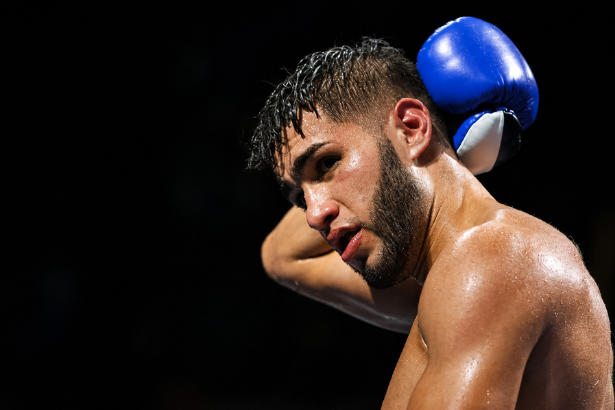
Prichard Colon has died at 33, more than a decade after a professional boxing bout left him with a devastating brain injury and 221 days in a coma.
Colon was once regarded as one of boxing’s promising young prospects. His professional career ended in October 2015 after his fight with Terrel Williams in Fairfax, Virginia. He suffered a brain bleed after the bout, underwent emergency surgery and was left with severe neurological damage that required round-the-clock care for the remainder of his life.
His father, Richard Colon, announced his death on social media on Thursday. Al Jazeera reported that Colon died at home with his family in Florida.
The news quickly sent searches for “Prichard Colon” soaring. The Google Trends screenshot supplied for this report shows a sharp spike in interest over the previous 24 hours, with related searches including “Prichard Colon death,” “Prichard Colon cause of death,” “how did Prichard Colon pass away” and “Prichard Colon now.”
His death has also renewed attention on one of boxing’s most dangerous fouls: punches to the back of the head, commonly called rabbit punches.
Background and Context
Before the injury, Colon was a rising Puerto Rican boxer with an undefeated record through his first 16 professional fights.
Al Jazeera reports that he won 13 of those fights by knockout. LiveNOW from FOX similarly reports that Colon finished his professional career with a 16-1 record, with the only loss coming in his final bout.
The October 17, 2015 fight against Williams was supposed to be another step forward.
Instead, it became the defining event of Colon’s life.
During the fight, Colon complained that Williams had repeatedly struck him on the back of the head. Al Jazeera reports that the referee penalized Williams with a point after one complaint.
Those blows are illegal under boxing rules.
The World Boxing Council specifically identifies hitting an opponent in the back of the head as a rabbit punch and classifies it as a serious foul.
The fight continued into the ninth round. Colon’s corner removed his gloves believing the scheduled 10-round contest had ended, and Colon was subsequently disqualified.
After returning to his dressing room, his condition deteriorated.
He complained of dizziness, collapsed and was diagnosed with a subdural hematoma. Emergency surgery followed, but Colon entered a coma that lasted 221 days.
Latest Update: Prichard Colon Dies at 33
The latest development is the death of Colon at age 33.
His father, Richard Colon, announced the news in a Facebook post, writing that he regretted having to inform supporters of his son’s passing and thanking people for years of “love and prayers.” Al Jazeera reported that Colon was with his family at home in Florida when he died.
Read the Al Jazeera report on Prichard Colon’s death
LiveNOW from FOX also reported Colon’s death and highlighted the broader safety implications of his case. The report notes that the World Boxing Organization paid tribute to Colon, describing his story as a testament to resilience and the love of his family.
Read the LiveNOW from FOX report
ESPN also published a report on Colon’s death, adding to the wave of coverage surrounding the former boxer’s passing.
The timing of the news explains the dramatic Google search spike visible in the supplied Trends screenshot. Interest is centered not only on Colon’s death but also on what happened during the 2015 fight and how his injury changed his life.
What Happened to Prichard Colon?
The central question behind many of the current searches is straightforward: what happened to Prichard Colon?
Colon suffered a severe brain injury during his October 2015 bout with Williams.
According to Al Jazeera, he complained about repeated punches to the back of his head during the fight. He later collapsed in the dressing room and was diagnosed with a subdural hematoma before undergoing emergency brain surgery.
He then spent 221 days in a coma.
After waking, the extent of his neurological damage became clear. Al Jazeera reports that Colon required round-the-clock care for the rest of his life.
The WBC had previously documented the severity of his condition and described the injuries as permanent. In a 2020 statement, the organization said Colon had suffered a brain bleed and spent 221 days in a coma.
His story subsequently became one of boxing’s most recognizable examples of the potential consequences of head trauma.
Expert Analysis: Why Rabbit Punches Are So Dangerous
The term “rabbit punch” refers to a strike to the back of the head or upper neck.
It is prohibited because that region contains vulnerable neurological structures.
The World Boxing Council has repeatedly warned that punches around the base of the skull and upper neck can result in catastrophic neurological injury. Its rules explicitly list hitting the back of the head as a foul.
In Colon’s case, the consequences became especially severe.
The WBC later introduced what it calls the Prichard Colon Rule, emphasizing zero tolerance for rabbit punches. The organization says referees should warn fighters before bouts, immediately address illegal punches and use penalties or disqualification when necessary.
That policy is one of the most significant parts of Colon’s legacy.
His name became permanently associated with an effort to make officials more aggressive in preventing dangerous punches before they result in catastrophic injury.
The Prichard Colon Rule Changed the Boxing Safety Conversation
Colon did not return to the ring after the 2015 fight.
Instead, his case became part of a broader discussion about how boxing officials respond to dangerous fouls.
The WBC has said that rabbit punches can cause catastrophic brain damage and has called for zero tolerance from referees and trainers.
The organization formally described the “Prichard Colón Rule” in its safety guidance, including pre-fight warnings and stronger penalties for fighters who continue throwing illegal punches.
The significance goes beyond one organization.
Boxing is a sport in which head trauma cannot be eliminated completely. But rules can influence how quickly officials respond to dangerous behavior.
Colon’s case illustrates the difference between detecting a foul and preventing its consequences.
A point deduction after an illegal punch may affect the score. Immediate intervention can potentially prevent an escalating medical emergency.
Broader Implications
Boxing Safety
The most obvious implication of Colon’s death is renewed scrutiny of fighter safety.
Professional boxing already has extensive rules governing illegal blows, medical examinations and ringside intervention. Yet Colon’s case demonstrates how quickly a boxing match can become a medical emergency.
The challenge for the sport is not simply identifying dangerous punches after they happen.
It is recognizing patterns of dangerous behavior quickly enough to stop them.
The WBC’s continuing emphasis on rabbit punches reflects that concern.
Technology and Ringside Medicine
This is where technology has an increasingly important role.
Modern boxing increasingly relies on ringside physicians, imaging, neurological assessment and post-fight monitoring to identify potentially serious injuries.
The broader sports technology industry is also developing systems designed to monitor impacts, movement and physiological changes.
The difficult problem is that no single sensor can determine whether an athlete has suffered a catastrophic brain injury.
A boxer can appear capable of continuing while a serious injury is developing internally.
That makes medical expertise and immediate clinical assessment essential.
The Human Cost of Combat Sports
Colon’s story also demonstrates why discussions about sports safety cannot be reduced to statistics.
Before his injury, he was a young athlete building a professional career.
After it, his family became his primary support system.
Al Jazeera reports that he required constant care for the rest of his life.
The financial, emotional and physical consequences of a severe neurological injury can extend for decades, affecting not only the athlete but parents, siblings, partners and caregivers.
For readers interested in the intersection of technology, sports and human performance, an internal link opportunity is The Tech Marketer’s technology coverage.
Related History and Comparable Cases
Colon’s case is not an isolated example of the risks associated with combat sports.
Boxing has spent decades attempting to reduce catastrophic injuries through changes to rules, medical protocols and officiating.
The WBC itself points to several safety initiatives, including strict enforcement against rabbit punches. Its published rules identify blows to the back of the head as prohibited.
What makes Colon’s case particularly notable is that his name became part of the safety framework itself.
The WBC’s 2020 guidance explicitly connected the “Prichard Colon Rule” to his injury and urged referees to take immediate action against rabbit punches.
That gives Colon’s legacy a dimension beyond his record.
He is remembered not only as a promising fighter whose career ended prematurely, but also as a symbol of the consequences of inadequate protection against dangerous blows.
What Happens Next?
For Colon’s family and supporters, the immediate focus will be mourning his death and remembering his life.
For boxing, however, his passing is likely to reignite conversations about fighter safety, neurological injuries and the enforcement of existing rules.
The Google Trends spike shows that public interest is already extending beyond the news of his death.
People are searching for:
- What happened to Prichard Colon?
- How did Prichard Colon die?
- What caused Prichard Colon’s brain injury?
- How long was Prichard Colon in a coma?
- What is the Prichard Colon Rule?
- Who was Prichard Colon fighting?
Those searches reflect a broader public attempt to understand how a young athlete’s career and life could change so dramatically in a single night.
The most important lesson may be that boxing safety is not only about what happens after an injury.
It is about preventing dangerous situations from escalating in the first place.
Conclusion
Prichard Colon’s death at 33 closes one of the most tragic chapters in modern boxing.
He entered his 2015 fight against Terrel Williams as an undefeated prospect with a promising professional career ahead of him.
He left the arena with a catastrophic brain injury.
After 221 days in a coma and more than a decade of severe neurological disability, Colon has now died, according to his father and multiple news reports.
His story is difficult to separate from the safety questions surrounding the fight.
It is also difficult to separate from the people who cared for him for more than a decade.
The boxing world will remember Colon for his talent, but also for the changes his case helped inspire. The WBC’s continuing emphasis on zero tolerance for rabbit punches and its use of the “Prichard Colon Rule” have made his name part of the sport’s safety conversation.
As technology improves and medical knowledge advances, the goal should be straightforward: identify dangerous injuries sooner, enforce safety rules more aggressively and give fighters every reasonable chance to return home safely.
Colon spent the final years of his life fighting a battle far different from the one he expected when he entered the ring.
His legacy now extends beyond boxing.
FAQ
What happened to Prichard Colon?
Prichard Colon suffered a severe brain injury during a 2015 professional boxing match against Terrel Williams. He underwent emergency surgery, spent 221 days in a coma and required round-the-clock care afterward.
When did Prichard Colon die?
Prichard Colon died at age 33 in August 2026. His father, Richard Colon, announced his death on social media.
What was Prichard Colon’s cause of death?
The reports supplied for this article describe his death in the context of the severe neurological injuries he sustained during his 2015 boxing bout. The available reporting does not provide a separate, detailed medical cause of death beyond that context.
How long was Prichard Colon in a coma?
Colon spent 221 days in a coma after suffering the brain injury during his 2015 fight.
Who did Prichard Colon fight when he was injured?
Colon was fighting Terrel Williams in Fairfax, Virginia, in October 2015 when he suffered the injury.
What are rabbit punches?
Rabbit punches are punches delivered to the back of an opponent’s head or neck. They are illegal in boxing because of the risk of serious neurological injury. The WBC specifically lists hitting the back of the head as a foul.
What is the Prichard Colon Rule?
The “Prichard Colon Rule” refers to WBC guidance calling for strict enforcement and zero tolerance toward rabbit punches, including warnings, point deductions and potential disqualification.
What was Prichard Colon’s boxing record?
Colon finished his professional career with 16 wins and one loss. Al Jazeera reports that 13 of his 16 victories came by knockout.
SOURCES & REFERENCES
- Al Jazeera, “Prichard Colon dies from boxing injury that resulted in 221-day coma”
Read the full Al Jazeera report - LiveNOW from FOX, “Professional boxer Prichard Colón dies at 33, years after career-ending fight injury”
Read the full LiveNOW from FOX report - ESPN, “Former boxer Colon dies a decade after suffering brain injury”
Read the ESPN report - World Boxing Council, “Referees must rigorously apply the Prichard Colon Rule”
Read the WBC safety guidance - World Boxing Council, WBC Rules for Championship Fights
Read the WBC rules document