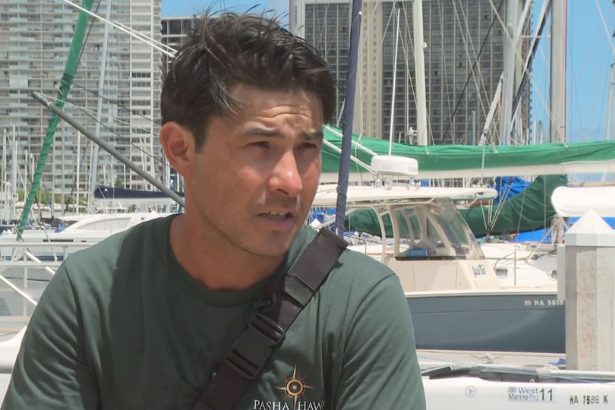
Kai Sato adrift at sea for more than 30 days is one of the most remarkable Pacific survival stories of 2026. Sato, a 39-year-old California man, set out from the Catalina Islands on June 7 in an attempt to complete his first solo sail across the Pacific Ocean. Within two weeks, his mast had snapped. His motor ran out of fuel when he tried to turn back. And for the better part of a month he drifted south with the current, far off course, rationing oatmeal, catching fish and squid that landed in his boat, and collecting drinking water from the condensation of seawater sealed in plastic bags. He was rescued on July 22 by a Pasha Hawaii cargo ship whose crew spotted him in the shipping lane between California and Hawaii, dropped a rope ladder, and pulled him aboard.
How the Solo Sail Went Wrong
Sato departed the Catalina Islands on June 7 with the goal of completing a solo Pacific crossing, a route that held personal meaning for him. His uncle had completed a sail from California to Hawaii with him when he was a young boy, and the journey was connected to that memory and relationship throughout his ordeal. Two weeks into the voyage, the mast snapped, instantly eliminating his primary means of propulsion and navigation. When he attempted to motor back toward shore, he ran out of gas, leaving him with no sail and no engine in open water.
“I was literally like a sitting duck, just getting taken south by the current going way off course,” Sato said. The current carried him south rather than toward Hawaii, compounding the navigational problem created by the mast failure. He had no way to signal for help, no engine, and was being pushed steadily away from both his origin and his destination.
Five Days of Despair, Then Action
The period immediately following the mast failure was the most psychologically difficult stretch of the ordeal. Sato described a week of crying and drifting, feeling helpless in the face of circumstances he could not immediately reverse. “I cried for a whole week, just drifting south, like miserable,” he said. He reached a point of profound despair before something shifted. After five days of contemplation, he made the decision to act rather than surrender to the situation.
He began jerry-rigging the sails using materials he had on board, improvising a repair with PVC pipes and kayak paddles that allowed him to generate some propulsion. It took him a month to make his way back into the shipping lane from California to Hawaii. The repair was not elegant and it was not fast, but it worked well enough to move him toward the lane where cargo ships travel regularly between the mainland and the islands.
Running Out of Water: The Critical Moment
On July 11, more than a month into the ordeal, Sato ran out of fresh drinking water. The loss of water access represented the most acute survival threat of the entire journey, with dehydration capable of incapacitating a person within days in open-ocean conditions. His response demonstrated the same improvisation he had applied to the mast repair. He filled buckets with seawater and tied plastic bags to seal it off to collect its condensation. “I was just licking that to survive,” Sato said.
For food, he ate mostly oatmeal from his existing supplies and caught fish and squid that landed in his boat, a combination that provided enough nutrition to sustain him through the final stretch of the voyage. He described meditating, talking to the water and wind, calling out for guidance, and feeling the presence of his uncle during the most difficult stretches of the journey. Those rituals appear to have served as the psychological infrastructure that kept him functional when the physical conditions were at their worst.
The Rescue: Pasha Hawaii Cargo Ship
On July 22, a Pasha Hawaii cargo ship came into view. Pasha Hawaii operates freight shipping between the US mainland and the Hawaiian Islands, and its vessels travel the same lane Sato had been working toward since he jerry-rigged his sails weeks earlier. The crew spotted him, and after two attempts, dropped a rope ladder over the side of the vessel. Sato climbed aboard.
“Oh my God, yeah, like ecstatic, you know what I mean? Like I was like crying and like so happy, and then they got me fruit and water, and yeah, they were so good to me, those guys,” Sato said. The Pasha crew gave him a suite aboard the ship, provided him with clothes, and gave him access to as much food as he wanted. After more than 30 days of improvised survival rations, the contrast was overwhelming.
The ship brought him to Hawaii, where he is now staying with a relative and has been recovering at the Hilton. He described his experience to Hawaii News Now from a position of evident relief and already-forming future plans.
What Sato Used to Survive
The improvisation at the heart of Sato’s survival is worth examining in detail, because it illustrates both the practical ingenuity and the psychological resilience that kept him alive across more than a month of open-ocean exposure. The mast repair using PVC pipes and kayak paddles is the kind of solution that requires not just the availability of those materials but the presence of mind to identify them as tools when everything else has gone wrong.
The water collection method, condensation harvested from seawater sealed in plastic bags and licked from the surface, is a genuine open-ocean survival technique. Seawater itself cannot be consumed directly because its salt content exceeds what the human kidneys can process, but the water vapor that evaporates from it and condenses on a cooler surface is effectively desalinated, making it safe to drink in small quantities. Sato’s method was low-yield but it was functional, and in the absence of any alternative it represented the difference between hydration and incapacitation.
His diet of oatmeal supplemented by fish and squid that landed in his boat reflects another reality of Pacific survival: the ocean at that latitude and in that season contains significant marine life, and a stationary vessel drifting in calm water can attract small fish and squid that can be caught and eaten raw if necessary.
What Comes Next for Kai Sato
Despite everything, Sato is already planning his next voyage. He is now staying with a relative and just got to the Hilton as he plans his next sail, to the Philippines, in a bigger boat. That detail is not a footnote. It is the most revealing thing Sato said in his account of the ordeal, capturing a specific quality of character that makes a person attempt a solo Pacific crossing in the first place and then spend thirty days improvising their way back to a shipping lane after everything goes wrong. The experience did not close that door. It opened a different one.
Latest Updates
Sato’s rescue was confirmed on July 22, 2026, and his account was first reported by Hawaii News Now on July 25. Hawaii News Now confirmed the full details of Sato’s departure from the Catalina Islands on June 7, the mast failure two weeks into the journey, the motor fuel exhaustion, the jerry-rigged sail repair using PVC pipes and kayak paddles, the water shortage on July 11 and the condensation collection method, and the Pasha Hawaii rescue. The Guardian confirmed Sato had been stranded at sea for 30 days with a broken mast before being rescued alive, and reported the broader details of his Pacific survival ordeal. The Daily Beast covered the story as part of its broader trending news coverage of the week’s most compelling human interest reports.
Sources: Hawaii News Now | The Guardian | The Daily Beast
Broader Implications
Solo ocean sailing carries inherent and serious risk, and Sato’s experience is a clear illustration of how quickly a single equipment failure can cascade into a life-threatening situation. The mast snap that began his ordeal happened two weeks into a journey that was otherwise going according to plan. What followed was not a failure of preparation so much as an encounter with the specific unpredictability of open-ocean passage-making, where a single component failure in the right conditions can strand a vessel with no realistic option for outside assistance. The fact that Sato survived is a product of improvisation, psychological resilience, and the fortunate coincidence of drifting back toward a heavily trafficked shipping lane in time for a cargo crew to spot him. For more news and human interest coverage, visit thetechmarketer.com.
If you or someone you know is struggling with hopelessness or thoughts of self-harm, help is available around the clock. Contact the 988 Suicide and Crisis Lifeline by calling or texting 988. You are not alone.
3. FREQUENTLY ASKED QUESTIONS
- Who is Kai Sato and what happened to him at sea?
Kai Sato is a 39-year-old California man who set out from the Catalina Islands on June 7, 2026, attempting his first solo sail across the Pacific Ocean. His mast snapped two weeks into the journey, and when he tried to motor back to shore his fuel ran out, leaving him stranded. He drifted for more than 30 days before jerry-rigging his sails and making his way back into the shipping lane, where he was rescued by a Pasha Hawaii cargo ship on July 22.
- How did Kai Sato survive 30 days adrift at sea?
Sato survived by improvising a sail repair using PVC pipes and kayak paddles, eating oatmeal from his supplies along with fish and squid that landed in his boat, and collecting drinking water by sealing seawater in plastic bags and licking the condensation that formed on the inside surface. He described meditating and drawing psychological strength from the memory of his uncle, who had previously sailed the same California-to-Hawaii route with him.
- How was Kai Sato rescued after being adrift at sea?
Sato was rescued on July 22, 2026, when a Pasha Hawaii cargo ship spotted him in the shipping lane between California and Hawaii. After two attempts, the crew dropped a rope ladder over the side of the vessel and Sato climbed aboard. The crew provided him with a suite, clothes, food, and water before bringing him to Hawaii.
- Where did Kai Sato start his solo Pacific sail?
Sato departed from the Catalina Islands, located off the coast of Southern California, on June 7, 2026. His destination was Hawaii, which he intended to reach as the first leg of a solo trans-Pacific voyage. The mast failure occurred approximately two weeks after departure, while he was still well short of Hawaii.
- What are Kai Sato’s plans after being rescued?
Despite the ordeal, Sato is already planning his next sail, this time to the Philippines and in a larger boat. He is currently recovering in Hawaii, staying with a relative and spending time at the Hilton. His stated intention to continue long-distance sailing reflects the same drive that motivated the original Pacific crossing attempt.
4. SOURCES AND REFERENCES
- Hawaii News Now: Solo-Sail Gone Wrong: California Man Survives Month at Sea Drifting to Hawaii
- The Guardian: California Man Rescued Alive After 30 Days Stranded at Sea With Broken Mast
- The Daily Beast: TikTok Star Battling Alzheimer’s Dies at 49