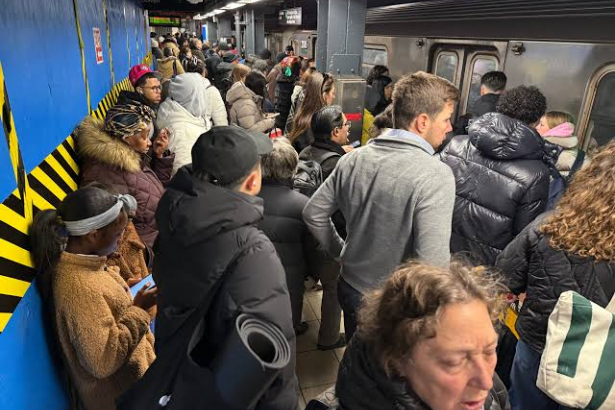
The Upper East Side subway construction project intended to improve accessibility at Manhattan’s 86th Street-Lexington Avenue station has become a source of frustration for commuters who say the work is making an already congested station harder to navigate.
Residents have raised concerns about crowded platforms, narrowed passageways and construction barriers that restrict movement around the station. Some have described the conditions as dangerous, particularly if an emergency required passengers to evacuate quickly.
The controversy comes as the Metropolitan Transportation Authority’s accessibility project faces delays. Work that was originally expected to be completed by the end of 2026 has reportedly slipped by approximately a year, according to local reporting on statements made by project officials.
The situation highlights a difficult urban infrastructure problem: building elevators and improving access to an existing subway station can make the station more accessible in the long run, but construction can impose real costs on the people who depend on it every day.
Background and Context: Why the 86th Street Subway Project Matters
The 86th Street-Lexington Avenue station serves passengers using Manhattan’s Lexington Avenue subway lines, including the 4, 5 and 6 trains. It is an important transit stop for Upper East Side residents, workers and visitors.
The accessibility project aims to improve access for passengers who cannot easily use stairs, including people with mobility disabilities, older adults, parents with strollers and travelers carrying luggage.
According to reporting by Patch, the work includes new elevators serving the station’s platforms, improvements to the mezzanine and staircases, and additional accessibility features such as tactile strips near the platform edge.
These upgrades are important because a station that lacks convenient step-free access can make ordinary journeys substantially more difficult for some passengers.
But retrofitting an older underground station is complicated. Construction teams must work around existing utilities, structural limitations, pedestrian access and nearby buildings while keeping the subway operational.
Those challenges have become particularly visible at 86th Street, where residents say the temporary arrangements are creating bottlenecks in areas already used by large numbers of commuters.
Latest Update: Residents Raise Safety Concerns as Construction Slips
Local reporting published in October 2026 describes growing frustration over the project’s effects on everyday travel.
Crowded platforms are the immediate concern
Residents have complained that construction barriers are reducing the usable space around passenger platforms and passageways.
When several trains arrive close together, the combination of arriving passengers, people waiting to board and commuters moving through restricted areas can make the station feel especially congested.
Some residents have questioned whether the current arrangement would allow passengers to leave quickly in an emergency.
These are reported concerns, not evidence that a specific evacuation failure or injury has occurred. Nevertheless, they raise a legitimate question for the transit authority: how should passenger movement and emergency access be managed while construction continues?
The Upper East Site report on crowded subway platforms details residents’ objections to the construction barriers.
Construction obstacles have pushed back the timeline
The project has encountered several obstacles, according to a report by Patch published in October 2026.
Among the challenges cited by officials were scaffolding that obstructed a work area near the northwest corner of the station, unexpected underground utility lines and the difficulty of coordinating construction within an existing urban environment.
The work also involved removing substantial amounts of rock to expand the station’s lower mezzanine. Once excavation began, crews encountered utility conditions that did not match existing underground drawings.
These discoveries help explain why underground projects can take longer than anticipated. Plans and historical drawings do not always reflect the exact conditions crews find beneath busy streets.
However, the explanation does not eliminate the impact on passengers. Commuters must continue using the station while the project progresses, and each additional delay extends the period during which construction affects everyday travel.
Read Patch’s report on delays to the East 86th Street accessibility project for details on the construction challenges and revised timeline.
The accessibility benefits remain important
The controversy should not obscure the purpose of the work. Better elevator access can make the subway system more usable for people who currently face barriers to entering or navigating the station.
A station can be physically open and still be difficult or impossible to use for someone who cannot climb stairs. Accessibility upgrades are therefore more than cosmetic improvements. They can expand who is able to use public transportation independently.
The challenge is delivering those improvements without creating unreasonable risks or burdens for current passengers.
That requires careful construction staging, clear passenger information, accessible alternative routes and ongoing monitoring of crowding.
Expert Analysis: Three Lessons From the Subway Construction Dispute
1. Construction logistics are part of passenger safety
Safety is not determined only by the final design of a station. Temporary construction arrangements also influence how people move through public spaces.
Barriers, scaffolding and narrowed passageways can alter passenger flows. When multiple streams of people converge in a confined area, congestion can become harder to manage.
Transit agencies need to assess these temporary conditions as the work changes, rather than assuming that a plan that worked earlier will remain suitable throughout construction.
Residents’ concerns about evacuation deserve to be evaluated through professional safety assessments and clear communication from the MTA.
2. Unexpected underground conditions need better contingency planning
The difficulties described by project officials illustrate a familiar challenge in older cities: underground infrastructure is not always documented with the precision modern construction requires.
Utility lines may be missing from historical plans, structures may differ from original drawings, and nearby construction can complicate access to work areas.
No planning process can eliminate every surprise. But realistic schedules, contingency budgets and transparent updates can help agencies respond without leaving passengers uncertain about when disruptions will end.
The public needs to understand not only that a delay has occurred, but also what caused it, what is being done and how the revised schedule will be monitored.
3. Accessibility and convenience should not be treated as opposing goals
The project demonstrates a tension common to public infrastructure. Construction creates short-term inconvenience in pursuit of long-term public benefits.
For passengers who need elevators, the finished project could substantially improve access. For commuters navigating crowded platforms today, the same project can create an immediate and frustrating problem.
The solution is not to dismiss accessibility concerns or ignore current passengers. It is to plan the construction process around both needs, with temporary routes and barriers designed to preserve as much safe, usable space as possible.
Broader Implications: What the Delays Mean for New York Transit
Commuters need reliable information
When a construction schedule changes, passengers need clear information about which entrances remain open, where barriers have moved and whether alternative routes are available.
Uncertainty adds to the inconvenience of a project. A passenger who knows what to expect can plan a different route or allow additional time. A passenger who encounters an unexpected bottleneck may have fewer options.
Regular updates should explain the reason for delays, the work scheduled next and any changes to passenger access.
Accessibility projects need public accountability
The benefits of an accessibility project are measured not only by whether elevators are eventually installed, but also by whether the finished station is usable and the construction period is managed responsibly.
Public agencies should explain changes to timelines, document the reasons for unexpected costs and communicate how they are addressing concerns raised by riders.
That information helps residents distinguish between unavoidable engineering complications and problems that could have been reduced through better planning.
The issue reflects a wider challenge for aging infrastructure
New York is not alone in trying to modernize transit infrastructure built decades ago. Older subway systems must add accessibility features while continuing to serve large numbers of passengers.
The work often requires complex coordination among construction teams, utility providers, local authorities and transit operators.
The 86th Street project illustrates why upgrades to existing infrastructure can be as difficult as building something new. The physical work is only one part of the task. Managing access, disruption and public confidence matters too.
Related History and Comparable Technologies
Accessibility improvements have become an important part of modern public transportation planning. Elevators, step-free entrances, tactile platform indicators and improved signage can make transit networks more usable for a wider range of passengers.
Yet installing these features in an existing underground station is often more complicated than incorporating them into a new station. Older structures may have limited space, and construction crews must work around utilities, foundations, streets and active rail operations.
Similar challenges arise when cities upgrade water systems, electrical networks, road tunnels and public buildings. Infrastructure that remains in daily use cannot simply be shut down indefinitely while improvements are made.
Digital tools can help agencies manage some of these challenges. Construction monitoring, digital models of underground utilities, passenger-flow analysis and real-time service alerts can improve planning and communication.
These technologies cannot remove every engineering obstacle. They can, however, help agencies identify bottlenecks, explain delays and make better decisions about how to manage the public spaces affected by construction.
What Happens Next?
The immediate priority is to manage the remaining construction while reducing congestion and improving passenger confidence.
Three questions will shape the next phase of the project:
- When will the work be completed? The revised schedule should make clear which construction milestones remain and how officials will report progress.
- Can passenger movement improve before the project ends? Changes to barriers and construction staging may create more usable space as work advances, according to local reporting.
- How will safety concerns be assessed? The MTA should clearly explain how it evaluates crowding, emergency access and temporary pedestrian routes.
Commuters should monitor official MTA service information and station notices for changes to entrances, passageways and construction arrangements. Residents can also follow updates from local community boards and neighborhood news outlets.
The longer-term test is whether the completed project delivers the intended accessibility improvements while demonstrating that passenger safety and communication were treated as priorities throughout construction.
Conclusion
The Upper East Side subway construction dispute illustrates the difficulty of modernizing public infrastructure while keeping it operational.
At 86th Street-Lexington Avenue, residents have raised concerns about crowded platforms and narrowed passageways as an accessibility project encounters delays. Officials have cited practical construction obstacles, including scaffolding and unexpected underground utilities, but those explanations do not erase the daily inconvenience faced by commuters.
The project has an important purpose: making the station more accessible to passengers who need elevators and step-free routes. Delivering that benefit responsibly requires attention to both the finished station and the temporary conditions people experience during construction.
Clearer updates, careful management of passenger movement and transparent scheduling could help restore confidence as the work continues.
The central question is not whether accessibility improvements matter. It is how New York can deliver them while keeping the subway safe, usable and predictable for the people who depend on it.
Frequently Asked Questions
1. Why are Upper East Side residents upset about subway construction?
Residents have complained that construction barriers and narrowed passageways at the 86th Street-Lexington Avenue station contribute to crowded platforms and concerns about emergency movement.
2. Which subway station is affected?
The project concerns the 86th Street-Lexington Avenue station serving the 4, 5 and 6 trains on Manhattan’s Upper East Side.
3. Why has the accessibility project been delayed?
Local reporting cites several obstacles, including scaffolding that blocked a work area, unexpected underground utility lines and complications associated with excavation.
4. What improvements is the project intended to deliver?
The project aims to add elevators and improve station accessibility, alongside work on the mezzanine, stairs and other passenger-access features.
5. Are the crowded platforms proof that an evacuation would fail?
No. Residents have raised concerns about emergency movement, but those concerns do not establish that an evacuation would fail. The relevant safety conditions require professional assessment.
6. When will the subway construction be completed?
Local reporting indicates that the original end-of-2026 target has slipped by approximately a year. Passengers should consult current MTA project updates for the latest schedule.
7. How can commuters stay informed about disruptions?
Commuters can check official MTA service alerts, station notices and local reporting for updates about construction barriers, entrances and alternative routes.
8. Why are subway accessibility upgrades important?
Elevators and step-free routes can make public transportation more usable for people with mobility disabilities, older adults, parents with strollers and other passengers who face difficulty using stairs.